1831: The Great Jamaican Slave Revolt Begins
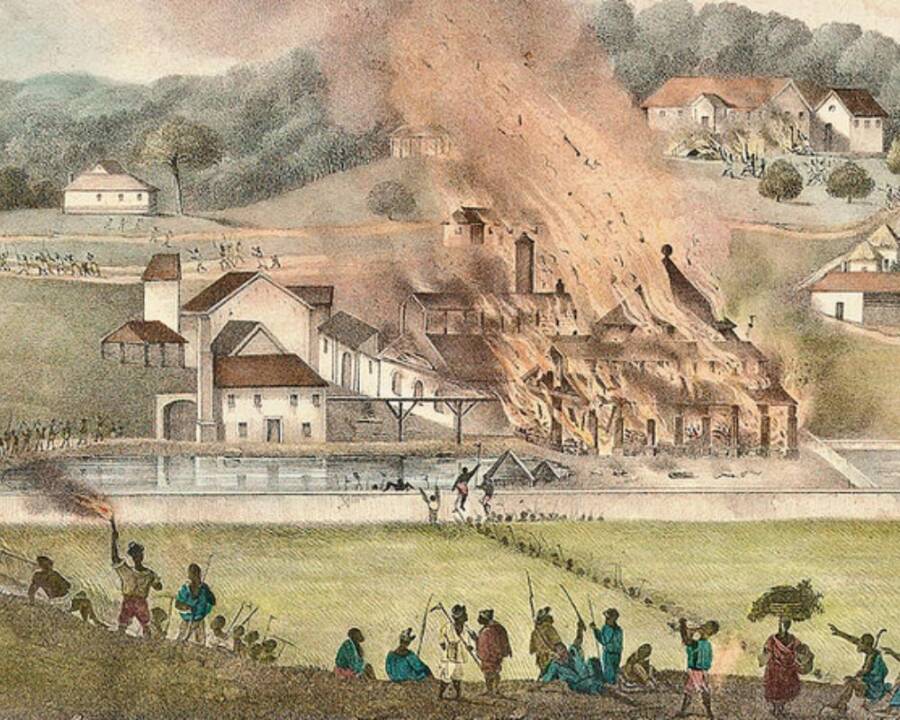
Public DomainThe destruction of Roehampton Estate in January 1832, during the final days of the Baptist War.
Dec. 25, 1831, was an important day for enslaved laborers in Jamaica. It marked the beginning of the end of their bondage.
Samuel Sharpe, an enslaved Baptist deacon, had been spreading word of a general strike. Thousands of slaves agreed not to go to the fields on Christmas Day unless they were promised a fair wage and better working conditions. Jamaica was a British colony at the time, and Parliament had been discussing abolishing slavery in the empire.
Jamaica’s plantation owners did not agree. They wanted a workforce they could exploit and abuse without question. So, although the Christmas Rebellion began peacefully, it soon turned violent.
An estimated 60,000 of Jamaica’s 300,000 enslaved workers participated in the strike. Most of them simply refused to work, but on Dec. 27, a group of men set a plantation on fire. The British government then declared martial law and deployed a militia to quash the uprising.
The peaceful strike that had begun on Christmas Day escalated into the Baptist War, which lasted into the first week of January. Within 10 days, at least 300 enslaved laborers were killed. Sharpe himself was arrested, and he was hanged in May 1832 for his role in the revolt. According to the Jamaican government, just before his death, he stated, “I would rather die upon yonder gallows than live in slavery.”

Pozole/Wikimedia CommonsA memorial to Samuel Sharpe in Montego Bay, Jamaica.
While the rebellion was not immediately successful, it did influence the British Parliament’s decision to end slavery. The Slavery Abolition Act was passed in 1833, and the heinous act had come to an end in the British Empire by 1834.