The Dark Disney Story Of The Hunchback Of Notre Dame
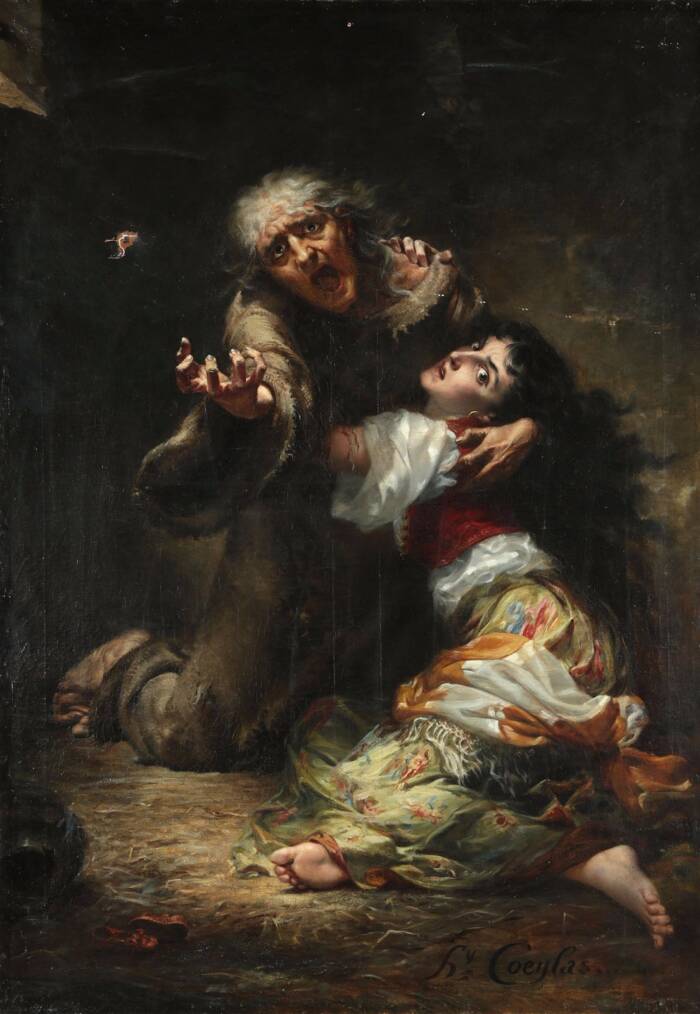
Public DomainQuasimodo pleads for Esmeralda’s life in this 1891 painting by Henri Coëylas.
First released in 1996, The Hunchback of Notre Dame may be one of Disney’s most disturbing films. In the movie, a woman falls and cracks her skull on the steps of Notre Dame while fleeing officials trying to persecute the Romani people. When the Parisian Minister of Justice, Claude Frollo, finds the deformed baby she left behind — whom he later dubs Quasimodo — he tries to drown the infant.
Instead, Frollo is chastised by a clergyman and agrees to raise Quasimodo, though he keeps him locked in the bell tower of the cathedral. As Quasimodo grows, he falls in love with a Romani woman named Esmeralda. Frollo later orders Esmeralda to be burned at the stake, but Quasimodo saves her, and Frollo falls to his death while trying to pursue them.
This dark Disney story is already uncharacteristically morbid for a children’s movie, but it’s nothing compared to the 1831 Victor Hugo novel it’s based on.
In the book, Quasimodo isn’t able to rescue Esmeralda. She is hanged in front of him, and when Frollo laughs at her execution, Quasimodo attacks him. Frollo’s death isn’t accidental in this version — Quasimodo purposely pushes him from the top of Notre Dame.
He then vanishes, and he isn’t seen again until many years later, when guards find his hunchbacked skeleton embracing the remains of Esmeralda. After fleeing from the cathedral, he had tracked down the corpse of his beloved and starved to death in her grave.