While repairing loose floor tiles at St. Peter and Paul Church in the Dutch town of Maastricht, workers recently came upon a centuries-old skeleton — that may belong to the 17th-century French soldier who served King Louis XIV as captain of the Musketeers of the Guard.
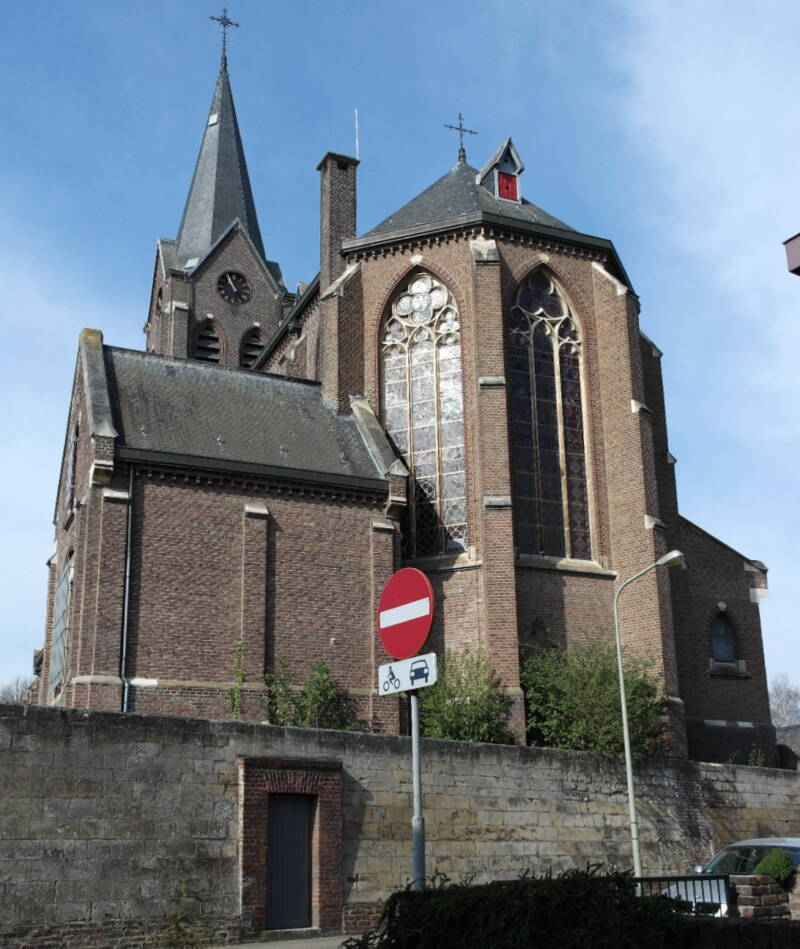
Kleon3/Wikimedia CommonsThe St. Peter and Paul Church in the Dutch town of Maastricht, where archaeologists believe that D’Artagnan’s remains may have been found.
According to a letter written about French soldier Charles de Batz de Castelmore — the inspiration for Alexandre Dumas’ 1844 novel The Three Musketeers — he was buried in “consecrated ground” after he was killed during the Franco-Dutch War of 1673. The exact location of his burial has long been a mystery, but the recent discovery of a skeleton beneath the floor of a Dutch church has led to speculation that it could be Castelmore himself.
Researchers still need to do more analysis to determine whether the skeleton belongs to Castelmore, who was known as D’Artagnan during his lifetime and inspired the eponymous character in Dumas’ famous novel. If so, it would solve a mystery more than 350 years in the making.
The Skeleton Found Under The Floor At St. Peter And Paul Church In Maastricht
According to Dutch media reports, the discovery of the skeleton at St. Peter And Paul Church in Maastricht, Netherlands, came entirely by chance. Some tiles in the church floor had gotten loose, and repair work then revealed a long-buried skeleton.
There’s always been speculation that D’Artagnan had been buried at this church. As such, the church’s deacon immediately notified Wim Dijkman, an archaeologist who had been researching D’Artagnan for decades.
Dijkman rushed to the church, and was present as archaeologists carefully exposed the skeleton, piece by piece. Though the skeleton’s skull had been shattered, its neck and vertebrae were in perfect condition.
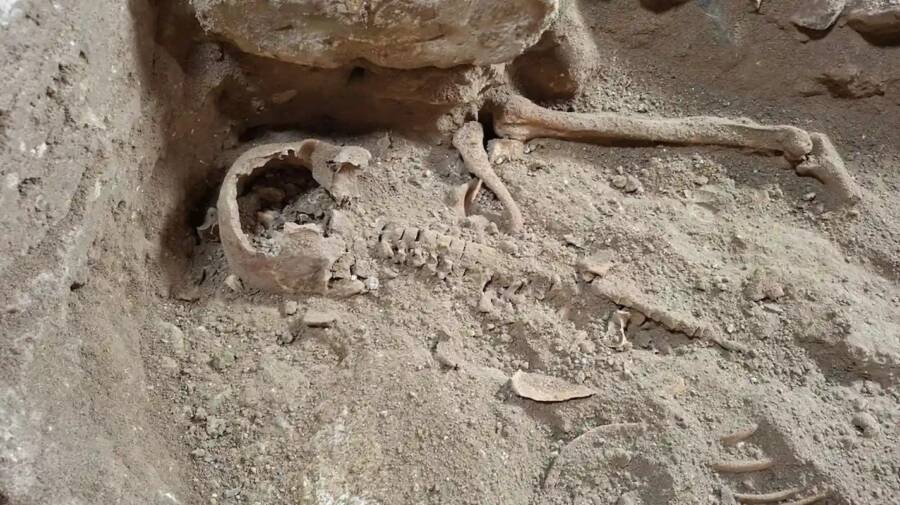
Stichting 6213 HLThe skeleton found at St. Peter and Paul Church that may belong to D’Artagnan.
There are several strong indications that these remains do in fact belong to D’Artagnan. For one, he was known to have been buried in “consecrated ground” after he was killed in Maastricht during the Franco-Dutch War in 1673. For another, archaeologists also found several items in the grave that line up well with the story of D’Artagnan’s death.
“There was a French coin from that time in the grave,” explained Jos Valke, the church’s deacon. “And the bullet that killed him lay at chest level. Exactly as described in the history books. The evidence is very strong.”
That said, Dijkman has advised caution until more tests, namely DNA analysis, can be run on the remains.
“I am anxiously awaiting official confirmation, which should come within the next few weeks, he said. “At the moment, all kinds of analyses and investigations are underway… It has really become a top-level investigation. We want to be absolutely certain that it is D’Artagnan.”
So who was D’Artagnan?
Charles de Batz de Castelmore, The French Musketeer Known As D’Artagnan
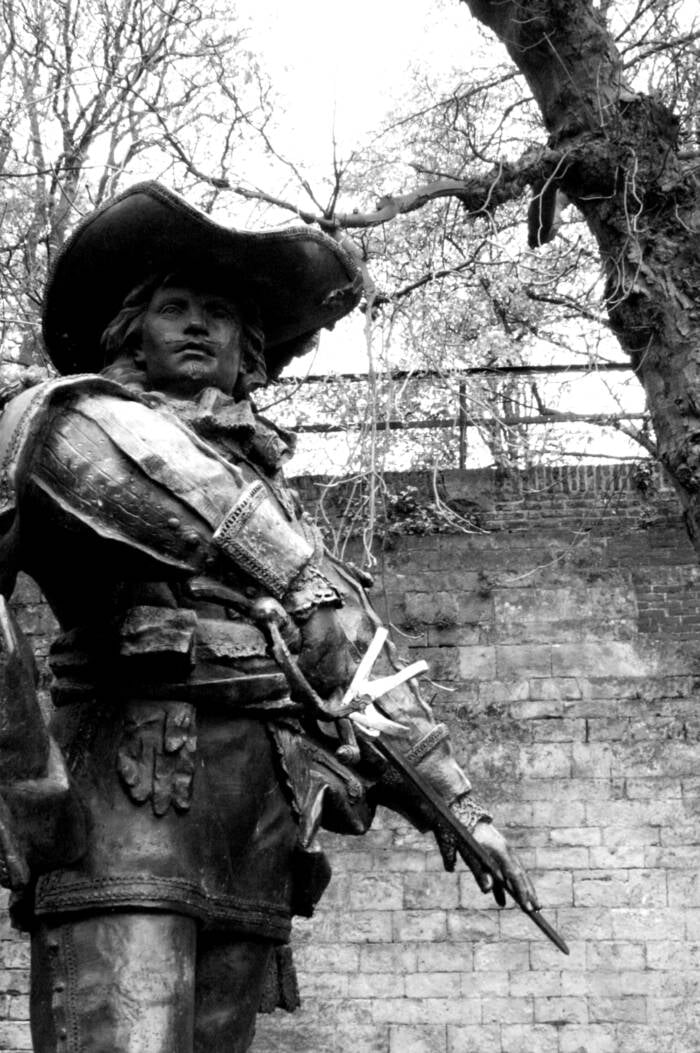
Public DomainA statue of D’Artagnan in Maastricht, where he died in 1673.
In Alexandre Dumas’ The Three Musketeers, D’Artagnan is a young nobleman who goes to Paris looking for adventure. There, he crosses paths with three musketeers (soldiers armed with muskets) named Athos, Porthos, and Aramis, who join him on a series of dramatic escapades.
The real-life D’Artagnan, Charles de Batz de Castelmore, was born around 1611 at Château de Castelmore in Lupiac, France. Taking the name of his mother, D’Artagnan, Castelmore went to Paris as a young man and became a musketeer in the service of King Louis XIV.
He eventually became a captain of the Musketeers of the Guard, elite soldiers who served the royal household for 200 years starting in the early 1600s. Ultimately, he was killed in 1673 during the Siege of Maastricht, which took place amid the Franco-Dutch War.
He was buried in Maastricht, but the location of his remains was lost. Both the French and the Dutch have long wondered where D’Artagnan ended up; for France, D’Artagnan is a national hero, and for the Dutch, he’s one of the best-known historical figures in Maastricht’s history.
The skeleton found beneath the floor at St. Peter and Paul Church may finally offer some answers, but Dijkman, for one, is holding out on celebrating until he’s able to definitively tie the skeleton to D’Artagnan.
“I am a scientist,” Dijkman stated, “and I will only say it is D’Artagnan when I know for certain.”
After reading about the possible discovery of D’Artagnan’s remains in a Dutch church, discover the story of Giethoorn, the Dutch town without any streets. Then, learn about Corrie ten Boom, the Dutch watchmaker who saved hundreds of Jews during the Holocaust.