Researchers have shown that participants in the rituals of the Eleusinian Mysteries may have used ergot, a rye fungus that contains a precursor to LSD.
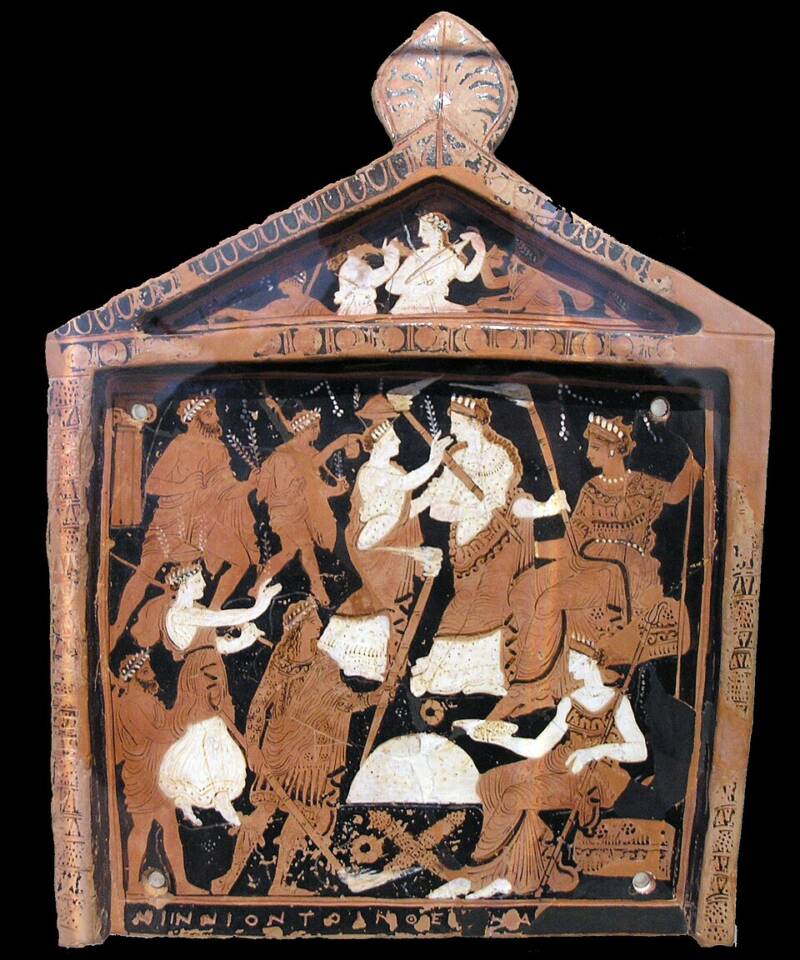
Wikimedia CommonsA votive plaque showing elements of the Eleusinian Mysteries that dates to the mid-4th century B.C.E.
Twice a year in the ancient Mediterranean, untold numbers of people descended on the small town of Eleusis, Greece to participate in a secret series of rituals known as the the Eleusinian Mysteries. Famous Greeks and Romans, from Plato to Augustus, participated in these rituals, which involved bathing, fasting, and drinking an elixir — which scientists have long suspected was laced with the ergot fungus to create psychedelic hallucinations.
But there was one problem with this theory: The ergot fungus is highly toxic and can cause debilitating symptoms, even death. Researchers thus wondered if the ancient Greeks had the ability to neutralize the fungus, eliminating its toxic proteins while retaining its hallucinogenic properties.
A new study, however, has proven that methods known during antiquity — such as combining water and ash to make lye — could indeed neutralize the toxins in ergot, suggesting that ancient Greek priestesses would have been capable of using it to brew a psychedelic elixir during the Eleusinian Mysteries.
How Ancient Greek Priestesses Could Have Brewed A Psychedelic Elixir Using Ergot
According to a new study from Scientific Reports, researchers set out to revisit a hypothesis first raised in the 1970s. This theory says that the Eleusinian Mysteries — which were practiced between 1600 B.C.E. and 392 C.E., and honored the story of Demeter and Persephone — could have involved hallucinogenic substances made from the ergot fungus. Indeed, traces of ergot have been found in a ceremonial vase at an Eleusinian site in Spain, as well as in the dental plaque of someone buried there.
The problem with this theory about the Eleusinian Mysteries has long been the nature of the fungus itself, which is highly toxic and capable of killing those who consume it. Thus, the question is whether or not ancient people possessed the knowledge to neutralize the toxic attributes of the fungus, thus making it safe to consume. To explore this question, researchers set out to neutralize the fungus using only methods available in antiquity.
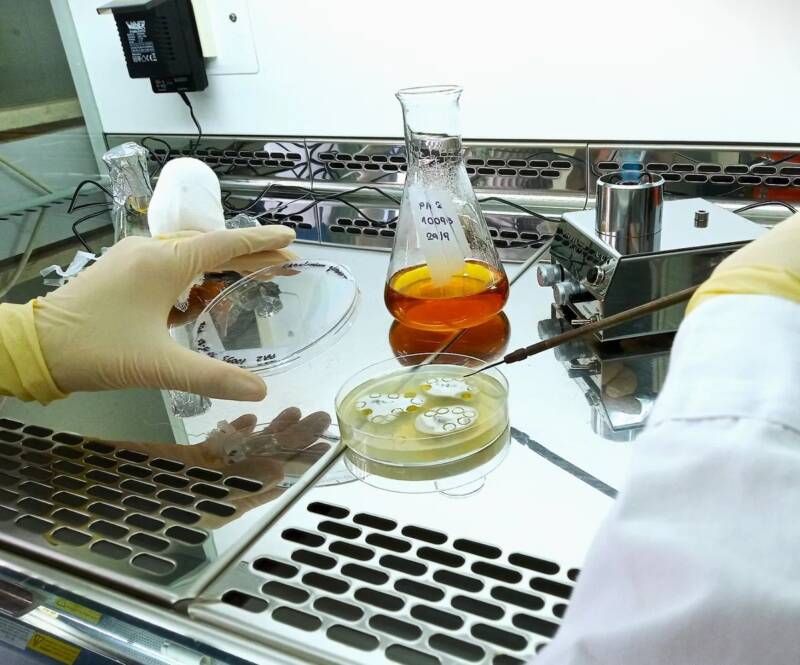
Evangelos Dadiotis and Romanos AntonopoulosResearchers attempted to neutralize the ergot fungus by using only methods available in the ancient world.
Their experiment was a success. By using a combination of water and wood ash, the researchers were able to produce an alkaline solution that broke down the toxic properties of the ergot fungus but maintained the hallucinogenic ones. These latter effects are due to the chemical lysergic acid amide (LSA), which is similar to the drug LSD and can be a precursor to it.
The researchers’ method, as they recently wrote, could have “been readily applied by the priestesses of Eleusis,” who would have been well-aware of the method of combining water and ash to produce a simple lye.
But aside from the consumption of ergot, perhaps, what exactly happened during the Eleusinian Mysteries themselves, the ancient rituals attended by everyone from Roman emperors to Greek philosophers?
Inside The Ancient Greek Secrets Of The Eleusinian Mysteries
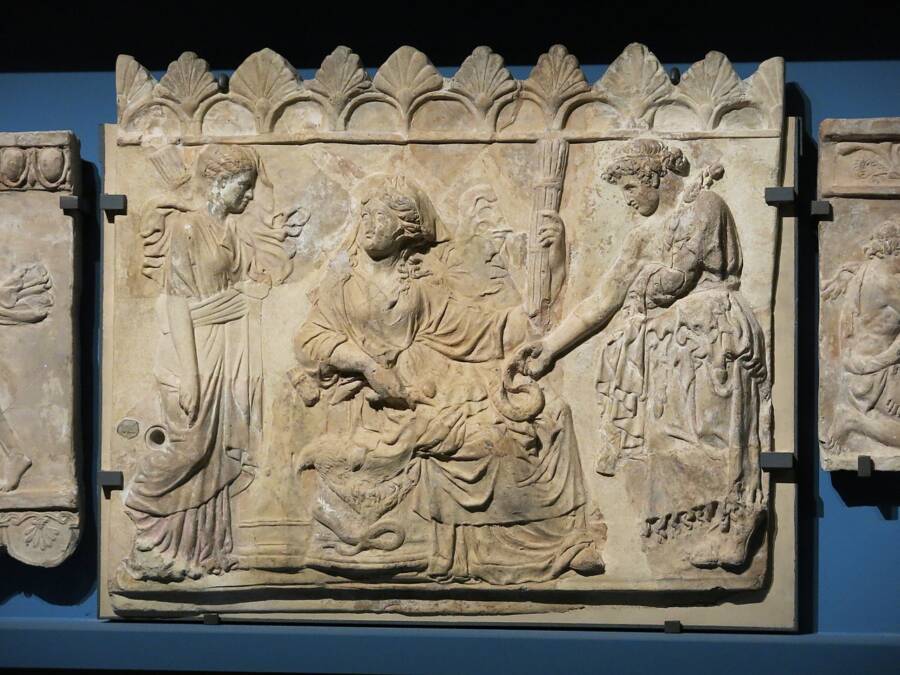
Wikimedia CommonsA stone relief from the first century B.C.E. showing an initiation into the Eleusinian Mysteries.
The Eleusinian Mysteries took place in Eleusis, Greece, just north of Athens. They celebrated the story of Demeter and her daughter, Persephone, who was kidnapped by Hades and brought to the Underworld.
According to ancient Greek myth, Demeter’s grief over the loss of her daughter made the world barren, so Zeus persuaded Hades to return Persephone to her mother for part of the year. The myth thus explained the changing of the seasons. But for participants in the Eleusinian Mysteries, this story also represented overcoming the fear of death.
These rituals began in ancient Greece around 1600 B.C.E. and took place twice a year, once in the spring and once in the fall. They reenacted Demeter’s search for Persephone, by walking from Athens to Eleusis along an important road known as the Sacred Way.
The rituals themselves would then involve ceremonial bathing in the sea, animal sacrifices, and the consumption of an elixir called kykeon, which was made of barley and flavored with herbs. Kykeon, researchers now believe, was also treated with the ergot fungus, which caused participants to hallucinate.
Participants were said to emerge from the Eleusinian Mysteries with a newfound fearlessness about death which, given the very lethal properties of the ergot fungus they consumed, was perhaps well earned.
After reading about the psychedelic elixir that ancient priestesses may have used during the Eleusinian Mysteries, discover the story of the Gorgons from Greek myth, the fearsome monsters who had snakes for hair and could turn men to stone. Then, learn about Ganymede, the handsome Trojan prince of Greek myth who was kidnapped by Zeus to be the gods’ cupbearer, and who has since become a queer symbol.