Recent scholarship has suggested that Mao Zedong was the deadliest dictator in history, but he was far from the only one responsible for millions of deaths.
Historically, dictators have been known for their cruelty, abuse of power, and willingness to kill anyone who gets in their way. But of all of history’s worst dictators, there are a few who stand out as particularly vile.
Nazi leader Adolf Hitler is likely the first who comes to mind, given that he and his genocidal regime organized the Holocaust, but Hitler is shockingly not responsible for the highest number of deaths in history. And while the exact death tolls from these authoritarian figures are unknown — they didn’t keep proper records of every single person they killed, after all — the estimates tell a profoundly dark and disturbing story.
So, if not Hitler, who was the deadliest dictator of all time?
Mao Zedong’s Devastating “Great Leap Forward”
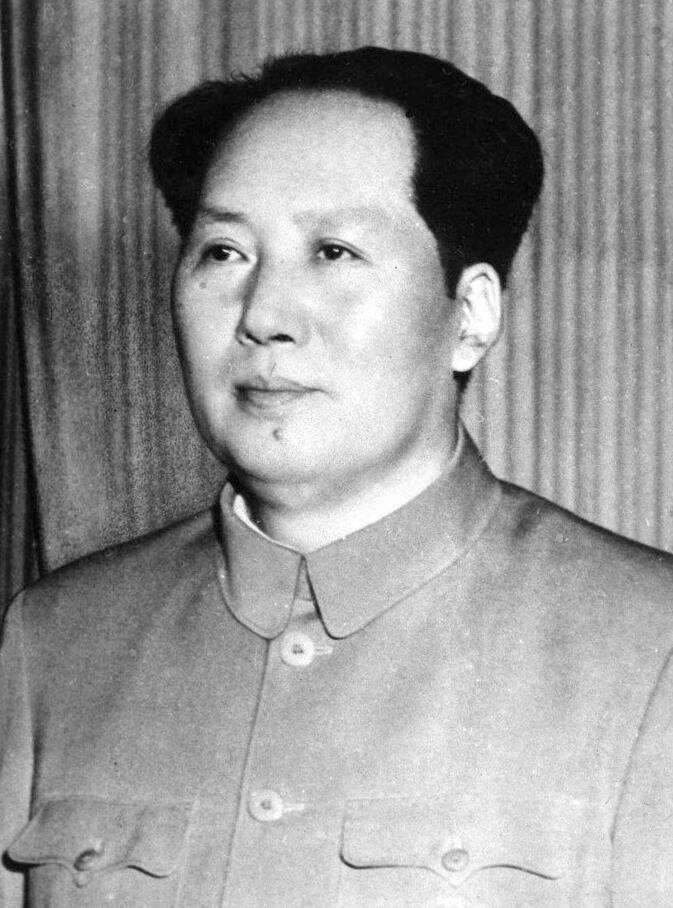
Public DomainMao Zedong’s rule lasted nearly 30 years, during which millions of people died.
Although his name comes up less often in conversations about the world’s most murderous leaders than Hitler or Stalin, Mao Zedong’s dictatorship in China resulted in deadly policies and horrific crimes. And recent scholarship suggests that Mao Zedong was the deadliest dictator in history.
According to historian Frank Dikötter, who published Mao’s Great Famine: The Story of China’s Most Devastating Catastrophe, 1958–1962 in 2010, “at least 45 million people between 1958 and 1962” died due to Mao’s policies. Some have suggested that the real number could be as high as 80 million.
As a Chinese communist leader and founder of the People’s Republic of China, Mao Zedong ruled over the country from 1949 until he died in 1976. During this period, he implemented radical campaigns that led to catastrophic loss of human life. The most devastating of Mao’s policies was what he called the Great Leap Forward, an ambitious attempt to rapidly transform China from an agrarian society into an industrialized communist society, partly through the formation of people’s communes.
This campaign led to the deadliest famine in human history, causing an estimated 30 million deaths (though some say the real number could be as high as 55 million). The famine was primarily caused by misguided agricultural policies that diverted valuable labor from farming to industrial projects like the widespread construction of backyard furnaces, resulting in food shortages. Even for a country that had experienced nearly 2,000 known famines throughout its history, this was a staggering level of devastation.
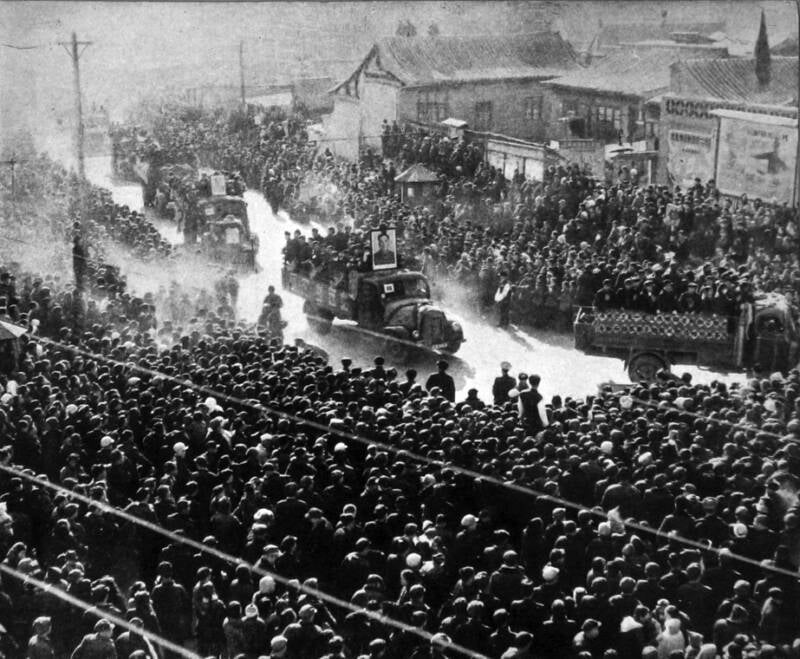
Public DomainChinese government officials traveling to the countryside during the Great Leap Forward.
As expert Judith Shapiro wrote in the book Mao’s War Against Nature, “Maoism constructed a world that pitted humans against nature, and inculcated this world view among the people through repression, indoctrination, utopian promises and censorship.”
This “war against nature” involved unscientific agricultural experiments, widespread deforestation, and even trying to stop birds from eating grain. As one study examined, in addition to the millions of people that Mao’s regime killed, millions of sparrows were also killed — which led to a noticeable increase in locust populations, which then ravaged crops.
On top of this, Mao’s regime also implemented brutal political purges and repressive campaigns to intimidate, harm, and kill possible opponents.
The Cultural Revolution, for example, was launched to help remove opposition and reconsolidate Mao’s power. During this time, his Red Guards targeted teachers, intellectuals, and perceived “revisionists,” subjecting them to public humiliation, torture, and execution. At one point, Mao reportedly boasted that while China’s first emperor Qin Shi Huang had buried alive 460 scholars, his regime had buried alive 46,000 scholars.
The death toll from Mao’s policies extended beyond famines and political purges. The Chinese labor camp system, similar to the Soviet gulag, imprisoned an estimated 50 million people from the 1950s through the 1980s, with about 20 million dying due to primitive conditions and forced labor.
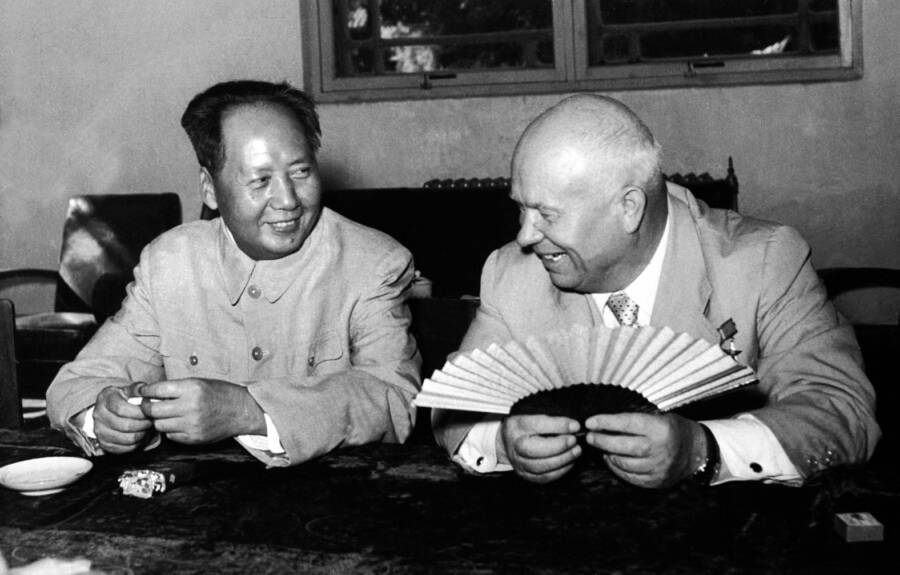
Public DomainMao Zedong, pictured with Soviet premier Nikita Khrushchev.
Despite the overwhelming evidence of his policy failures, Mao refused to acknowledge the famine’s severity. He had positioned himself as a demigod who could do no wrong — admitting to making crucial mistakes would have been in direct conflict with this self-imposed image. When other highly influential Chinese political leaders spoke out against Mao, they often put their jobs, reputations, and lives at risk.
As the Monthly Review noted in 2006, though, Mao’s deadly regime is a curious case, as far as dictators go. Mao, unlike other dictators, had not brazenly committed outright genocide against a specific group or groups of people, but his confident incompetence in his rush to mass modernize China ultimately led to millions upon millions of deaths. At the same time, the country did see some success in industrializing, life expectancy (ironically), and overall production. It just came at a tragic human cost.
And after Mao’s death, his successor Deng Xiaoping publicly stated that he felt Mao was “70 percent right and 30 percent wrong” on his policy positions — though, privately, it seemed that Deng felt those numbers might have been flipped. Either way, the fact that so many people died as a result of Mao’s dictatorship is evidence enough of the horrors within his movement.
Of course, there were also dictators who did target specific groups of people for murder — and this alone makes their rule all the more horrifying.
Joseph Stalin’s Great Purge, Gulag System, And Authoritarian Policies
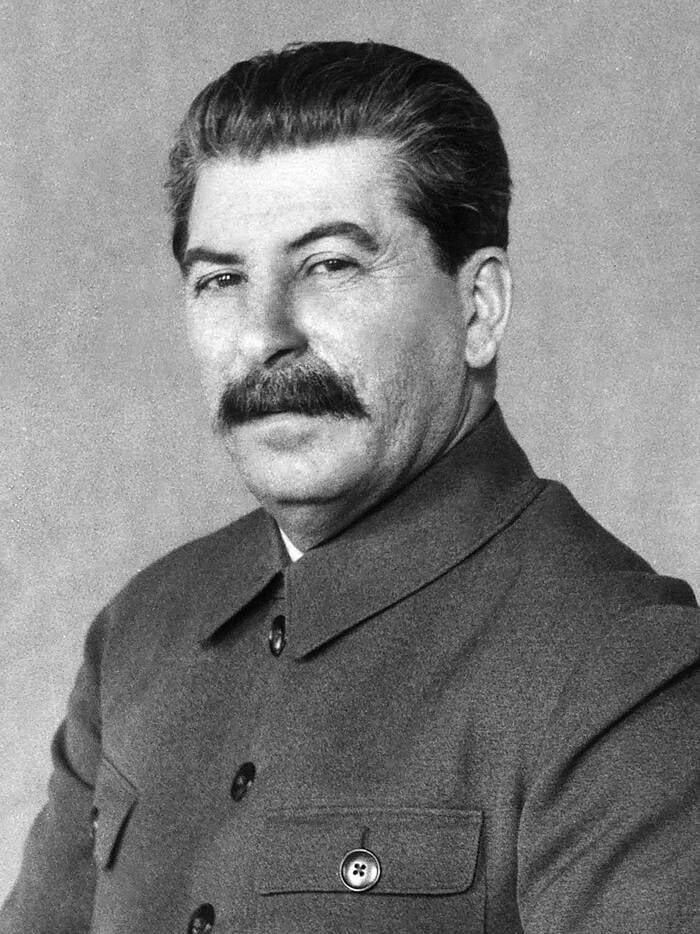
Public DomainSoviet leader Joseph Stalin.
There is some irony in Joseph Stalin and Mao Zedong both ranking among history’s deadliest dictators. Initially, Mao had viewed Stalin and the Soviet Union as the model for revolutionary success, with Mao using many of Stalin’s tactics, such as purges of perceived political enemies.
However, as time went on, Mao began to resent Stalin’s condescending attitude toward him and the Chinese Revolution. And when Stalin was reluctant to fully support the Chinese Communists in their fight against the Chinese Nationalists, Mao never forgave the betrayal.
Eventually, he criticized Stalin, acknowledging that Stalin had made serious mistakes. But he never fully denounced Stalin’s Great Purge.
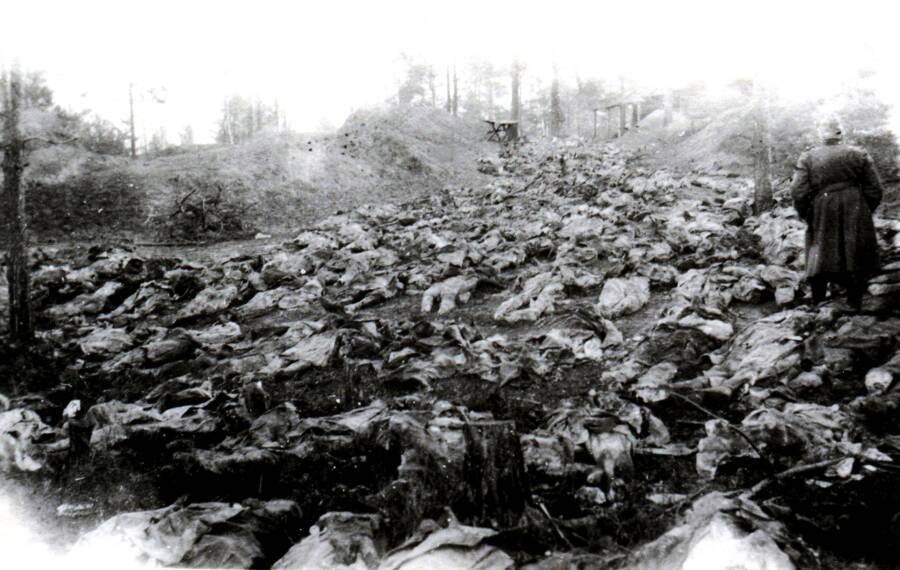
Photo 12/Alamy Stock PhotoThe aftermath of the Katyn massacre, where thousands of Polish prisoners were slaughtered by the Soviet NKVD.
The Great Purge was the most intense phase of Stalin’s political repression. Launched after the assassination of party official Sergei Kirov — which Stalin possibly orchestrated as a pretext — the purge targeted virtually every segment of Soviet society. The Soviet secret police, known as the NKVD, arrested, tortured, and executed Stalin’s political rivals and critics, intellectuals, Old Bolsheviks, ethnic minorities, citizens accused of “counter-revolutionary activities,” and even senior military officials.
Show trials forced prominent figures to confess to absurd charges before being executed. Notably, the executions of many experienced military leaders and other soldiers weakened the Red Army before World War II.
Beyond political killings, Stalin’s policies also caused mass starvation. The Holodomor in Ukraine, a deliberately engineered famine, killed millions of people as grain was confiscated while starving peasants were prevented from leaving their villages or seeking out food elsewhere.
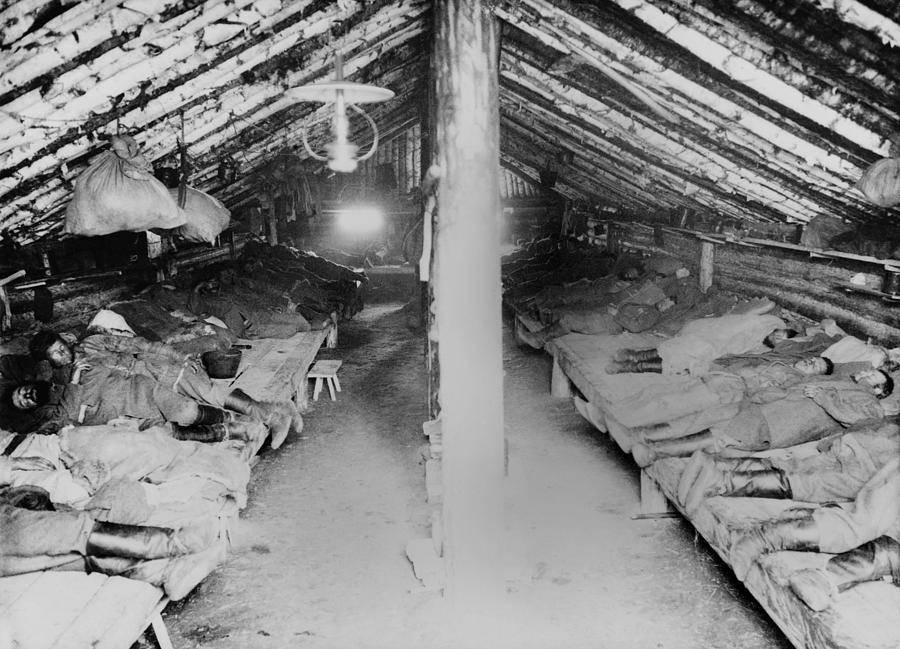
Library of CongressA Soviet gulag.
The gulag system imprisoned millions in brutal forced labor camps, where it’s been estimated that some 10 percent of prisoners died every year. Projects like the White Sea-Baltic Canal were built by prisoners who died by the thousands due to exhaustion, malnutrition, and exposure.
The total death toll under Stalin is estimated to be between 6 million and 20 million people, though some scholars suggest even higher numbers.
Adolf Hitler, The Nazi Regime, And The Holocaust
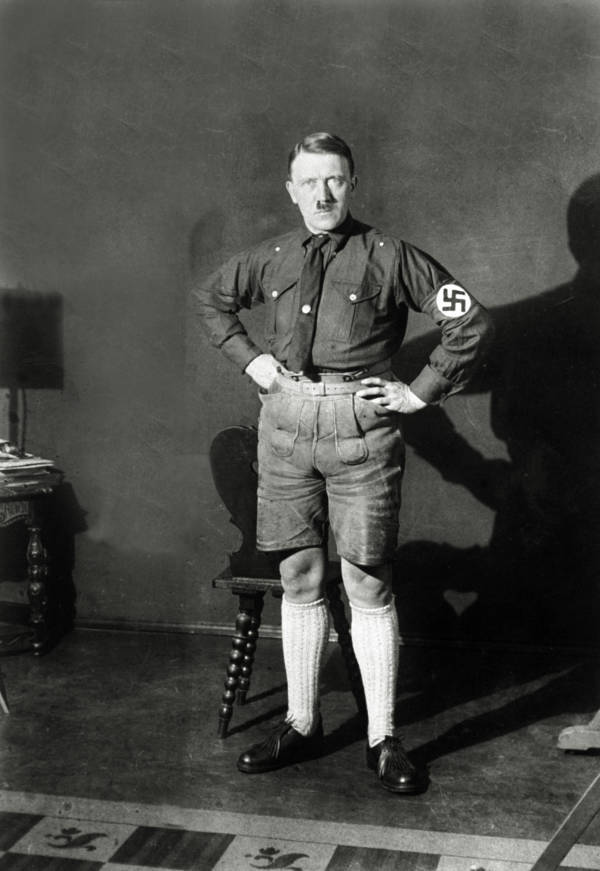
Time Life Pictures/National Archives/The LIFE Picture Collection/Getty ImagesAdolf Hitler, the leader of Nazi Germany and one of the deadliest dictators.
Although in terms of numbers alone, Adolf Hitler’s death toll was not the highest, it is still perhaps the most prominent and infamous example of mass murder perpetrated by a dictator.
After becoming chancellor of Germany in January 1933, Hitler rapidly dismantled the country’s democratic institutions, banned all opposing political parties, and established a totalitarian state built on racial ideology, antisemitism, and absolute obedience to the Führer.
The Holocaust, Nazi Germany’s deliberate genocide of European Jews, was the regime’s most infamous atrocity. Between 1941 and 1945, the Nazis systematically murdered approximately 6 million Jews through mass shootings, gas chambers, starvation, and brutal treatment in extermination camps like Auschwitz, where an estimated 1.1 million victims were killed.
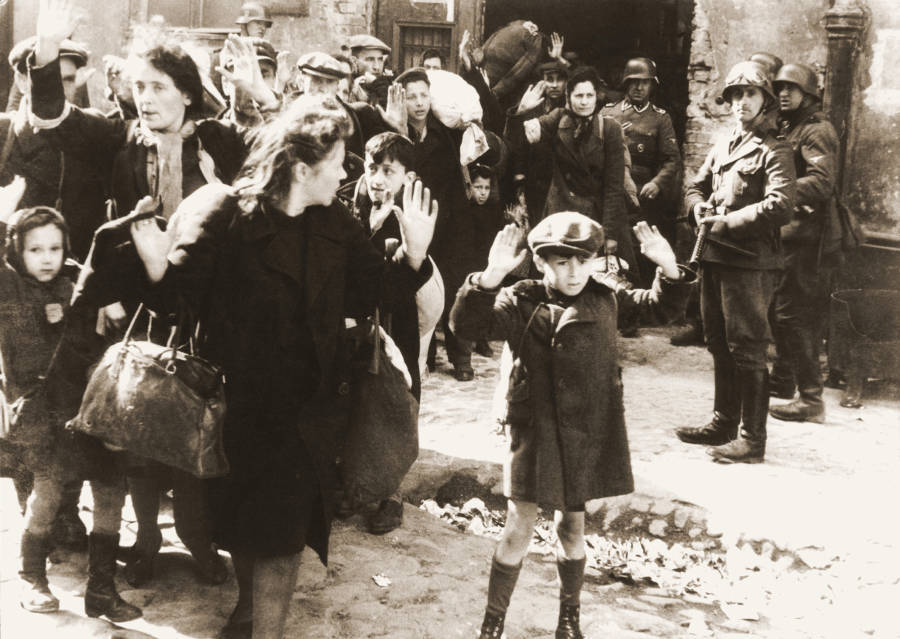
United States Holocaust Memorial Museum via Wikimedia CommonsA famous image from the Warsaw Ghetto uprising during the Holocaust.
The death toll under Hitler extended far beyond Jewish victims. The Nazis also murdered millions of non-Jewish civilians and prisoners of war. Other victims included over 3 million Soviet prisoners of war, nearly 2 million non-Jewish Poles, over 250,000 disabled people, hundreds or possibly thousands of gay men, Jehovah’s Witnesses, and various political opponents.
And despite the horrific nature of Hitler’s crimes, which only fully came to light after his death and the defeat of Nazi Germany, this was sadly not the last time a mass genocide was carried out by a country’s leader.
Pol Pot And The Cambodian Genocide
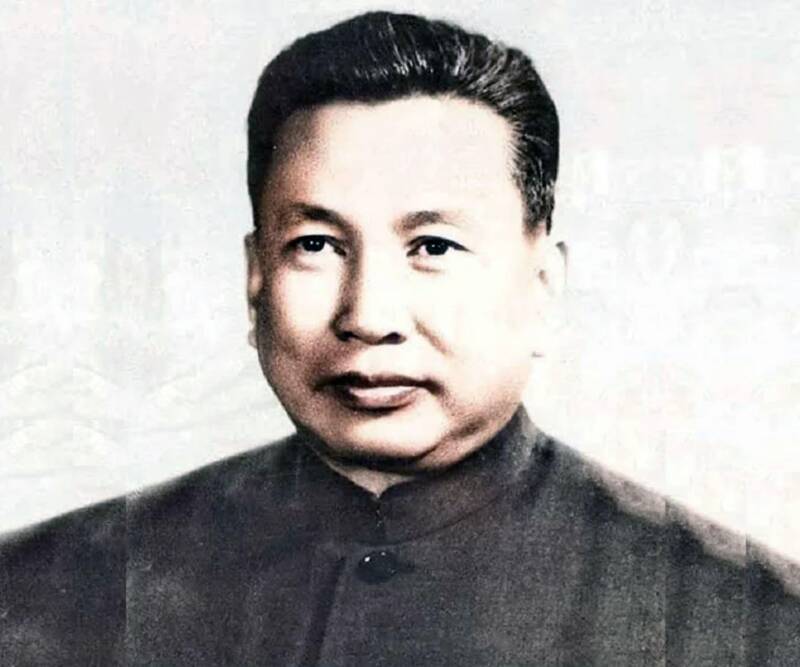
Pictorial Press Ltd/Alamy Stock PhotoPol Pot, one of history’s deadliest dictators, pictured around 1978.
Pol Pot, leader of the Khmer Rouge, orchestrated one of the most brutal genocides of the 20th century after seizing control of Cambodia in 1975.
His radical communist regime sought to create an agrarian utopia by forcibly emptying cities and marching millions to the countryside to work as peasant laborers. This forced exodus, known as “Year Zero,” marked the beginning of a systematic campaign to eradicate all aspects of modern society.
The genocide targeted multiple groups for extermination. Ethnic minorities faced particular brutality — the Muslim Cham population was nearly annihilated, while Vietnamese and Chinese communities were also systematically eliminated. The Khmer Rouge also murdered professionals, intellectuals, and people thought to have too many foreign connections.
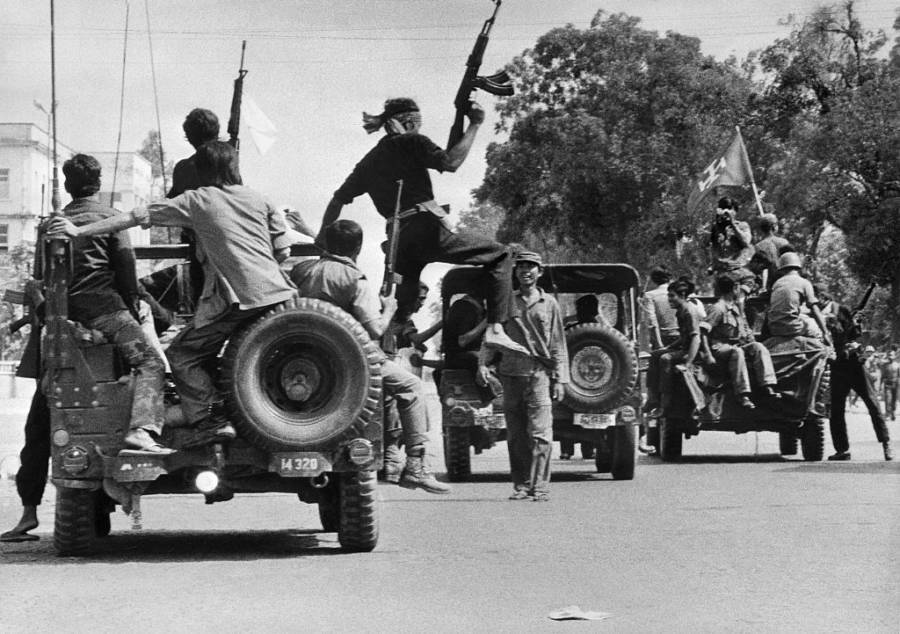
SJOBERG/AFP/Getty ImagesA photo from the day that Cambodia fell under control of the Khmer Rouge forces in 1975.
Even wearing glasses could put your life at risk.
The regime established concentration camps and security centers, with Tuol Sleng becoming the most infamous interrogation facility, where an estimated 17,000 to 20,000 people were tortured and executed. Starvation, disease, and forced labor killed many more in the agricultural communes.
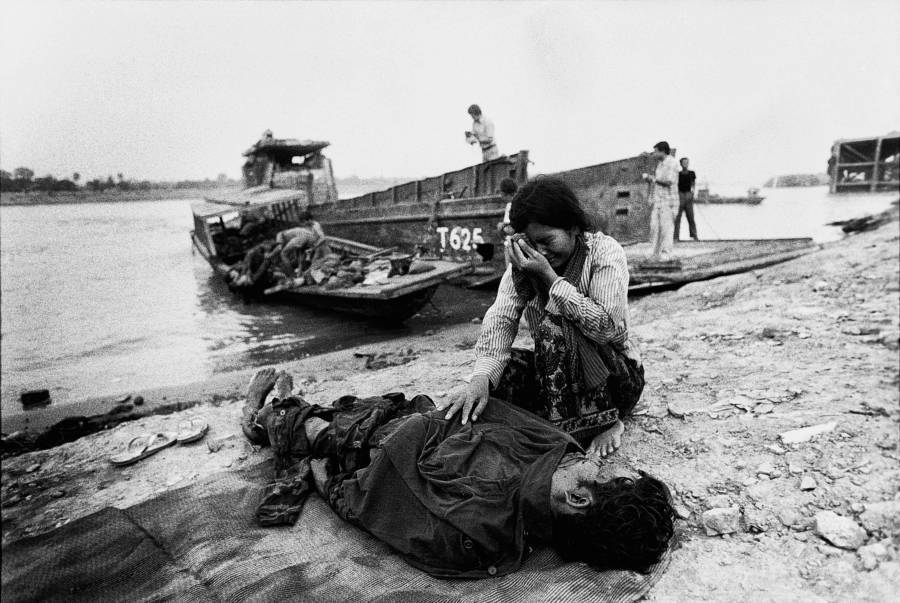
Roland Neveu/LightRocket via Getty ImagesA woman crying over the body of her dead husband, who was murdered by the Khmer Rouge.
From 1975 to 1979, an estimated 2 million people — nearly a quarter of the country’s population — died under Pol Pot’s regime. The genocide ended only when Vietnam invaded Cambodia in 1979, overthrowing the Khmer Rouge, and leading to the revelation of the full extent of the atrocities to the world.
Pol Pot died, reportedly from heart failure, in 1998, without ever facing justice for his crimes against humanity in Cambodia.
And unfortunately, that is often the case with dictators. The regimes fall, the surviving people are eventually liberated, memorials are erected to honor the murdered victims, but the men who orchestrated the mass suffering of millions of people often either die while in power, or at least in relative safety, or take their own lives to escape accountability.
It’s a stark reminder that sometimes, the law only applies to those who are too powerless to oppose it.
After reading about history’s deadliest dictators, go inside the tragic true stories of the nine deadliest days in American history. Then, discover the deadliest Mafia hitmen in history — and the gruesome stories behind them.