History’s Most Famous Explorers: George Mallory
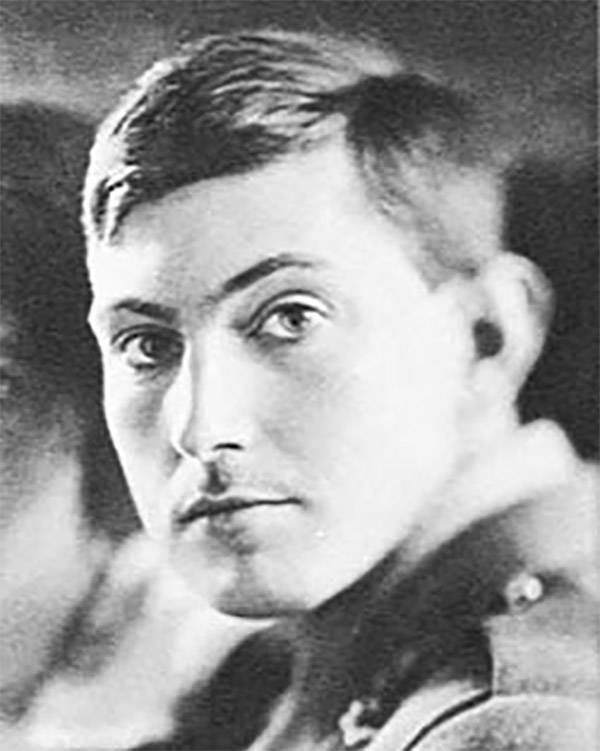
Wikimedia CommonsGeorge Mallory.
George Mallory was a pioneer in Mount Everest exploration. He became a member of the inaugural Mount Everest Committee in the U.K. and was a part of the first team of climbers to make a full-scale attempt at reaching the mountain’s summit.
The committee orchestrated three expeditions to Mt. Everest all of which Mallory was a part of. The first in 1921 was simply a reconnaissance mission for the purposes of mapping out the mountain and to figure out if there was a climbable path to the summit from the north side.
The second in 1922 was the first ever recorded summit attempt by a climbing team. Mallory was one of the first humans to climb beyond 26,000 feet on a mountain.
The third Mt. Everest expedition and second summit attempt that Malloy would make in 1924 would be his last. At 37-years-old, he suspected that this would be the last time he’d ever be given the chance to reach Everest’s summit anyway.
He and his climbing partner Andrew Irvine began their ascent from their C-6 high camp, which rests about 26,800 feet above the base, on the morning of June 8.
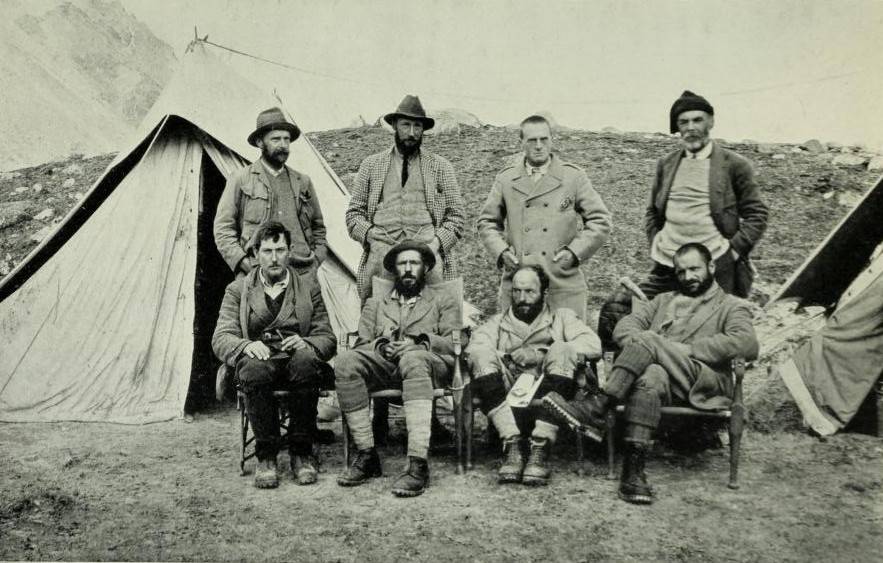
Wikimedia CommonsThe 1921 Mount Everest expedition group.
One of the members from their team claimed to have seen the duo climbing in the early afternoon that same day but eventually lost sight of them. It was the last time Mallory and Irvine were seen again.
The nature of Irvine and Mallory’s disappearance was widely debated once news hit home. Some even hypothesized that Mallory may have reached the summit, making him the first to do so.
Mallory’s body was discovered on Everest at 26,760 feet in 1999, and it was concluded that he had died from a bad fall. While there was no evidence on his person that indicated he had reached the summit, it was said that Mallory brought a camera with him on his final climb.
Explorers hoped that maybe if Mallory’s body was found, the camera would soon follow. But no such camera has been discovered.
John Franklin
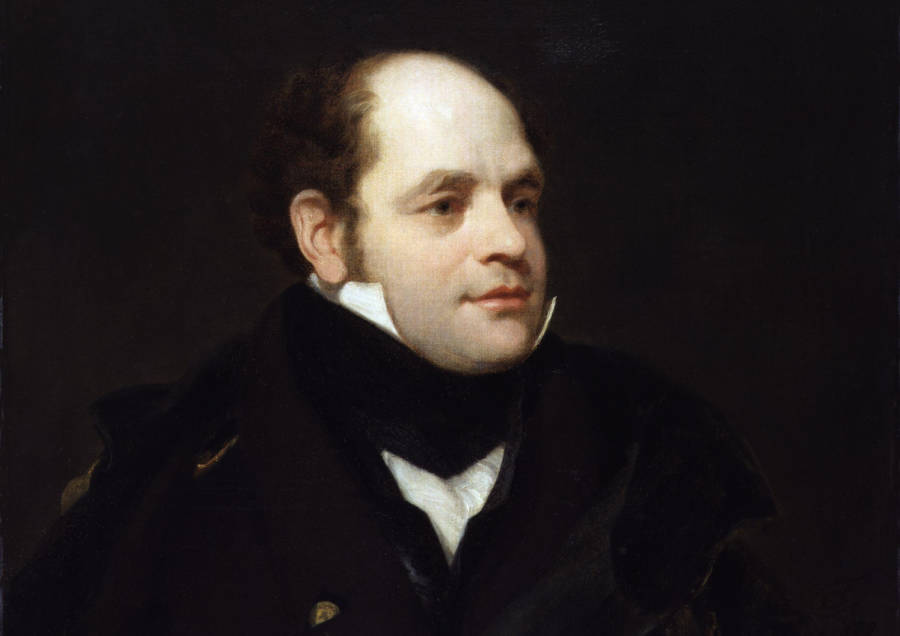
Wikimedia CommonsJohn Franklin
John Franklin knew from an early age that he wanted to spend his life out at sea, and by age 14 his father ensured him a spot in the British Royal Navy as a first-class volunteer aboard the ship Polyphemus.
Born in 1786 in Spilsby, England, Franklin departed for Copenhagen in 1801 aboard the vessel but was discharged shortly thereafter.
It was decided that Franklin was better suited for an expedition mission at sea as opposed to the Royal Navy. He’d embarked on a series of missions to Australia and South America before returning home to England in 1815 at the tail-end of the Napoleonic Wars.
Franklin believed that his naval career was as good as over until 1818 when the Royal Navy expressed interest in exploring the Arctic. Second Secretary of the Admiralty, Sir John Barrow, believed that a potential passageway in the Arctic could be lucrative for Britain in terms of trade with Asia.
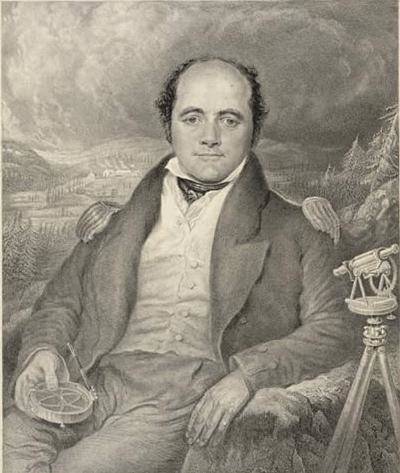
Wikimedia CommonsJohn Franklin.
Four navy ships were dispatched in the spring of 1818 to explore various corners of the North American Arctic. Franklin commanded the Trent, which was tasked with sailing over the North Pole via Greenland and Spitsbergen.
That first trip would prove unsuccessful, and a second attempt was made in 1819. Unfortunately for Franklin, that expedition would be even less successful than his first.
Franklin’s third voyage dispatched in 1845, when the Erebus and Terror left England for the west coast of Greenland. The expedition was the best-supplied Arctic voyage to date, with enough food on board to feed 134 men for three years.
The ships lasted until September 1846, when they were frozen in the frigid sea north of King William Island, and Franklin was eventually forced to abandon ship, after which the famous explorer was never seen again.