Warning: This article contains graphic descriptions and/or images of violent, disturbing, or otherwise potentially distressing events.
The Worst Murders In History: St. Valentine’s Day Massacre
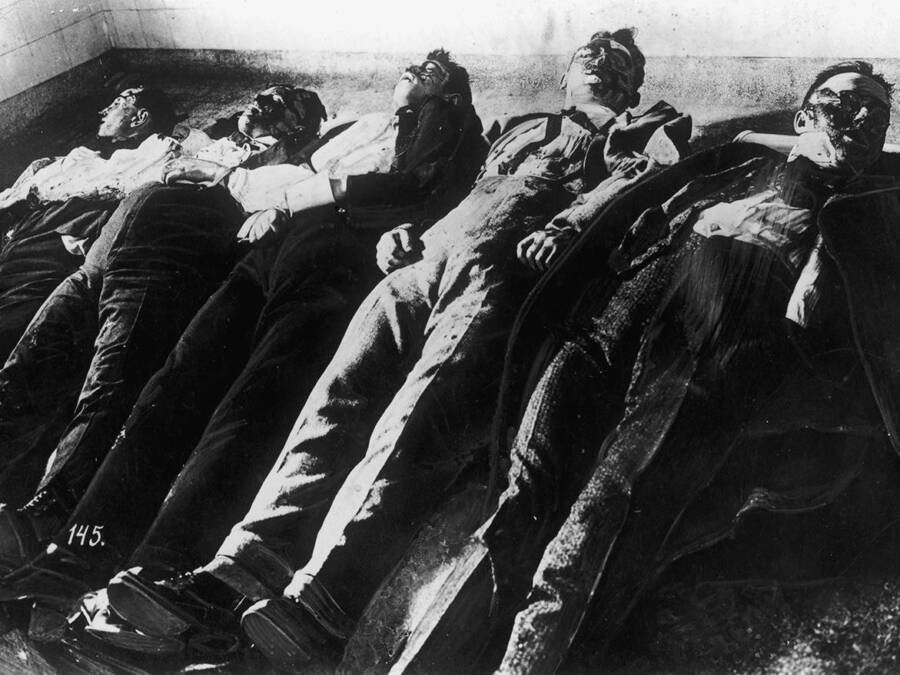
FPG/Getty ImagesOne of the grisliest photos of the St. Valentine’s Day Massacre, which shows five of the victims.
In the late 1920s, Chicago’s gang war came to a crescendo with the deaths of seven men. It was a bloody scene that would live on in infamy as the St. Valentine’s Day Massacre.
This grisly mob hit was organized by Al “Scarface” Capone as a way to get rid of his rival George “Bugs” Moran once and for all and cement himself as the top dog of the Chicago mob scene.
On the morning of Feb. 14, 1929, four of Capone’s men arrived at Moran’s warehouse where he illegally distributed liquor. It’s believed that Capone lured Moran to the warehouse by pretending that one of his bootlegging ventures in Canada needed assistance.
Five of Moran’s men answered Capone’s call, accompanied by two car mechanics. They filed into the warehouse, never imagining that Capone’s men were lying in wait.
As Albert Weinshank, the last of Moran’s men to arrive, exited his Cadillac sedan on the street and made his way into the warehouse, he was accosted by two police officers, who forced him inside. Moran’s men, believing they were being arrested, lined up against the wall, their backs to the police, all remaining silent so as to not out their boss.
The men who’d stopped them, though, weren’t police officers at all. They were two of Capone’s men in disguise.
Once Moran’s men were lined up against the wall, two more of Capone’s thugs, dressed in plain clothes, stepped inside with submachine guns in their arms. They riddled the men with bullets. Six of them died on the spot; but one lingered on painfully for hours until he slowly bled out on a hospital bed.
The plan’s original target, Bugs Moran, was never hit. The men had mistaken Weinshank for Moran; a mistake that saved Bugs Moran’s life.
Capone was the obvious suspect, but he ended up evading justice. No one was ever brought to trial for the murders. Capone never took credit for the violence and bloodshed during the St. Valentine’s Day Massacre.
The Lindbergh Baby
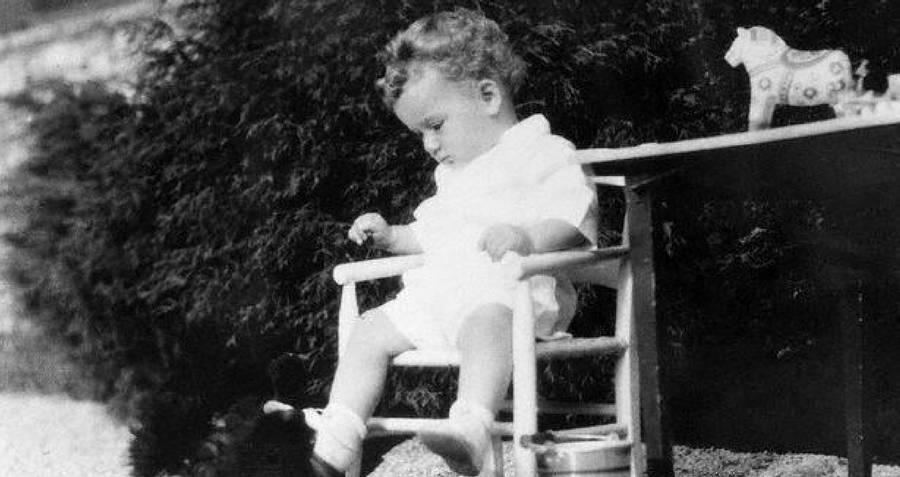
FBI ArchivesCharles A. Lindbergh Jr., the victim of the infamous Lindbergh kidnapping, sitting outside his home, several months before his abduction.
The heartbreaking kidnapping and death of 20-month-old Charles Augustus Lindbergh Jr. has gone down as one of the most famous murders in American history.
On March 1, 1932, Charles Lindbergh Sr., a famous aviator who achieved celebrity status when he flew solo across the Atlantic, heard a noise come from his kitchen that sounded like a wooden crate snapping closed. Just minutes later, the family’s nurse discovered that the Lindbergh baby was missing from his crib.
Lindbergh Sr. entered his son’s room and found a ransom note on the windowsill as well as a broken ladder outside of the window. The note demanded $50,000 in exchange for his son’s safe return.
Over the next three months, the Lindbergh family, with help from the FBI, desperately searched for the missing baby. Lindbergh Sr. even paid the enormous ransom request to his son’s kidnapper. The kidnapper, though, never held up his end of the bargain. Charles Lindbergh Sr. would never see his son alive again.
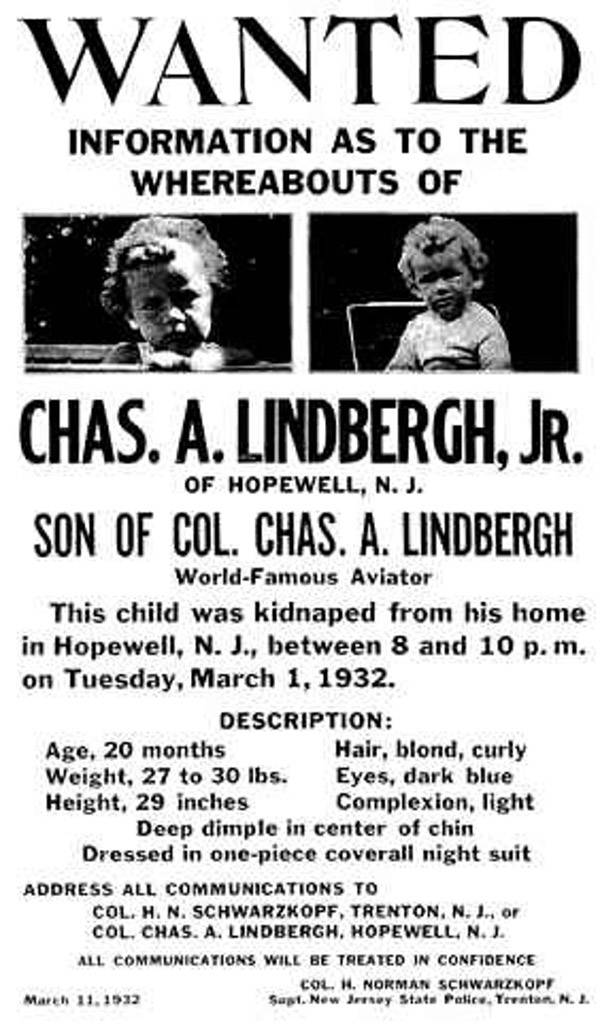
Wikimedia CommonsA wanted poster for the Lindbergh baby.
On May 12, 1932, more than two months after the Lindbergh baby first went missing, his tiny body was discovered dead just over a mile from his family’s mansion.
The boy had been dead for at least two months; it is believed that he died on the day that he was kidnapped. His skull had a hole in it and his bones had endured several other fractures. Some of the child’s body parts had even been chewed off. Animals, it appeared, had gotten to the body first.
In the end, the official culprit was identified as Richard Hauptmann, a German immigrant with a criminal record. Hauptmann was caught after using some of the ransom money.
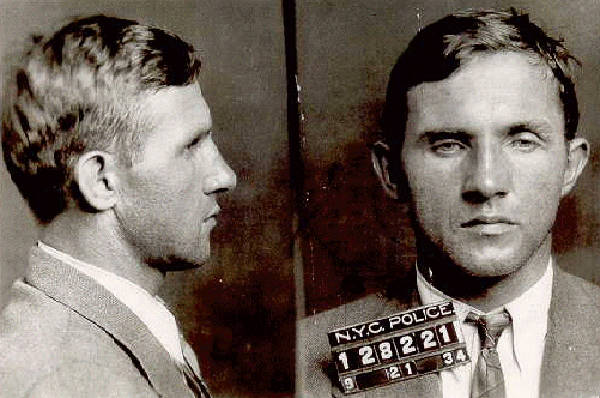
Flemington Police DepartmentThe man convicted of murdering Charles Lindbergh’s baby, Bruno Richard Hauptmann, opted for a final meal of chicken, buttered peas, French fries, olives, celery, cherries, and a slice of cake before his execution in 1936.
The media attention surrounding the Lindbergh baby’s kidnapping and subsequent trial was chaotic. In what was dubbed the “Trial of the Century,” Hauptmann was found guilty of the crime and sentenced to death. Hauptmann died in the electric chair on April 3, 1936.
The tragedy of the Lindbergh baby case pushed Congress to pass the Federal Kidnapping Act, which made transporting a kidnap victim across state lines a federal offense. The law is commonly referred to as the “Lindbergh Law.”