George Everest wasn't a mountaineer and never laid eyes on Mount Everest — so how did the world's highest mountain come to bear his name?
The world’s highest mountain has many names. In Nepal, it’s known as Sagarmāthā, which translates to “Goddess of the Sky.” Tibetans call it Qomolangma. But it’s best known in the Western world as Mount Everest, named for English surveyor George Everest.
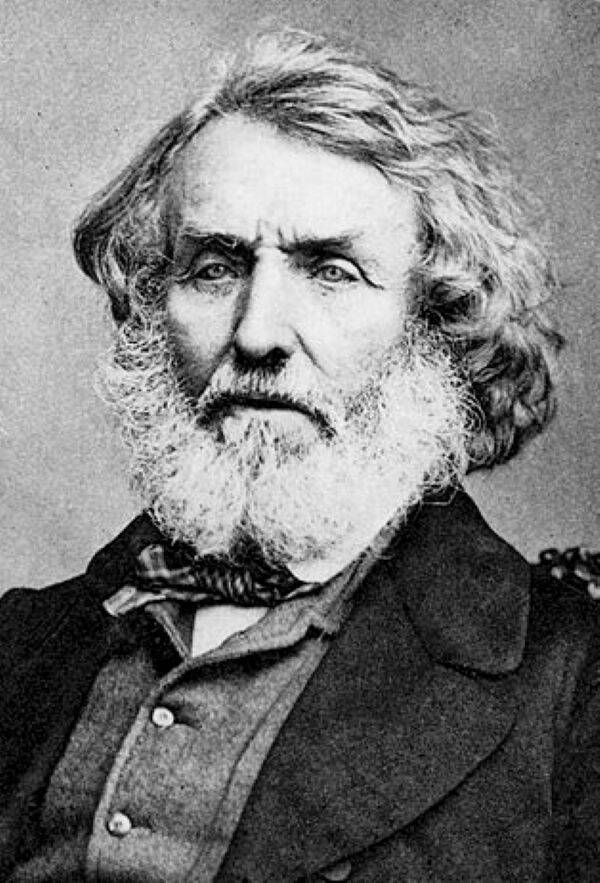
Public DomainGeorge Everest, the namesake of Mount Everest, circa the 1860s.
In the early 19th century, Everest spent three decades in India working on the Great Trigonometrical Survey, which aimed to accurately map the subcontinent. He was appointed Surveyor General of India in 1830, and he was responsible for hiring Andrew Scott Waugh and Radhanath Sikdar, both of whom were instrumental in identifying Everest as the highest mountain in the world.
Despite all of this, George Everest never actually laid eyes on Mount Everest. Still, Waugh — who succeeded Everest as Surveyor General of India — insisted that the mountain carry his mentor’s name.
Everest declined this honor, worried that the people of India would have trouble pronouncing his surname. Regardless of his protestations, however, the Royal Geographical Society officially settled on the name Mount Everest in 1865, permanently tying Everest’s legacy to a mountain he never set foot on.
George Everest’s Early Life And Move To India
Born in either Wales or England in 1790, George Everest had a fairly normal — if wealthier than average — childhood. He attended military school, and by the time he was 16, he’d joined the East India Company.
When he arrived in India in 1806, he served as a second lieutenant in the Bengal Artillery. Because of his propensity for math and astronomy, he was trained as a surveyor. By 1814, he’d been assigned to survey the island of Java, and his work there and along the Ganges River caught the attention of Colonel William Lambton, the leader of the Great Trigonometrical Survey.
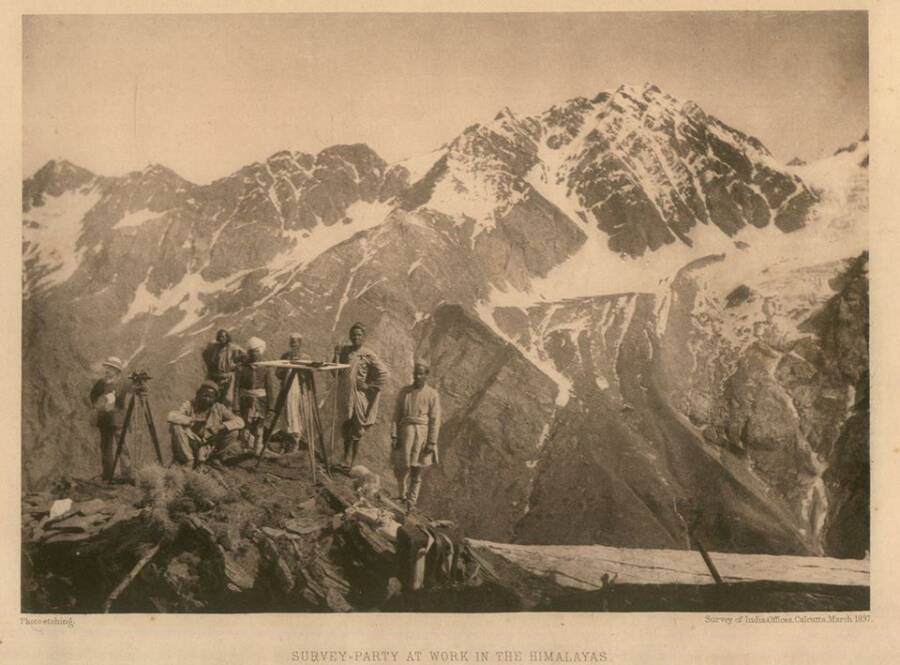
Public DomainA group of surveyors in the Himalayas in 1897.
The survey, which Lambton had started in 1802, aimed to map India with scientific precision. Lambton appointed Everest as his chief assistant in 1818, teaching him everything he knew about surveying.
Most of Everest’s work involved mapping the meridian arc that ran some 1,500 miles from Cape Comorin at the southernmost point of India to the border of Nepal. After a brief stint in South Africa to recover from malaria in 1820, Everest returned to India in 1821 to continue the project.
Two years later, William Lambton died — and the Great Trigonometrical Survey fell into the hands of George Everest.
Mapping The Indian Subcontinent
In 1823, Everest became the superintendent of the Great Trigonometrical Survey. He continued Lambton’s work, mapping central India in the present-day state of Madhya Pradesh. In 1825, however, he fell ill again, this time with rheumatism, and he was forced to return to England for five years.
Even on his sickbed, Everest kept working. He lobbied the East India Company for better surveying equipment, which would prove to be instrumental in completing the project.
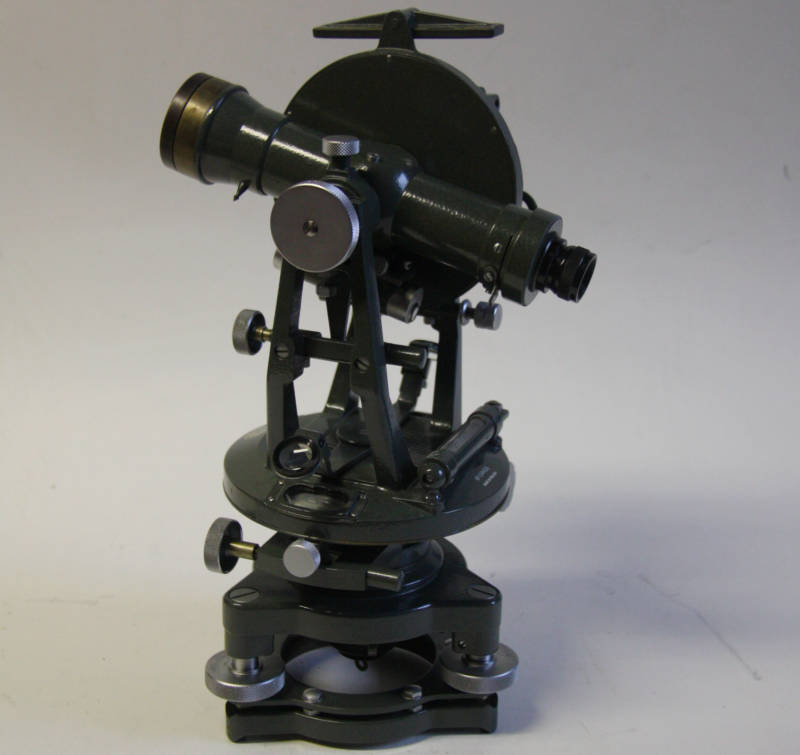
University of Dundee Museum CollectionsA primitive theodolite, similar to the surveying instruments used by George Everest’s teams to map the Indian subcontinent.
Upon his return to India in 1830, George Everest was appointed Surveyor General of India. He spent the next decade completing the survey of the meridian arc with the help of Andrew Scott Waugh, who joined the project in 1832.
By 1841, the meridian arc was mapped, and shortly after, Everest retired and recommended Waugh as his replacement. He returned to England in 1843, where he married a woman more than 30 years his junior and had six children.
In 1847, Everest published An Account of the Measurement of Two Sections of the Meridional Arc of India, a book that he surely thought would be his legacy. He couldn’t have imagined how wrong he was.
Becoming The Namesake Of Mount Everest
After George Everest’s retirement, Andrew Scott Waugh continued the Great Trigonometrical Survey, mapping the Indian Himalayas. In 1847, Waugh was observing Mount Kangchenjunga — which was considered the world’s highest mountain at the time — when he noticed a peak beyond it. He began to refer to it as “Peak B” and later “Peak XV.”
Then, in 1852, Indian mathematician Radhanath Sikdar officially calculated the height of Peak XV, determining it was the highest mountain in the world at 29,000 feet. (Today, Mount Everest is considered to be 29,032 feet tall, a difference of just 32 feet from Sikdar’s original calculation.)
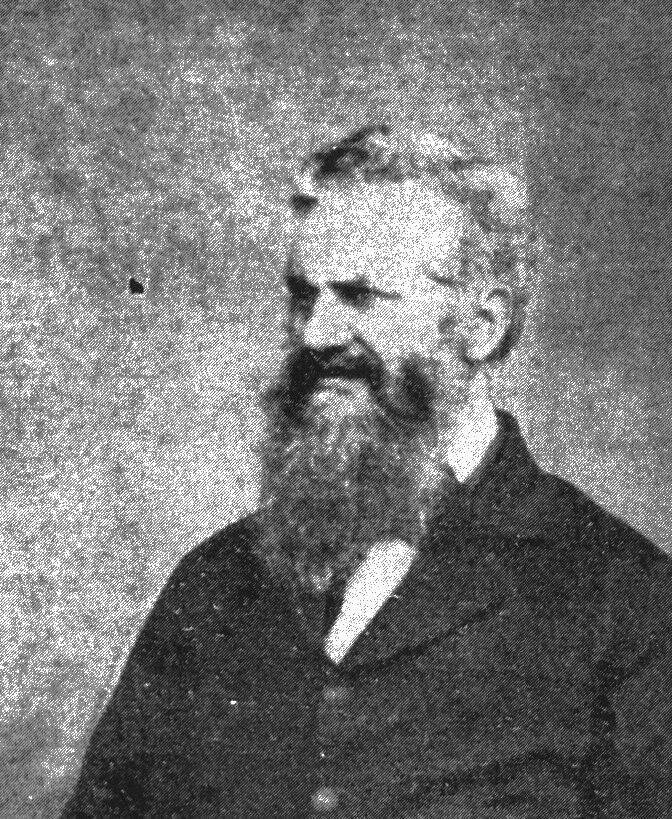
Public DomainAndrew Scott Waugh, the surveyor who first proposed naming the world’s highest mountain after George Everest.
Waugh wrote to the Royal Geographical Society announcing this discovery in March 1856. In the letter, according to HISTORY, Waugh declared:
“I was taught by my respected chief and predecessor, Colonel Sir George Everest, to assign to every geographical object its true local or native appellation. But here is a mountain, most probably the highest in the world, without any local name that we can discover, whose native appellation, if it has any, will not very likely be ascertained before we are allowed to penetrate into Nepal.”
At the time, most of Nepal and Tibet were closed to the British, and the Indians didn’t have a specific name for Peak XV. Thus, Waugh proposed naming it Mount Everest to “perpetuate the memory of that illustrious master of geographical research… [George] Everest.”
Everest himself objected to the proposition. He didn’t think that “the native of India” would be able to pronounce his surname or write it in Hindi. Still, the Royal Geographical Society officially settled on the appellation Mount Everest that same year.
Seeing his name on the world’s highest mountain wasn’t Everest’s only honor, though.
The Enduring Legacy Of George Everest
Throughout George Everest’s lifetime, he became a Fellow of the Royal Society, the Royal Asiatic Society, and the Royal Geographical Society. He was made a Commander of the Order of Bath and even knighted in 1861.
According to the Surveyors Historical Society, when Everest received an award from the Royal Astronomical Society in 1848, Sir John Herschel stated, “The Great Meridianal Arc of India is a trophy of which any nation, or any government of the world would have reason to be proud, and will be one of the most enduring monuments of their power and enlightened regard for the progress of human knowledge.”
George Everest died in 1866 at age 76 having never seen the mountain that bears his name.
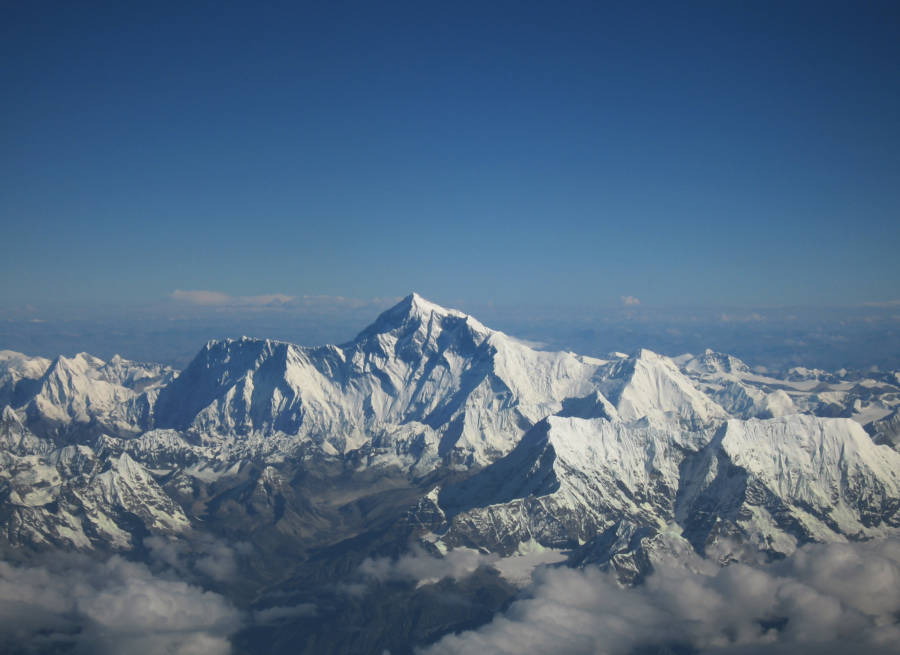
shrimpo1967/Wikimedia Commons Mount Everest as seen from Bhutan.
Today, Mount Everest is perhaps the most famous mountain in the world. Since Edmund Hillary and Sherpa Tenzing Norgay became the first people to reach Everest’s summit in 1953, more than 7,000 people have successfully climbed the peak.
Tragically, more than 340 others have died trying. Their bodies litter the mountain, serving as macabre landmarks for their fellow climbers. From Scott Fischer and Francys Arsentiev to Marco Siffredi and George Mallory, even the most experienced mountaineers have succumbed to Everest’s deadly conditions.
As such, George Everest’s legacy is one of perseverance, endurance, ambition, pride, disappointment, tragedy — and, above all, hope.
After reading about George Everest, go inside the story of Yuichiro Miura, the oldest person to ever climb Mount Everest. Then, learn about Rob Hall, the man who summited Everest five times — and then perished during his final descent.