The tiny village of Supai has a population of around 200 and can only be reached by foot, mule, or helicopter.

@madisonnuzzi/TikTokMadison Nuzzi’s view of Supai from atop the Grand Canyon.
The Grand Canyon is visited by around five million people every year. Still, there’s a unique aspect to the canyon that many tourists leave without noticing: the village that sits at the bottom of it, Supai.
In a video with over 12.2 million views, TikTok user Madison Nuzzi (@madisonnuzzi) shows a discovery she made while visiting the Grand Canyon.
“I was today years old when I learned there is a tiny village at the bottom of the Grand Canyon,” she writes in the text overlaying the video.
As the video continues, she zooms the camera in. Just like she promised, there does, in fact, appear to be a small town at the base of the canyon. The village has lush greenery and several visible houses — but seemingly no road leading to or from it. So, what is this place?
A Community Within The Grand Canyon
The Grand Canyon consistently ranks as one of the best and most beautiful landmarks in the United States. It’s hard not to be impressed: The canyon is bigger than the state of Rhode Island.
But of the five million people who make the trek to the landmark each year, only 20,000 or so visit Supai, the village at its base that serves as the capital of the Havasupai Indian Reservation.
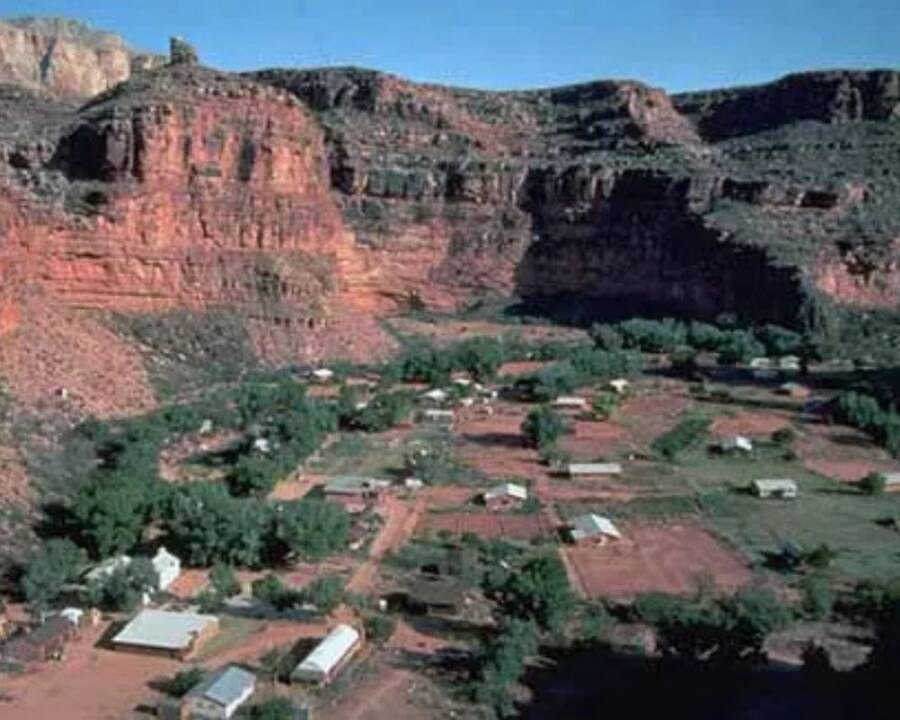
National Park ServiceSupai’s exact population is tough to determine due to census inconsistencies, but it has historically ranged from 200 to 500.
The Havasupai people have lived in the region for more than 1,000 years. The tribe once had settlements in the plateaus of Arizona, but over the decades, the U.S. government pushed the Havasupai deeper and deeper into the canyon.
Today, Supai has a population of at least 200. The town is complete with houses, a school, a church, a cafe, a convenience store, and even a post office.
However, the closest road is eight miles away, and it can only be reached by mule or helicopter. The village receives frequent food deliveries — via mule — from the closest town of Peach Springs, Arizona, which keeps a walk-in freezer in its post office specifically to store provisions for Supai’s residents.
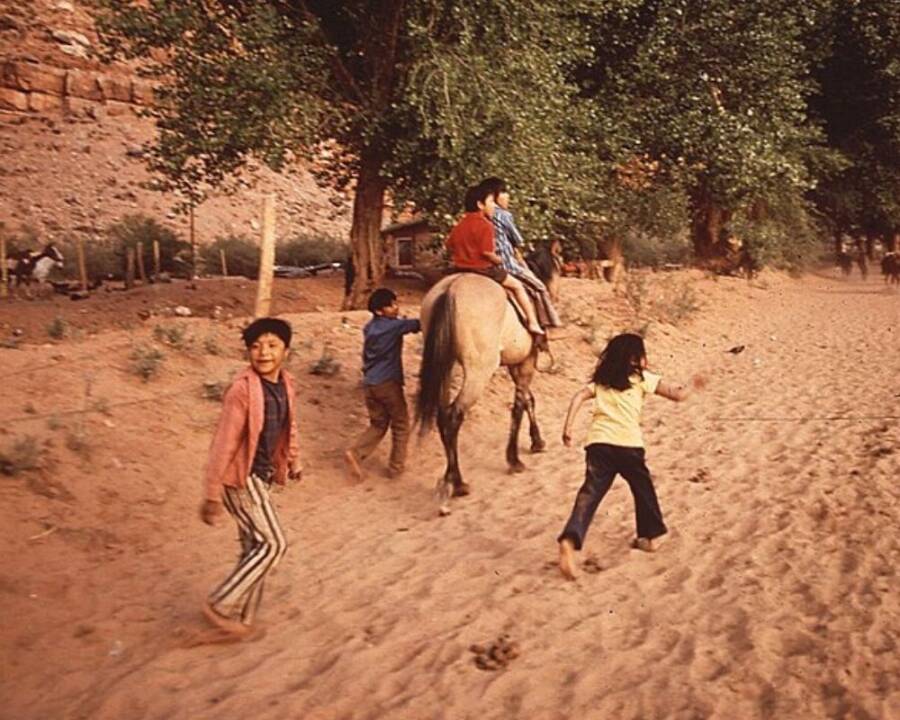
Public DomainThe Havasupai people who call Supai home have lived in the region for centuries.
Due to its remote location in the desert, Supai relies heavily on tourism for an income — but how do visitors even get there?
Inside Supai’s Thriving Tourism Industry
Visiting Supai is difficult, but it is possible. However, visitors can’t simply take a hike into the village, look around, and leave. Instead, there is a process that all tourists must follow to spend time in Supai.
To start, hikers must apply for a permit — though that doesn’t mean that they’ll actually get one. The National Park Service notes that there are many more requests for reservations and campground spaces than available spots. As a result, anyone who wants to visit Supai is encouraged to book a spot months in advance.
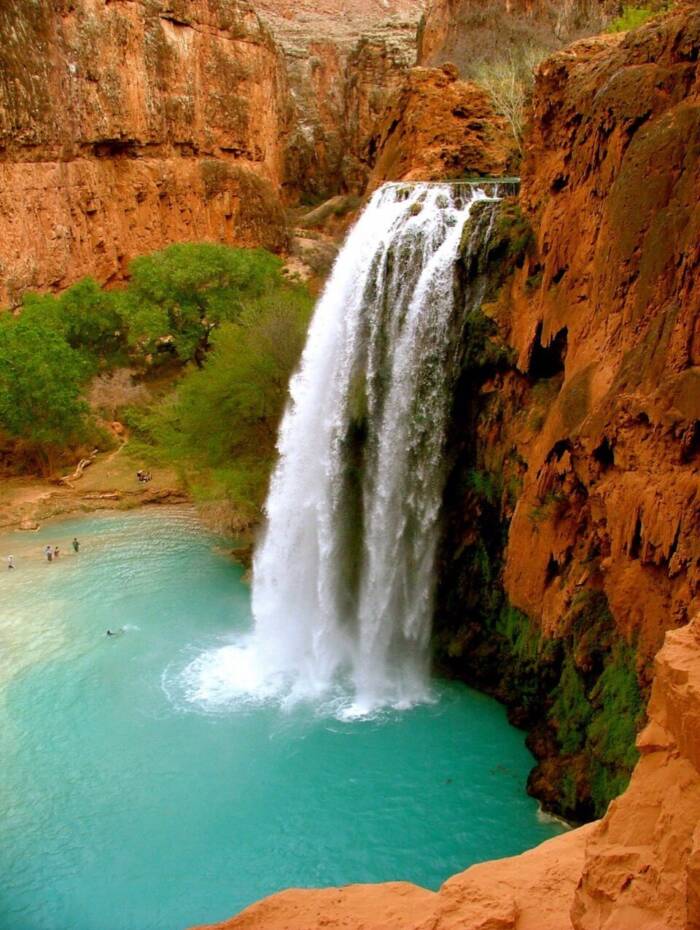
Brent Sisson/Wikimedia CommonsThe word Havasupai translates to “People of the Blue-Green Waters,” a name taken from the stunning waterfalls near Supai.
Bookings are only available for three nights at a time, either at a campground or in the town’s lodge. While in Supai, tourists can see the area’s famous blue-green waterfalls — from which the Havasupai tribe takes its name — as well as the incredible natural landscape of the Grand Canyon.
Those who do not want to make the eight-mile hike or ride in a helicopter, however, can simply enjoy the view of Supai from above, just like Nuzzi did.
@madisonnuzzi UM how cool is that. Such a cool view from above #grandcanyon #grandcanyonvillage
All That’s Interesting reached out to Nuzzi via email and Instagram direct message.
After reading about the village of Supai, look through 33 vintage photos from the Grand Canyon’s historic Kolb Studio. Then, learn about Cochise, the Apache leader who fought for his tribe’s freedom.