While on an expedition along the Congo River in 1888, James Jameson traded six cloth handkerchiefs for an enslaved girl, handed her over to cannibals, and then sketched the gruesome scene that unfolded in front of him.
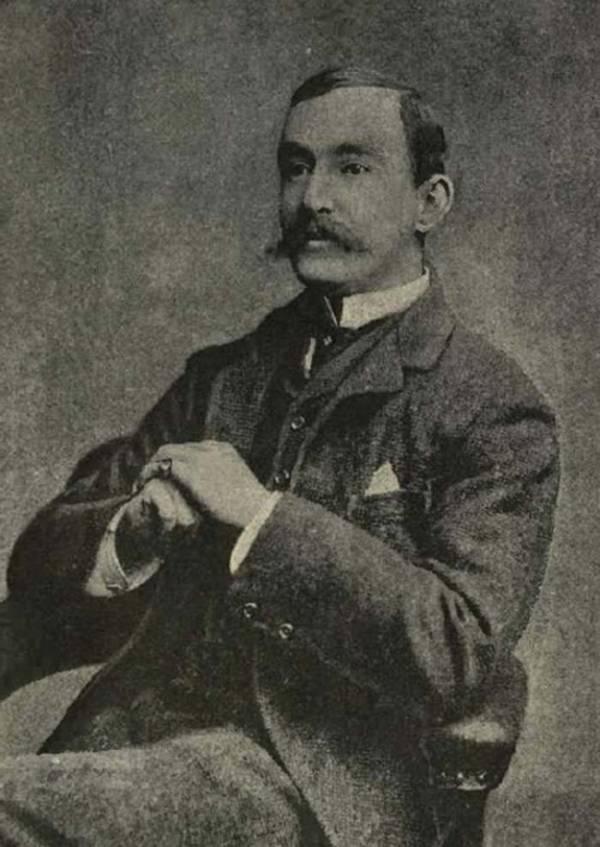
Public DomainJames Sligo Jameson, the whiskey heir and Scottish naturalist who handed a young girl over to African cannibals in 1888.
James Jameson was a prolific traveler, an accomplished naturalist, and the grandson of one of the founders of Jameson Irish Whiskey. He was also fascinated by cannibalism.
During an expedition to Africa in the 1880s, Jameson purchased a 10-year-old girl from a slave trader and handed her over to cannibals just so he could watch them eat her. He even sketched the gruesome scene and proudly shared the drawings with anyone who asked.
Jameson later tried to claim that he didn’t think the Africans were actually going to eat the little girl, but other men on the expedition called his bluff. The naturalist didn’t live long enough to defend himself, though.
James Jameson died after spiking a high fever just a few months later, on August 17, 1888, at age 32. Today, despite his work in ornithology and famous family connections, he’s best remembered for the needless act of violence he incited along the Congo River.
James Jameson’s Journey To Africa
Born in Alloa, Scotland, on August 17, 1856, James Sligo Jameson was a grandson of whiskey distiller John Jameson. He was also the uncle of Guglielmo Marconi, the man credited with inventing the radio.
After completing his education, Jameson began traveling, visiting Ceylon (now known as Sri Lanka), Singapore, and Borneo in 1877. While in Southeast Asia, he became the first person to scientifically describe the black honey buzzard.
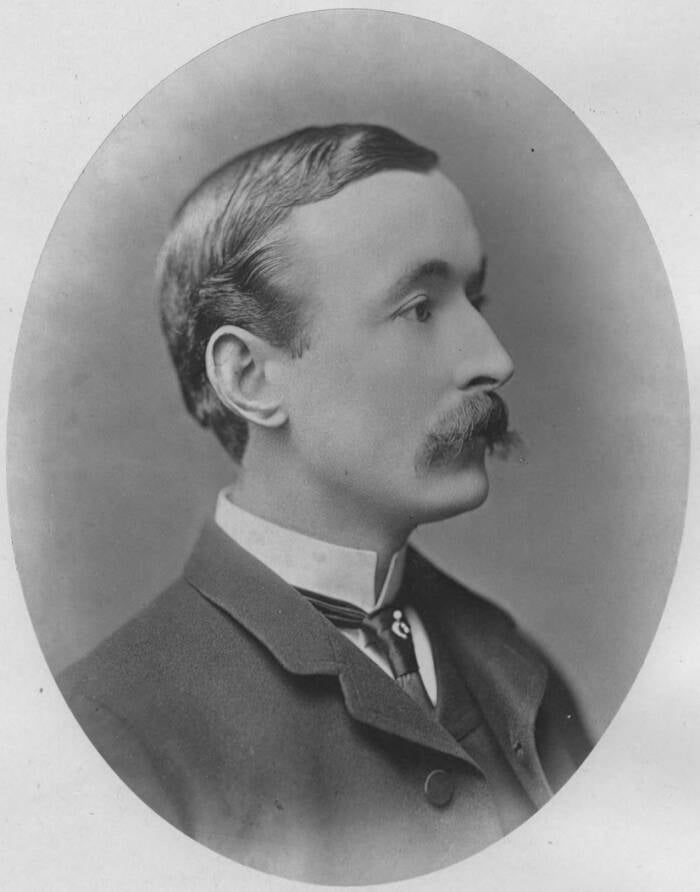
Public DomainA portrait of James Sligo Jameson taken shortly before he set off on his expedition to Africa in 1887.
The following year, Jameson headed to Africa for the first time, hunting big game in South Africa and making his way north toward Zimbabwe, collecting animal heads to take back to Scotland. He hunted in the Rocky Mountains, too, before settling down to marry and have two children.
Jameson couldn’t stay still for long, though. In 1887, he joined the Emin Pasha Relief Expedition as a naturalist. Led by Henry Morton Stanley, the expedition aimed to cross “Darkest Africa” — and potentially annex new territories for Britain — beginning in the Democratic Republic of the Congo and following the Congo River to East Africa.
Their other goal was to rescue Emin Pasha, an Ottoman physician and the governor of Equatoria (far southern Sudan). He faced threats from the Mahdists who had taken over the rest of Sudan, separating Equatoria from Egypt.
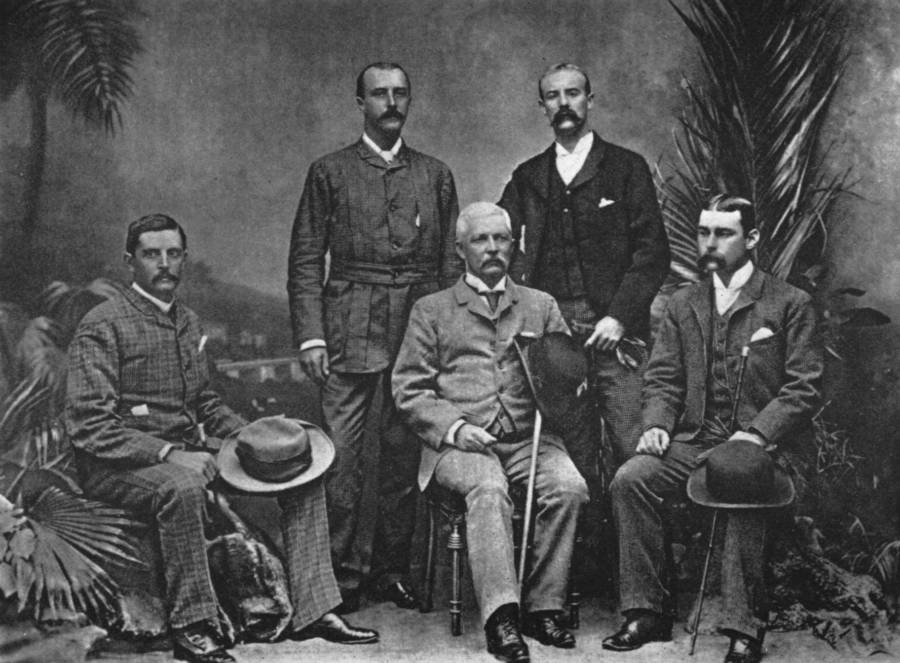
Public DomainHenry Morton Stanley (center) with other officers of the Emin Pasha Relief Expedition.
So, in March 1887, Jameson and nearly 700 other men set out from the western African port city of Banana and headed inland. Even from the earliest days of the expedition, the naturalist’s team members noticed that he seemed fascinated by the concept of cannibalism.
But it wasn’t until May 1888 that Jameson got to witness the grisly act for himself.
Cannibals Eat A 10-Year-Old Girl
Throughout the second half of 1887 and the first few months of 1888, James Jameson and his fellow team members made their way up the Congo River. They formed a relationship with Tippu Tip, a notorious African slave trader, who sent men to help the Europeans carry supplies.
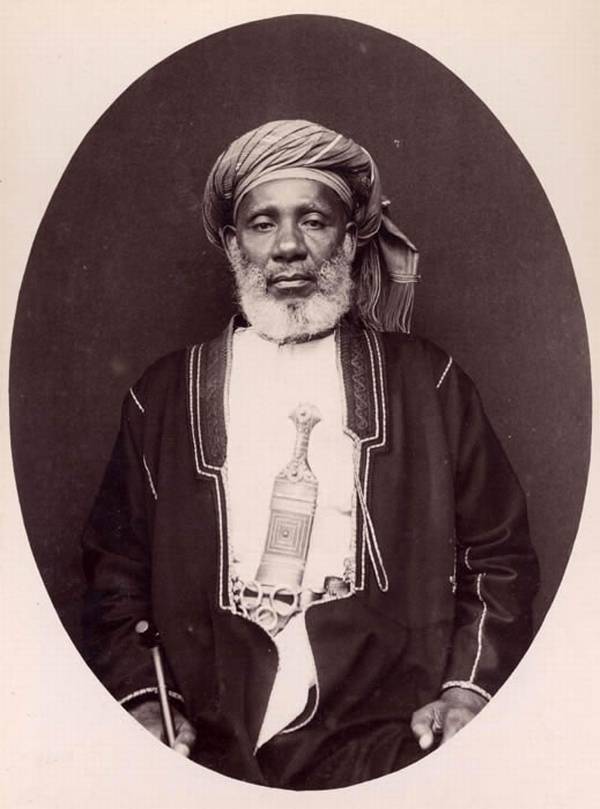
National Maritime Museum, Greenwich, London, Michael Graham-Stewart Slavery CollectionTippu Tip circa 1890, just after he worked with James Jameson and other members of the Emin Pasha Relief Expedition.
However, this connection to Tippu Tip proved to be detrimental to the expedition. Local villagers along their route refused to trade with them, as they’d been personally victimized by Tippu’s slave raids. So, Jameson and his comrades took to kidnapping African women and children and holding them ransom until their communities handed over food.
Jameson himself wrote in his diary on July 22, 1887: “We finished our last plantain to-day, and have only two more fowls left, a kid and a goat; I see no chance in getting any more, for the natives do not trade, or offer to, in the least. As a last resource we must catch some more of their women.”
The naturalist also spent this time identifying various birds and insects. Some of these creatures were named after him, such as Jameson’s antpecker, Jameson’s firefinch, and Jameson’s wattle-eye.
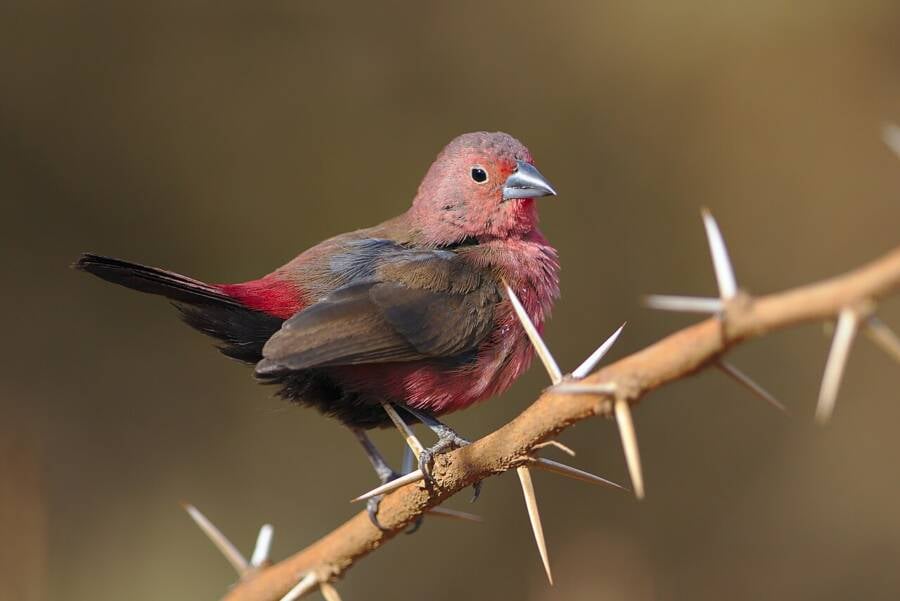
Derek Keats/Wikimedia CommonsJameson’s firefinch, an African bird described by and named after James Jameson.
Then, in May 1888, the expedition reached the central forests of the Democratic Republic of the Congo. Jameson was near the village of Yambuya with Tippu Tip when he witnessed residents dancing. Tippu informed him that such celebrations typically ended in cannibalism.
As Jameson wrote in his diary, “I told [Tippu Tip] that people at home generally believed that these were only ‘travellers’ tales,’ as they are called in our country, or, in other words, lies. He then said something to an Arab called Ali, seated next to him, who turned round to me and said, ‘Give me a bit of cloth, and see.'”
He purportedly thought the men were joking, so he sent his assistant to fetch six handkerchiefs. Then, however, “a man appeared, leading a young girl of about 10 years old by the hand.” She had recently been captured during a slave raid in a nearby village.
James Jameson recorded the gruesome sequence of events that proceeded to unfold in front of him:
I then witnessed the most horribly sickening sight I am ever likely to see in my life. He plunged a knife quickly into her breast, twice, and she fell on her face, turning over on her side. Three men then ran forward, and began to cut up the body of the girl; finally her head was cut off, and not a particle remained, each man taking his piece away down to the river to wash it. The most extraordinary thing was that the girl never uttered a sound, nor struggled, until she fell.
So, did Jameson really believe it was all a joke? Or — as his fellow expedition members claim — did he just want to see cannibalism firsthand?
The Truth Behind The Macabre ‘Jameson Affair’
“Until the last moment, I could not believe that they were in earnest,” Jameson wrote in his diary. “I could not bring myself to believe that it was anything save a ruse to get money out of me, until the last moment.”
He made several sketches of the scene after returning to his tent — though some who were familiar with the so-called “Jameson Affair” say that he started the drawings as the horrific event was still taking place.
Assad Farran, James Jameson’s interpreter during the expedition, gave an affidavit about the incident two years later. As reported by The New York Times in November 1890, Farran stated, “The man who had brought the girl said to the cannibals: ‘This is a present from a white man who desires to see her eaten.'”
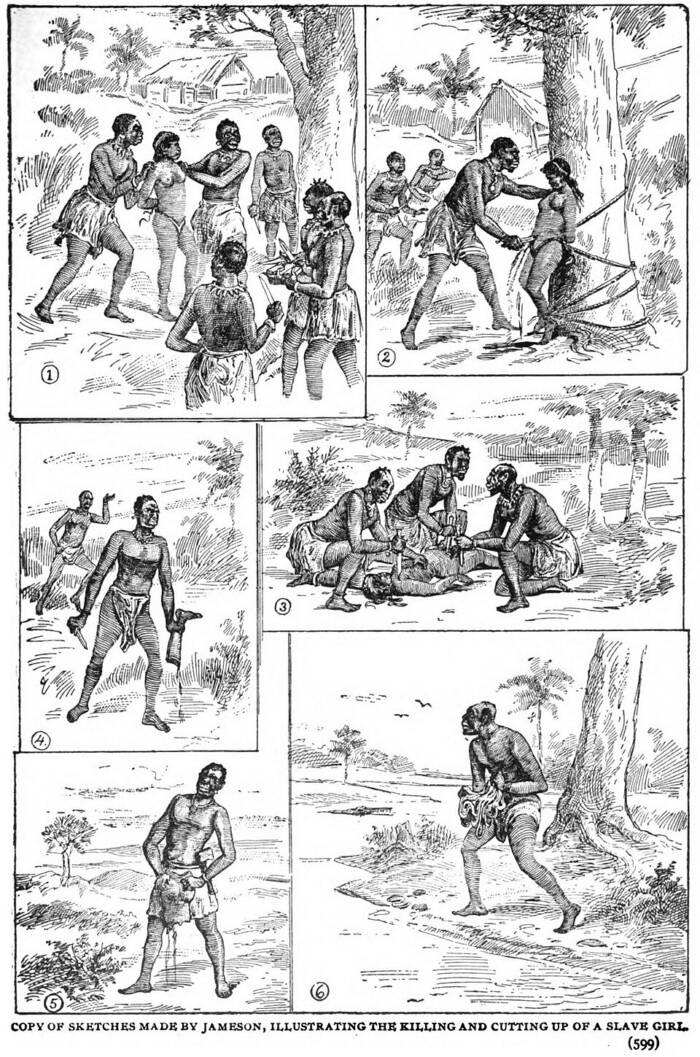
Public DomainAn 1890 recreation of James Jameson’s sketches of the cannibals.
Farran went on to describe how the girl was tied to a tree and stabbed before the cannibals cut pieces off of her corpse. “Jameson in the meantime,” said Farran, “made rough sketches of the horrible scenes. Then we all returned to the chief’s house. Jameson afterward went to his tent, where he finished his sketches in water colors.”
Jameson reportedly delighted in showing off these sketches to his companions — which only strengthens the argument that he knew very well what was going to happen when he handed over the handkerchiefs that day in May 1888. However, Jameson never faced justice for his actions, even though they were controversial among his own men at the time.
James Sligo Jameson died just three months later, on August 17, 1888, at age 32, after developing a high fever. He was buried on an island in the Congo River.
His diaries from the expedition were published posthumously, both securing his legacy as a celebrated naturalist and throwing his work into controversy. Many have suggested that the birds named for Jameson should be given new monikers. In the end, this whiskey heir who could have gone down in history for his contributions to ornithology is instead remembered for his unimaginable cruelty.
After reading about the controversial life of James Jameson, learn what human meat tastes like. Then, go inside Stalin’s horrific “Cannibal Island.”