Made by both humans and animals two millennia ago, these prints were uncovered due to shifting dunes along Lunan Bay in Angus, Scotland.
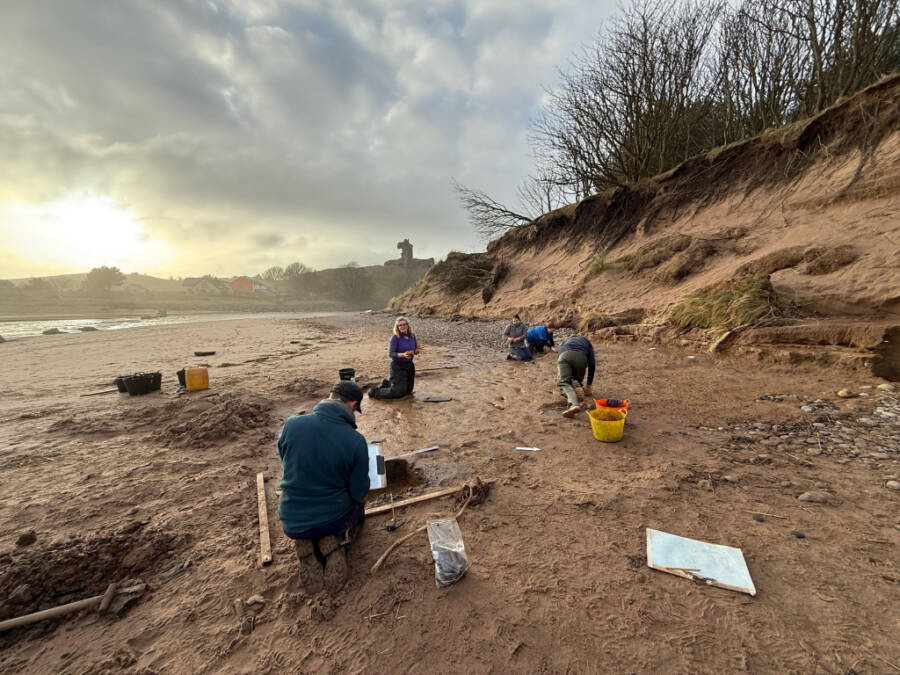
University of AberdeenArchaeologists had to race against time to document the footprints before the sea swallowed them up.
In the aftermath of violent storms in eastern Scotland, two locals took their dogs for a stroll on the beaches of Lunan Bay along the Angus coast. While walking, they noticed that the storm had kicked up a layer of sand — revealing human and animal footprints from thousands of years ago.
Archaeologists hurried to the scene, though they only had a narrow window to document and examine the footprints before they were destroyed by the rising tides. During their analysis, they determined that the footprints were roughly 2,000 years old, dating to the time of the Roman invasion of Scotland.
Documenting The 2,000-Year-Old Footprints Found Along Scotland’s Lunan Bay
According to a statement from the University of Aberdeen, the footprints were spotted by a pair of locals, Ivor Campbell and Jenny Snedden, who decided to take a walk along the beach following a series of recent storms. While strolling with their dogs, Ziggy and Juno, Campbell and Snedden noticed that the storms had shifted the sands on the beach, exposing a layer of clay. And within the clay was a set of distinctive markings that looked like footprints.
Campbell and Snedden called council archaeologist Bruce Mann, who realized the possible significance of the discovery — as well as the need to document it before the tide rose again. He notified archaeologists at the University of Aberdeen, who sped to the scene to examine the exposed clay.
“We knew we were dealing with a really rare site and that this discovery offered a unique snapshot in time – but it was also clear that the sea would soon take back what had so recently been revealed,” said University of Aberdeen archaeology professor Kate Britton.
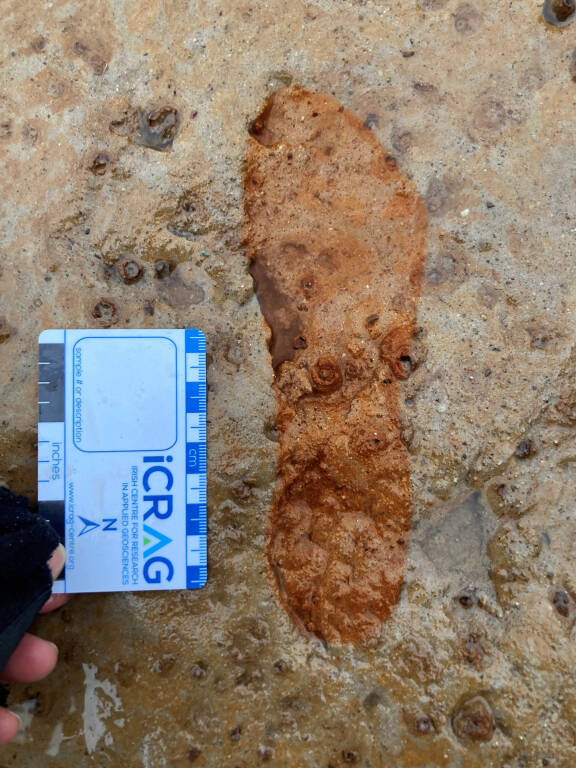
University of AberdeenA 2,000-year-old footprint found in the clay along Lunan Bay.
The incoming tide wasn’t the only challenge that the archaeologists faced. As they worked, 55 mile-per-hour winds whipped along the beach, stirring up loose sand and further damaging the delicate site.
“We had to work fast in the worst conditions I’ve ever encountered for archaeological fieldwork,” Britton recalled. “[T]he sea was coming in fast, with every high tide ripping away parts of the site, while wind-blown sand was simultaneously damaging it. We were effectively being sandblasted and the site was too, all while we were trying to delicately clean, study and document it, so it became a race against the elements.”
“And, within 48 hours,” she said, “the entire site was destroyed.”
But the archaeologists succeeded in documenting the footprints, which included both human prints and prints from animals like deer. And after examining these discoveries more closely, archaeologists realized just how incredible they truly were.
Footprints From The Era Of The Roman Invasion Of Scotland
By studying plants that were preserved just beneath the footprints, archaeologists determined that the prints were roughly 2,000 years old — and thus had been made “around the time of Boudicca, Jesus, and the height of the Roman Empire.”
Specifically, archaeologists suspect that the prints were made around the time of the Roman invasion of Scotland, and shortly before the rise of the ancient Scottish people known as the Picts.

Wikimedia CommonsA depiction of a Pict warrior, as described by the Romans who encountered them.
“This is a real tangible link to the region’s past,” said team member Gordon Noble, an archaeology professor at the University of Aberdeen. “The late Iron Age dates are in keeping with what we know about the rich archaeology of nearby Lunan Valley. It’s very exciting to think these prints were made by people around the time of the Roman invasions of Scotland and in the centuries leading up to the emergence of the Picts.”
It’s not the first time that changing tides have revealed lost chapters of history. Last year, waves in Hawaii washed away sand and revealed centuries-old petroglyphs carved into the rock. And in Scotland, archaeologists suspect that other sandy beaches may conceal former muddy estuaries, where ancient people and animals once walked.
As such, though the Lunan Bay site was short-lived, it offered up an incredible look into Scotland’s ancient past. And archaeologists are grateful that the dog-walkers, Campbell and Snedden, happened to spot the exposed clay.
“It was a powerful reminder that some of the most important discoveries start with someone noticing something and choosing to report it,” said Mann. “What came next was a race against time… Standing there, watching the site being destroyed as the waves crashed over it, was heartbreaking in some ways, but at least we got the chance to record most of it.”
After reading about the Roman-era footprints found on a beach in Scotland, go inside the reasons behind the fall of the Roman Empire. Then, discover the stories of some of the worst Roman emperors, from Caracalla to Caligula.