During the last decade of Elvis Presley's life, he became increasingly dependent on his doctor George "Dr. Nick" Nichopoulos — who supplied the King with thousands of prescriptions.
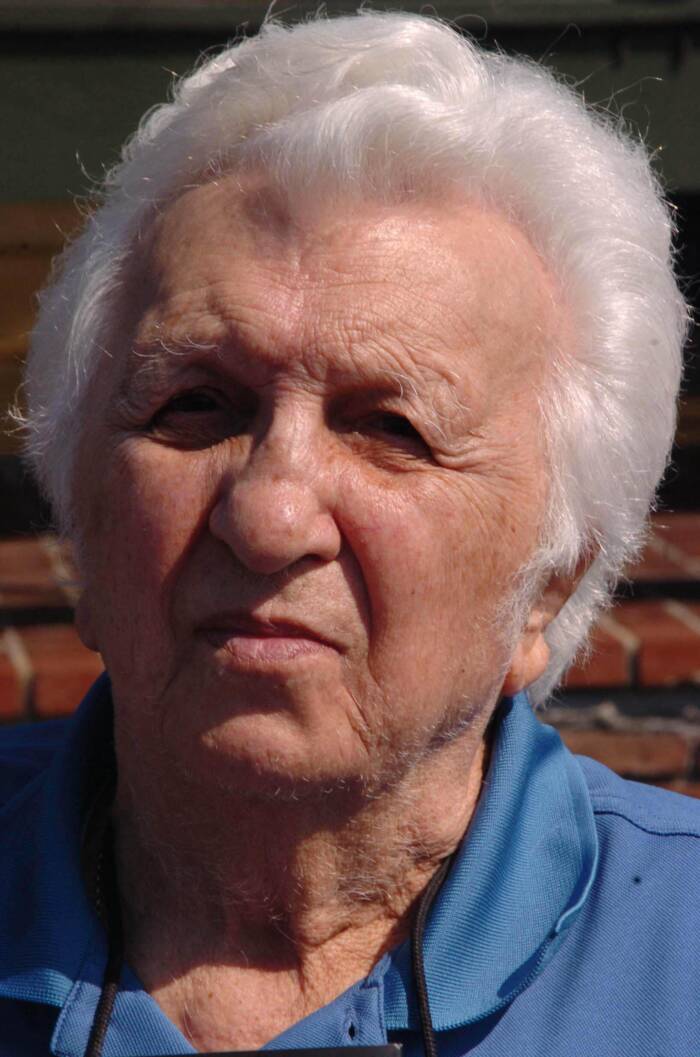
ZUMA Press, Inc./Alamy Stock PhotoGeorge “Dr. Nick” Nichopoulos, Elvis Presley’s personal doctor.
In his final years, Elvis Presley was in noticeably poor health. Although he had initially tried to avoid using any drugs, his time in the army had introduced him to amphetamines, and since these were prescription drugs, not street drugs, the rock star convinced himself it was safer. By the 1970s, however, he had expanded his drug intake to a number of other medications.
And, of course, someone had to write the prescriptions.
That person was usually George Nichopoulos, a.k.a. “Dr. Nick,” Elvis Presley’s personal physician. Nichopoulos once described Presley as “a person who thought that as far as medications and drugs went, there was something for everything.” So, for the last decade of Presley’s life, Dr. Nick supplied the King with drugs while developing a controversial friendship with him.
Even as Presley’s behavior grew more and more bizarre — and even after he suffered two overdoses in 1973 — Dr. Nick controversially continued to supply the prescriptions. By this point, Presley had gained a substantial amount of weight, his health had deteriorated, and on August 16, 1977, he died at his Graceland home. George Nichopoulos was the one who signed the death certificate. Some fans would argue he had been signing it over and over again each time he wrote Presley a prescription.
Although Dr. Nick was ultimately acquitted of any crime in regard to Elvis Presley’s death, the fact remains that in the 31 months leading up to that tragic day, the doctor had prescribed him 19,000 doses of drugs, including sedatives, amphetamines, and narcotics. Chillingly, the final prescription was written just 12 hours before Presley’s untimely demise.
So, was George Nichopoulos partly to blame?
How Dr. Nick Met The King
It’s not every day that you’re introduced to one of the most famous men on the planet, but the meeting between George Nichopoulos and Elvis Presley began with nothing more than a simple call. At that time, in 1967, the girlfriend of the DJ George Klein — a friend of Presley’s — was working in Nichopoulos’ office. So, when Presley got “saddle sore” after riding horses at the Circle G Ranch, he was recommended to call Nichopoulos.
“I went all the way up to the damn ranch, three times!” Dr. Nick told Andrew Hearn in an interview that was later archived by Elvis Australia. “I went all the way out there to take a look, and he asked if I wouldn’t mind stopping by Graceland to take a look at his grandma.”
But after Dr. Nick went from the ranch to Graceland, Elvis called him back out two more times. It wasn’t for anything serious. Nichopoulos, who was supposed to be on call at his practice, didn’t think much of it.
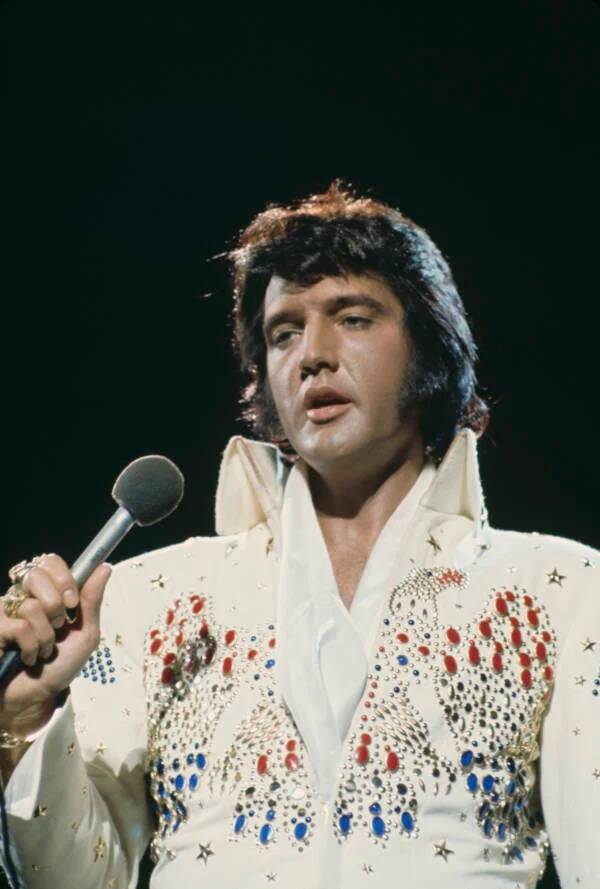
Fotos International/Archive Photos/Getty ImagesElvis Presley, pictured in 1973.
“He just liked having new people around, just someone new to talk to,” Nichopoulos said. “He’d get tired of the same people, some of the guys. He’d get tired of their conversations too. He loved to talk about a lot of things.”
Nichopoulos, who had spent much of his life in the South even though he had been born in Ridgway, Pennsylvania, on Oct. 29, 1927, found himself frequently departing from his Memphis office to treat Presley.
Eventually, when it came time for Presley to go on tour, he asked Nichopoulos to tag along — not just for his sake, either. Dr. Nick said he was looking after about 150 people associated with Presley while on the road. And although Nichopoulos was never officially on the payroll during the tour, he and Presley worked out a system so he would be paid the same amount that he would have made while he was in the office for that time period.
Before long, he became Elvis Presley’s personal physician.
“It was demanding,” Nichopoulos said. “When we were home, I’d still see Elvis probably five or six days out of the week. Every night on the way home, I’d go by his house just to check on him or just to sit and talk.”
How Elvis Presley’s Drug Abuse Escalated
George Nichopoulos told The Guardian in 2002 that he had initially been treating Elvis Presley for insomnia. Presley’s sleep issues had worsened after his mother’s death and his time in the army. Paired with his amphetamine use, this made it increasingly difficult to properly manage his sleep.
Nichopoulos didn’t get Presley started on drugs. By the time they met, the King was already taking Tiunal, Desbutal, Escatrol, and, soon enough, Placidyl. Eventually, Presley started sending other associates to Vegas to procure even more intense drugs for him, which started to affect his personality and eventually caused tension between him and Nichopoulos.
“I don’t know where he was getting it from, not that kind of thing anyway,” Nichopoulos remarked. “Elvis called me everything imaginable and another doctor went on the next tour. The new doctor changed the medicine around that I was giving him and the stuff that he gave him was a heavy tranquilizer… Elvis just couldn’t wake up.”
Other doctors were more than happy to give Elvis Presley whatever drugs he wanted at anytime he wanted. Dr. Nick said he felt a responsibility to keep him relatively stable, at least in comparison to other personal physicians.
“No one understands that Elvis was so complicated,” Nichopoulos told The Daily Beast in 2009. “I worked so hard just to keep things together and then they turned the tables on me after he died and decided I was to blame.”
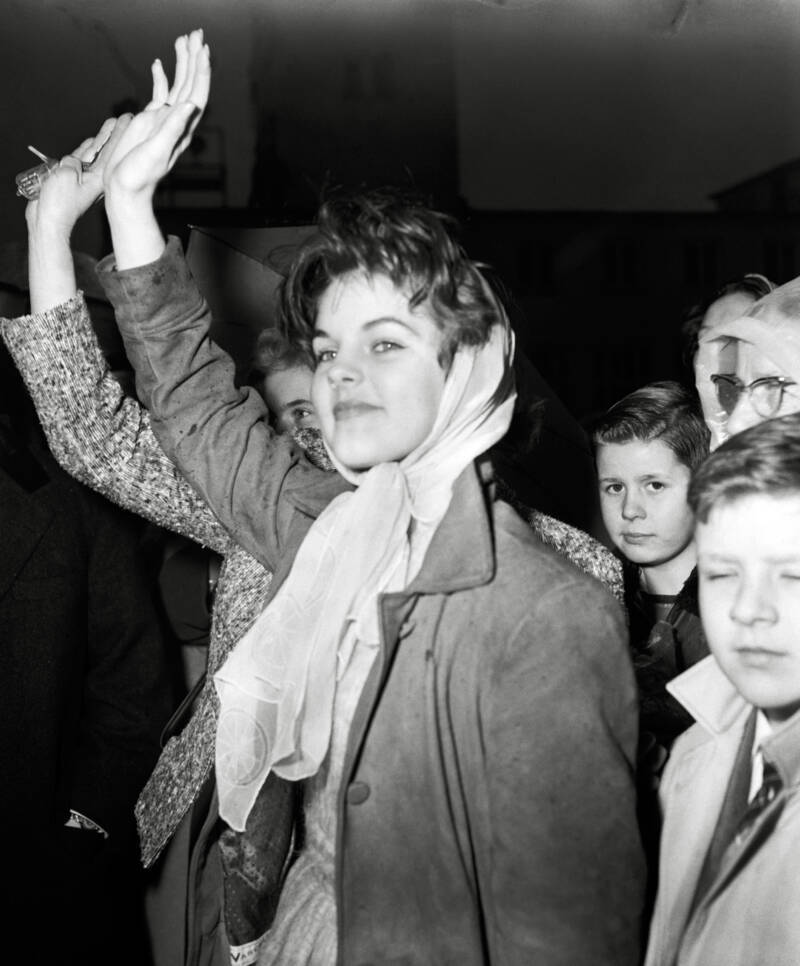
PictureLux/The Hollywood Archive/Alamy Stock PhotoA young Priscilla Beaulieu, pictured before she married Elvis Presley.
Things got worse when Presley’s wife Priscilla left him in 1971. Presley became more and more erratic. He was always on something — anything he could get, essentially. Then, in 1973, he overdosed twice on barbiturates.
Dr. Nick realized that Presley was continuing to get more drugs from other doctors. While there was little he could do about Presley’s other appointments, he said he tried to tell Presley to stop taking so many pills.
Eventually, Nichopoulos said he resorted to giving the rock star placebos, since it was clear the singer wouldn’t listen to his advice.
“I don’t think he ever realized how harmful these things could be to him,” Dr. Nick said. “If he got a sore throat, and I gave him a penicillin tablet — I gave him 20 to take, saying, ‘You take four a day of these things until you use these up,’ so he’s going to take eight or 12 a day until he uses them up, [because] he thinks he’ll get well faster that way.”
Of course, the exact opposite was true. Elvis Presley was only getting worse. And in August 1977, it all caught up to him.
Did George Nichopoulos Hasten — Or Cause — Elvis Presley’s Death?
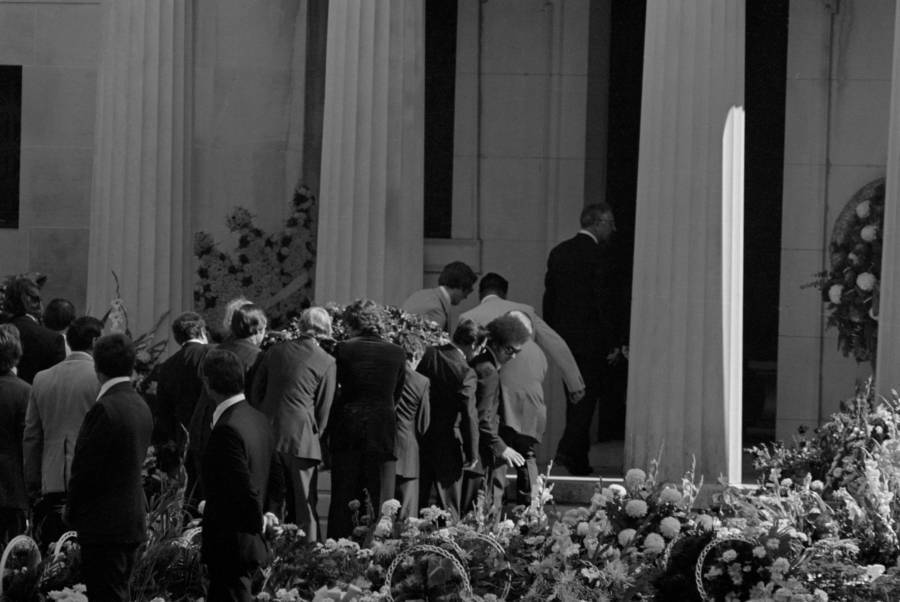
Bettmann/Getty ImagesPallbearers carrying Elvis Presley’s casket into a mausoleum in Memphis.
On August 16, 1977, Elvis Presley was found dead at the age of 42 in his bathroom at Graceland. At the time of his demise, he had been suffering from glaucoma, high blood pressure, liver damage, and an enlarged colon. All were either aggravated or caused by his many years of drug abuse.
By Dr. Nick’s own admission, he had written prescriptions totaling over 10,000 doses of sedatives, amphetamines, and narcotics for Presley that year alone. But he also said that, despite bearing Presley’s name, these doses were collectively for Presley and the 150-person crew that worked for him.
George Nichopoulos claimed that he was surprised when he got the call about Elvis Presley’s death. He was even more surprised, over the following months, about the number of death threats sent his way.
He said he was blindsided again in 1979 when the Tennessee Medical Board charged him with gross malpractice over the illegal prescription of painkillers and other drugs to Elvis Presley, the singer and pianist Jerry Lee Lewis, and 12 other patients. The district attorney’s office even looked into potential criminal charges against him related to Presley’s death.
In January 1980, the Medical Board Tribunal found Dr. Nick guilty of overprescription, resulting in a three-month suspension of his license and three years’ probation. Later that year, he faced criminal prosecution for abusing his license to prescribe controlled drugs and a potential prison sentence of up to 10 years. However, he was acquitted on all counts.
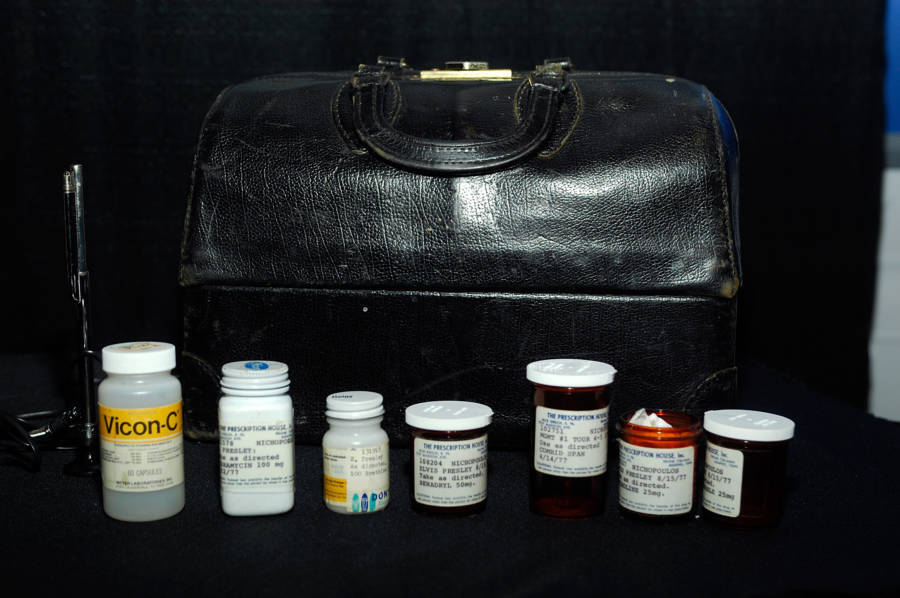
Joe Corrigan/Getty ImagesDr. Nick’s medical bag.
“I don’t regret any of the medications I gave him. They were necessities,” Nichopoulos insisted. “Later, everyone attacked me, saying all I was interested in was making money from Elvis. That’s just not true. I never charged him for a house call, and I’d make those four or five times a week.”
In 1994, Elvis Presley’s death was re-examined, and the coroner Dr. Joseph Davis determined that the cause of death was likely a heart attack, a claim that remains controversial to this day.
Still, just a year later, in 1995, the Tennessee Board of Medical Examiners permanently suspended Nichopoulos’ medical license, saying that it was because he had been overprescribing to numerous patients for years.
From then until his own death on Feb. 24, 2016, Nichopoulos would occasionally resurface in the news, sometimes selling Elvis Presley memorabilia or reappearing for an interview, always unable to escape the specter of Elvis Presley’s death looming over him.
“You break your balls to help somebody and try to keep him alive and it turns around you were in it for the money,” George Nichopoulos had lamented. “I was one of his closest friends. At times I was his father, his best friend, his doctor. Whatever role I needed to play at the time, I did.”
Next, learn about Elvis Presley’s father Vernon Presley. Then, go inside the tragic story of Benjamin Keough, Elvis Presley’s grandson.