Measuring eight inches long and dating back at least 1,800 years, this Roman phallus is extremely rare in that it's made from bone, as opposed to metal or stone.
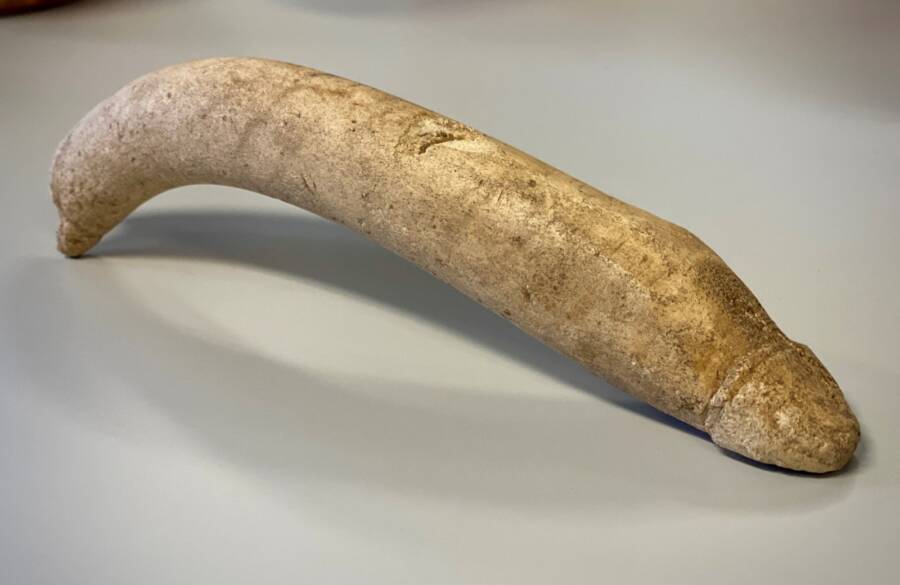
Province of GelderlandThough phalluses were depicted often in ancient Rome, it’s rare to find one carved from bone.
For decades, thousands of boxes of archaeological treasures have sat unopened in the Netherlands. Now, experts have started to sort through them. They’ve made some incredible finds, but perhaps the most remarkable object they’ve documented so far is an ancient Roman phallus carving.
The Roman phallus, rare in that it’s made from bone, is just one of the incredible discoveries that researchers have made so far. And with more than 15,000 other boxes to unpack, there’s sure to be many more treasures to come.
The Ancient Roman Phallus Made Of Bone That Was Found In Gelderland
According to a statement from the Valkhof Museum in the Dutch city of Nijmegen, the Roman phallus was found during a larger project to unpack 16,000 boxes of archaeological finds that have accumulated over the past 70 years. The first boxes contained Roman-era objects that were excavated near Canisius College, a former school in the Nijmegen-Oost neighborhood, which are estimated to be between 1,800 and 2,000 years old.
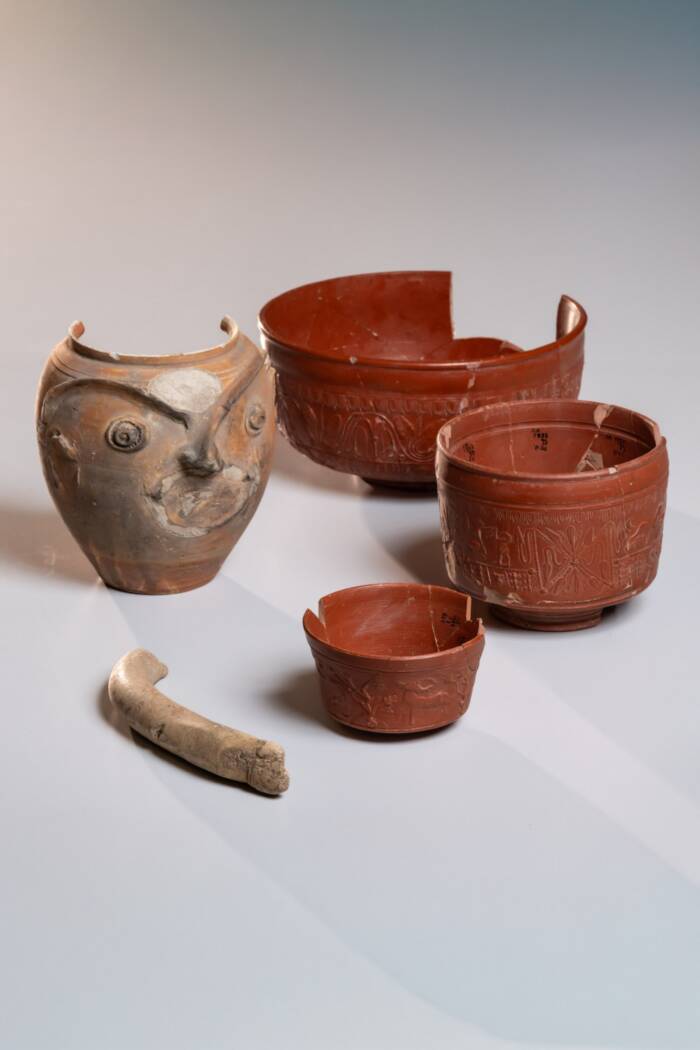
Province of GelderlandA collection of Roman objects, including the phallus, which were found in some of the first boxes opened by researchers at the Valkhof Museum.
Of these, the Roman bone phallus certainly stands out, but not because of the design itself. Phallic imagery was commonly found in ancient Rome, and phalluses could represent good luck, protection, and virility.
“Romans felt no shame regarding genitals,” said Ilse Schuuring, an archaeologist for the Province of Gelderland. “Images of them were common, for example as amulets. It symbolizes fertility. Images of them were also hung near doorways to ward off evil spirits.”
Rather, it’s the material of this nearly eight-inch phallus that makes it a rare find. While carved Roman phalluses have been found across Europe, it’s highly unusual to find one made of organic material. Most are made of inorganic material like metal or stone — though one found in England in 2023 was made of wood — but this phallus made of bone stands apart.
And it’s just one of the incredible relics that archaeologists have unboxed so far.
Other Roman Artifacts Revealed By The Valkhof Museum
In addition to the Roman bone phallus, researchers also documented a number of other remarkable objects, including a number of well-preserved orange-red cups and bowls from about 2,000 years ago.
“It is a luxury earthenware service,” Schuuring explained. “You can tell by the technique used, where the Romans pressed patterns into the pottery with a mold. On the service, for example, you see deer leaping through a forest… it is still virtually intact; you could eat from it straight away.”
Museum workers also unboxed a Roman drinking cup with a smiling face on it that was found near a Roman army camp.
“This cheerful cup lay for decades in a sealed box in a dark warehouse,” the museum noted, “but will undoubtedly soon find a nice spot in a museum.”
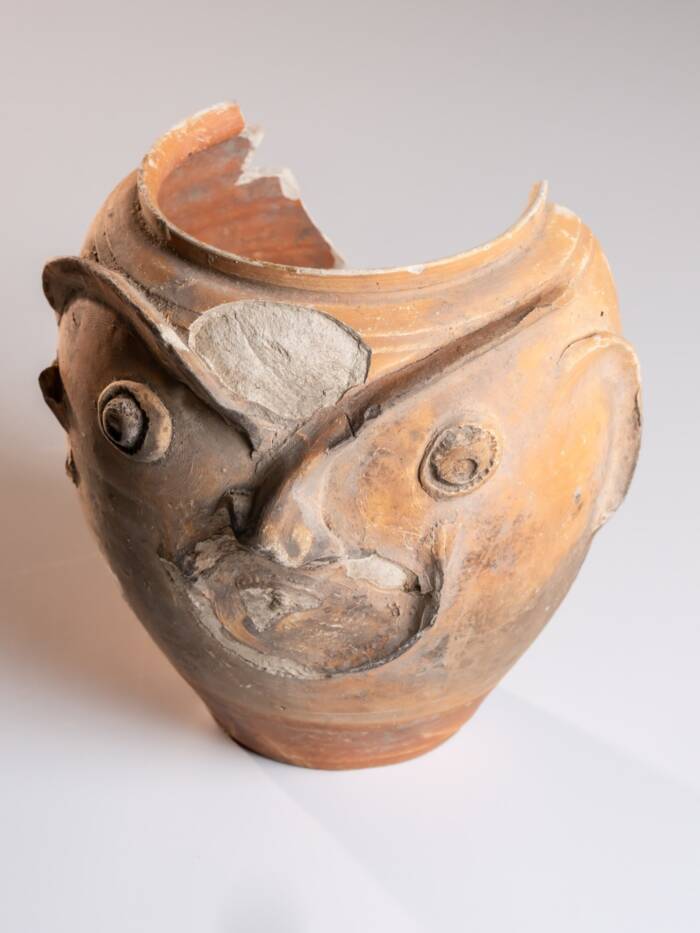
Valkhof Museum/FacebookAnother one of the archaeological treasures that was found in the boxes was this Roman cup with a smiling face on it.
Indeed, these objects represent just a small sample of the archaeological treasures in this vast collection of boxes, 300 of which have been opened, and 15,700 of which remain in need of documentation. The Valkhof Museum has been tasked with unpacking, labeling, and repacking the objects, a process that is estimated to take six years.
Though somewhat of a herculean undertaking, the project to unbox and document the objects has been incredibly gratifying so far. For as many as 70 years, these objects have been tucked away in the dark, ignored and forgotten. Yet they tell a remarkable story about the Roman history of the Dutch province of Gelderland, and researchers and city administrators are eager to see what other objects they will uncover over the next several years.
“This is proving to be an enormous treasure trove,” said Provincial Executive Member Peter Drenth. “These first boxes alone show how rich and diverse Roman life in Gelderland was. In the coming years, we will discover what the remaining 15,700 boxes tell us about the history of Gelderland.”
After reading about the boxes of Roman artifacts that were uncovered by a museum in the Netherlands, look through these surprisingly raunchy images from medieval manuscripts. Then, discover the history of Shunga, Japanese erotic art, with this collection of stunning images.