Galgano Guidotti was a 12th-century knight who purportedly thrust a sword into a boulder in Tuscany after having a religious vision, a feat that led to his sainthood after his death.
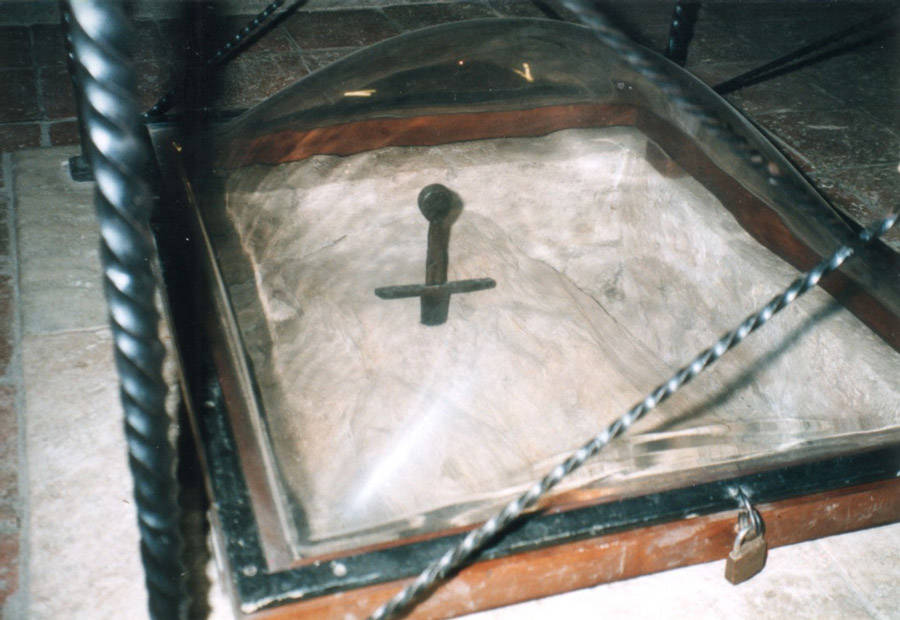
Giorces/Wikimedia CommonsThe “real sword in the stone” was purportedly thrust into this boulder by Galgano Guidotti in the 1180s.
Everyone knows the story of the future King Arthur pulling a sword from a stone, proving his worth as the ruler of England. But few are aware that there’s a real sword in the stone tucked away inside an Italian chapel.
As the legend goes, a medieval knight named Galgano Guidotti thrust his blade into a boulder on a hilltop in Tuscany after having a divine vision in the 12th century. Guidotti was later declared a saint, and Montesiepi Chapel was built around the stone where he performed his feat.
It remains on display today, with the knight’s sword still stuck inside. Other extraordinary stories surrounding the relic have emerged over the centuries, and religious pilgrims and curious visitors alike continue to flock to the chapel to see it for themselves.
This is the story of the real sword in the stone that has nothing to do with the mythic King Arthur.
Who Was Galgano Guidotti?
Galgano Guidotti was reportedly born to a feudal lord in Chiusdino, Italy, around 1148. He went on to become a wealthy knight, but while he was skilled in the art of combat, he was also profoundly arrogant, violent, and concerned only with worldly pleasures.
However, when Guidotti was in his early 30s, he had a vision. The Archangel Michael allegedly appeared to him and told him that he had to turn away from his life of sin. The angel led Guidotti to a hill, where the 12 apostles ordered him to give up all of his possessions and live as a hermit.
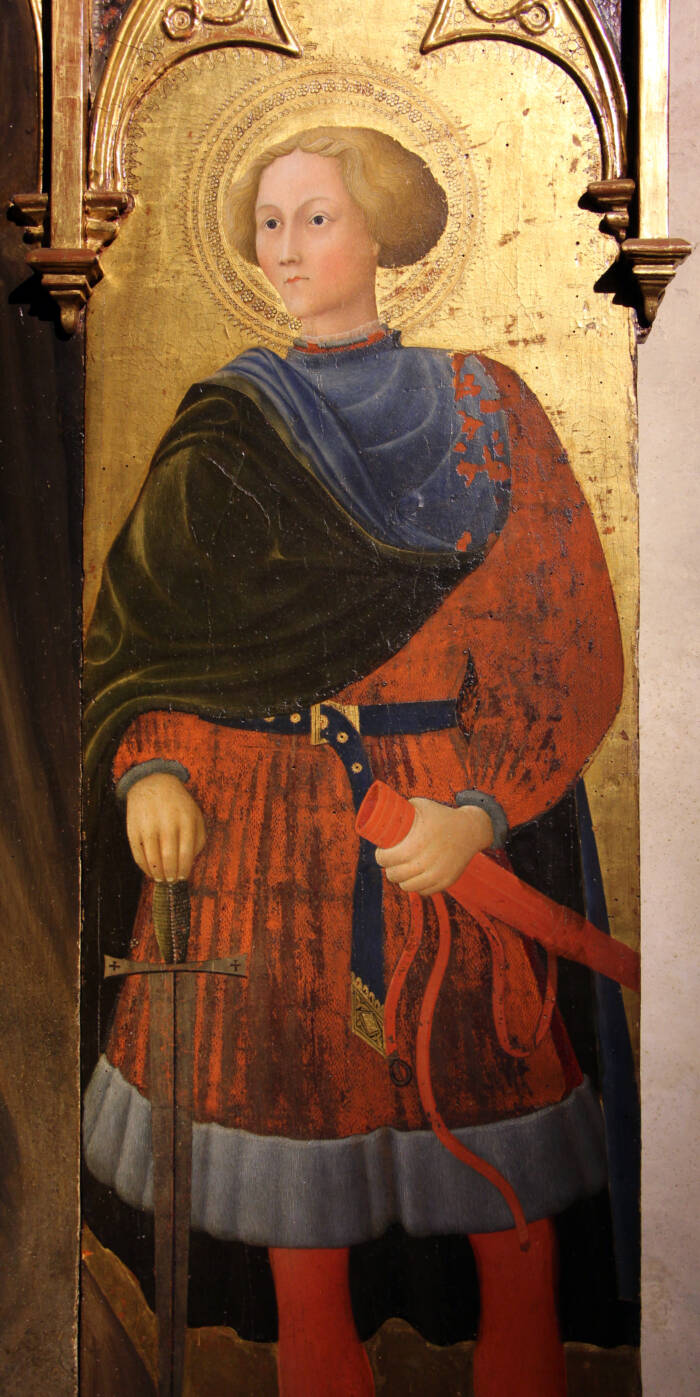
Sailko/Wikimedia CommonsA painting of Saint Galgano Guidotti, the knight who allegedly thrust a sword into a stone in the 12th century.
Guidotti told the apostles that it would be easier for him to split a rock with his sword than to adopt such a lifestyle. To prove his point, he thrust his blade into a nearby boulder — and it sliced right through.
When Guidotti awoke from his dream, he immediately changed his ways. He became a hermit, much to the surprise of his family. His mother didn’t believe Guidotti’s transformation was permanent, and she tried to set him up with a young woman so he could settle down and marry. Guidotti agreed to meet the potential love match, but on his way there, something strange happened. It would change Guidotti’s life — and the landscape of the Tuscan countryside — forever.
The Legend Behind Italy’s Real-Life Sword In The Stone
As the story goes, while Galgano Guidotti was heading to meet his potential fiancée, his horse suddenly changed direction. It led him to a hilltop that looked vaguely familiar, and Guidotti soon realized that it was the very hill that he’d seen in his vision.
To acknowledge the circumstances and honor God, he plunged his blade into a rock — and just as in his dream, it easily slid in. Only the hilt emerged, forming the shape of a cross.
The reformed knight died shortly after this incident, at some point in the early 1180s, but he spent his remaining days praising God as a hermit.
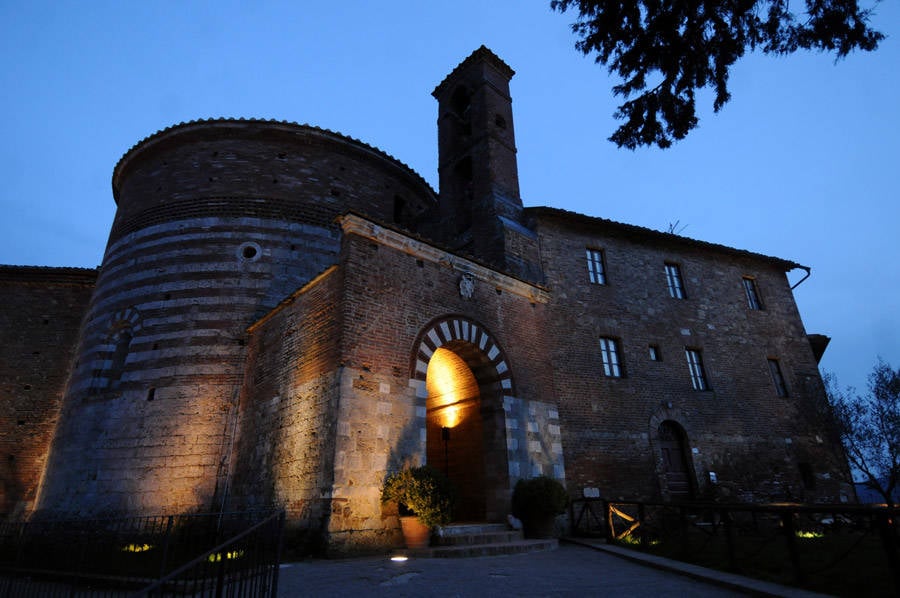
Eric VANDEVILLE/Gamma-Rapho/Getty ImagesMontesiepi Chapel was built over the “real sword in the stone” near Chiusdino, Italy.
Then, in 1184, Montesiepi Chapel was built around the real sword in the stone to memorialize Guidotti. Around the same time, he was canonized by Pope Lucius III, as pilgrims visiting the site had reported more than a dozen miracles after praying near the boulder.
The church has stood just outside of Chiusdino ever since. The Abbey of San Galgano, a Cistercian monastery, was constructed nearby in the 13th century. It was abandoned centuries ago, but its ruins — and the evidence of Saint Galgano Guidotti’s purported miracle within Montesiepi Chapel — can still be seen to this day.
Is The Real Sword In The Stone Legitimate?
In the centuries since Galgano Guidotti’s death, Catholic pilgrims have traveled to Montesiepi Chapel to see the saint’s sword for themselves. The stone that it’s lodged in sits in the floor in the middle of the church, though it’s covered in plexiglass to protect it from anyone who may try to pull the weapon from the rock.
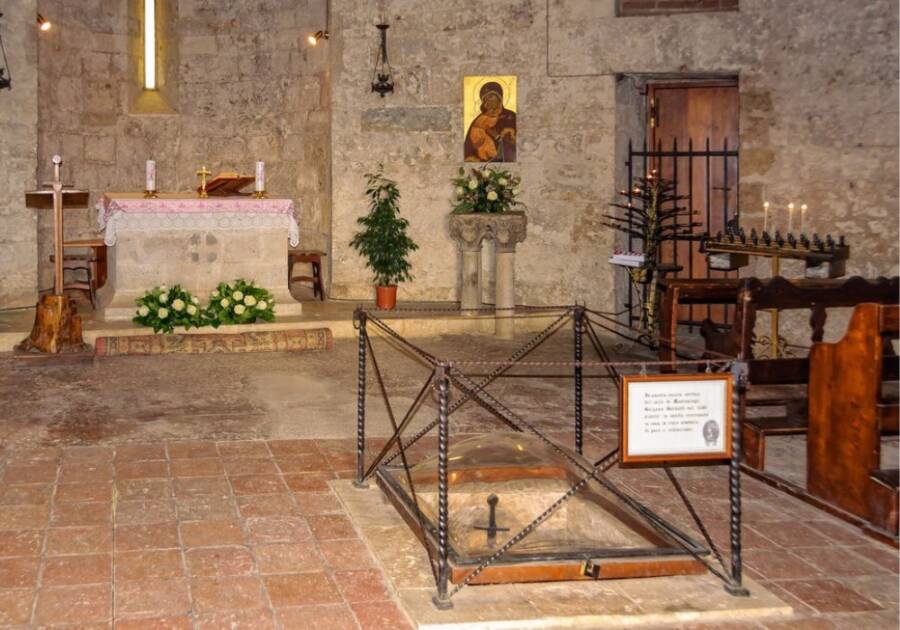
Good Old Pete/Wikimedia CommonsThe interior of Montesiepi Chapel, with the sword pictured in the center of the floor.
Of course, skeptics have long questioned the legitimacy of the sword and the legend surrounding it. So, in 2001, scientists set out to settle the debate once and for all.
As reported by The Guardian at the time, researchers analyzed the blade and determined that it did indeed seemingly date back to the 12th century.
“Dating metal is a very difficult task,” said Luigi Garlaschelli, one of the study’s researchers, “but we can say that the composition of the metal and the style are compatible with the era of the legend. We have succeeded in refuting those who maintain that it is a recent fake.”
The scientists also used ground-penetrating radar to determine that there is an empty space in the ground beneath the stone, which may be the tomb of Saint Galgano Guidotti himself. What’s more, they looked into an additional myth related to the real sword in the stone — and discovered that it may be true, too.
Two mummified hands are also on display at Montesiepi Chapel, and there are two versions of the story behind them. One states that they belonged to a man who was torn apart by wolves while trying to pull the sword from the stone. The second claims that the wolves killed a man who was sent by the Devil to murder Guidotti while he was living as a hermit on the hilltop, mauling him so viciously that only his hands were left intact.
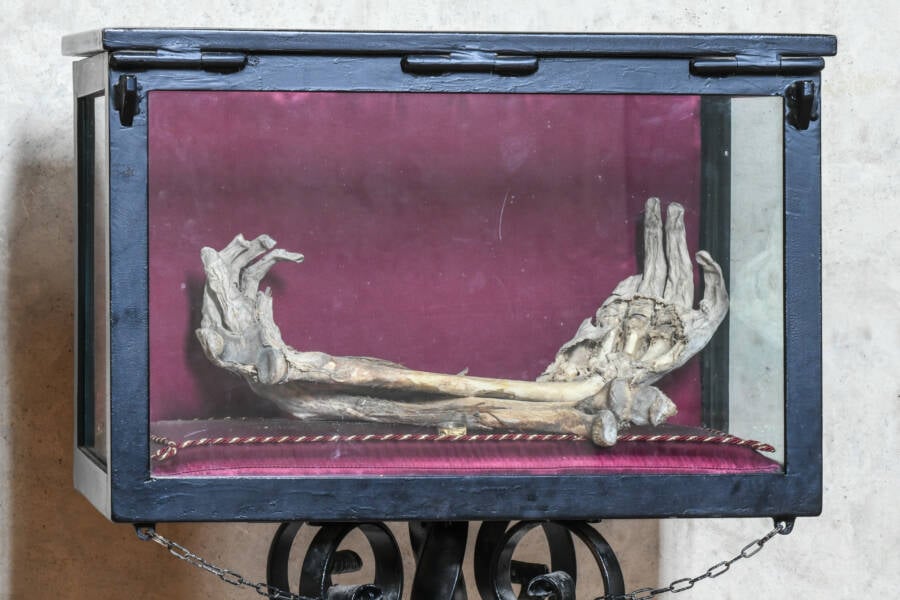
Bernhard Holub/Wikimedia CommonsThe mummified hands on display at Montesiepi Chapel allegedly belonged to a man who tried pull Galgano Guidotti’s sword from the stone.
Radiocarbon dating confirmed that the mummified hands were from the 12th century, just like the blade, lending some credence to the story of the real sword in the stone.
In the end, we will likely never know the true story behind the blade entombed in a boulder in rural Tuscany. But the legend of Saint Galgano Guidotti lives on as Italy’s very own version of the famed King Arthur.
After reading about Italy’s real sword in the stone, go inside the legend of Excalibur, the famed weapon of King Arthur. Then, learn the stories behind the Knights of the Round Table.