Archaeologists in Constanța, which is built atop the ancient city of Tomis, uncovered skeletons, catacombs, glassware, coins, a Greek inscription, and a piece of a rare ceremonial shield — all dating back to approximately the third century C.E.
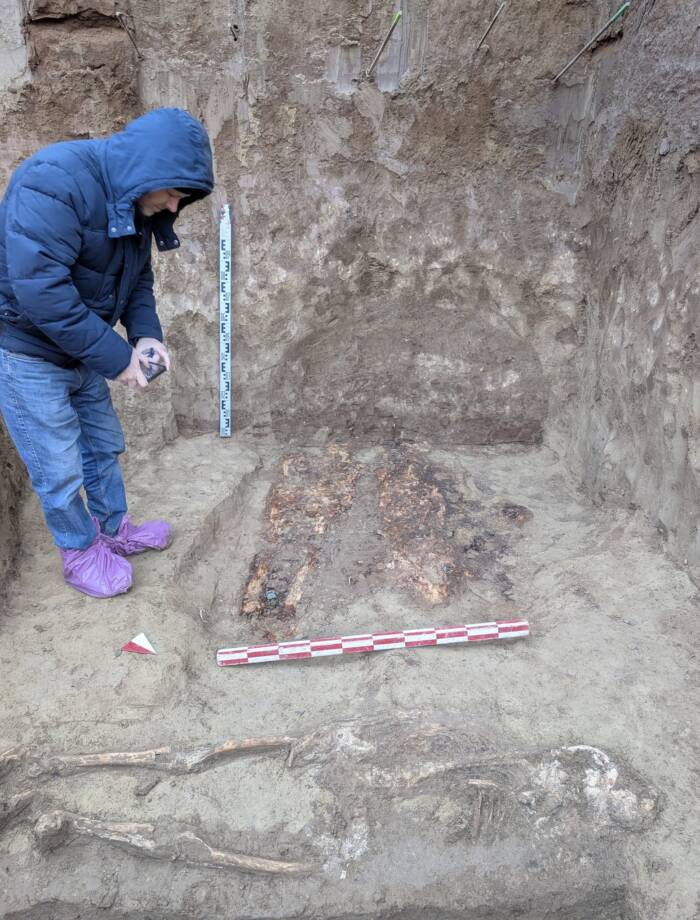
Constanța Museum of National History and Archaeology/FacebookAn archaeologist documents one of the 34 graves uncovered near the Constanța Municipal Hospital site in Romania.
A hospital in Constanța, Romania, was recently slated to undergo major upgrades, but because of its location on the perimeter of an ancient necropolis, archaeologists were called in to excavate the construction site — and they made a remarkable discovery.
Beneath the soil, workers uncovered 34 graves from the Roman era, some of which were located in catacombs and held multiple bodies. The burials also included artifacts like jewelry, glassware, and even part of an exceptionally rare parade shield. These extraordinary finds are revealing more than ever before about life in Tomis, the ancient city upon which Constanța was built.
Construction Work Reveals A Roman-Era Necropolis In Romania
According to a statement from the Constanța Museum of National History and Archaeology, archaeologists uncovered these tombs while excavating the area surrounding Constanța Municipal Hospital, which is currently undergoing upgrades. Because the hospital is known to stand near a Roman necropolis, experts carried out a series of digs ahead of the relocation of the building’s utilities.
In all, the excavations revealed 34 burials dating back to at least the third century C.E., some 200 years before the fall of Rome. Archaeologists also unearthed an intact set of tile stairs leading down into catacombs, along with a trove of well-preserved grave goods.
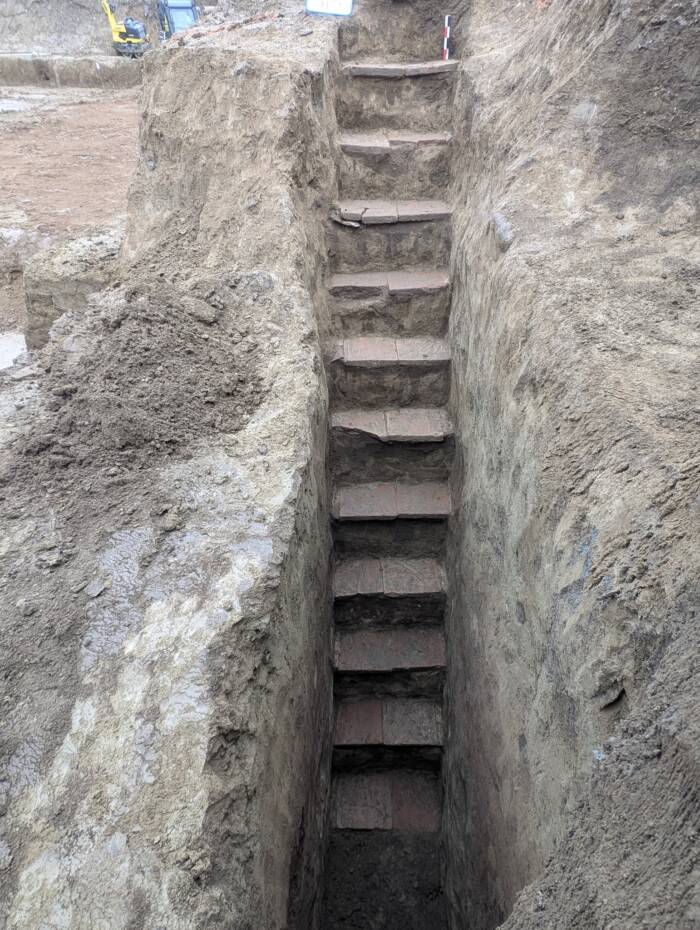
Constanța Museum of National History and Archaeology/FacebookThe tile stairs leading to the Roman catacombs in Tomis.
These artifacts included jewelry, coins, glassware, and even amphorae from North Africa, revealing evidence of trade between the furthest reaches of the Roman Empire. These finds alone would have been incredible enough, but two other discoveries stood out above the rest.
The first was a stone slab inscribed in Greek. It was seemingly a fragment from a sarcophagus or grave marker that was reused when building the necropolis, and it detailed an “association” to a deity whose name has since broken off of the slab.
The second especially notable artifact was an umbo, the raised, round piece of metal at the center of a shield. The umbo uncovered at Constanța was seemingly part of a ceremonial parade shield, which the museum called “extremely rare.”
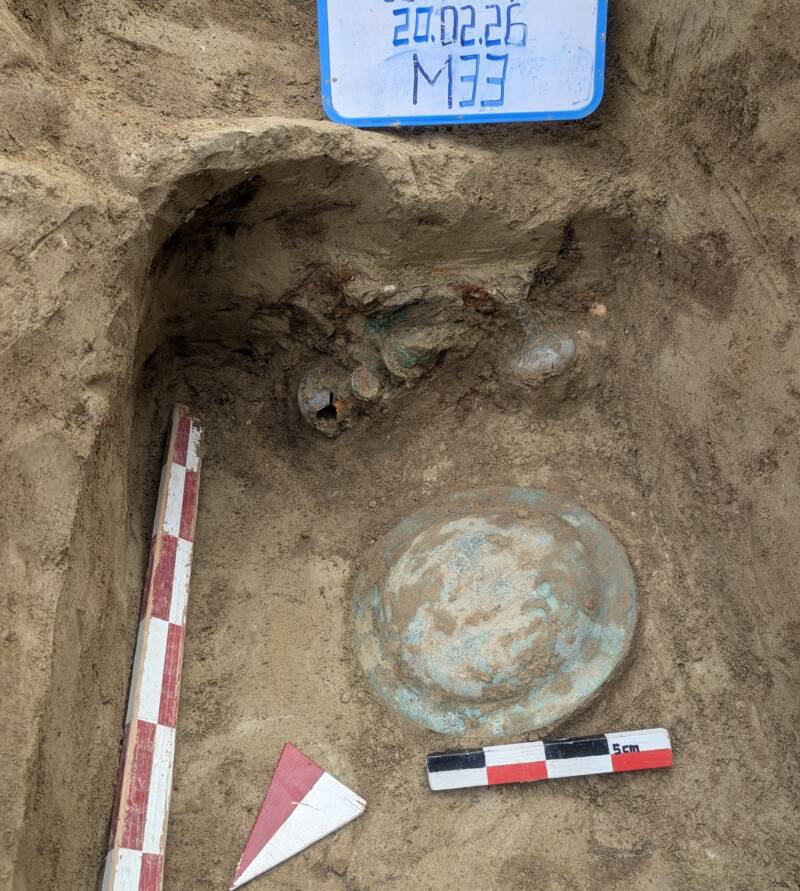
Constanța Museum of National History and Archaeology/FacebookThe umbo, the center of an ancient parade shield, uncovered among the ruins of Tomis.
This necropolis and the treasures found within it were all part of the ancient city of Tomis, an initially Greek settlement with a long — and poetic — history.
The History Of Ancient Tomis, Site Of Ovid’s Exile
Constanța, located on the Romanian coast of the Black Sea, is the oldest continuously inhabited city in Romania. Greek colonists first settled there around 600 B.C.E., dubbing the site Tomis.
Over the next six centuries, Tomis continued to grow as it underwent major changes, transforming from an oligarchy to a democracy. Then, in 29 B.C.E., the city was captured by the Romans, and it became part of their ever-expanding empire.
In 8 C.E., the poet Ovid, who is best known for his Metamorphoses, was exiled to Tomis by Emperor Augustus. The reasons for the banishment are unclear, but scholars have speculated that the ruler disliked Ovid’s scandalous Ars Amatoria, which mocked Augustus’ moral reforms. Others believe that the poet discovered that the emperor had committed incest with his daughter or granddaughter.
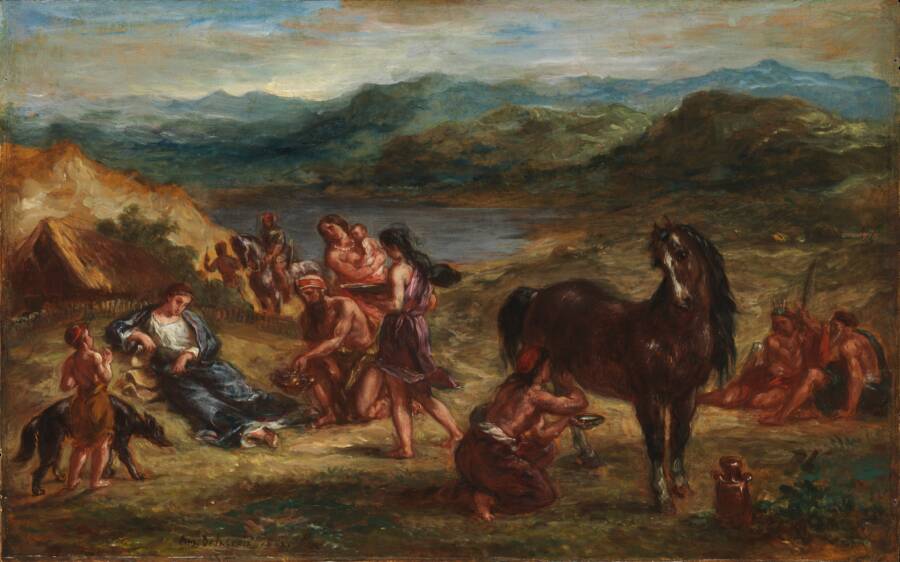
Public DomainOvid Among the Scythians by Eugène Delacroix, a 19th-century painting depicting Ovid’s exile in Tomis.
Regardless of the cause, Ovid arrived in Tomis in his early 50s. He hated the city, and he documented his woes in a series of poems published as the Tristia. In one entry titled “The Rigours of Tomis,” he laments, “I am living in the midst of the barbarian world… The snow lies continuously, and once fallen, neither sun nor rains may melt it.”
Later in the poem, Ovid describes Tomis’ “naked fields, leafless, treeless — a place, alas! No fortunate man should visit. This then, though the great world is so broad, is the land discovered for my punishment!”
Ovid died in Tomis in 17 or 18 C.E., and his statue still stands in Constanța to this day.
Over the subsequent centuries, Tomis changed hands numerous times, falling under the rule of the Second Bulgarian Empire and the Ottoman Empire before the Romanian War of Independence in the late 19th century. And as the ancient buildings crumbled, new structures were erected, covering the history beneath them.
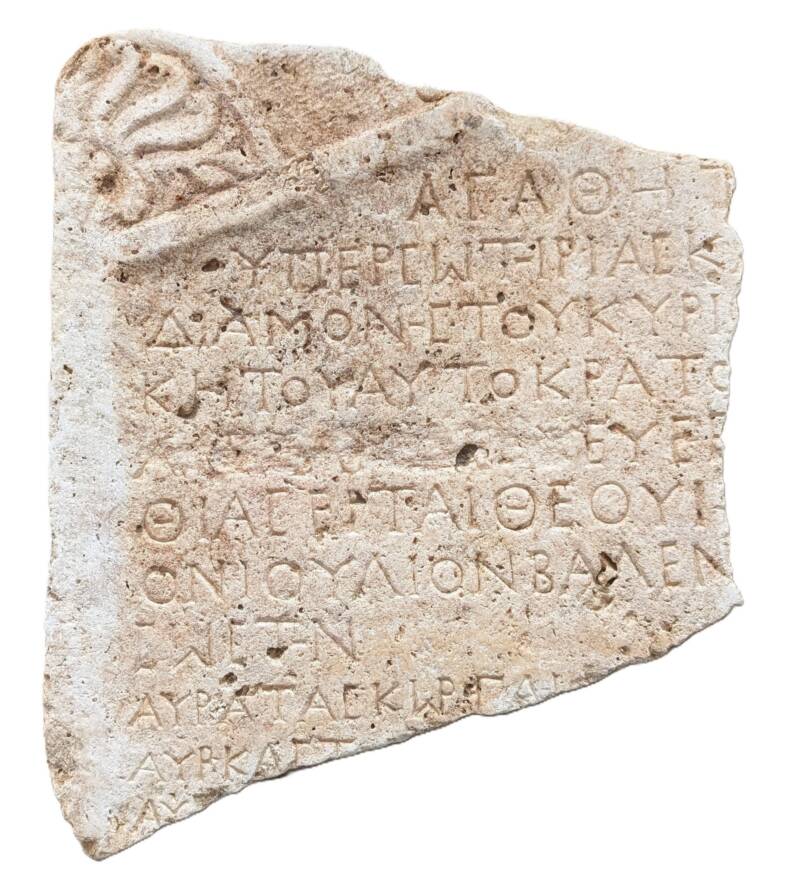
Constanța Museum of National History and Archaeology/FacebookA slab uncovered during excavations is inscribed in Greek and dates to the third century C.E.
Indeed, much of Tomis has yet to be excavated, as the modern city of Constanța covers it. As such, this archaeological discovery at the Constanța Municipal Hospital is providing a rare peek at the ancient city that saw everything from Greek colonization to Roman rule to the death of Ovid.
After reading about the Roman-era necropolis and artifacts uncovered in Romania, go inside the chilling story of Vlad the Impaler, the Wallachian ruler who may have inspired Dracula. Then, discover some of the myths recorded by Ovid in Metamorphoses, such as the legend of the Minotaur.