The crannog in Loch Bhorgastail was built between 3500 and 3300 B.C.E., and the Neolithic pottery found in the water surrounding it suggests that it may have been used for cooking and community feasts.

Blankshein et al., Advances in Archaeological Practice (2026)The crannog was built in Loch Bhorgastail around 5,000 years ago.
In a lake on northern Scotland’s Isle of Lewis sits a tiny island that appears to be a simple stone mound. However, archaeologists recently discovered that it’s completely manmade — and it’s centuries older than Stonehenge.
This crannog on Loch Bhorgastail was originally constructed around 3400 B.C.E. as a round timber base covered in brushwood. Its purpose remains unknown, but a trove of Neolithic pottery found in the shallow water surrounding it is providing insight into how ancient people may have used this landmass, as well as the hundreds of other similar structures that dot the country’s waters.
The 5,000-Year-Old Crannog In A Scottish Lake
In 2021, archaeologists from the University of Southampton and the University of Reading set out to survey the island (which has no name) on Loch Bhorgastail. Bits of wood had previously been seen beneath the stone surface, but they were believed to be supports for structures that once stood on the isle.
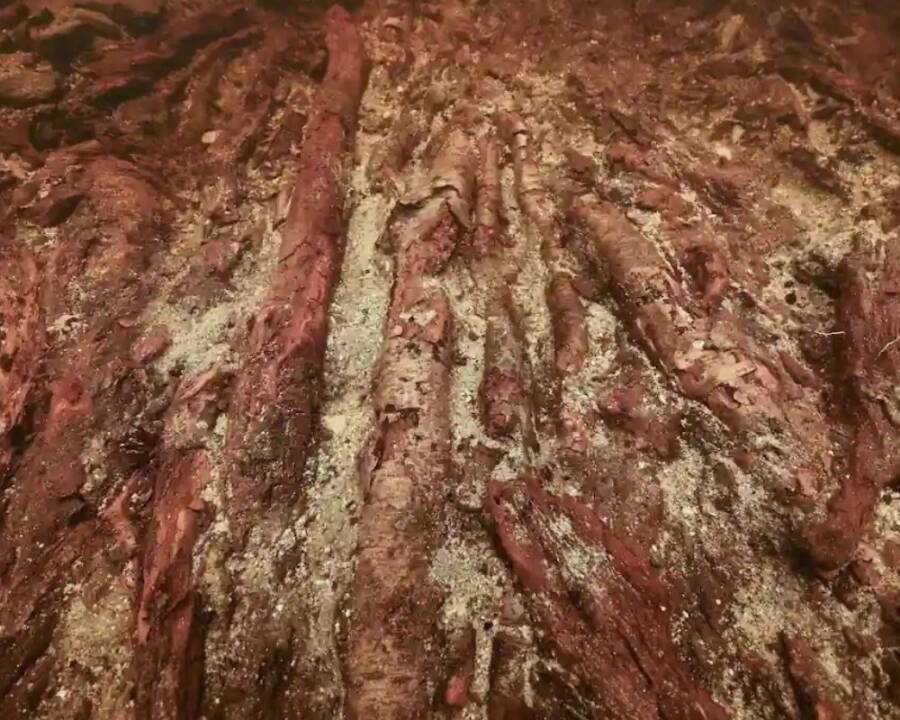
University of SouthamptonA close-up view of the wood that makes up the crannog’s base.
Upon further investigation, however, researchers realized that the island was actually a crannog. “Crannogs are small artificial islands that are typically thousands of years old,” University of Southampton archaeologist Stephanie Blankshein explained in a statement. “Hundreds exist in lochs of Scotland and many remain unexplored or undiscovered.”
The entire structure is manmade. Sometime between 3500 and 3300 B.C.E., the Neolithic people of Scotland constructed a round timber base with a diameter of 75 feet in the shallow water. They then piled brushwood on top, and later communities added a stone layer.
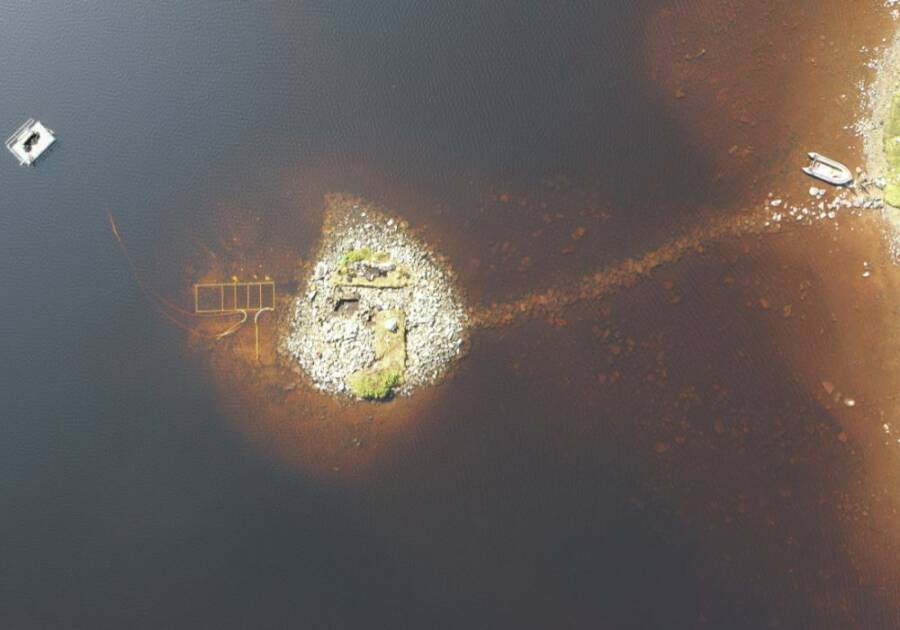
University of SouthamptonAn aerial photo shows the stone causeway that once connected the crannog to the shore.
A stone causeway once linked the crannog to the shore to provide easy access, but it has since been submerged. No structures remain on the island, but archaeologists have found artifacts in Loch Bhorgastail that may provide clues about how it was used.
What Was The Purpose Of The Ancient Manmade Island In Loch Bhorgastail?
In the water surrounding the crannog, researchers have discovered hundreds of bits of pottery from jars and bowls used by Neolithic people. Some of them even still contain food residue.
Because of this, archaeologists theorize that the island was used as a gathering spot for cooking, food preparation, and feasts. If that’s the case, there were seemingly large and productive communities living in the area 5,000 years ago. The construction of the crannog itself also supports this hypothesis.
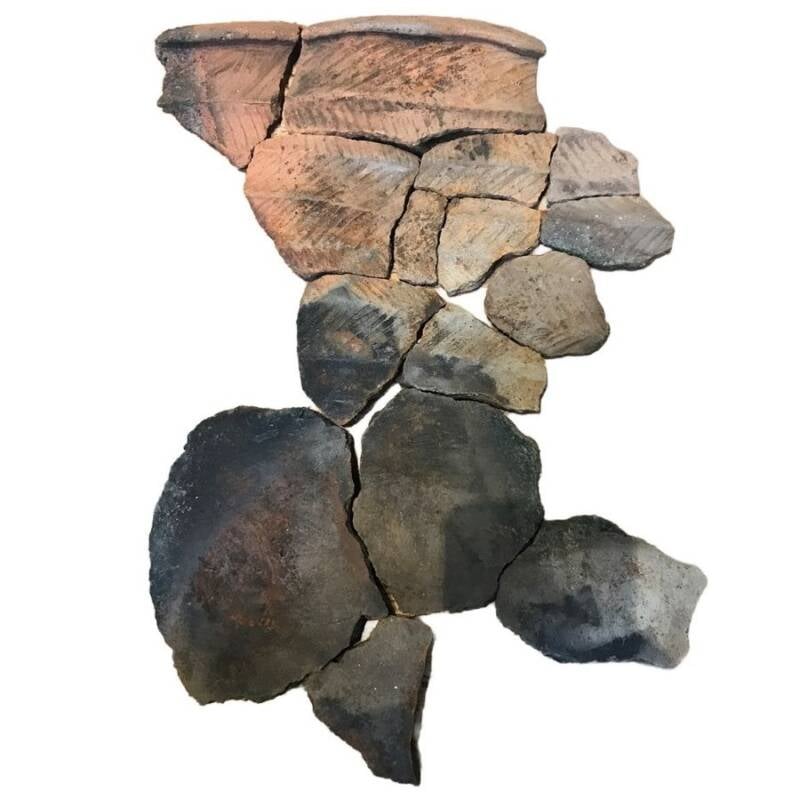
University of SouthamptonBits of Neolithic pottery found near the crannog in Loch Bhorgastail.
“While we still don’t know exactly why these islands were built,” said Blankshein, “the resources and labor required to construct them suggests not only complex communities capable of such feats, but also the great significance of these sites.”
However, the crannog’s location has also created difficulties for the archaeologists studying it. Stereophotogrammetry, the typical method they use to map ancient sites, works well on land or in deep water, but not in shallow water.
Fraser Sturt, the director of the Southampton Marine and Maritime Institute, noted in the University of Southampton statement, “Fine sediments, choppy conditions, floating vegetation, and distorted or reflected light all hinder shallow water imaging. Stereophotogrammetry is very effective in deep water but runs into problems at depths of less than a meter. This problem is a well-known frustration for archaeologists.”
To get around this issue, a diver used two waterproof cameras mounted at a set distance apart to photograph the crannog. The images were then stitched together, creating a model of the island both above and below the waterline.
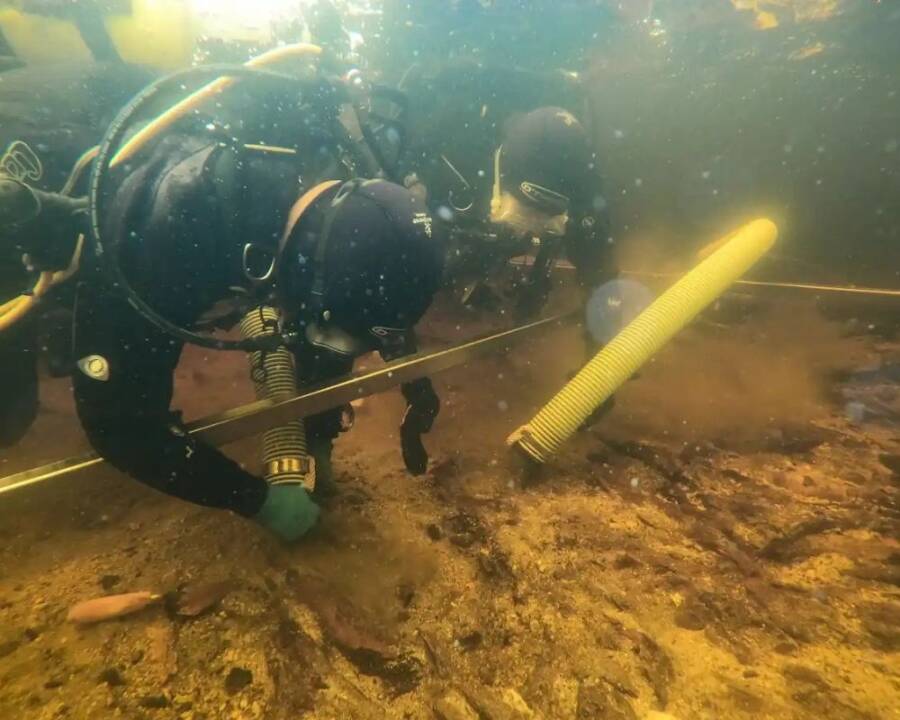
University of SouthamptonDivers excavating the timber base of the crannog.
The results were recently published in the journal Advances in Archaeological Practice.
“Loch Bhorgastail provided a rare opportunity to develop, test, and refine a workflow capable of achieving terrestrial-grade accuracy underwater,” the authors wrote. “This flexible, field-deployable workflow proved effective not only at Loch Bhorgastail but also offers a transferable model for other shallow-water environments facing similar challenges.”
As such, not only does the discovery on the Isle of Lewis reveal more about the purpose of this specific Neolithic crannog, but it may also help archaeologists uncover the mysteries of similar sites across Scotland.
After learning about the 5,000-year-old manmade island in Scotland, go inside the history of the Picts, the fearsome warriors of ancient Scotland. Then, explore the magical Fairy Glen on the Isle of Skye.