Made from the sperm sacs of male fish, shirako is a Japanese delicacy that can be consumed raw, fried in tempura batter, rolled into sushi, and more.
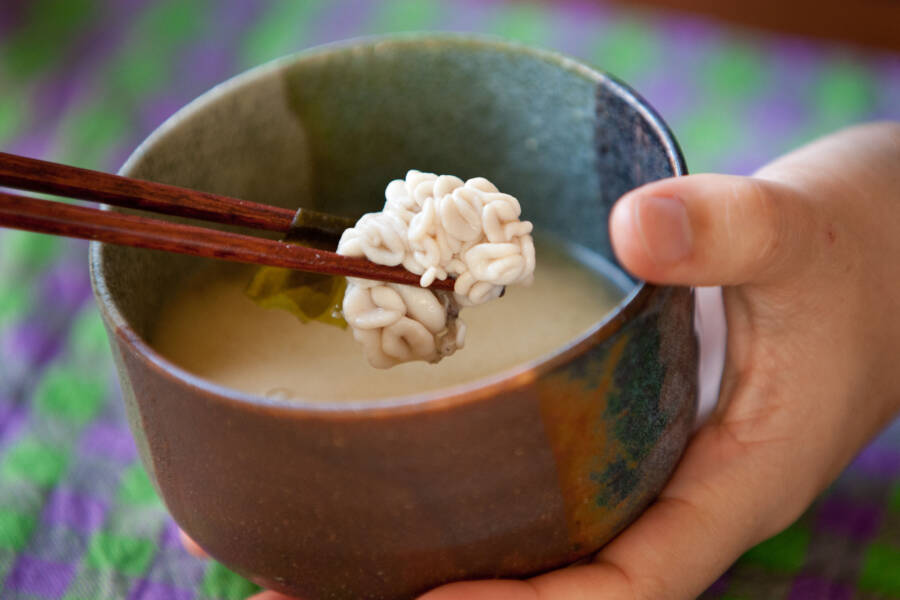
jeremy sutton-hibbertHere, shirako — fish sperm — is used in a miso soup.
The creamy white delicacy known as shirako in Japan translates to “white children.” This translation is somewhat apt. Shirako, a popular dish in the country, is made from fish semen.
Specifically, shirako is made from the sperm sacs of male fish. Depending on how full the sperm sac is, shirako can be either a pale pearly pink, or white as fresh snow. There are many ways to serve it, and those who enjoy the delicacy often compare the taste to custard.
And while shirako may seem odd to some, fish semen — or milt — is actually a popular ingredient in cuisines across the world. Russians, Czechs, and Italians also have various ways of enjoying fish sperm.
This is everything you need to know about shirako, the Japanese seafood delicacy made of fish semen.
What Is Shirako? The History And Taste Of The Japanese Delicacy
Though the exact origins of shirako are unknown, it’s been a staple of Japanese cuisine for a long time. It likely comes from the Japanese practice of using every part of the fish, and became a popular delicacy in the country during the Meiji period (1868 to 1912). The Japanese believe that shirako promotes anti-aging and it is indeed packed with fatty acids like omega-3 and vitamin B12 — though it also contains high levels of cholesterol.
So what is shirako exactly?
The delicacy comes from the sperm sacs, or milt, of male fish. Often cod fish is used, but shakiro can also be harvested from anglerfish, salmon, squid, and even pufferfish.
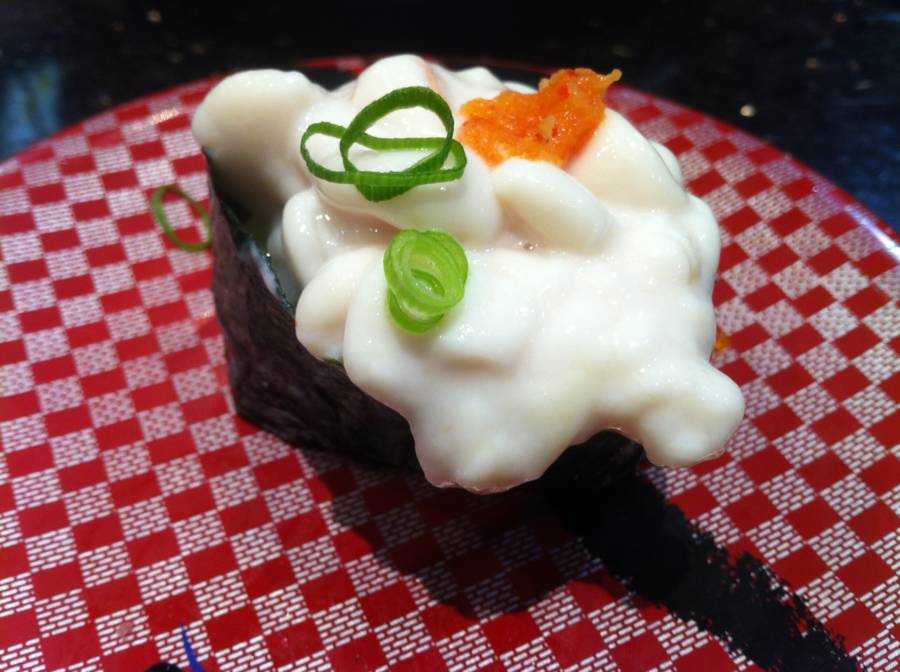
Wikimedia CommonsShirako, garnished with green onions and roe.
But while made from fish semen, shirako is not a liquid. (Though its fluid can be mixed with other ingredients.) Rather, the delicacy is usually served whole, with the sac intact, which gives it the appearance of a brain. It can be translucent white or pink (if the fish’s sperm sacs were depleted) or more of a creamy white (if the fish’s sperm sacs were full).
As to the taste? While this can depend on how shirako is prepared, most people describe the delicacy as having a custard-y taste. Jessica Thompson, writing about shirako for USA Today in 2021, reported that fans of the delicacy have also described its taste as “the sweetness with sea air.”
However, its taste depends somewhat on how shirako is served.
From Raw To Tempura: How Shirako Is Served
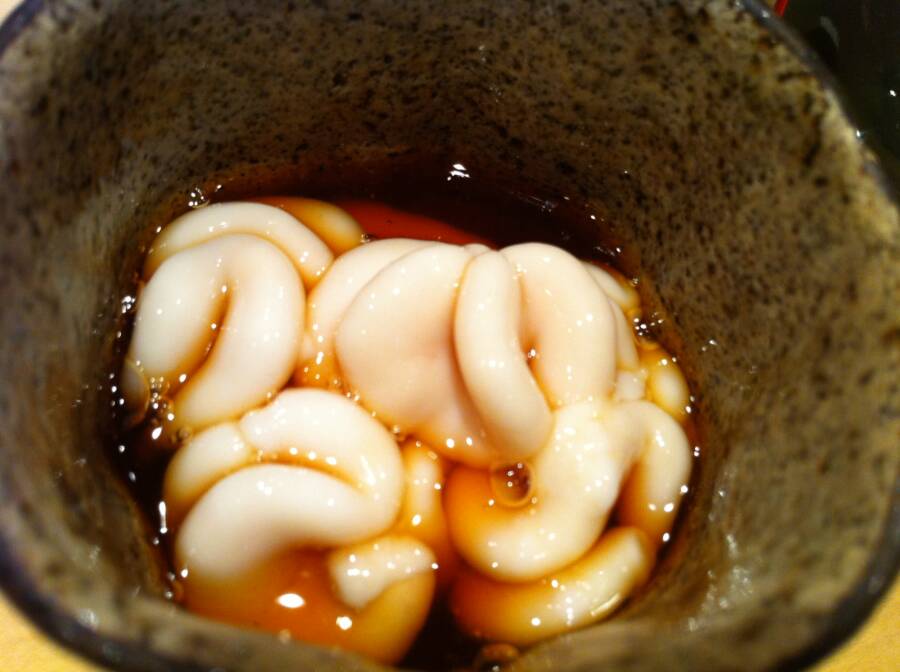
Chris Chen 陳依勤/FlickrA bowl of shirako in Tokyo, Japan. Some compare the appearance of shirako to brains, and the taste to custard.
As an ingredient, shirako is incredibly versatile.
In its purest form, shirako is served raw as shirako ponzu. The raw shirako is doused in ponzu (a mix of citrus and soy sauce), and is often topped with finely grated daikon or shiso, or chopped scallion. Eaten like this, the shirako often tastes creamy and fishy, like fresh seafood.
However, shirako can also be served as a tempura dish. Like anything with tempura, the shirako is fried in batter, then served. This gives it a crispy exterior, and a creamy, fishy interior, and this variation could be a good choice for those who may have reservations about trying shirako raw.
Shirako diners will also have their choice of shirako served as gunkanmaki, or “battleship sushi.” In this variation, the shirako is wrapped in nori (seaweed) atop a rice ball. It can also be grilled or pan-fried, which firms the exterior, but keeps the interior creamy. And shirako can also be included in nabe, or hotpots, or into chawanmushi, an egg-and-seafood custard.
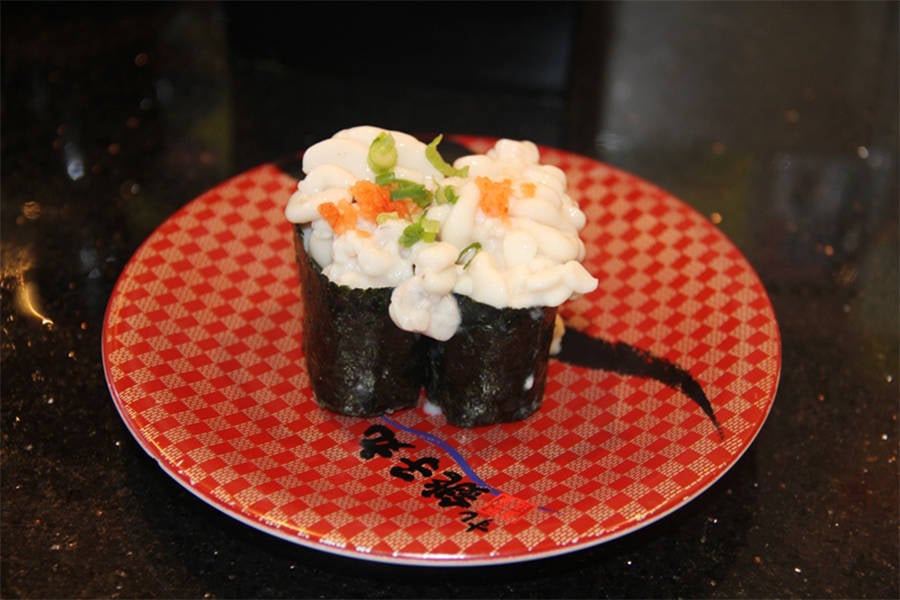
Wikimedia Commons“Gunkanmaki”, or “battleship sushi,” which used shirako as its prime ingredient.
As to when to eat shirako? It is best consumed during the winter months, which is when shirako is harvested from the Sea of Japan. It’s served in seafood restaurants and sushi bars, and is best enjoyed with warm sake.
How Fish Sperm Is Used In Other Cuisines
While Japan is famous for its fish sperm delicacy, shirako, many cultures around the world also use fish semen — or milt — as an ingredient.
In Sicily and Sardinia, for example, diners often enjoy tuna lattume, which is made from tuna sperm (though fish sperm is often also harvested from herring, mackerel, cuttlefish, and sea bass in Italy). One option is to simply boil the milt and top it with lemon; another is to sauté tuna lattume, then toss it with pasta, parsley, and tomatoes. Meanwhile, Romanians also eat the sperm of carp and other freshwater fish. Known as lapți this delicacy is usually fried and served as a garnish to other foods, or on its own.
Meanwhile, Russians also consume milt. They pickle herring milt, which is known as moloka. British chefs also often fry milt in butter, which is then eaten on toast, whereas Koreans often add milt to spicy soups or stews. (Milt is popular in Korea — it’s also often fried, poached, or enjoyed raw.) And Czechs consume a soup made of carp milt (mlíčí) on Christmas Eve, whereas Jewish cuisine uses milt to make a sauce known as kratsborscht.
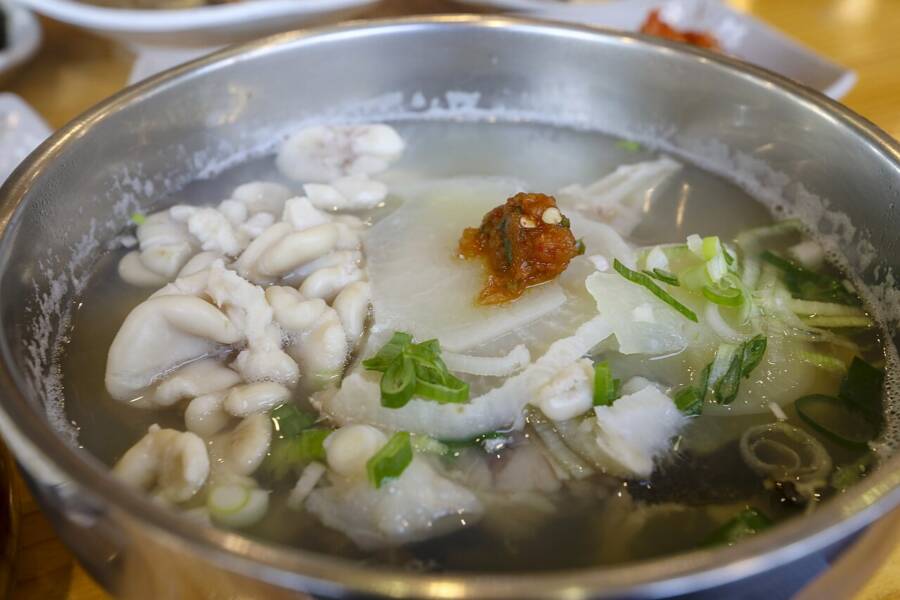
bryansjs/FlickrDaegu-iri-tang, or cod milt soup, in South Korea.
As such, dishes like shirako may seem unusual to some tastes, but milt is a popular food enjoyed across the world. Creamy and fishy, it’s a versatile ingredient that can be enjoyed raw, fried, in soups, or in sushi. So if you happen to find yourself in Japan on a cold winter night, it might be to your advantage to find a cozy sushi bar, where you can order shirako ponzu or another shirako dish, and enjoy it alongside a hot cup of steaming sake.
After reading about the many ways to eat shirako, the Japanese delicacy made from fish semen, learn about ortolan, the forbidden French dish that involves drowning ortolan birds in brandy and then eating them in a single bite. Or, discover balut, the popular but controversial street food in southeast Asia which is made of a partially developed duck fetus.