Elsewhere in this royal grave, researchers found a wealth of weapons, including a spear, sword, dagger, and axe as well as a helmet and bronze vessels that may have once held offerings of food.
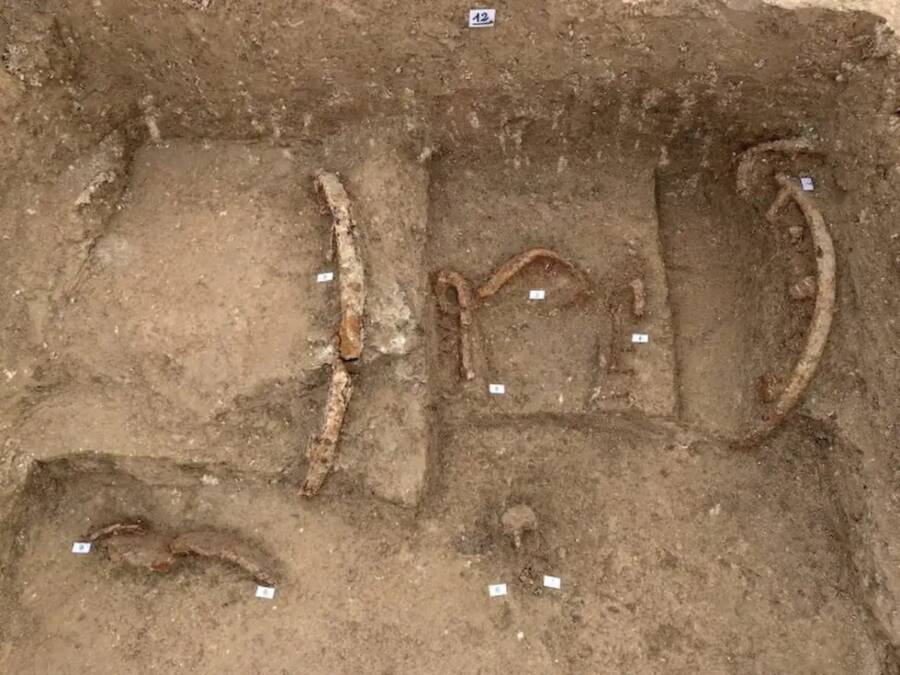
Soprintendenza Abap Ancona Pesaro UrbinoArchaeologists in Italy discovered the ancient grave of a Piceni prince who was buried with a two-wheeled chariot.
Archaeologists on the Adriatic coast of Italy have uncovered an ancient necropolis that was used by the Piceni people who lived in the area before the Romans. While many burials and countless artifacts have been unearthed thus far, one find now stands out above the rest.
Researchers excavated the 2,500-year-old grave of a warrior-prince who was laid to rest along with his chariot as well as a wealth of weapons. Experts hope that this astonishing discovery will shed more light on the little-understood Piceni people and their burial rituals.
The Discovery Of A Princely Tomb At A Piceni Funerary Complex In Eastern Italy
The discovery of the princely tomb, as well as a grave of an elite woman and a unique burial enclosure, was made during preventive excavations in the municipality of Sirolo.
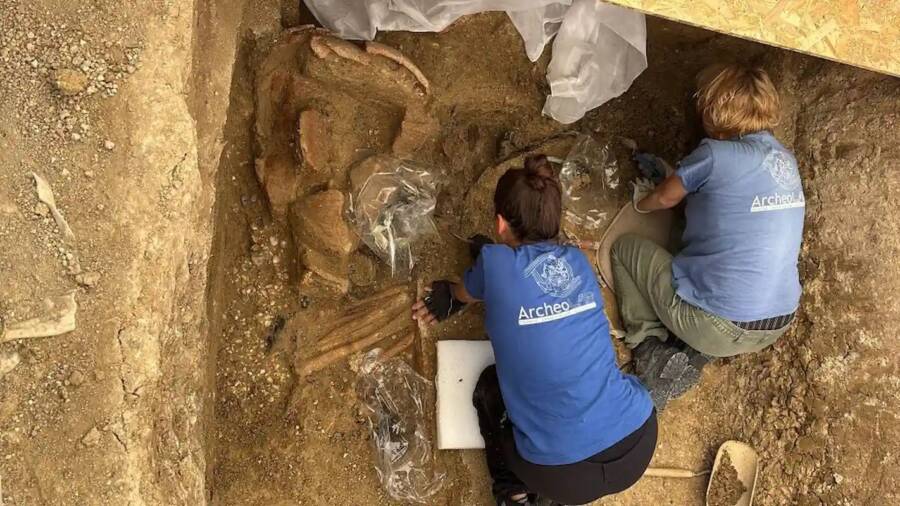
Soprintendenza Abap Ancona Pesaro UrbinoThe team dated the prince’s grave to the 6th century B.C.E.
The prince’s tomb, found at the center of the burial complex, contained the remains of a two-wheeled chariot known as a currus. The team believes that the vehicle was placed in the prince’s grave intact, as this was a common practice that’s been seen in aristocratic burials across ancient Picenum.
Alongside the chariot, the archaeologists found a helmet and axe, among other weapons. Elsewhere in the burial, researchers excavated large bronze containers that were still sealed with ceramic lids. The team said the vessels held organic material, ceramic fragments, and animal bones, likely the remains of a funeral feast or a similar ritual held in honor of the prince some 2,500 years ago.
In addition to the prince’s tomb, researchers discovered the burial of an elite woman that also contained textile and footwear remnants, as well as numerous brooches used to fasten her clothes and hairstyle or headdress.
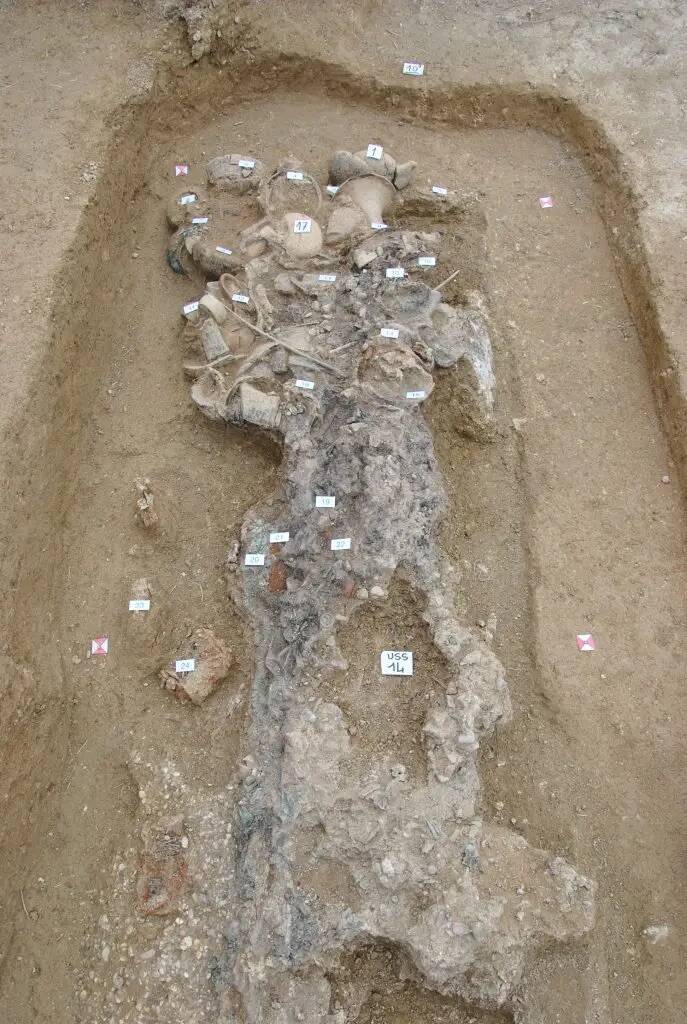
Soprintendenza Abap Ancona Pesaro UrbinoNear the prince’s tomb, researchers also found the burial of an elite woman.
The funerary complex that held these two tombs was notably unusual. Most Piceni burials were separated from the world of the living with a circular ditch, but researchers believe that this burial was instead surrounded by a circular, wooden, fence-like structure, as they discovered a ring of evenly spaced holes around the site.
How This Discovery Contextualizes Previous Finds At This Ancient Piceni Site
Researchers believe that these newly-discovered graves could illuminate important context for previous finds that have been made near this same site.
Most notable is the warrior’s tomb that was found nearby at Via del Leccio in 2020, which contained elite grave goods such as a helmet, spear, longsword, and dagger, in addition to a bronze jug and a rare folding stool. These previous finds indicated to researchers that this warrior, who lived in the late 6th century B.C.E., was an extremely important member of Piceni society.
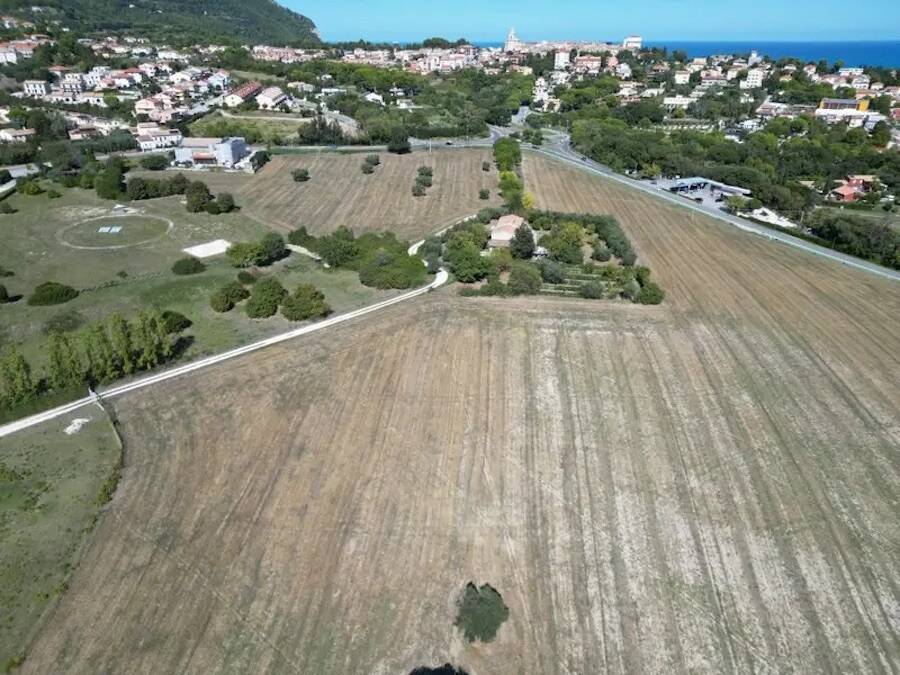
Soprintendenza Abap Ancona Pesaro UrbinoResearchers previously discovered a warrior’s tomb nearby at this same excavation site in 2020.
Now, archaeologists can place that warrior’s tomb in the broader context of the monumental funerary complex that was centered around the burial of the newly-excavated princely tomb.
The warrior’s grave likely belonged to the larger family cemetery built around the prince’s burial. With this layout in mind, researchers can better understand how the Piceni social hierarchy was structured and how the ruling class maintained authority across generations.
“For the first time, we can observe not just a single tomb, but an entire aristocratic nucleus, with hierarchical and symbolic relationships that open new perspectives on the structure of the elites who governed the large Picene center that developed in the area of present-day Conero,” Stefano Finocchi, the excavation’s director, said in a statement.
The researchers hope that the artifacts found in the prince’s tomb that are still being studied and restored will only deepen this newfound knowledge of the Piceni elite.
For one, the funerary complex sits at a slightly higher elevation that overlooks the surrounding landscape, making this necropolis all the more imposing — which only adds to experts’ understanding of how the Piceni aristocracy reinforced its power 2,500 years ago.
What’s more, early geophysical surveys of the area suggest that this massive cemetery extended much farther than previously thought. So perhaps there are additional burials and artifacts out there, just waiting to be found so that they can reveal more than ever before about the ancient Piceni.
After reading about the 2,500-year-old princely tomb discovered in Italy, take a look inside the catacombs of Rome. Then, see the 2,500-year-old chariot that was found in Spain.