The Toraja people treat death as just another phase of life — so much so that they tend to the corpses of their deceased loved ones as if they were still alive.






And if you liked this post, be sure to check out these popular posts:
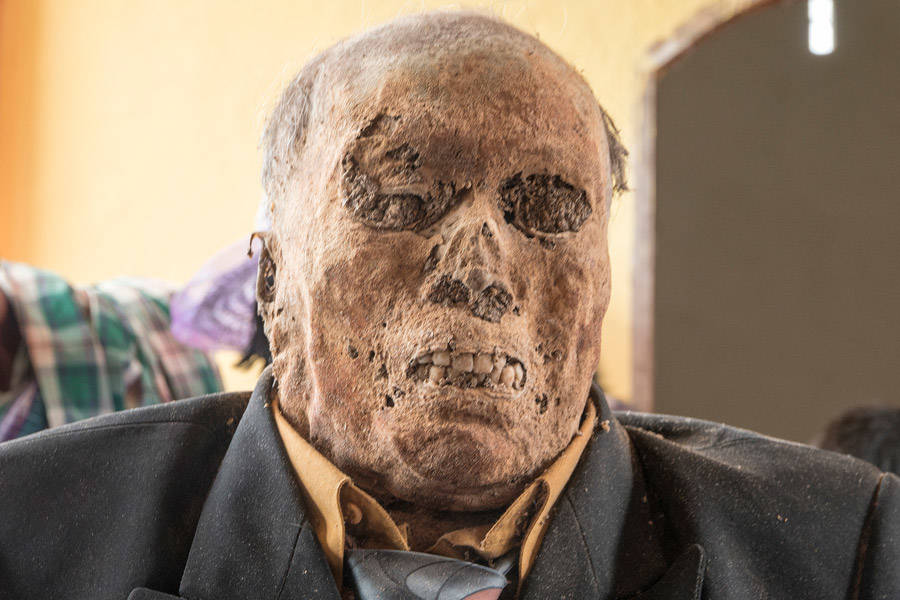
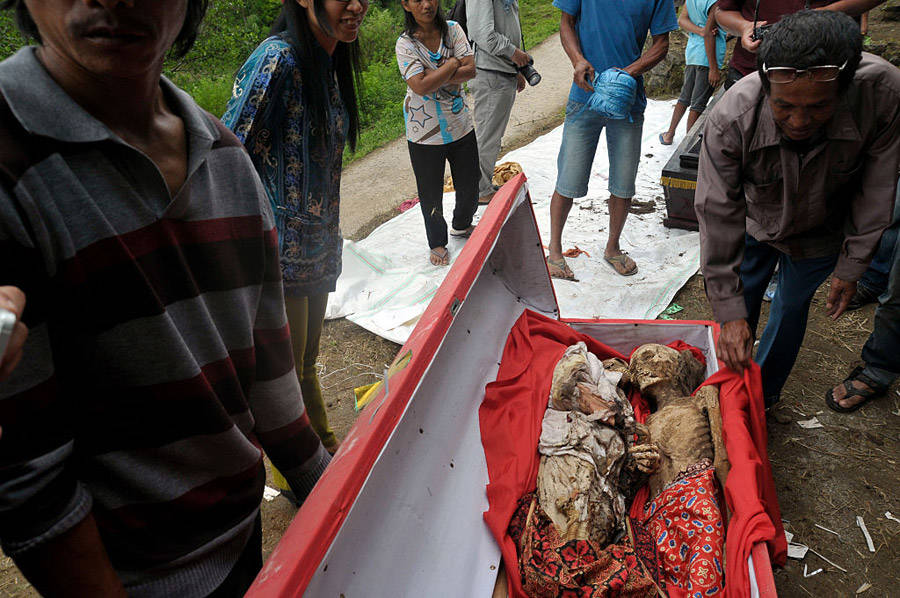
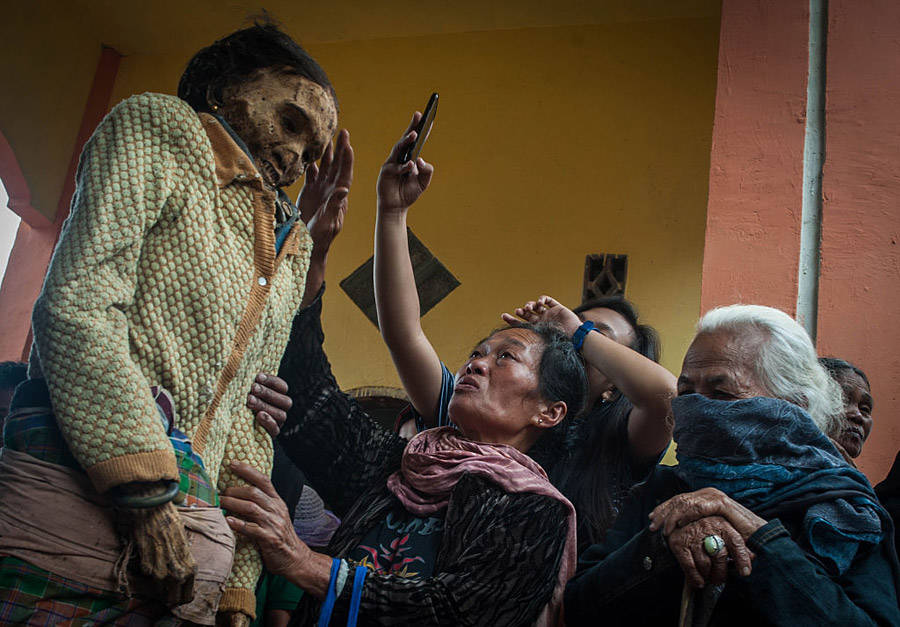
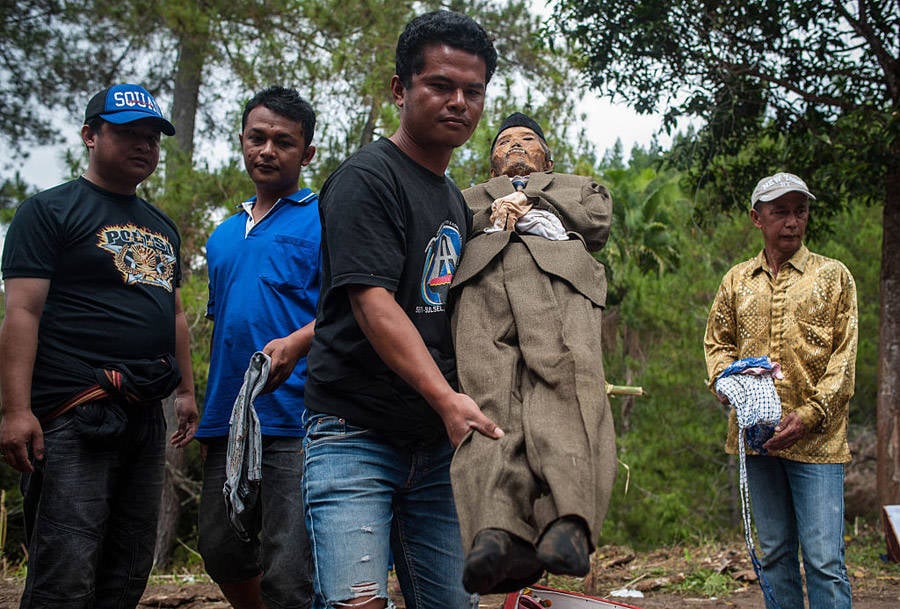
Aug. 25, 2016.Jefta Images/Barcroft Images/Getty Images
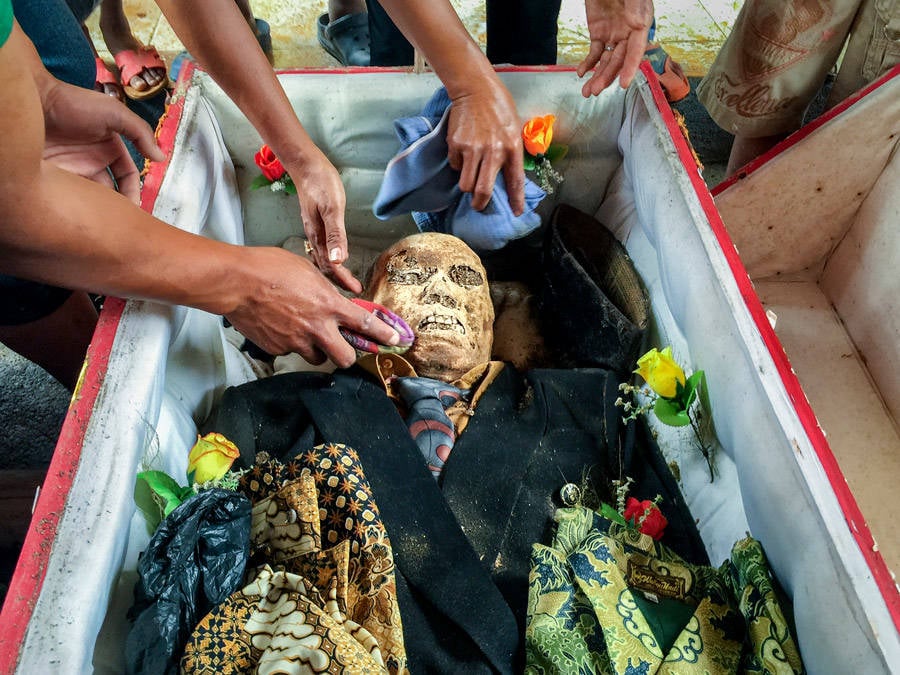
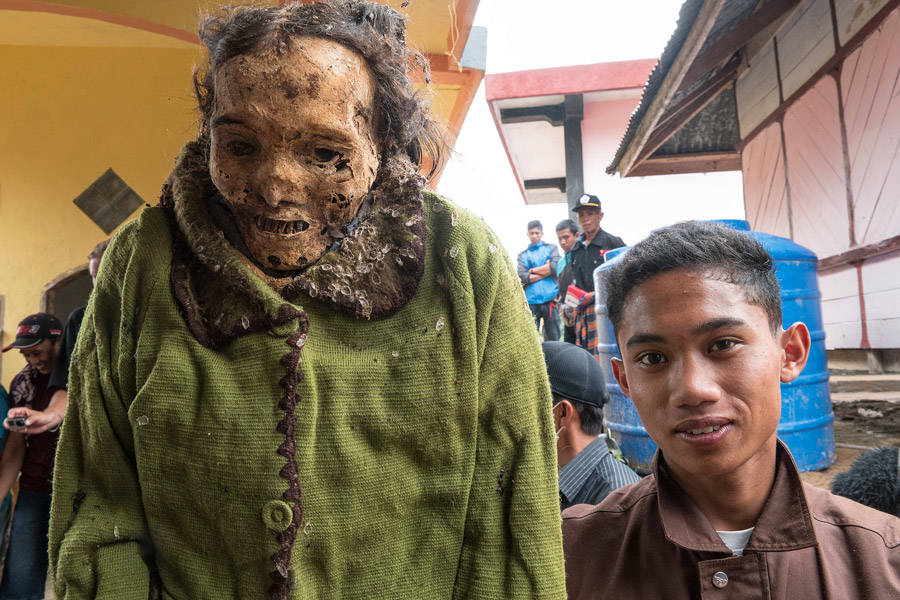
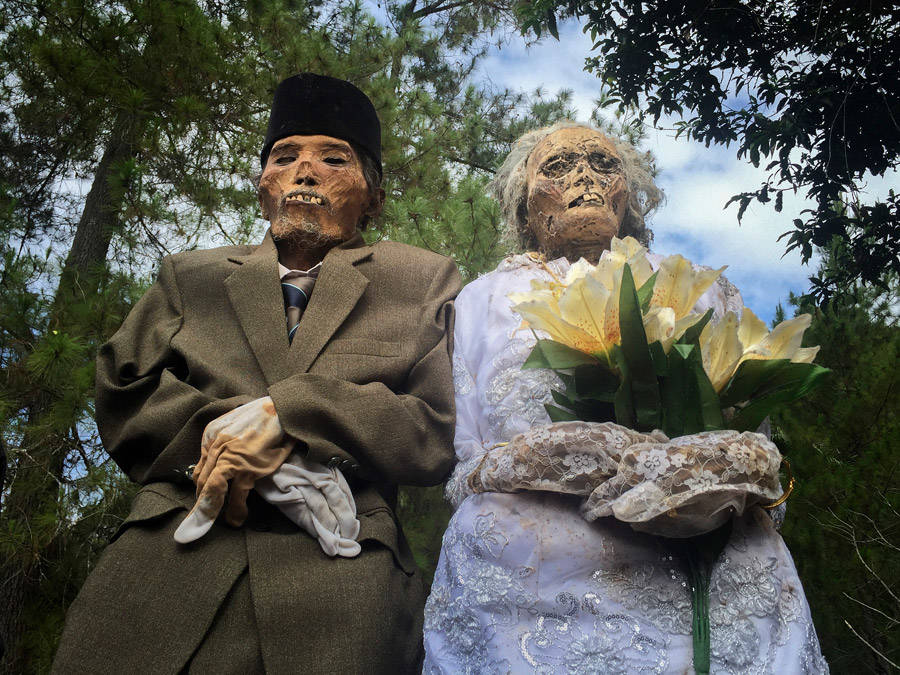
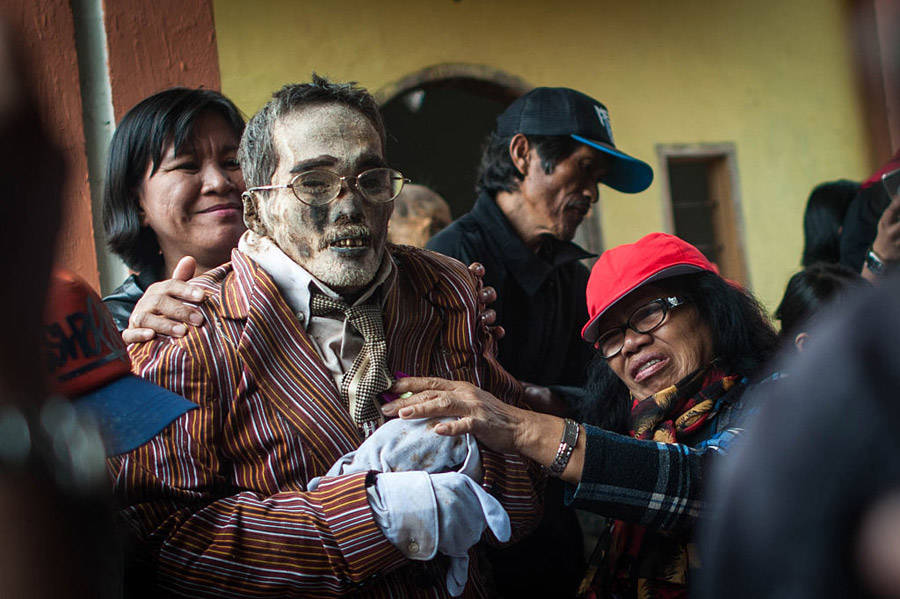
Bagan Pangala Village. September 2012. Bertrand Duperrin/Flickr
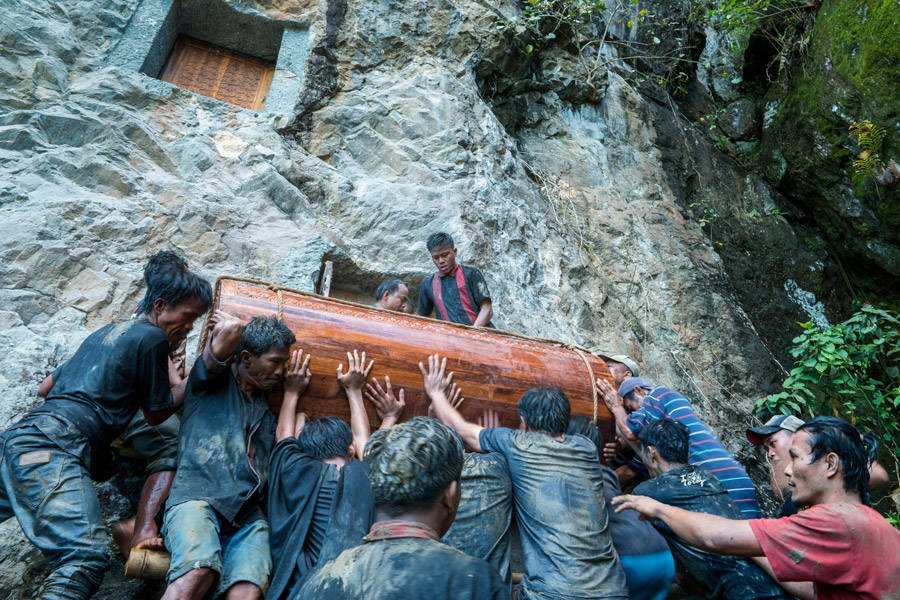
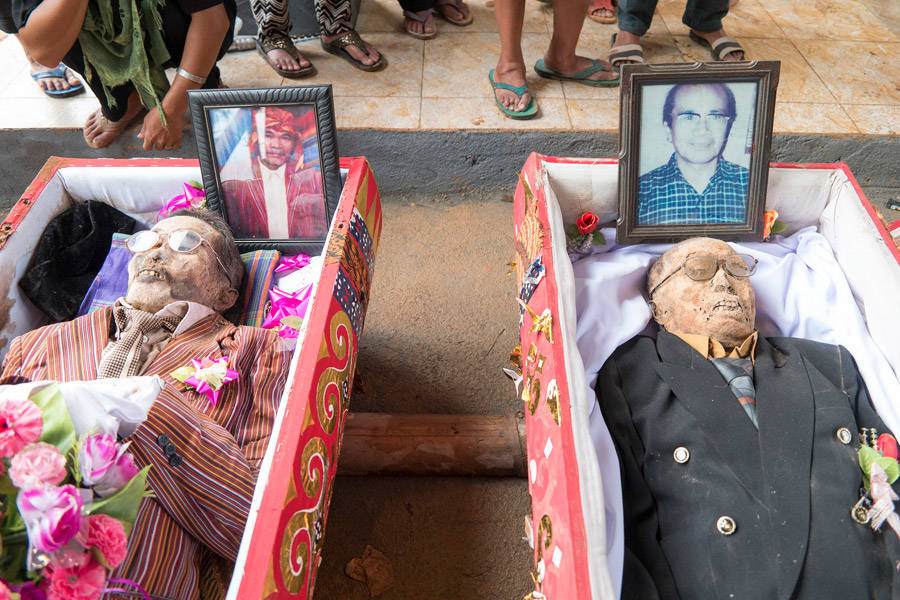
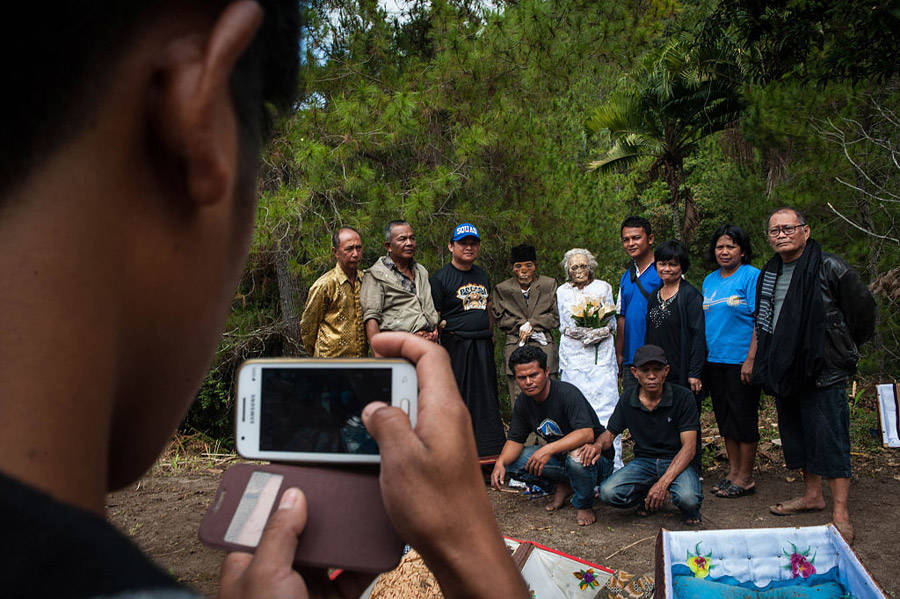
Panggala Village. August 2016. Sijori Images/Barcroft Images/Getty Images
August 2016. Muslianshahmasrie/Flickr
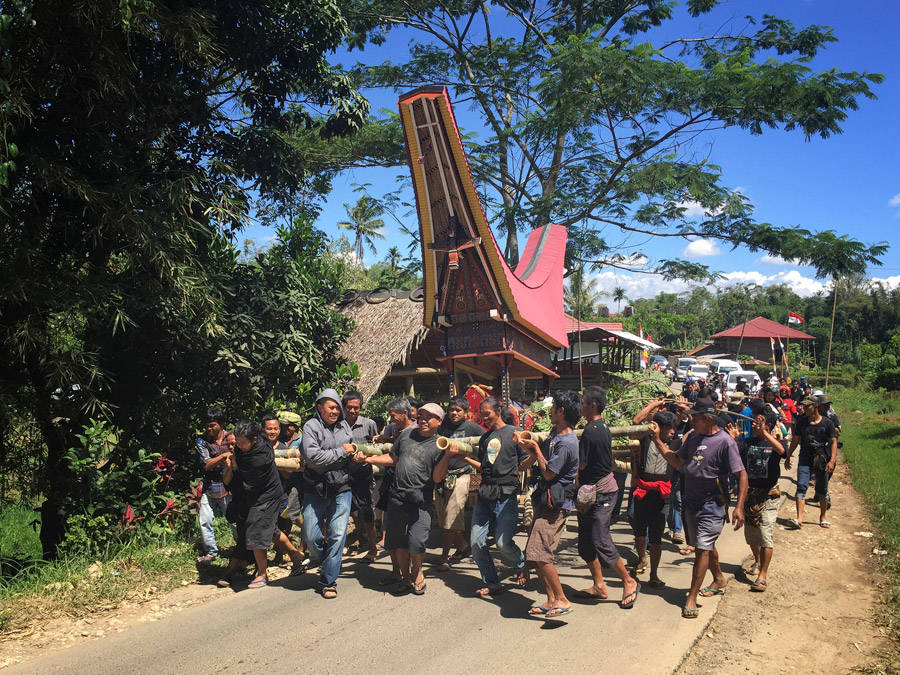
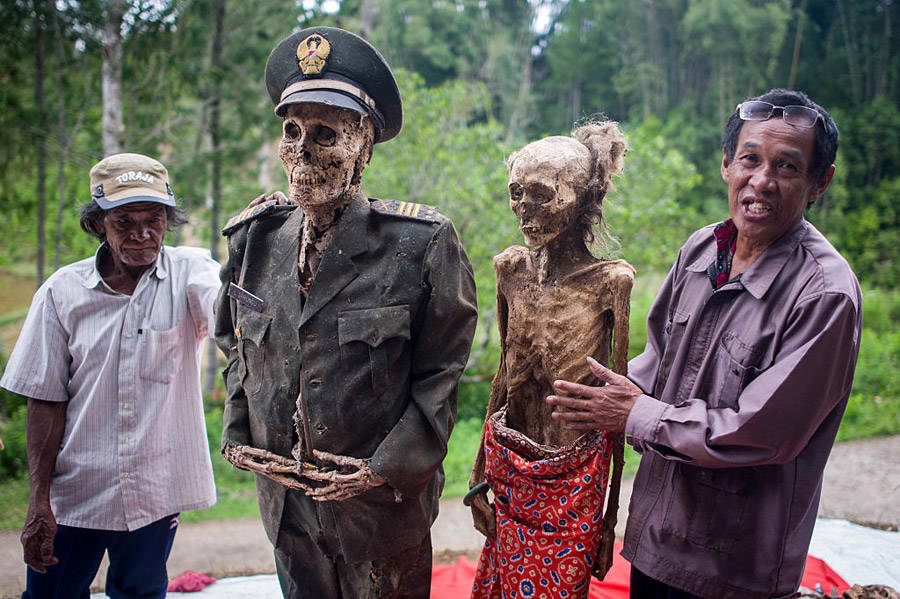
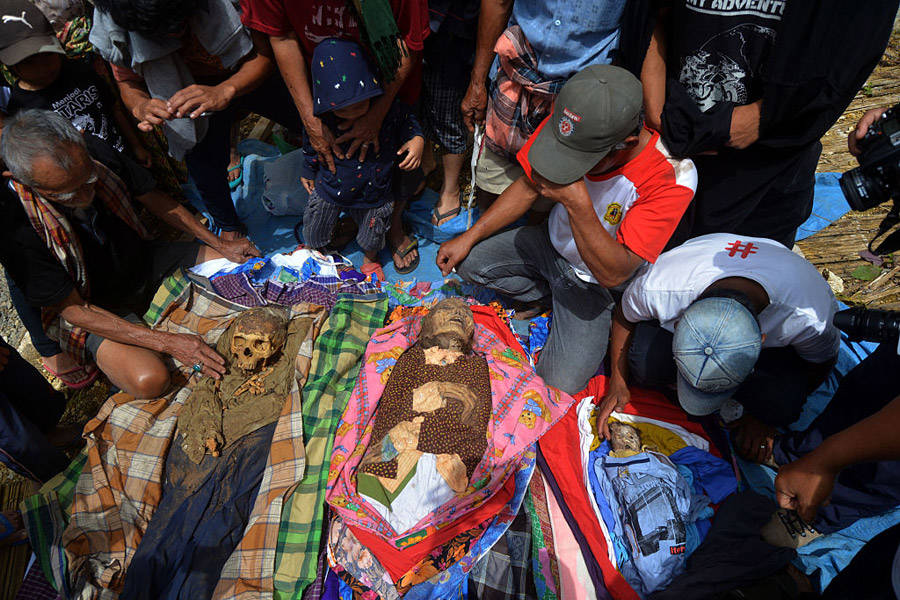
Toraja, Indonesia. Aug. 26, 2016.Sijori Images/Barcroft Images/Getty Images
Panggala Village. August 2016. Sijori Images/Barcroft Images/Getty Images


In Western culture, death is usually treated with sadness and fear. But the complete opposite is true for the Toraja people of Indonesia.
For them, death is not something to dread and avoid; it's a central part of living. After someone dies in Toraja culture, their body is preserved, cared for, and given an elaborate funeral. After burial, the Toraja people will also periodically exhume the dead to tend to them and change their clothes.
This is the fascinating story of the Toraja people and their death rituals.
The Mountain People Of Indonesia
The Toraja people have lived in the South Sulawesi region of Indonesia, at the geographical center of the country's sprawling archipelago, for thousands of years. The area is mountainous and tropical, and usually humid and rainy.
They had little contact with the outside world until the early 20th century, when the Dutch began to permeate their territory. The Dutch brought with them Western ideas, including Christianity. But though many of the Toraja people are Christian today, they've also preserved their cultural traditions.
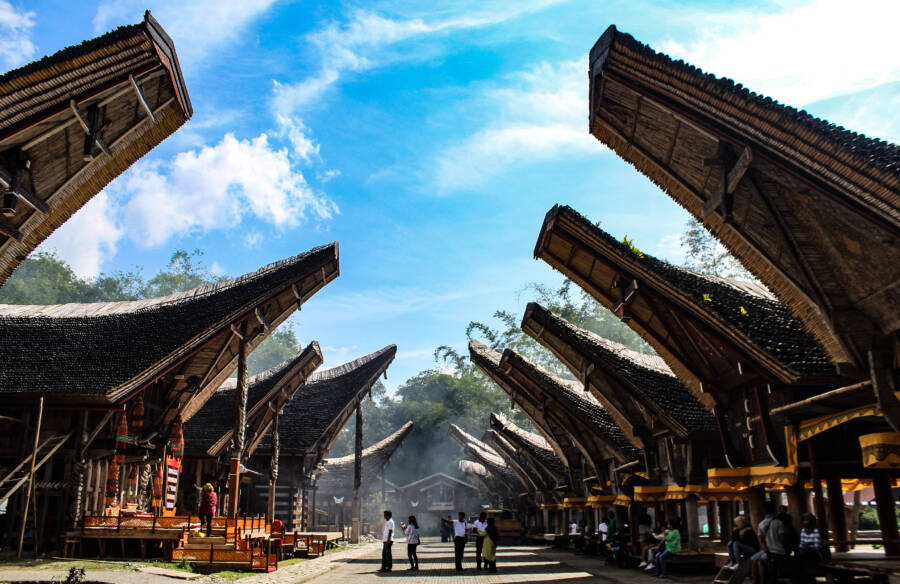
Ansensius/Wikimedia CommonsTongkonan, the Toraja's distinctly shaped homes.
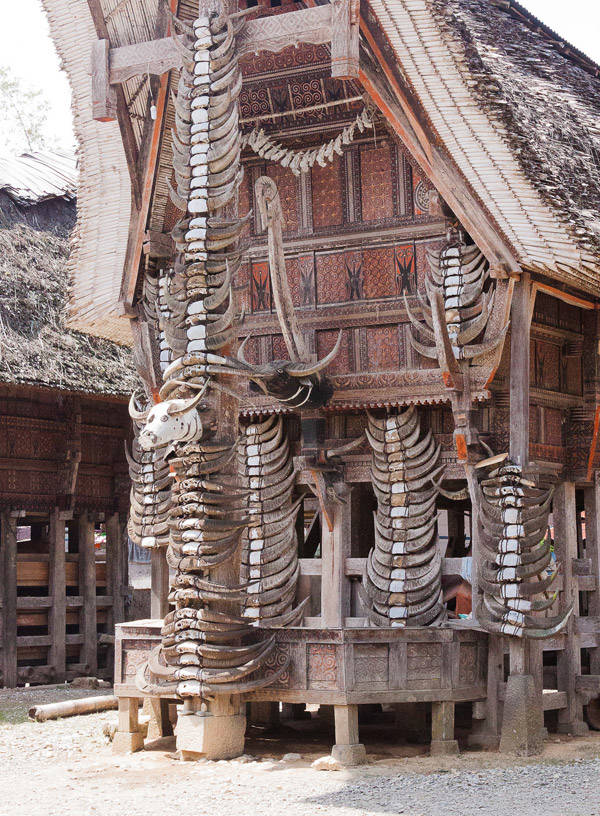
Today, most of the Toraja live in small villages in the Sulawesi highlands. These villages are known for their distinct houses known as tongkonan, which perch high on stilts and include sweeping saddleback roofs and ornate carvings. The home is the heart and center of Toraja life.
What truly sets the Toraja apart, however, is their treatment of the dead.
How Life And Death Coexist For The Toraja
For many cultures, death is the end. But for the Toraja people, it's just a part of life. In fact, it's seen as one of the most important parts of life.
When a loved one dies, their body is kept in the family home — sometimes for years — as the family saves up for an elaborate funeral. They are not seen as dead, but sick ("to makula'"). And their family lovingly tends to them.
The living family members visit the dead, talk to them, and bring them daily meals. The dead are treated with a combination of formaldehyde and water, which preserves their corpse as it slowly turns into a mummy.
"We do this because we love him and respect him so much," a Toraja man named Yokke told National Geographic, in reference to his deceased father.
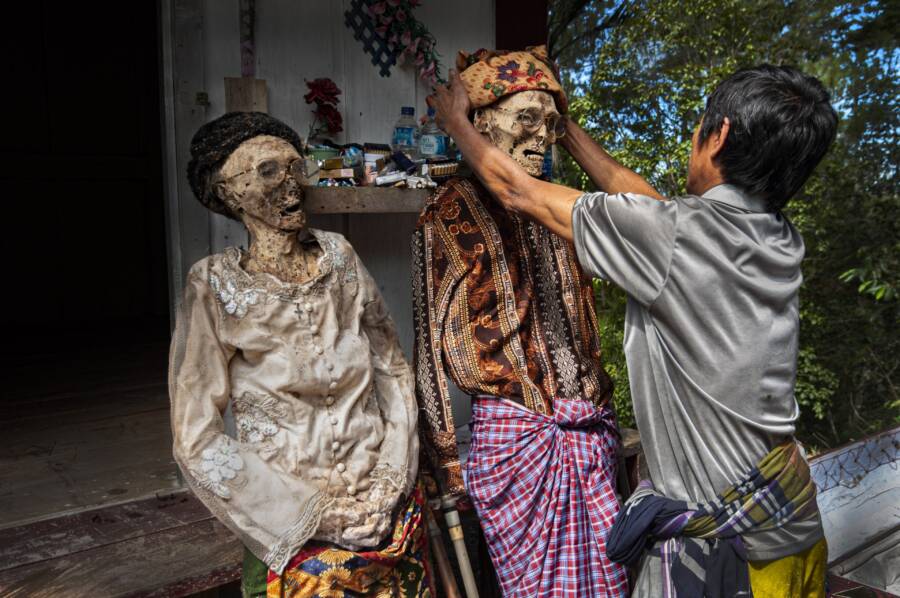
RaiyaniM/Wikimedia CommonsToraja corpses are preserved and turn into mummies, but even after they're buried they're periodically exhumed so that their loved ones can tend to them and change their clothes.
As they tend to the dead, Toraja families focus on raising money for a funeral. Funerals are highly important affairs, and can be so expensive that they plunge families into debt for generations. But for the Toraja people, funerals are highly important — and worth the cost.
"We're sad about the funeral," a Toraja man, Izak Sapan, told NPR ahead of his father's funeral. "But it is the most important day in my father's life. It is when his soul will make the journey to heaven."
Traditional Toraja Funeral And Burial Practices
While the cost of a Toraja funeral can vary, they're usually expensive. Families spend anywhere from tens of thousands to hundreds of thousands of dollars on funerals to give their loved ones a proper send-off.
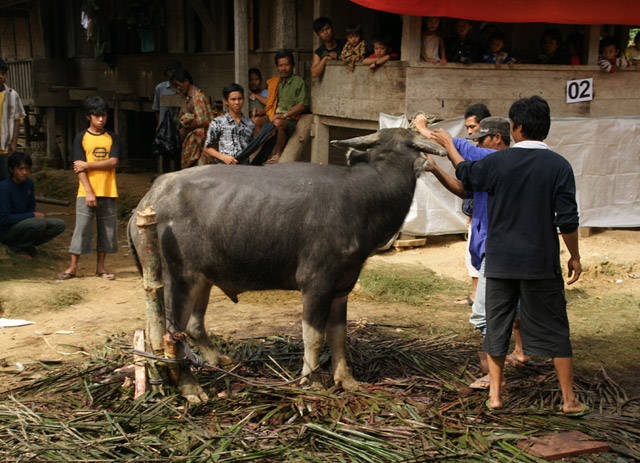
Rejselyst/FlickrA water buffalo is prepared for slaughter as part of a funeral celebration.
As NPR reports, Sapan's father's funeral was expected to cost $18,000 (roughly five times as much as most Indonesians make in a year), draw 5,000 guests, and last for several days. Yet his funeral was only considered to be "average" sized. Some are even more elaborate and more expensive.
Funeral festivities include prayers, dancing, singing, and, importantly, the sacrifice of expensive water buffalo. As Visit Toraja notes, it's believed that each buffalo sacrificed helps the dead move more quickly to Puya, the afterlife. Sometimes, hundreds of animals can be sacrificed, after which their meat is divided and shared with the funeral guests.
It's not uncommon for tourists with a strong stomach to be invited by a family to stay for the slaughter, as their presence boosts the family's stature.
After the funeral, the bodies of the dead are taken to their resting place, usually in a cliffside tomb or an ancestral funeral tower. Meanwhile, if the deceased is an infant, the Toraja traditionally placed them in a hollowed out portion of a tree. According to The New York Times, the tree is believed to absorb the skeleton (though this tradition is practiced less and less).
One last key element of the funeral are wooden or bamboo effigies of the deceased called tau tau. These effigies are meant to be placed on a balcony in front of the dead person's tomb.
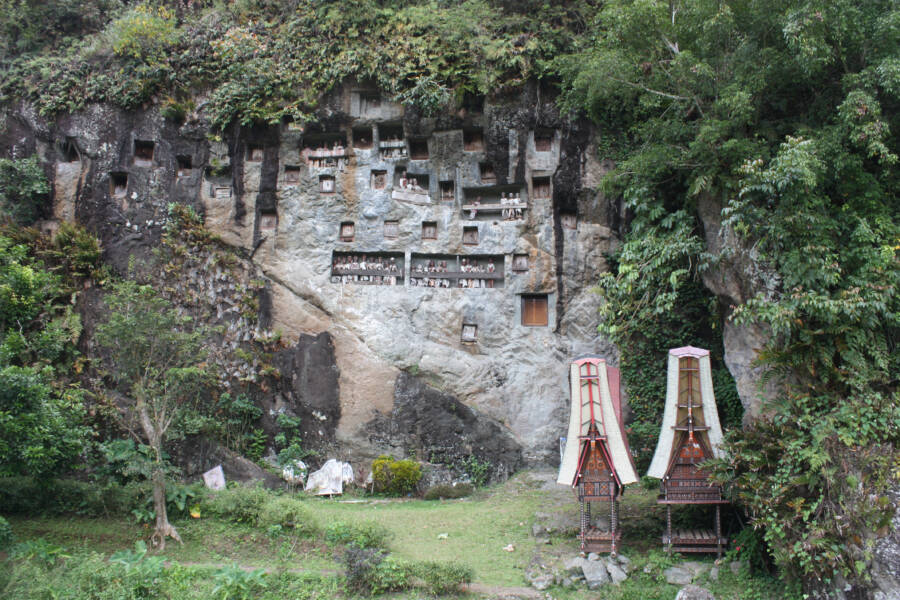
Arian Zwegers/FlickrA cliff containing the coffins and effigies of many Toraja.
But the story of the Toraja death rituals doesn't end here.
Ma'nene: Refreshing The Dead
After the funeral and burial, the Toraja continue taking care of their dead. In a ritual known as ma'nene, Toraja families tidy up the mummified bodies and their tombs every one to three years, usually in August.
Relatives who may have been dead for years — even decades — are removed from their crypts, cleaned, and changed into a fresh set of clothes. This provides a chance to see how well the dead are holding up. According to National Geographic, a well-preserved body is seen as a blessing.
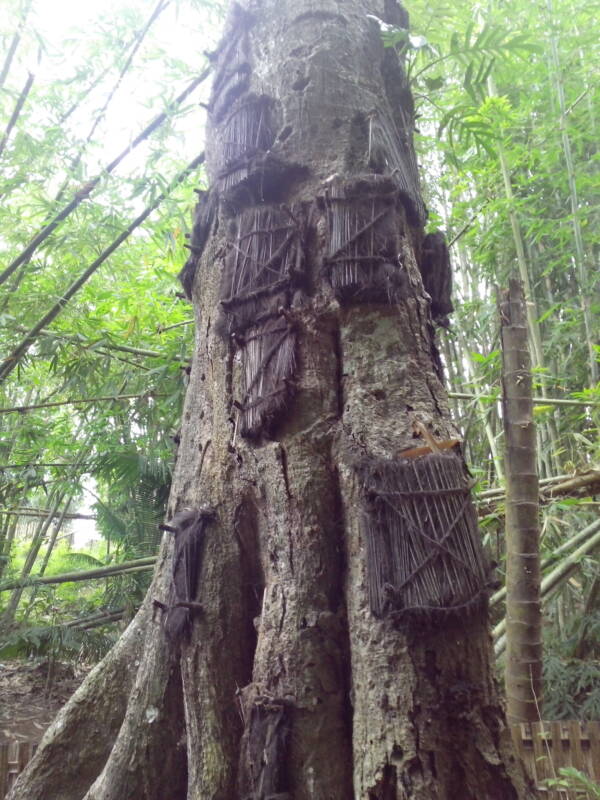
Cahyo Ramadhani/Wikimedia CommonsThe graves of newborns in a Toraja tree.
Most importantly, this ritual also gives an opportunity for the younger generations to connect with their ancestors. It's not unusual to see young Toraja people share a smoke with their dead great-grandfathers, or take selfies with their mummified grand-grandmothers.
The practice helps to remind the Toraja that they're part of a long line of people stretching back generations.
"My father is in here," Petrus Kambuno told National Geographic, pointing to his family crypt, "but I am here, so he is not really dead. My mother is in here, but I have daughters, so she is not really dead. My daughters have been exchanged for my mother. I have been exchanged for my father."
Indeed, the Toraja truly embrace the idea that the dead are never really gone. Death is not seen as something to fear, but as a normal step in life. The dead are honored, cared for — and never forgotten.
After reading about the Toraja people and their death rituals, go inside the question of what exactly happens after we die. Or, discover the strange story of Sin Eaters, the people hired to "eat" the sins of the dead.