With olive oil workshops under almost every structure citywide, Syedra would have been one of the Mediterranean's key suppliers, shipping its wares as far as North Africa and the Levant.
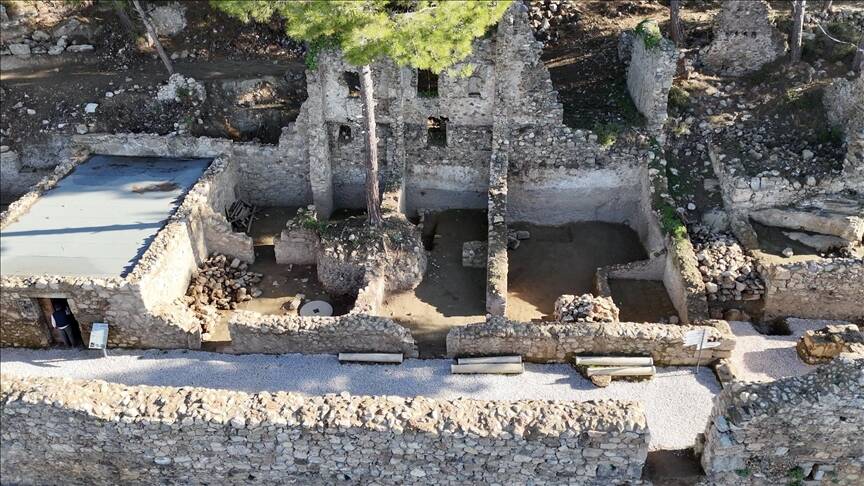
AA PhotoArchaeologists have found dozens of olive oil workshops across the city of Syedra, which is roughly 3,000 years old.
In many ways, olive oil was the lifeblood of the ancient Mediterranean. Called “liquid gold,” it was used for everything from cosmetics to medicine to religious rituals. And archaeologists have just uncovered one of the major centers where olive oil was once produced during antiquity.
In the ancient city of Syedra, located in present-day Turkey, archaeologists have found evidence of a sprawling olive oil operation. Curiously, while most olive oil at the time was produced outside of urban centers, Syedra’s olive oil was seemingly produced within the city walls, making this site not only pivotal, but unique.
The Production Of Olive Oil In Syedra During Antiquity
According to The Anadolu Agency, excavations led by Alanya Alaaddin Keykubat University discovered a wealth of olive oil workshops across the 3,000-year-old port city of Syedra during excavations that began in 2019.
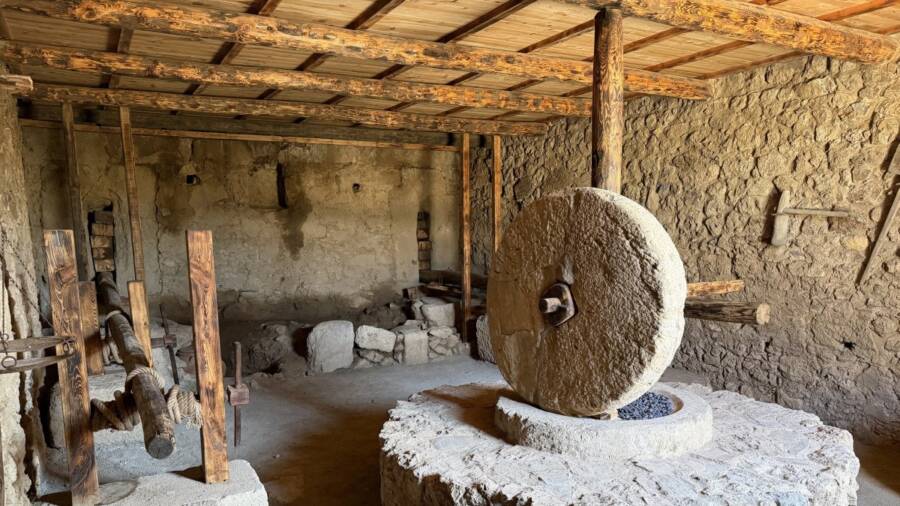
AA PhotoA restored olive oil workshop in Syedra.
“Through excavations, we have uncovered nearly 20 olive oil workshops,” said excavation director Professor Ertug Ergurer. “Beyond that, we have identified over 100 such workshops across the entire ancient city. This indicates very intensive olive oil production here.”
Indeed, archaeologists excavating Syedra found evidence of olive oil production almost everywhere they looked. Nearly every structure in the ancient city seemed to contain some kind of workshop, and many held “pithoi,” large vessels for storing olive oil.
This indicates that Syedra was once an important industrial hub, and it also suggests that the city played a unique role in antiquity. Most olive oil production in the ancient world, Ergurer noted, took place in more rural areas outside of urban centers.
“The presence of olive oil workshops within the city was intriguing for us,” he said. “Typically, production occurs outside the city, beyond the walls. Here, however, they are under nearly every building, which is noteworthy. This shows that olive oil production was carried out on a massive scale.”
This production allowed Syedra to play a significant role in the ancient Mediterranean.
How Olive Oil Made Syedra A Commercial Powerhouse In The Ancient Mediterranean
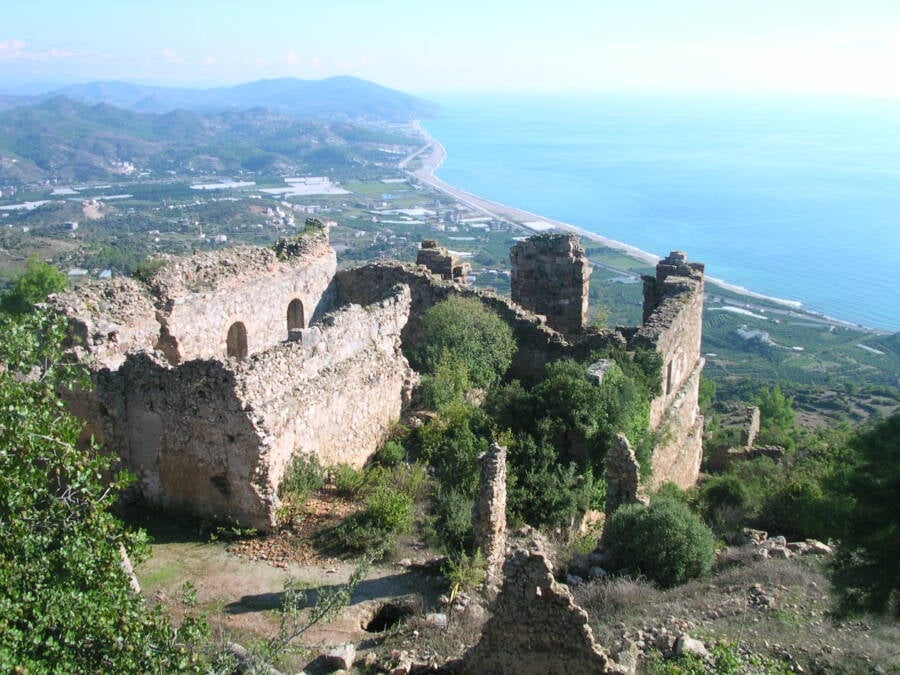
matzi01/Wikimedia CommonsThe ancient ruins of Syedra, perched along the coastal hills of southern Turkey’s Antalya province.
Settled in the 7th century B.C.E., Syedra served as an important port in the Mediterranean during antiquity. It likely reached its heyday during the Roman period, between the 2nd and 4th centuries C.E., when its population was between 4,000 and 5,000 people.
Indeed, archaeologists have found evidence that Syedra was once a thriving metropolis. Its citizens once enjoyed Roman amenities like a stadium, baths, a theater, water infrastructure systems, and colonnaded streets. The surplus of olive oil workshops under the city’s structures suggests that the olive oil industry was an important part of Syedra’s commerce and culture.
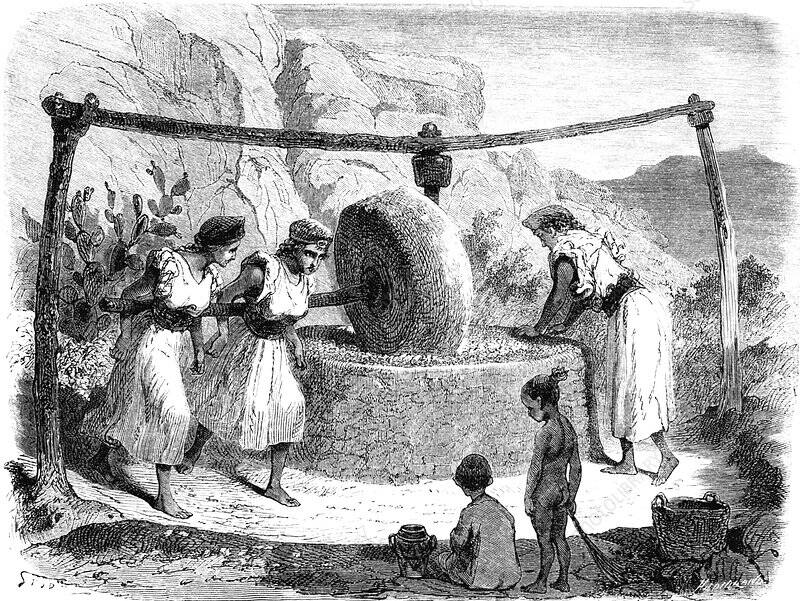
Public DomainA 19th-century depiction of olive oil production during antiquity.
What’s more, Ergurer suspects that most of the olive oil produced in Syedra was exported elsewhere. After all, olive oil played an important role in the ancient world.
Olive oil cultivation in the Eastern Mediterranean began around 6000 B.C.E., and swiftly spread across the ancient world. Hippocrates called olive oil “the great healer” and Homer famously referred to it as “liquid gold.” Olive oil was used for cooking, perfume, cosmetics, medicine, and soap, as well as for anointing both athletes and the dead.
And Syedra was seemingly one of the many important production centers for olive oil throughout antiquity. Tucked between almost every structure in the ancient city is evidence of olive oil production, suggesting that the “liquid gold” of the ancient world was the city’s lifeblood. Produced in massive quantities, it seemingly brought comfortable prosperity to Syedra for centuries before it was finally abandoned in the 13th century.
Until that point, however, olive oil produced in Syedra was likely sent out to the many corners of the ancient Mediterranean, making its way from the shores of the city to far-off lands in North Africa, the Levant, and beyond.
After reading about the sprawling olive oil operation that was unearthed in the ancient port city of Syedra, discover the astounding story behind the production of Tyrian purple, the vibrant dye coveted by elites throughout antiquity. Then, learn about the incredible lost stories of the Seven Wonders of the Ancient World.