Cameras set up in a wildlife sanctuary in southern Thailand captured the first photographs of flat-headed cats in the country since 1995.
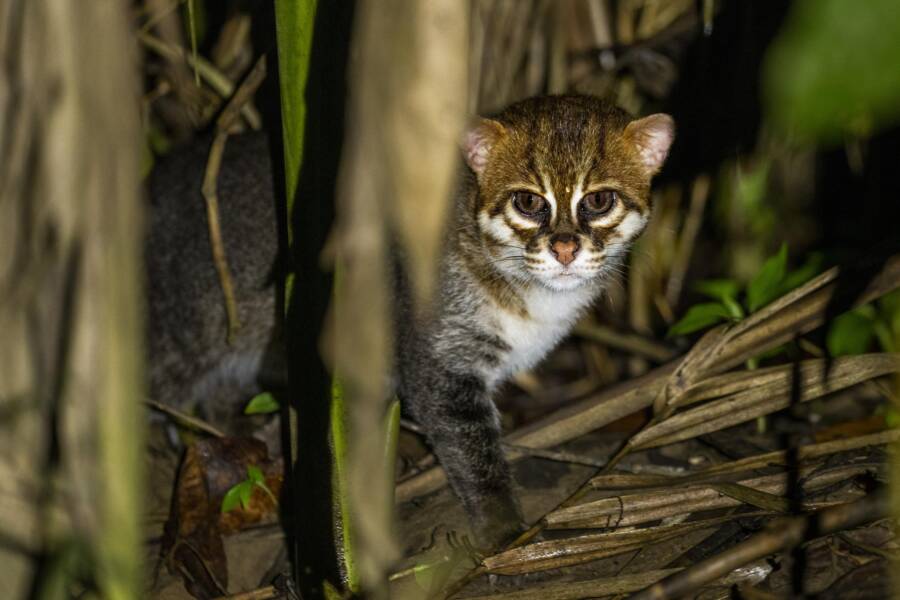
Sebastian Kennerknecht/PantheraA rare photograph of the elusive flat-headed cat.
For the first time in 30 years, researchers have spotted elusive flat-headed cats in Thailand. They were seen on camera in a wildlife sanctuary near the country’s southern border, renewing the hopes of conservationists.
The species, so rarely observed that it was classified as endangered in 2008, had long been considered “possibly extinct” in Thailand. Then, from 2024 to 2025, scientists carried out the largest-ever survey of the wild felines. The results shocked them.
Rare Photographs Of A ‘Possibly Extinct’ Cat Species
According to a press release from Panthera Thailand, an organization that focuses on the conservation of wild cats, researchers captured the photographs in cooperation with Thailand’s Department of National Parks, Wildlife, and Plant Conservation (DNP) during an ecological survey that launched in 2024. Remote camera traps placed around protected wetlands in the country captured 13 photos of the cats in 2024 and an additional 16 images in 2025.
Notably, researchers spotted a female flat-headed cat with her baby — an especially rare sighting, given that litters typically only produce a single cub. This is one of the reasons why the species struggles to grow. Still, the observation of a mother with her cub does provide evidence of ongoing reproduction, a positive sign for the species’ future.
It also explains, in part, why flat-headed cats have proven so difficult to observe.
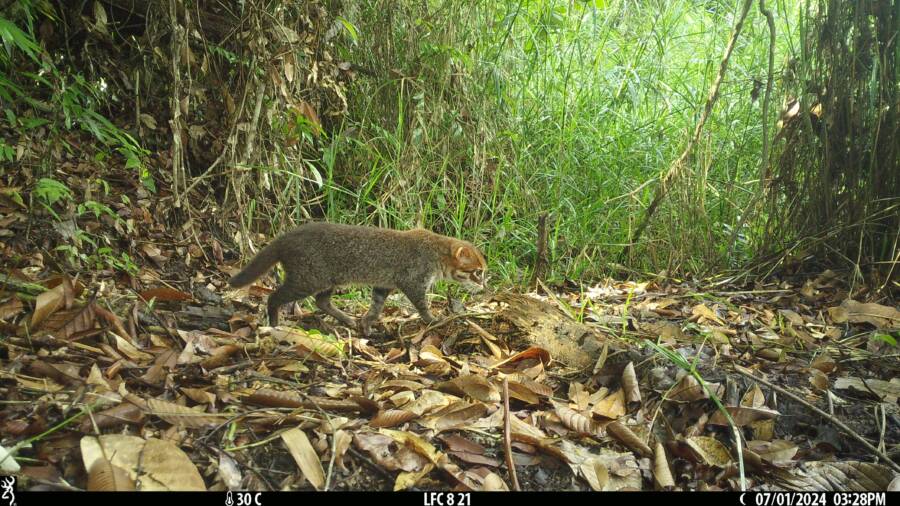
Sabah Forestry Department/Sabah Wildlife Department/PantheraOnly around 2,500 adult flat-headed cats are estimated to exist today.
With only an estimated 2,500 adults remaining globally, catching a glimpse of these small felines is not a common occurrence. With their webbed toes, they prefer habitats like tropical rainforests, swampy regions, marshes, lakes, and forests located along rivers, all of which are somewhat inaccessible for researchers but provide the cats with their preferred diet of fish, frogs, and shrimp.
Flat-headed cats are named for their flattened foreheads and elongated skulls. They are roughly the size of domestic house cats but only half the weight, making them the smallest wild cats in Southeast Asia.
Their lack of any distinctive markings makes it difficult to say just how many individuals were recorded during the survey, but their presence alone could be a boon for researchers looking to protect the natural habitats of Thailand. “Rediscovery of the flat-headed cat in southern Thailand is a significant win for conservation in Thailand and the broader Southeast Asia region where the species is still found,” said Athapol Charoenshunsa, the director general of the DNP.
Charoenshunsa continued, “Uncovering the existence of a species once thought lost in the region highlights the dedication and effectiveness of DNP officials in protecting border forests and preserving rare wildlife populations despite challenging political and social circumstances that make conservation work difficult.”
Indeed, researchers hope this survey is only the beginning of their conservation efforts.
Flat-Headed Cats Bolster Conservation Efforts In Thailand
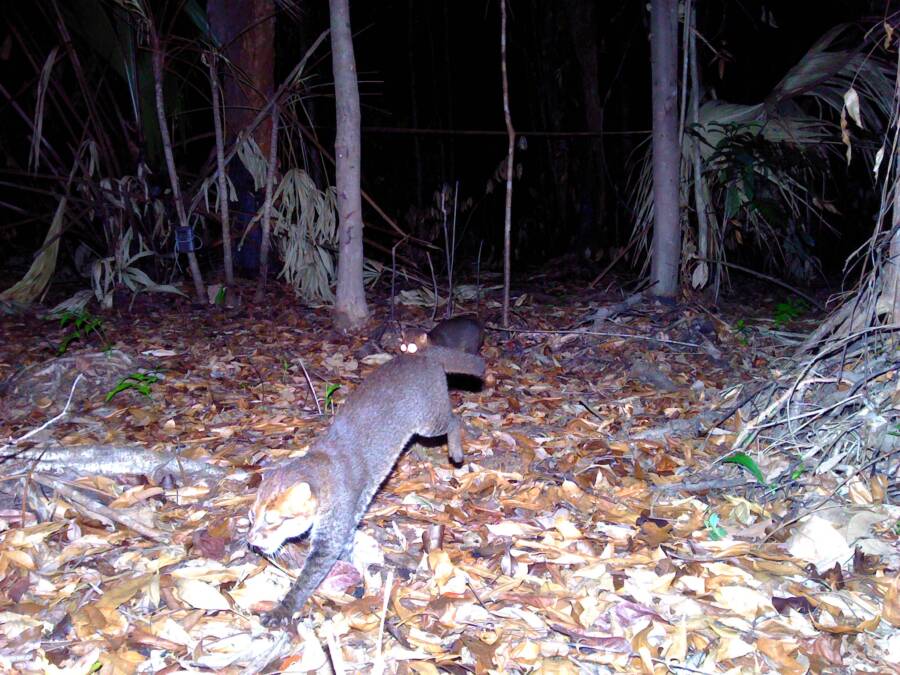
DNP/Panthera ThailandFlat-headed cats have not been scientifically observed in Thailand since 1995.
Some of the greatest threats to flat-headed cats are the direct result of human actions: fishing, agricultural encroachment, hunting, water pollution, and the spread of disease from domestic animals. And as habitats continue to shrink, competition increases, making it even harder for these tiny felines to survive. As a result, they have largely moved to remote and undisturbed locations. Researchers emphasized just how crucial it is, then, to protect these environments.
“Even species thought to be lost can be rebuilt if we invest in protecting the habitats they depend on,” said Panthera’s Science Director, Wai Ming Wong. “Flat-headed cats’ persistence in Thailand suggests that these ecosystems still hold remarkable biodiversity but also underscores how urgently we must conserve and restore them before they vanish entirely.”
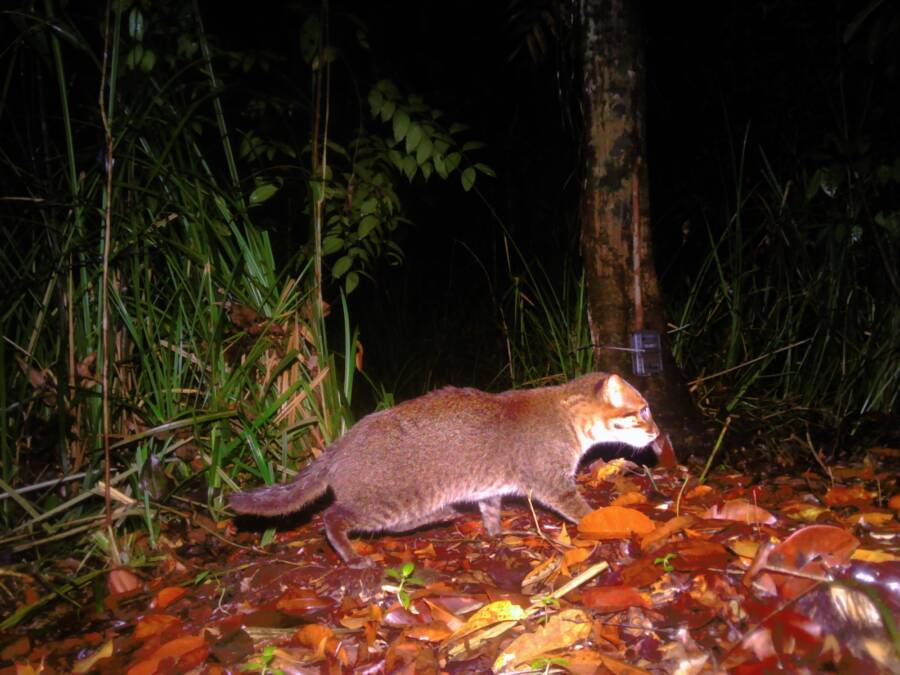
DNP/Panthera ThailandThe smallest wild cats in Southeast Asia, flat-headed cats weigh half as much as the average house cat.
Panthera and the DNP stated that they will continue to work together to research the species, its habitat, and the most effective pathways for conservation. Future steps include more training for park rangers, prioritizing field gear and trap cameras, and working with local communities to identify threats to local environments.
“This is a landmark moment for Thailand and a powerful reflection of our long-standing commitment to conservation,” Charoenshunsa said. “The flat-headed cat’s resurgence is a well-timed reminder that when we safeguard our natural heritage, we safeguard our nation’s wild habitats and future.”
After reading about the rediscovery of Thailand’s flat-headed cats, learn about the misunderstood fisher cats of North America. Or, check out seven places around the world that have become overrun with cats.