Tsewang Paljor was long thought to have been the frozen corpse that became a macabre landmark referred to as "Green Boots," but in 2026 Indian authorities identified the body as his fellow officer's.

Family Photo/Find a GraveTsewang Paljor died on Mount Everest at age 28, but his corpse became one of the mountain’s most famous landmarks.
On May 10, 1996, Tsewang Paljor set out to break a record. The Indo-Tibetan Border Police officer hoped to become part of the first Indian expedition to summit Mount Everest from the North Face. He was seemingly successful, but he wouldn’t live to experience the prestige.
During the descent from the peak, Paljor and the two other members of his team were caught in a blizzard. They were never heard from again. In the days following the disaster, climbers noticed a frozen body curled up along the trail. The corpse was wearing bright green boots — the very same ones that Paljor reportedly owned.
“Green Boots” became a macabre landmark for Everest’s mountaineers. Located at an elevation of 27,900 feet, the body was a sign that their climb was almost over. It was also a reminder that they could easily suffer a similar fate.
While most people long agreed that the famous corpse was Tsewang Paljor, Indian authorities identified Green Boots as his fellow officer, Dorje Morup, in 2026.
But the story of Tsewang Paljor — “Green Boots” or no “Green Boots” — remains a harrowing reminder of both the allure and danger of Mount Everest.
Who Was Tsewang Paljor?
Born in Sakti, India, in 1968, Tsewang Paljor was known for his quiet and compassionate demeanor from an early age. Though he was shy, he was polite and would do anything he could to help those he loved.
So after finishing 10th grade, he dropped out of school to support his family.
He was thrilled to secure a job as an Indo-Tibetan Border Police officer, and he dedicated himself to his career as earnestly as he devoted himself to his parents and siblings. Paljor often volunteered for duties that no one else wanted to do, and this eagerness landed him a spot on the force’s 1996 Mount Everest expedition.
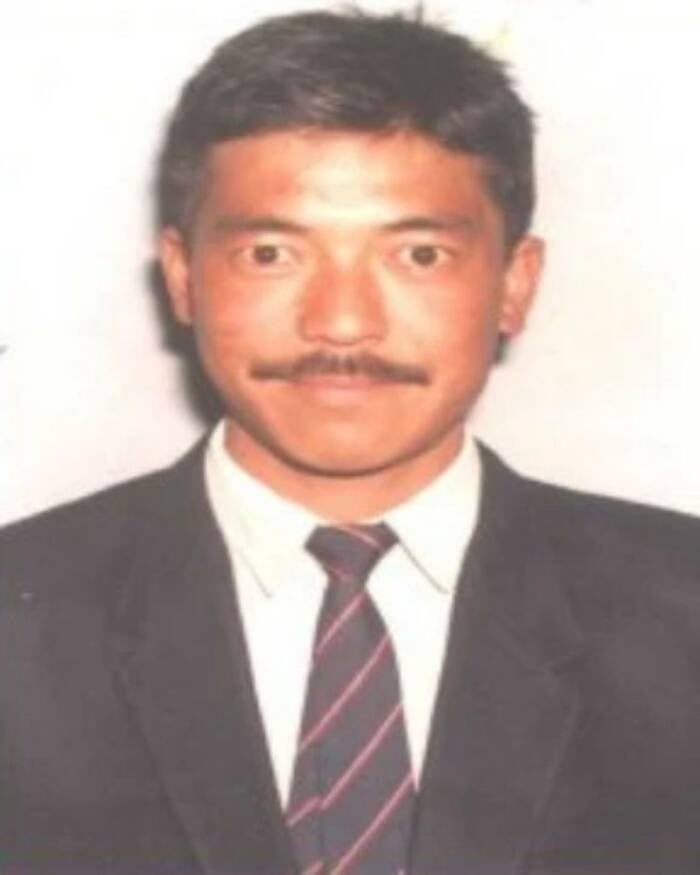
Find a GraveTsewang Paljor likely froze to death or perished from lack of oxygen on Everest.
“He told a small lie, that he was going to climb a different mountain,” Paljor’s mother, Tashi Angmo, told the BBC’s Rachel Nuwer in 2015. “But he also told some friends what he was actually doing, and word got back to us.”
Paljor’s family was supportive of his ambitions, of course, but they were also worried. “He must have thought, if he climbs Everest, it will bring benefits for his family,” Angmo said. She begged her son not to go, but he wasn’t worried. He knew he could do it.
“I always thought of him as a kind of Superman,” said Paljor’s younger brother, Thinley Namgyal. But despite his skills and enthusiasm, Tsewang Paljor was no match for Mount Everest.
The 1996 Mount Everest Disaster
On the morning of May 10, 1996, Tsewang Paljor began his summit push alongside two fellow officers, Tsewang Smanla and Dorje Morup. They got a late start, but they were determined to make it to the top of the mountain before dark.
Around 3 p.m., the men radioed their commander, Mohinder Singh, to tell him they were almost at the peak. He ordered them to turn around, as the Sun was setting and weather conditions were deteriorating. But they were so close.
“Sir, please allow us to go up!” Paljor begged, as reported by the BBC. Then, the radio cut off.
Two-and-a-half hours later, the climbers called Singh once again. They had reached the summit, and they were heading back down. As everyone back at camp celebrated, Paljor, Smanla, and Morup began their descent.
Then, a blizzard struck.
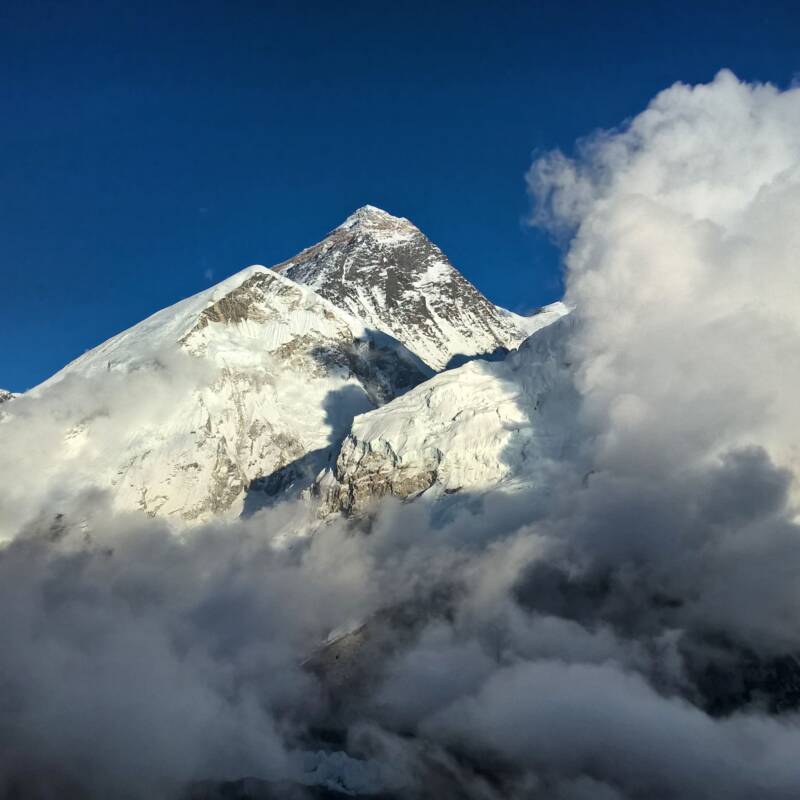
Manjil.ghimire/Wikimedia CommonsThere is some debate as to whether Tsewang Paljor and his team ever made it to the summit of Mount Everest.
As the night went on, Singh knew something was wrong. He asked a team of Japanese climbers who were about to depart to keep an eye out for the men, and they agreed. Around 9 a.m., they came across Morup, who was frostbitten and moving slowly. They helped him clip into a fixed line and continued their ascent.
Accounts of what happened next vary. Singh claims that the Japanese team passed Paljor and Smanla but didn’t stop to help them. One of the Japanese climbers, Hiroshi Hanada, later said, “We did not see anybody who seemed to be in trouble or dying.”
Another member of the Japanese team suggested that Paljor and Smanla would have been in climbing gear that made it impossible to know who they were. It may have also concealed that they were in distress.
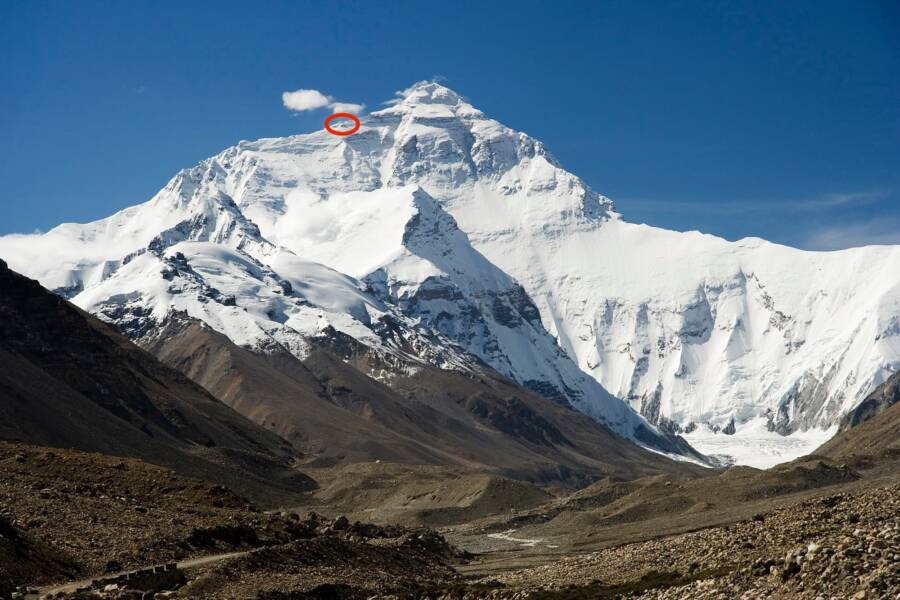
Luca Galuzzi/Wikimedia Commons; thegreenboots.comThe circled location shows where on Mount Everest Green Boots was located.
Nobody will ever know what really happened on the mountain that night. The body of Smanla, who reportedly stayed at the peak longer than Paljor and Morup, was found near the Second Step, at an elevation of roughly 28,300 feet. Morup’s corpse may have been found, too, though there is some debate surrounding this claim.
Five other people also died on Everest between May 10 and 11, 1996, including Rob Hall and Scott Fischer. And Beck Weathers walked away from the disaster with one of the most incredible survival stories of all time.
Soon after Paljor’s death, climbers captured footage of a body huddled in a small cave just off the trail. “Green Boots,” as the corpse came to be called, was widely believed to be the corpse of Tsewang Paljor. But is it?
Is Tsewang Paljor Really “Green Boots”?
“Green Boots” got his name from the neon green Koflach boots he wore — and Paljor reportedly had the same pair. However, the body has never been positively identified as Tsewang Paljor’s. In fact, in 2026, Indian authorities tested the DNA of the corpse and discovered it actually belonged to Morup.
Still, the belief that Paljor is Everest’s most famous body endures. And despite his death on the mountain, his loved ones still find honor in his accomplishments.
Even mountaineer Jon Krakauer’s claims in his book Into Thin Air that Paljor and his team never actually reached the peak of Everest can’t dampen their pride. Krakauer wrote that the men from the Indo-Tibetan Border Police likely stopped 500 feet before the summit, thinking they’d made it to the top due to poor visibility and confusion from the lack of oxygen in Everest’s Death Zone.
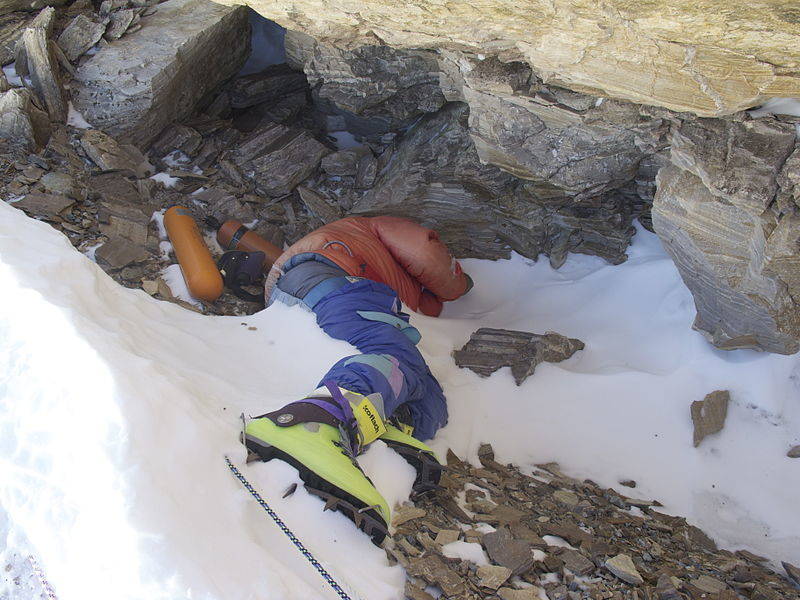
Maxwelljo40/Wikimedia CommonsIt’s widely believed that “Green Boots” is the body of Tsewang Paljor, but in 2026, it was determined to be the body of Dorje Morup.
But Singh doesn’t believe this. “They made it, they accepted that they made it, and I confirmed it,” he declared.
Green Boots remained in his cave on Mount Everest for nearly 20 years. In 2006, another climber, David Sharp, perished in the cave. He seemingly stopped there to rest during his descent, but he never got back up.
In 2014, a Chinese expedition moved Green Boots to a less visible part of the mountain. His cave lies empty today, but the memory of Tsewang Paljor and his fellow officers is a permanent fixture in the minds of every climber who encountered Green Boots during their journey to the top of Mount Everest.
After reading about the life and legacy of Tsewang Paljor, go inside more haunting deaths on Mount Everest. Then, learn about Ueli Steck, the record-breaking mountaineer who fell to his death near Everest in 2017.