In the original version of Clue, the game contained the subtitle "Murder at Tudor Close," a nod to a real mansion located in Rottingdean, England.
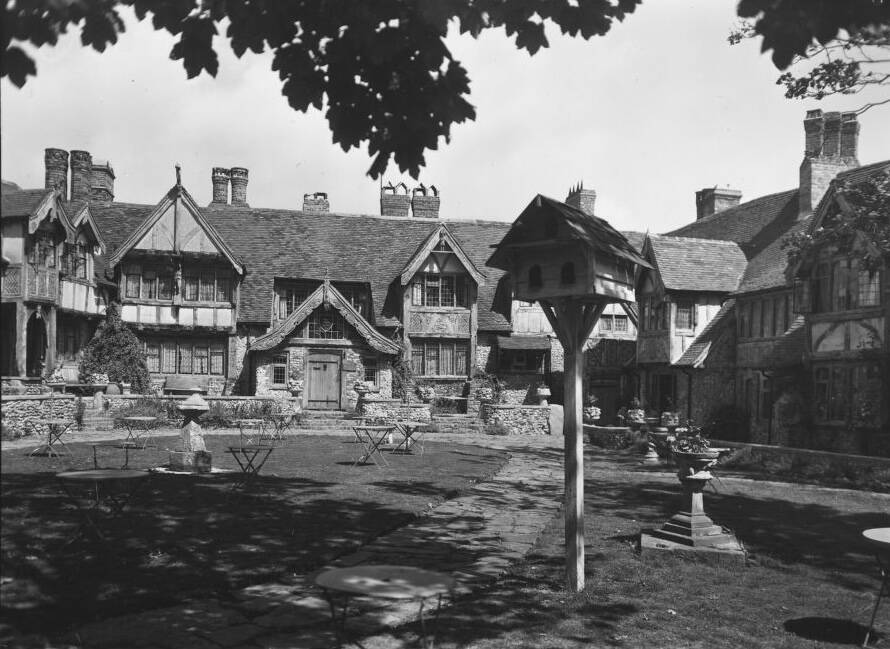
University of St Andrews Libraries and MuseumsTudor Close in the 1940s.
Colonel Mustard in the kitchen with the candlestick. Anyone who has played Clue — or Cluedo, as it’s known in England — is familiar with that sentence. Clue has been a beloved board game since it first came out in 1949, and while the various murders that occur in the game have no specific basis in reality, the house where they take place is, allegedly, based on a real English mansion known as Tudor Close.
This country home in Rottingdean, East Sussex, England, is the picture of stately British charm. Tudor beams stretch over Art Deco elements, creating an intriguing blend of depth and color. And, of course, there are the many nooks and crannies (not to mention, a secret passageway).
Built in the 1920s, Tudor Close became a hotel in the 1930s — and the site of glamorous, star-studded parties. Celebrities like Cary Grant and Bette Davis passed through its doors, as well as, possibly, a traveling pianist named Anthony E. Pratt. In the 1940s, Pratt designed Clue, basing the board game on the English manors where he’d performed.
While there’s no evidence that Pratt performed at Tudor Close specifically, the original subtitle of his game suggests that he was at least familiar with the mansion. The title read: “Murder at Tudor Close.”
This is the story of Tudor Close, the real-life house that allegedly inspired the board game Clue.
Tudor Close, The Real House That Possibly Inspired ‘Clue’
The story of Tudor Close begins in the 1920s, when it was first constructed in the seaside hamlet of Rottingdean, East Sussex. Concocted by developer Charles Neville, Tudor Close was conceived as a set of Tudor-style cottages mean to keep craftsmen employed during the Great Depression, or, as it’s known in England, the “Great Slump.”
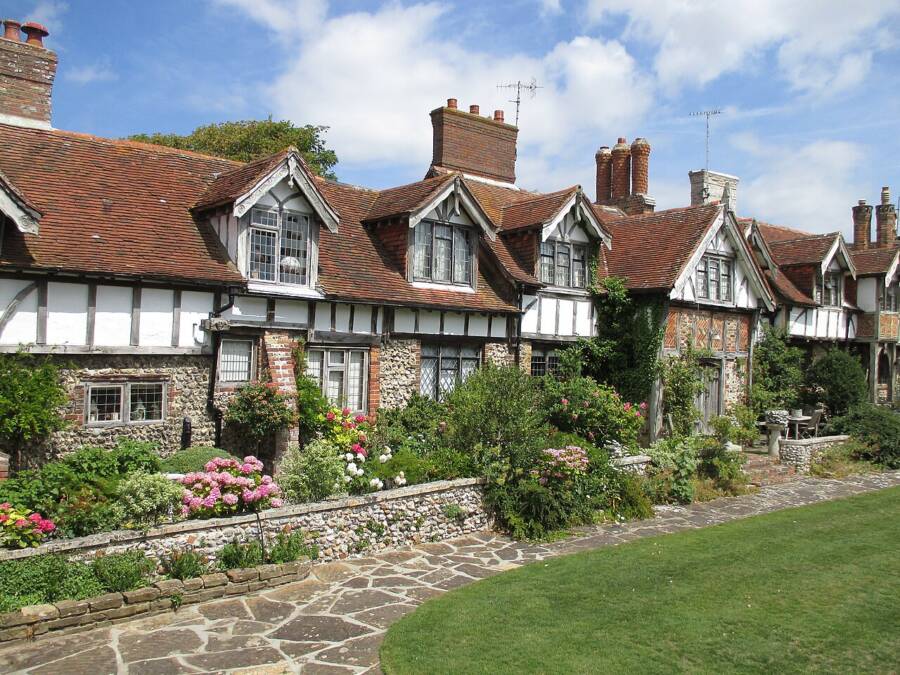
Antiquary/Wikimedia CommonsTudor Close was built as cottages before it was converted into a hotel, and then to a private residence.
Though times were bad, Tudor Close was built with great care and attention to detail. According to Sussex Live, its beams were made from ships’ timbers, and its developers collected authentic material from the Tudor era to build the house’s grand stone fireplaces.
Though developed as a private residence, Tudor Close became a hotel in the 1930s, and a 1937 renovation added a billiards room, a ballroom, and a ladies’ bar. Before long, it drew a celebrity crowd, including Cary Grant, Bette Davis, Errol Flynn, and a young Julie Andrews.
The house may have also drawn someone else as well: a traveling pianist named Anthony E. Pratt, who made a living playing piano at fancy parties held at stately English mansions.
Anthony E. Pratt Develops The ‘Clue’ Board Game
In the 1920s and 1930s, Pratt traveled to mansions, hotels, and cruise ships and played piano to entertain party guests. But music was just one part of the entertainment. At the time, parties often also featured a murder mystery game. These games fit in with another interest of Pratt’s. According The Times, Pratt was a fan of mystery novels like those by Raymond Chandler.
When World War II began, Pratt found himself with more time on his hands. And so, during blackouts in Birmingham, he and his wife Elva started designing a board game in order to pass the time.
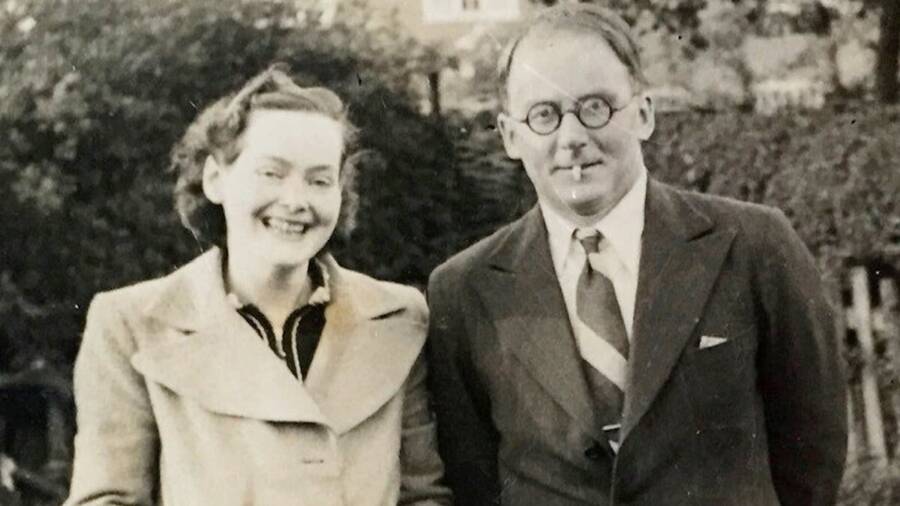
Marcia LewisAnthony E. Pratt and his wife, Elva, designed Cluedo, basing it off stately English manors where Anthony had once played the piano at parties.
Their game combined what Pratt remembered about the posh country homes he’d performed in, and his interest in mystery novels. He came up with the characters and weapons (which originally included a bomb and a syringe filled with poison), and his wife designed the board itself, which she modeled after a Tudor mansion. Pratt had originally included characters in the game such as Mr. Brown, Mr. Gold, Miss Grey, and Mrs. Silver, who were not ultimately used, and a character called Nurse White, who later became known as Mrs. White. Meanwhile, Colonel Mustard was originally Colonel Yellow, but the name was changed because “yellow” can mean “cowardice.” And in the U.S. version, Reverend Green was changed to Mr. Green.
The Pratts called the game Murder! But it was soon changed to Cluedo, in England, or Clue, in the U.S. (Cluedo plays with the word “clue” and “ludo,” the Latin word for “I play.”) Pratt patented the game in 1944, although it wasn’t sold until 1949 because of the war.
Then, it came with the subtitle: “Murder at Tudor Close.” Clearly, the Tudor Close house had helped inspire Clue in one way or another, but it’s unknown if Pratt ever performed there, if he was simply familiar with the hotel, or if the house, with its many rooms and secret passages, merely fit the description of the stately manor Elva Pratt had designed.
As of 2025, over 150 million copies of the game have been sold, and Clue even inspired a cult classic 1985 film. That said, Anthony E. Pratt did not see much of the profit, as he had sold the rights for the game for £5,000 (about $14,000) in 1953. But he didn’t seem to regret any of it.
“A great deal of fun went into [the game],” he once remarked in an interview. “..so why grumble?”
So what ever happened to the house that inspired Clue?
The House That Inspired Clue Today
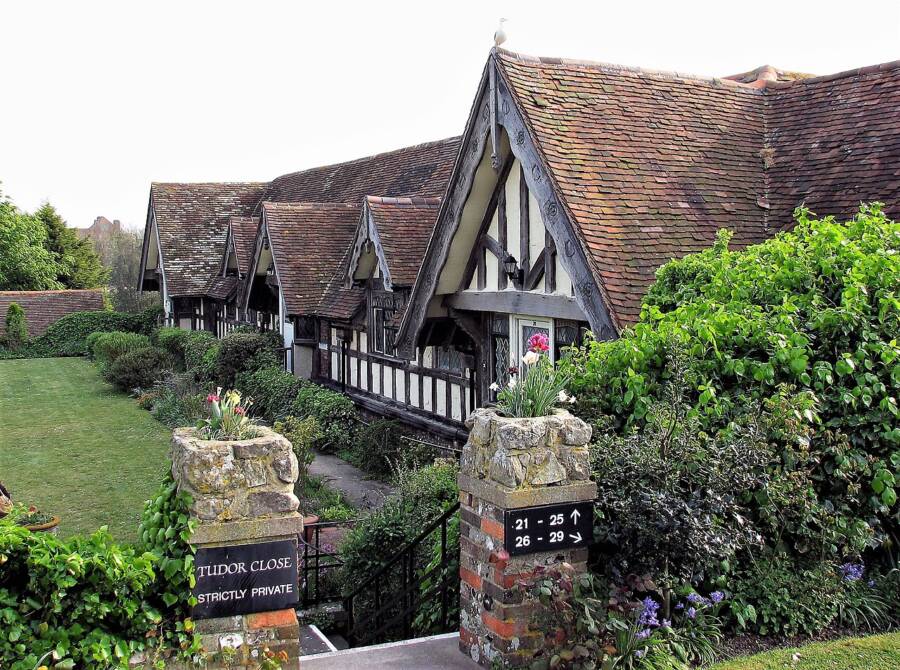
Patrick Roper/Wikimedia CommonsThe Tudor Close house stands today.
After its glamorous life as a hotel, Tudor Close was converted to a private residence in the 1950s. And, in 2021 it was put on the market for a cool $1.3 million dollars. Prospective buyers could enjoy 3,000 square feet of living space, luxury appliances, bedrooms with fireplaces, and, of course, quirks like the passageway that leads from the kitchen to the bar.
Indeed, the glamor of Tudor Close remains, even in photos. Within the conspiratorial gardens, the mysterious nooks and crannies, the Tudor beams, and the vast fireplaces, one can still imagine Miss Scarlett in the billiards room, planning something nefarious with the revolver.
After reading about Tudor Close, the real-life English mansion that may have inspired the board game Clue, look through these chilling stories behind these allegedly haunted mansions. Or, learn about Oheka Castle, the mansion from the 1920s that’s believed to have inspired ‘The Great Gatsby.’