Found inside a glass bottle known as an unguentarium, this concoction was discovered in the form of dried, dark brown flakes mixed with thyme to mask the smell.
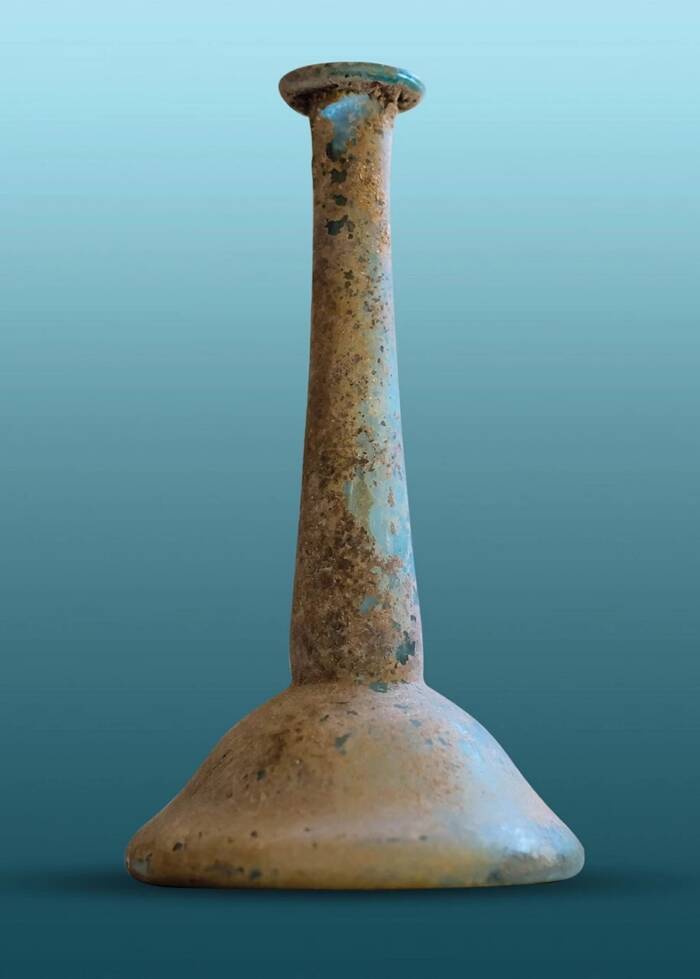
Cenker AtilaThe Roman unguentarium unearthed in Pergamon that was found to contain ancient medicine made with feces.
Ancient Roman texts suggest that doctors in antiquity used a peculiar ingredient to treat certain medical maladies: human feces. This has been largely dismissed by modern scientists as a theoretical idea, as opposed to something that Roman doctors actually used in practice. But a new study of ancient Roman artifacts found in Turkey suggests that human feces were indeed used as medicine after all.
A vial from the second century C.E. was found to contain traces of human feces and thyme, suggesting that Roman doctors used the fecal matter to treat illnesses and the fragrant herb to mask the smell.
The Ancient Roman Medicine Made With Human Feces And Thyme That Was Found In Turkey
According to a new study published in the Journal of Archaeological Science, Reports, the discovery of this medicinal feces was made inside a 1,900-year-old sealed Roman unguentarium, a kind of glass vial, which was discovered in a tomb at the ancient city of Pergamon in present-day Turkey.
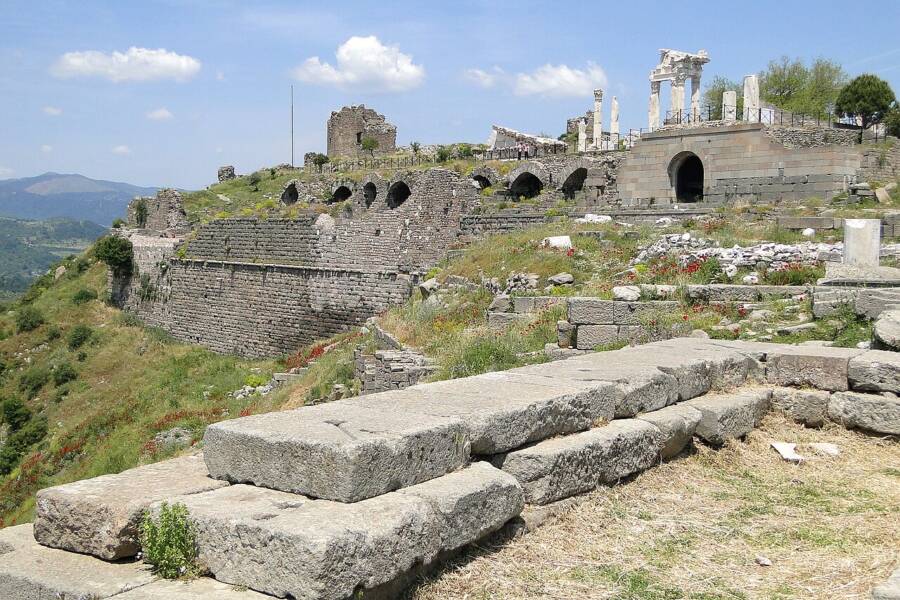
Adam Jones/Wikimedia CommonsThe ancient city of Pergamon, in present-day Bergama, Turkey.
The unguentarium had long been stored at the Bergama Archaeology Museum, where it caught the eye of archaeologist Cenker Atila of Sivas Cumhuriyet University. The unguentarium was sealed, and it seemed to contain a significant amount of material.
After running chemical tests on the material found inside the unguentarium, Atila and his team came to a surprising conclusion. Their tests revealed “a distinctive blend of human fecal biomarkers,” including coprostanol and 24-ethylcoprostanol, as well as carvacrol, “a major constituent of thyme oil.”
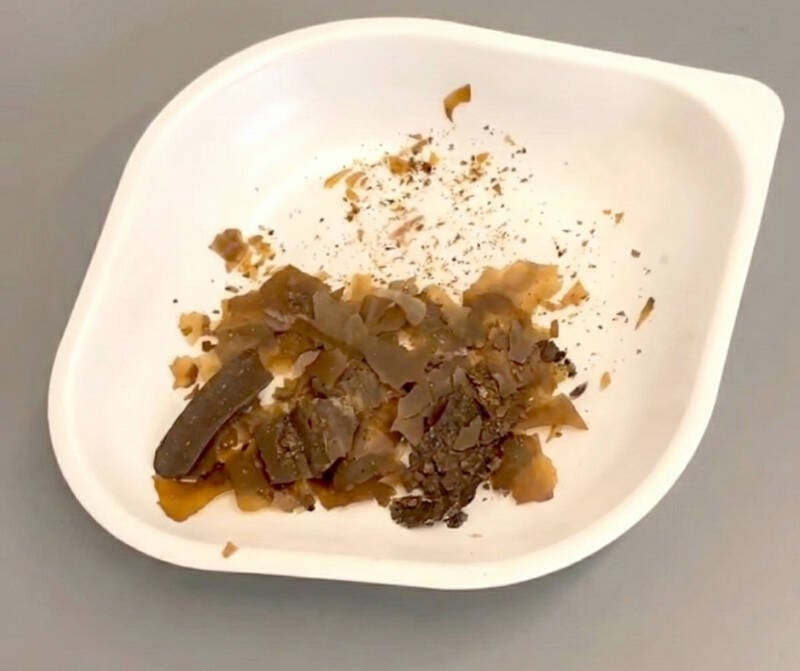
Cenker AtilaAnalysis of the residue inside the ancient Roman vial revealed that it contained human feces and thyme oil.
In other words, the 1,900-year-old unguentarium contained feces that was almost certainly human, which was then treated with scents like thyme oil to mask its smell. And apparently, the thyme may have done its job, because, according to Atila, “When we opened the unguentarium, there was no bad smell.”
Atila and his team believe that their study thus confirms longstanding and controversial theories about how doctors once used feces as medicine in ancient Rome.
The Use Of Feces In Ancient Roman Medicine
The discovery of medicinal feces may strike some as surprising, but it actually lines up with what’s been found in ancient Roman medical texts. Famous Roman physicians and naturalists such as Dioscorides, Pliny the Elder, and Galen — who lived in Pergamon, where the unguentarium was found — all wrote about the possible usage of feces as medicine.

Public DomainPergamon was once a major center of Roman medicine, and home to the famous Roman physician, Galen.
“Animal dung, in particular, appears in numerous ancient medical texts as a therapeutic substance employed for a wide range of ailments,” the researchers explained in their study. “Egyptian sources dating as far back as the sixteenth century BCE describe the medicinal and apotropaic use of dung, frequently in combination with potent aromatic agents. In the later Greco-Roman tradition, authors such as Dioscorides, Pliny the Elder, and Galen classified dung-based treatments for conditions ranging from inflammation and infection to reproductive disorders.”
Feces, though discussed in ancient medicinal texts with “euphemism” and “caution,” were not seen as inherently “repulsive” or “irrational,” according to the researchers. Rather, they were considered “potent and efficacious, yet also symbolically and sensorially charged.”
That said, medicinal feces are extraordinarily rare in the archaeological record. As an organic compound, they don’t normally endure over the centuries. This, combined with the taboo nature of the subject, has given rise to the opinion that ancient Roman medicinal texts about feces were merely theoretical. But the researchers say that their finds prove that medicinal feces was more than just a theory.
“These findings closely align with formulations described by Galen and other classical authors,” they wrote, “suggesting that such remedies were materially enacted, not merely textually theorized.”
What’s more, this finding is especially significant given the use of feces in modern-day science. For example, fecal microbiota transplantation (FMT) is used today to attempt to revive healthy gut flora in some patients.
“In light of contemporary interest in microbiome-based therapies,” the researchers wrote, “this evidence also prompts a reconsideration of early traditions once dismissed as marginal or irrational.”
After reading about the study that suggests the Romans used human feces to treat certain medical ailments, learn about the complicated factors behind the fall of the Roman Empire. Then, go inside the stories of some of the worst Roman emperors, from Caligula to Nero.