Matiate: The World’s Largest Underground City
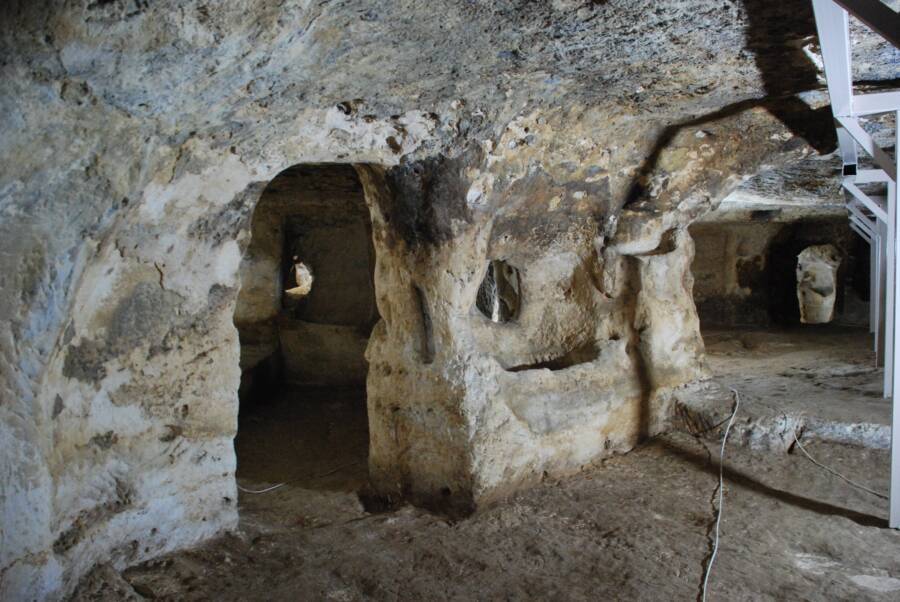
Anadolu AgencyOpen hallways inside Matiate, the largest underground city in the world.
Surprisingly, Derinkuyu is not Turkey’s only underground city. In fact, there are at least 40 others that have been found in the country, but in 2022, beneath the foundations of the ancient town of Midyat, researchers discovered another sprawling metropolis known as Matiate.
While cleaning the streets and buildings in the historic town, a group of Turkish conservationists stumbled upon a hidden cave entrance that led down into a massive complex of dozens of tunnels and nearly 50 rooms.
Archaeologists came in to excavate the cave system, finding numerous ancient artifacts that dated back to the second and third centuries C.E. alongside various storage silos, worship altars, and water wells.
“While the houses on the top are dated to the 17th, 18th, and 19th centuries, there is a completely different city underneath,” said Gani Tarkan, the project’s lead excavator. “That city is 1,900 years old.”
At the time of the discovery, Tarkan said that he believed the city of Matiate — literally the “city of caves” — may have once housed as many as 60,000 or 70,000 people. Amazingly, the excavation team had only explored roughly three percent of the underground city by that point.
Excavations have been going on since 2022, but so far the full size and history of Matiate largely remains a mystery. Still, it’s a unique and surprising revelation that beneath one of Turkey’s most historically significant towns sat another large city, completely undisturbed for nearly 2,000 years.
Orvieto Underground: The City That Lies Beneath Orvieto, Italy
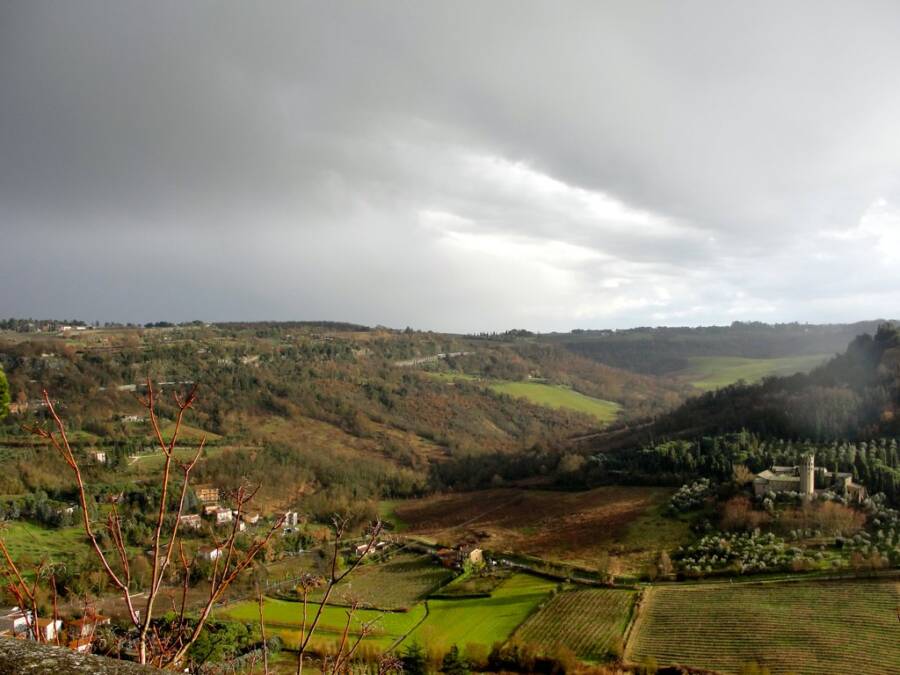
Umbria Lovers/Flickr Creative CommonsOrvieto, Italy sits on the summit of a flattened volcanic bluff, which was dug into to create an underground city.
In ancient times, historians believe, the Etruscans established a city reportedly known as Velzna on top of a volcanic bluff. The location afforded them ample defense, but it came with a host of problems too — namely, that their water source was far down below on the plains beneath the bluff.
To remedy this situation, the Etruscans dug deep wells into the bluff along with chambers and cisterns to collect rainwater, allowing them to resist Roman siege for nearly two years. Unfortunately, according to Atlas Obscura, in 264 B.C.E., the Romans prevailed, and the city ultimately fell.
The Romans saw the potential in what the Etruscans had begun, however, and they kept digging. Above ground, the city of Orvieto continued to rise skyward, but beneath the dirt, its inhabitants carved out tunnels to serve different purposes, including shelters, quarries, grottoes, and galleries.
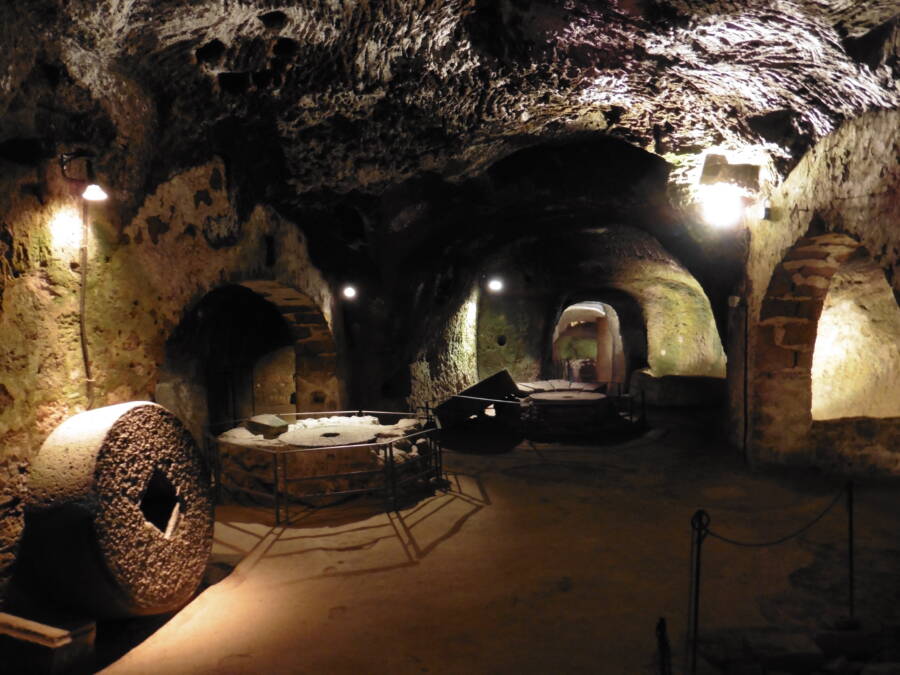
Michael Kogan/Flickr Creative CommonsRoughly 1,200 structures were dug into the volcanic rock beneath Orvieto.
One carved-out room even housed a massive olive press, millstones, furnaces, structures for storage, and troughs for animals doing labor. Some tunnels connected to nobles’ houses to provide them easy access out of the city, should invading forces arrive unexpectedly.
In total, roughly 1,200 structures were dug out beneath the city of Orvieto — though it seems as if that number will not be growing any higher in the years to come, as the city has officially banned any further digging in the underground tunnels, barring archaeological activities.