The Weird Historical Event Known As The Battle Of Los Angeles
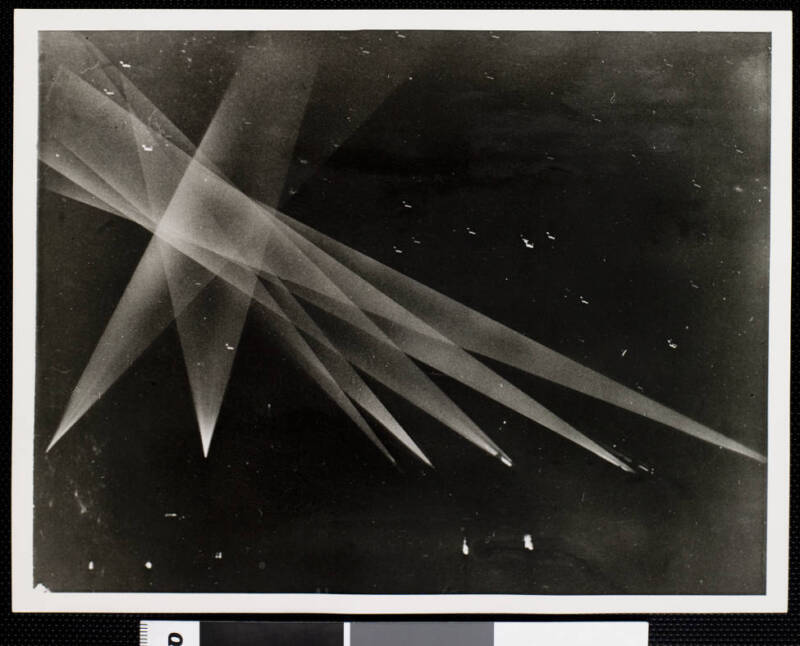
International News Photos/University of Southern CaliforniaMilitary spotlights sweeping the skies over Los Angeles in 1942.
Two months after the attack on Pearl Harbor, residents of Los Angeles were awoken in the middle of the night to bear witness to what is known as the Battle of Los Angeles — only, there was no battle at all.
At 2:25 a.m., Californians were pulled from their slumber by the sound of blaring sirens and saw searchlights sweeping the sky as more than 1,400 rounds of anti-aircraft ammunition exploded overhead. When the “all clear” finally sounded at 7:21 a.m., five people were dead — two from heart attacks and three from traffic accidents — and numerous homes had been damaged by falling shells.
Tragically, there was no need for any of it. There had never been any enemy aircraft.
It made sense that the U.S. military was paranoid, especially along the coast. Los Angeles was a major center for airplane and ship manufacturing, and there were fears that the city would be Japan’s next target. In fact, just the night before, a Japanese submarine had fired on the Ellwood oil field near Santa Barbara, causing minimal damage but demonstrating, at the very least, that the West Coast was vulnerable.
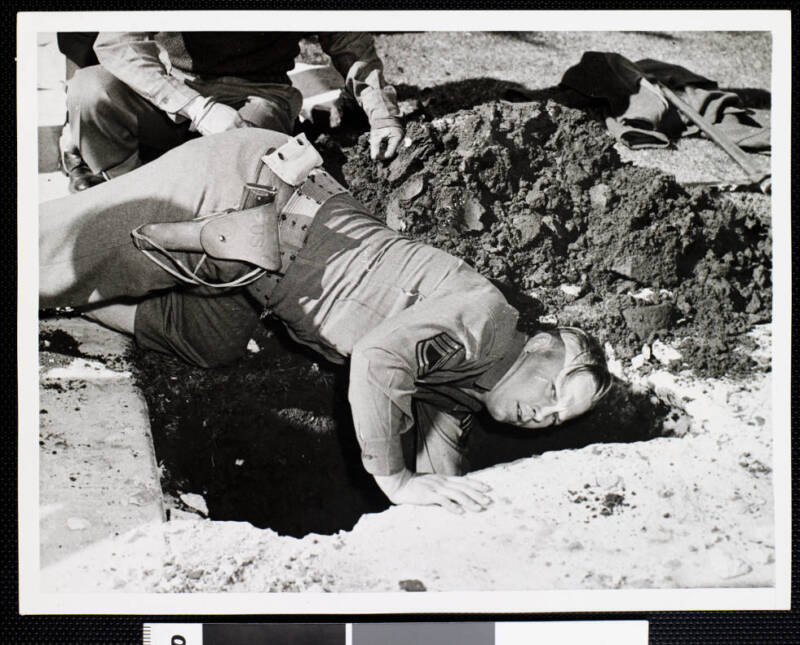
International News Photos/University of Southern CaliforniaAn Army officer digging up an unexploded anti-aircraft shell.
But the military’s response to the sudden midnight panic only made things more confusing. Navy secretary Frank Knox called it a false alarm caused by “jittery nerves,” while the Secretary of War suggested that something had actually been spotted in the skies over Los Angeles that night. These contradictory explanations naturally fueled decades of speculation, including theories about UFOs.
Declassified military reports later revealed that servicemen had fired at a weather balloon, with one report mentioning “a balloon carrying a red flare” over Santa Monica. The smoke from explosions and excess spotlights likely created the illusion of massive aircraft, causing terrified soldiers and civilians to keep firing for over four hours until daylight revealed their mistake.
It wasn’t until 1983, though, that the U.S. Office of Air Force History officially concluded this weird historical event was likely a mirage sparked by meteorological equipment and wartime panic.