William the Conqueror’s ‘Explosive’ Royal Death
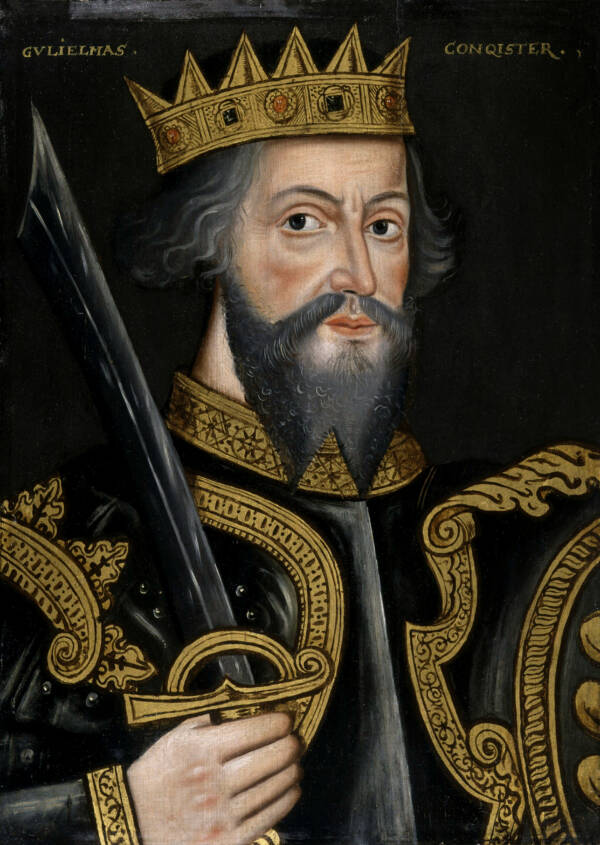
VCG Wilson/Corbis via Getty ImagesWilliam the Conqueror’s death wasn’t that strange — but his funeral certainly was.
William the Conqueror’s death was apt for someone with his nickname, as he died after a battle in 1087. But it was the aftermath of William’s demise that made his death especially bizarre.
There are basically two accounts of the events that led to William the Conqueror’s death. The first states that William, the first Norman king of England, suffered from something akin to heatstroke while fighting in a battle. The second suggests that the then-portly king was impaled by the wooden pummel of his saddle, which ruptured his intestines.
Though the king survived the battle, he died from his wounds on Sept. 9, 1087. And his funeral would ensure that no one ever forgot his royal death.
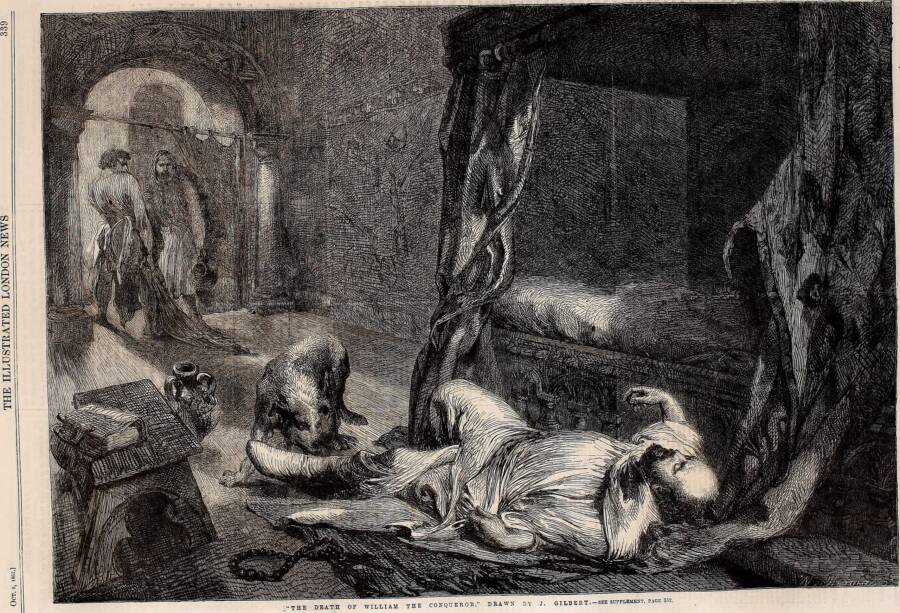
Public DomainA depiction of William the Conqueror’s final moments from 1842.
According to an account written by the Benedictine monk and chronicler Orderic Vitalis, mourners gathered in Abbaye-aux-Hommes in present-day Caen, France, to say goodbye to the king. But as William the Conqueror’s bloated corpse was forced into a too-small sarcophagus, his body exploded.
“[T]he swollen bowels burst, and an intolerable stench assailed the nostrils of the by-standers and the whole crowd,” Orderic wrote.
As mourners fled, the priests tried to conduct the rest of William’s funeral as quickly as possible. But nothing could mask the stench.
Qin Shi Huangdi, The Chinese Emperor Who Died Trying To Become Immortal
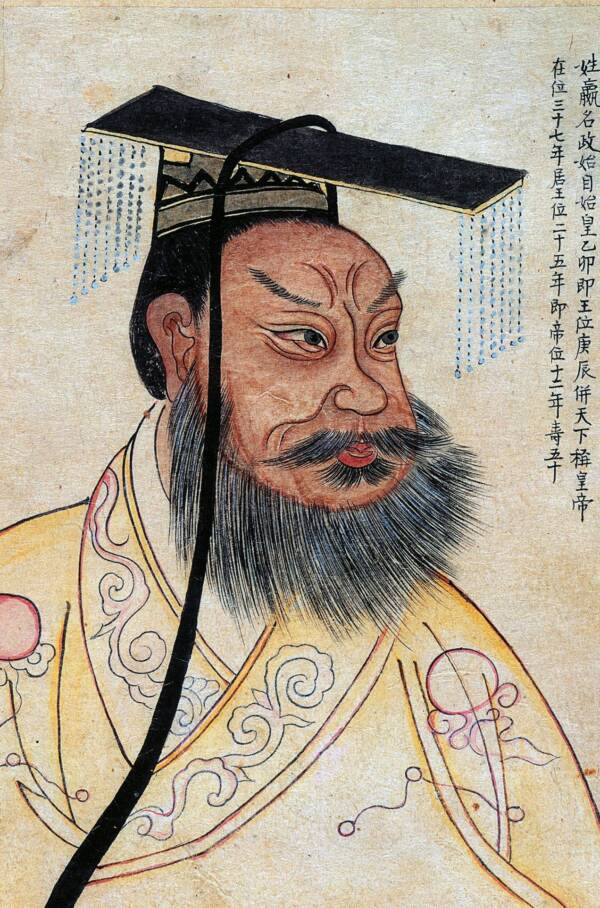
Public DomainQin Shi Huang in a 19th-century portrait.
Qin Shi Huangdi’s death in 210 B.C.E. came as a surprise — especially to him. As the story goes, the Chinese emperor died after seeking a draught that he hoped would make him live forever.
The founder of the Qin dynasty and the first emperor to rule over a unified China, Shi Huangdi was subject to numerous assassination attempts during his life. According to World History, he developed an obsession with death. Specifically, the emperor became obsessed with avoiding it at all costs.
Ancient Origins notes that the emperor constructed elevated walkways and private roads, covered his windows with curtains, and put anyone to death who dared share his location. He searched far and wide for some kind of elixir he could drink to make himself immortal, and, apparently, found one.
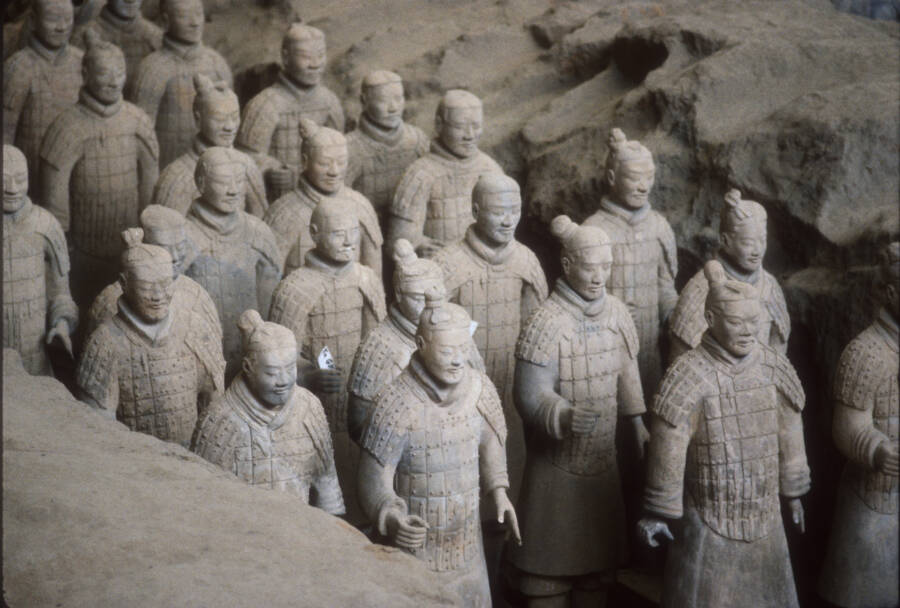
Forrest Anderson/Getty ImagesIn the off chance that he did die, Qin Shi Huang had his future tomb surrounded by more than 6,000 terra cotta soldiers and horses.
Though the exact details of Qin Shi Huangdi’s royal death have been obscured by time, most sources agree that the emperor was advised that consuming mercury could make him immortal. He took pills, or perhaps wine mixed with honey and mercury, and looked forward to living forever.
Instead, Qin Shi Huangdi died fairly quickly. Before long, the empire that he’d so carefully cultivated lurched into civil war and disintegrated.
But though Shi Huangdi never attained his dream of immortality, he nevertheless left an enduring mark on China. In China’s Shaanxi province, thousands of terra cotta soldiers and horses — once commissioned by the emperor to guard his tomb — have been found.
Though the emperor’s mausoleum itself hasn’t been opened, ancient texts suggest it was filled with model palaces, pavilions, and offices.