Sigurd Eysteinsson, The Viking Killed By His Enemy’s Decapitated Head
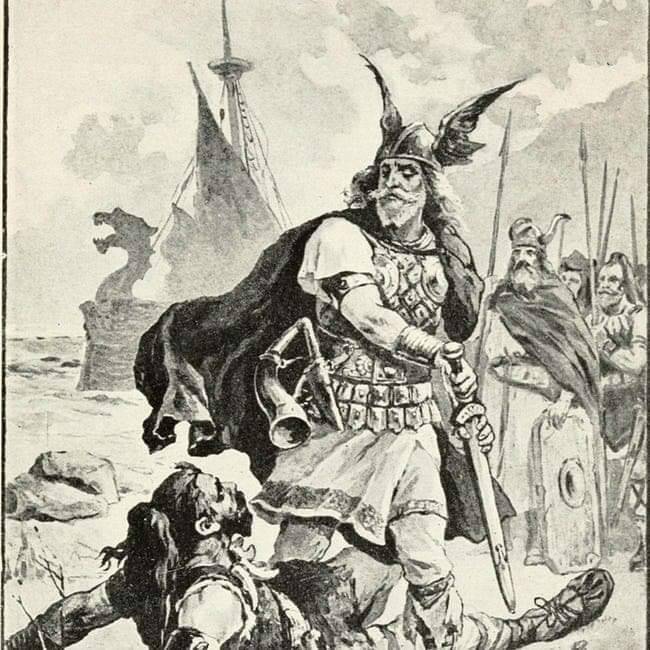
TwitterSigurd The Mighty’s death is ironic beyond belief.
When fighting in battle, most warriors can assume they’re safe once their enemy is vanquished. But Viking chieftain Sigurd Eysteinsson was bizarrely killed by his foe in 892 C.E. — after he’d already cut off his head.
According to History Collection, Sigurd the Mighty was known for his military prowess. Working with other chiefs, Sigurd succeeded in conquering most of northern Scotland and, in 875, his brother gifted him the Orkney Islands and the Shetland Islands.
As the earl of the islands, Sigurd continued to conduct raids into mainland Scotland. He drew the ire of a Pictish chieftain named Maelbrigte Tusk, also called Máel Brigte the Bucktoothed, because of his protruding teeth. Maelbrigte proposed that their two armies battle it out with 40 men apiece.
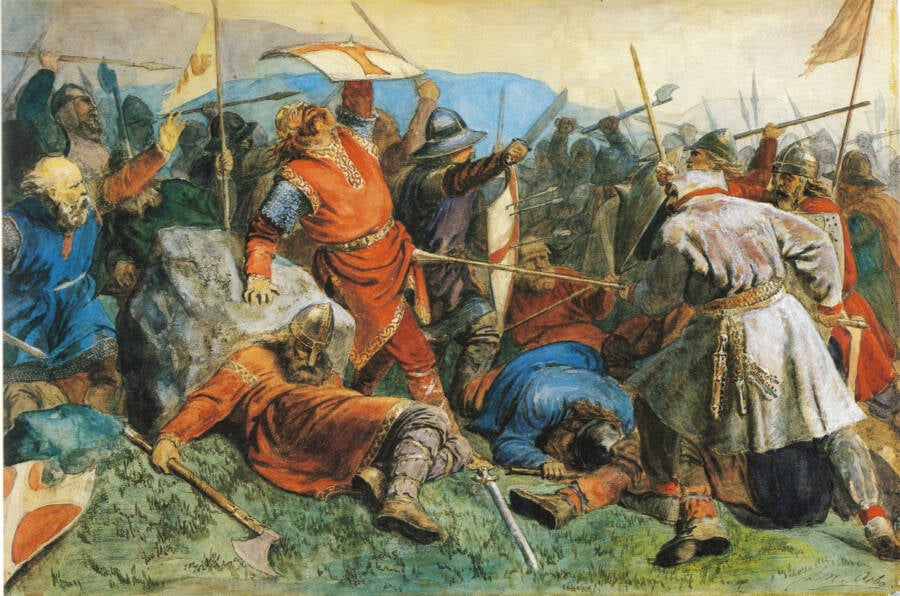
Fine Art Images/Heritage Images/Getty ImagesA depiction of a different Viking battle.
But when the two forces met, Maelbrigte realized that Sigurd had deceived him. Instead of 40 men, the Viking chieftain had brought 80. Though Maelbrigte and his men put up a brave fight, Sigurd and his troops easily overpowered them, and Sigurd himself cut off Maelbrigte’s head.
Sigurd then tied Maelbrigte’s severed head to his saddle, and the triumphant Vikings rode home. During the journey, however, Maelbrigte’s famous buck teeth scraped against Sigurd’s exposed leg. The wound became infected, and Sigurd the Mighty died soon afterward.
King Henry I, The Monarch Who Died From A ‘Surfeit Of Lampreys’
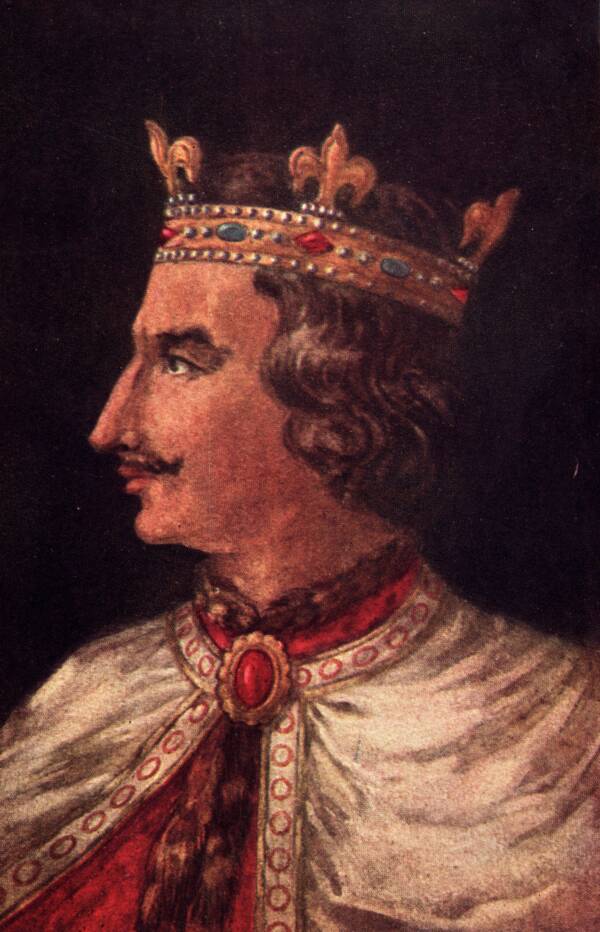
Hulton Archive/Getty ImagesKing Henry I’s fondness for lampreys ultimately killed him.
King Henry I was no stranger to royal deaths. The youngest son of William the Conqueror, he certainly knew the explosive details of his father’s funeral. But Henry, too, would meet a strange fate. And it had to do with fish.
After outliving one brother and outmaneuvering another, Henry took the English throne in 1100. As king, he dedicated his time to revamping the royal justice system, building a grand abbey in Reading, and indulging his love of lampreys, a boneless fish historically favored by England’s royals.
There was just one problem. Every time that Henry ate lampreys, he felt sick.
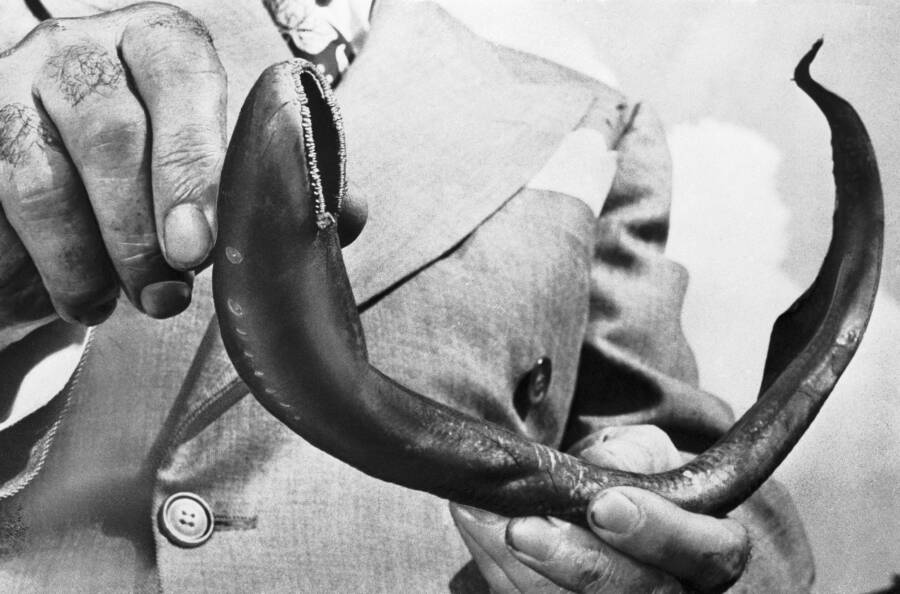
Bettmann/Getty ImagesA lamprey held for display. The fish is allegedly a favorite among English royals.
According to medieval historian Marc Morris, doctors had warned Henry about eating lampreys before. But the king had waved away their worries. And after hunting in Normandy in 1135, he called for his favorite meal.
Medieval chronicler Henry of Huntingdon described the aftermath, writing, “[T]his meal brought on a most destructive humour, and violently stimulated similar symptoms, producing a deadly chill in his aged body, and a sudden and extreme convulsion. Against this, nature reacted by stirring up an acute fever to dissolve the inflammation with very heavy sweating.”
Soon afterward, King Henry I died. Doctors apparently ascribed his royal death to “a surfeit of lampreys.”