The unusually cheerful depiction of Medusa was found carved onto a marble ceiling block in the ancient city of Amastris.
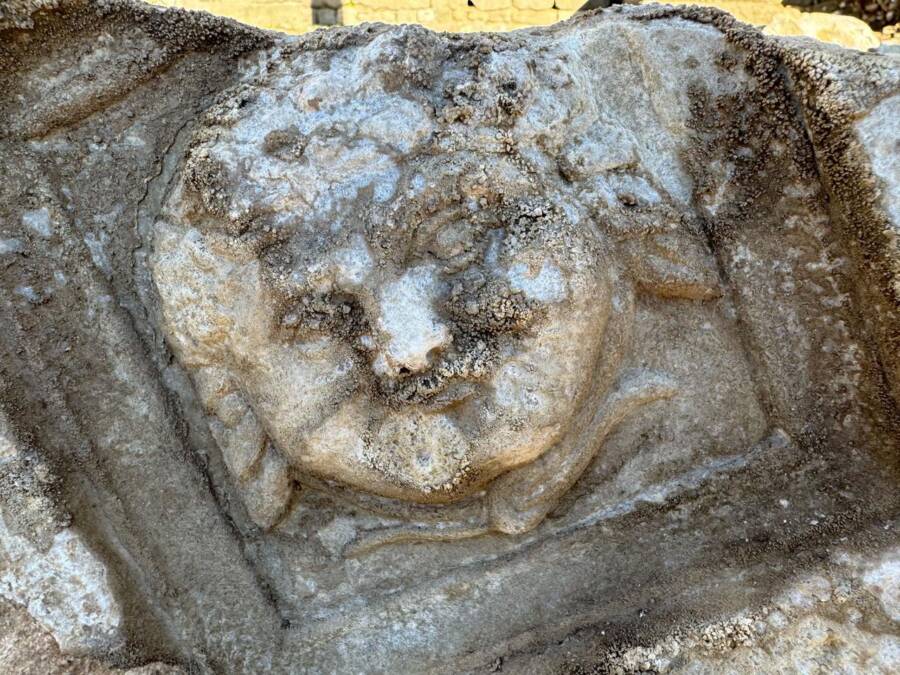
AA PhotoThe smiling Medusa may be indicative of an era of peace and prosperity.
During excavations in the ancient city of Amastris, Turkey, archaeologists came across a monumental Roman stoa, or covered walkway, which seemingly collapsed in an earthquake 2,000 years ago. In the midst of restoring the stoa, they discovered a figure carved on its ceiling: Medusa.
A monster from Greek myth whose gaze could turn victims into stone, Medusa is often depicted as frightening and snarling. But, unusually, this Medusa was carved with a cheerful expression, which archaeologists think may be indicative of the national mood at the time it was made.
Discovering The Carving Of Medusa On A Roman Stoa
According to Türkiye Today, the smiling Medusa was found during excavations in the ancient city of Amastris, located in modern Bartın, Turkey.
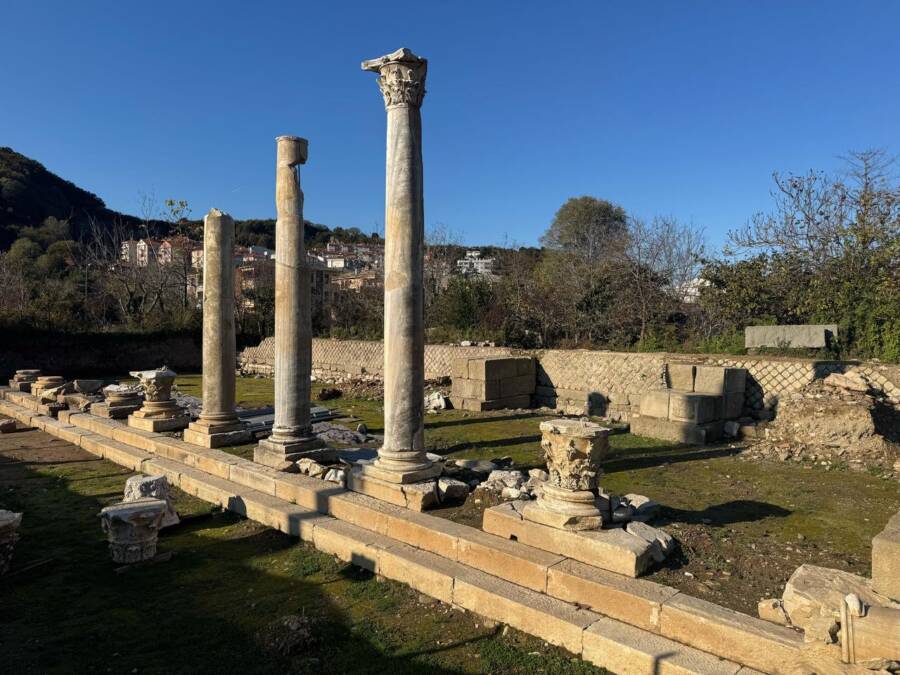
AA PhotoRuins in the ancient city of Amastris, which is located along the Black Sea in northern Turkey.
During these excavations, which began in 2017 and now stretch over an archaeological site of 30,000 square feet, archaeologists found the ruins of a Roman stoa, a covered walkway and public gathering space that seemingly collapsed in an earthquake 2,000 years ago. Though in pieces, the stoa was once “monumental” and was surrounded by 30-foot-tall columns. To archaeologists working in Amastris, it’s a clear sign of the city’s wealth and splendor.
But the most fascinating feature of the stoa was not discovered until archaeologists began the slow and delicate process of trying to put the structure back together. Then, they discovered a carving of the mythological figure Medusa that once adorned the ceiling of the walkway.
One of the Gorgon sisters, Medusa is best known for her hair of snakes, her power to turn people into stone, and her defeat by the Greek hero Perseus. As such, she’s often depicted in antiquity as a frightening figure with bared teeth, fiery eyes, and snarling lips. She typically adorned houses or shields in ancient times as a symbol of protection meant to frighten enemies.
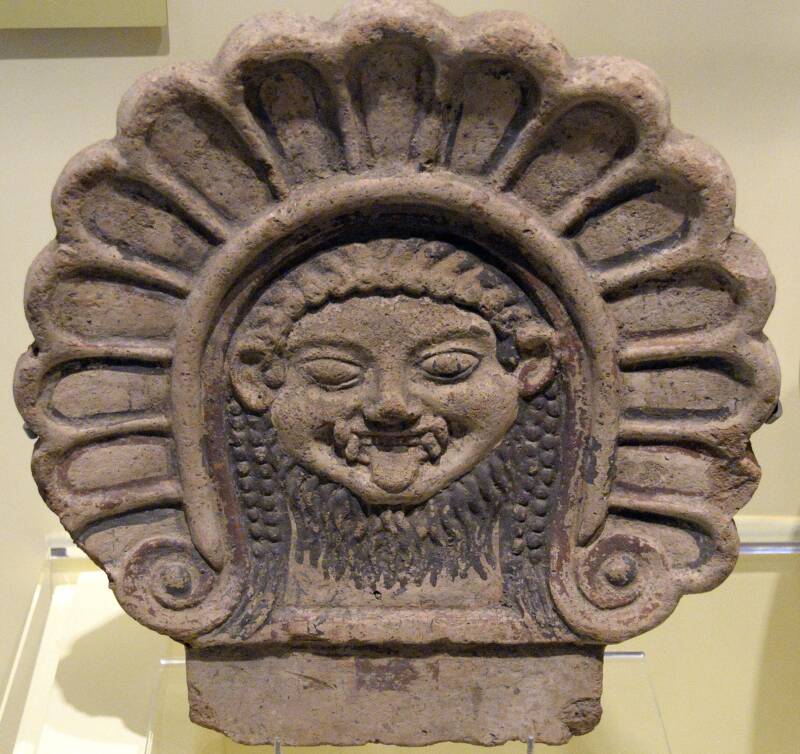
Osama Shukir Muhammed Amin FRCP(Glasg)/Wikimedia CommonsAn Italian roof ornament from the sixth century B.C.E. with a more typical depiction of Medusa, shown with a sinister grin.
But, unusually, the Medusa carving found in Amastris seems to be smiling.
The Meaning Behind The Smiling Medusa Found In Amastris
“Medusa normally became a symbol with a frightening expression and snake hair in order to scare the enemy and create fear,” Dr. Fatma Bağdatli Çam of Bartın University, the leader of the excavations, stated, “but our Medusa was made just like an Eros, like the face of a very small child and in a smiling pose.”
So, why is this Medusa depiction so different from others? While it’s impossible to know for sure, Çam suspects that it had something to do with Amastris’ golden years two millennia ago.
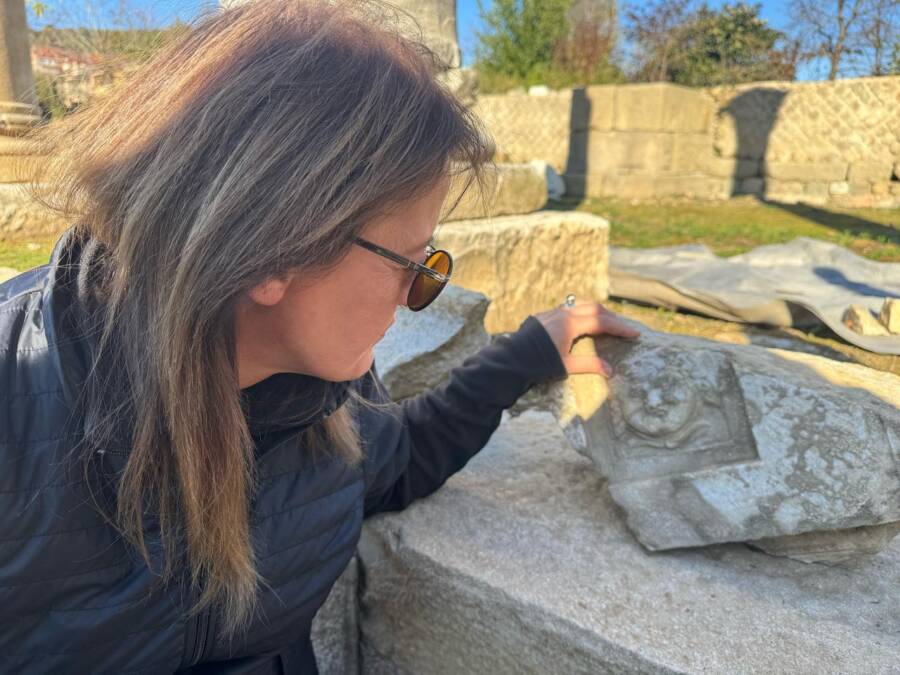
AA PhotoCam with the Medusa carving, which has an unusually cheerful expression.
Specifically, Çam believes that the smiling Medusa might have been carved during an especially prosperous time in Amastris’ history. The city enjoyed its heyday during the life of Queen Amastris (340 to 285 B.C.E.), the niece of the Persian king Darius III. She gave her name to the metropolis and was the first queen to issue coins in her own name.
At its peak, Amastris was likely home to tens of thousands of people, and archaeologists have already made a number of exciting discoveries at the site in addition to the Roman stoa and the Medusa carving. They have uncovered coins, the stone head of Alexander the Great, statues of water nymphs, a “protective” amulet, and fragments of inscriptions.
As such, the Medusa carving adds to archaeologists’ growing understanding of what life was like in Amastris thousands of years ago. Clearly, it was a thriving metropolis with a growing population and the wealth to build elaborate structures. The Medusa carving also hints at another thing — that prosperity brought such happiness to Amastris that its people reinterpreted a classically frightening image into something much more pleasant.
After reading about the smiling Medusa found in Turkey, discover the stories behind some of the most fearsome Greek gods and goddesses. Or, learn the tragic story of Hypatia of Alexandria, the ancient Greek female philosopher and mathematician who was stoned to death.