The Armero tragedy occurred in November 1985, when the Nevado del Ruiz volcano erupted and buried the nearby town of Armero in devastating mudflows.
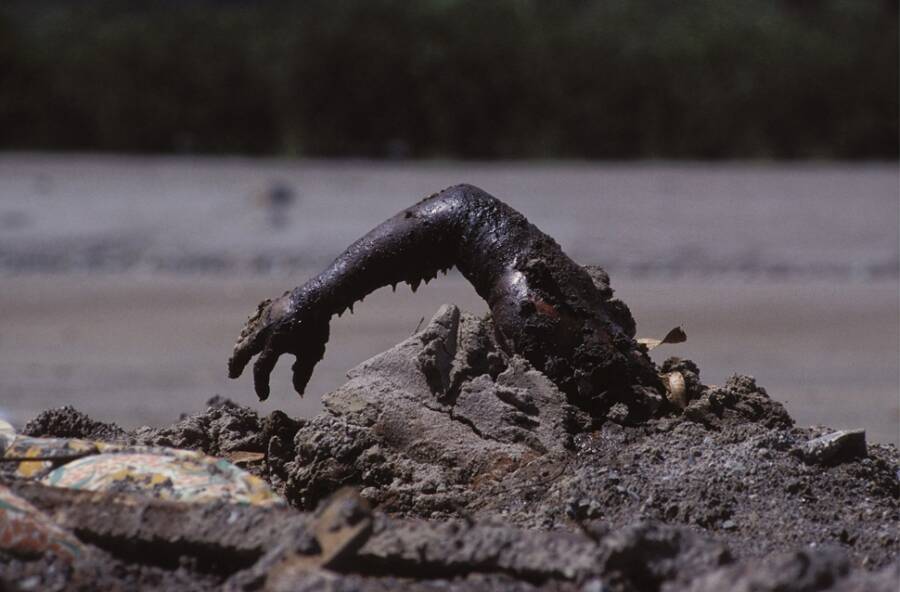
Chip HIRES/Gamma-Rapho/Getty ImagesThousands were buried in the mud that flooded Armero in 1985.
On Nov. 13, 1985, the Nevado del Ruiz volcano erupted in Colombia. Before long, lahars — fast-moving volcanic mudflows made of lava, ash, and rock — began to race down the mountainside toward the farm town of Armero. Sadly, the destruction of the volcano, and the lack of warning from the government, would lead to the Armero tragedy.
Within a matter of hours, some 25,000 people were killed. Others were hopelessly trapped in the mud and debris. And some, including more than 500 children, were never seen again.
But the terrible destruction of the Armero tragedy — the worst natural disaster in Colombian history — could have likely been prevented.
The Eruption Of The Nevado Del Ruiz Volcano
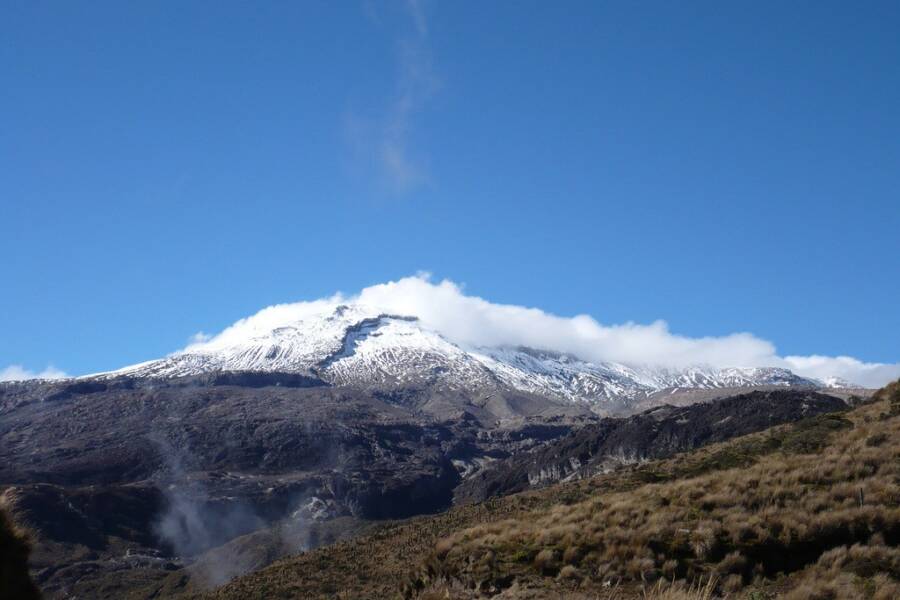
Edgar/Wikimedia CommonsThe Nevado del Ruiz, as seen in 2007.
At around 3 p.m. on Nov. 13, 1985, the Nevado del Ruiz volcano started to rumble. It spewed ash into the air which began to fall gently on the nearby towns, including Armero, 30 miles away. But the residents of the town, which then had a population of 29,000, didn’t panic at first.
According to the 2015 documentary El valle sin sombras (“The Valley Without Shadows”), one of the town’s residents asked the local priest what to do about the ash. He advised her, “enjoy this beautiful show, it will never be seen again.” A few hours later, a fire truck drove through Armero, telling residents that they should stay home and there was no need to panic.
Then, shortly after 9 p.m., the Nevado del Ruiz volcano erupted. The force of the eruption created powerful lahars, a kind of volcanic mudflow, which cascaded down the mountainside — and toward Armero.
Thirty feet deep and moving at roughly 25 miles per hour, the lahars sped toward the town. It would take two hours for them to reach Armero but, sadly, the residents had still not been told to evacuate. No one realized anything was wrong until they heard a roar and, by then, it was far too late.
“The sound was like a whole bunch of helicopters in the sky,” Marco Rivera, an Armero tragedy survivor who was 18 when the disaster struck, recalled to NPR in 2025. “Lights were flashing in the dark because the mudslide swallowed up cars with their lights on and they were flipping over and over.”
The lahars from the volcano pummeled the town starting around 11:30 p.m. Within a matter of minutes, most of the town’s inhabitants were killed.
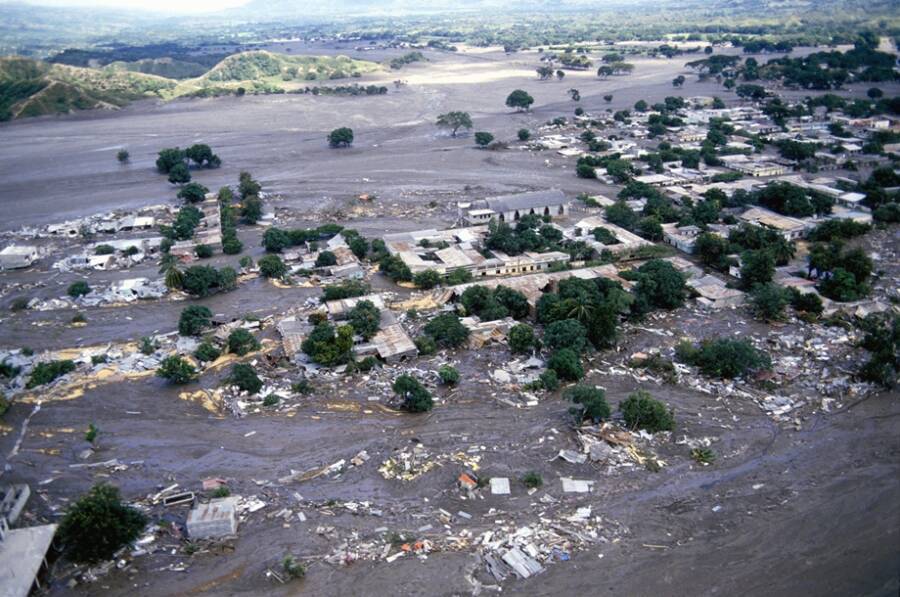
Jacques Langevin/Sygma/Sygma/Getty ImagesAerial photographs capture the scape of the crisis in Armero.
Yet emergency teams did not reach Armero for 12 hours.
The Harrowing Aftermath Of The Armero Tragedy
Though most of the town of Armero had been killed when the lahars hit, some people managed to survive through the night.
Fernando Angarita was one of those survivors. A veterinarian in the town, Angarita first tried climbing a tree to escape the rush of mud and debris. But the mudslide caught him, dragging Angarita for four miles. Somehow, he survived, though he suffered 16 fractures to his face and jaw.
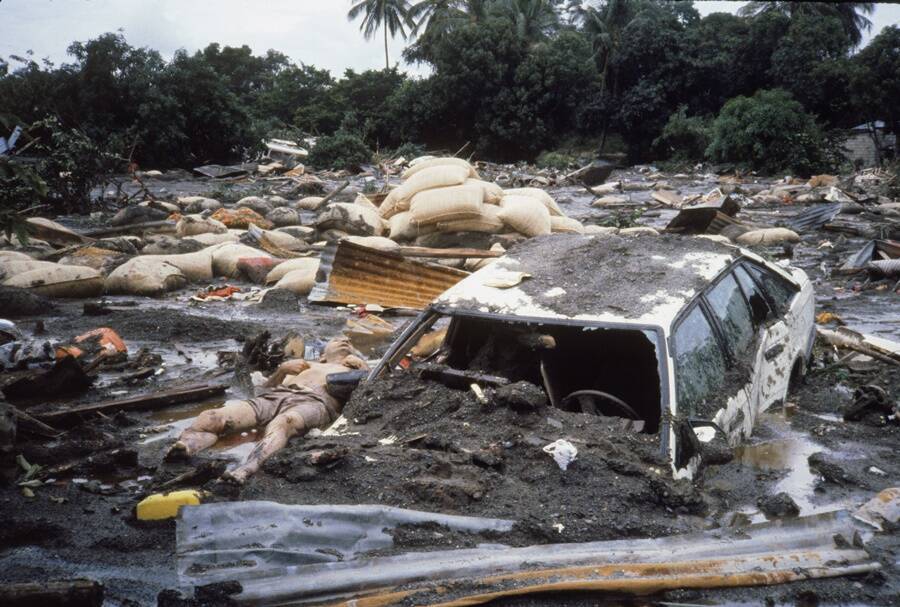
Bernard Diederich/The LIFE Images Collection/Getty Images/Getty ImagesThe mudslide buried Armero, turning the town into a graveyard.
The churning mud felt like being in a blender, Angarita told NPR, noting: “I have no idea why I’m still alive.”
Not everyone was as lucky as Angarita. One of the most well-known victims of the Armero tragedy was 13-year-old Omayra Sánchez.
Sánchez also survived the initial mudslide, but heavy rubble pinned her in the mud, leaving only her head exposed. The girl was hopelessly trapped in the ruins of own home and, though rescuers spent 60 hours attempting to free her, they could not extract her from the muddy debris.
During this time, Sánchez was conscious and lucid. She spoke to her rescuers, sang, prayed, and cried. Near the end of her life, she began to hallucinate and worried out loud about missing school.
Then, after surviving in the ruins for more than two days, Sánchez sadly died of hypothermia and gangrene.
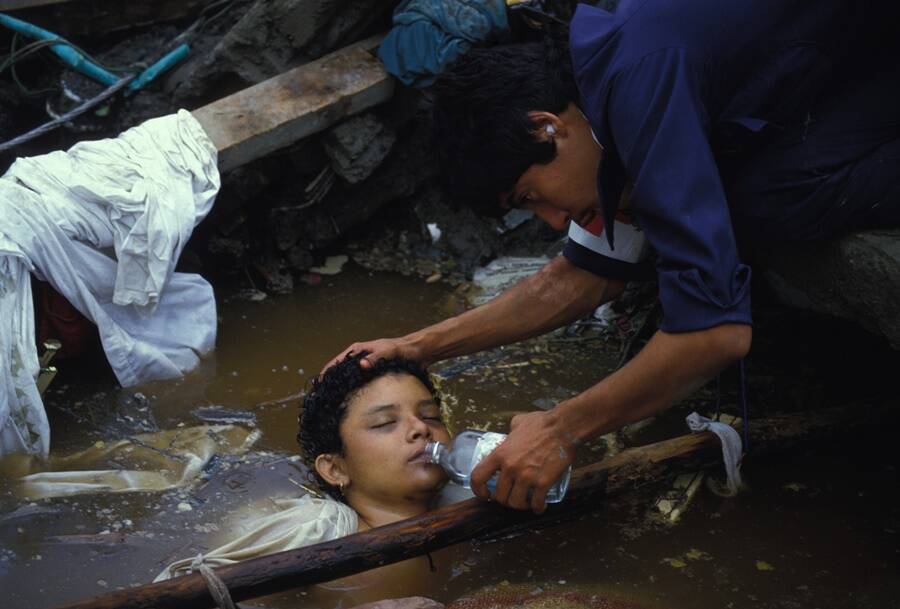
Bouvet/Duclos/Hires/Gamma-Rapho/Getty ImagesThough Omayra Sánchez survived the mudflow, she was hopelessly trapped in the rubble.
Other children in Armero, however, were never seen again. In the aftermath of the disaster, families reported 583 missing children. Some likely died in the landslide, but families suspect that others were recovered and given up for adoption — or worse. Indeed, Reuters reports that four adoptees from Armero have since been reunited with their families.
The fate of the rest, however, remains a mystery.
“My brother did survive. Lots of people saw him. A doctor saw a photo of him and told me that he treated him,” Mariela Díaz told NPR. “So, we still have hope that, maybe, he will reappear.”
But while some survivors of the Armero tragedy cling to hope, many others have turned to anger. In the aftermath of the natural disaster, it became clear that it could have been averted.
Could The Armero Tragedy Have Been Prevented?
“The Volcano Didn’t Kill 22,000 People,” a banner proclaimed outside a funeral mass held in the weeks after the Armero tragedy, according to the Los Angeles Times. “The Government Killed Them.”
After all, the government had been warned about the potential for disaster.
Only one month before the tragedy, Columbian volcanologist Marta Lucía Calvache Velasco warned the government that an eruption could strike in the near future — possibly in only a few months. Meanwhile, Armero’s mayor Ramón Antonio Rodríguez had also called the volcano a “time bomb.”
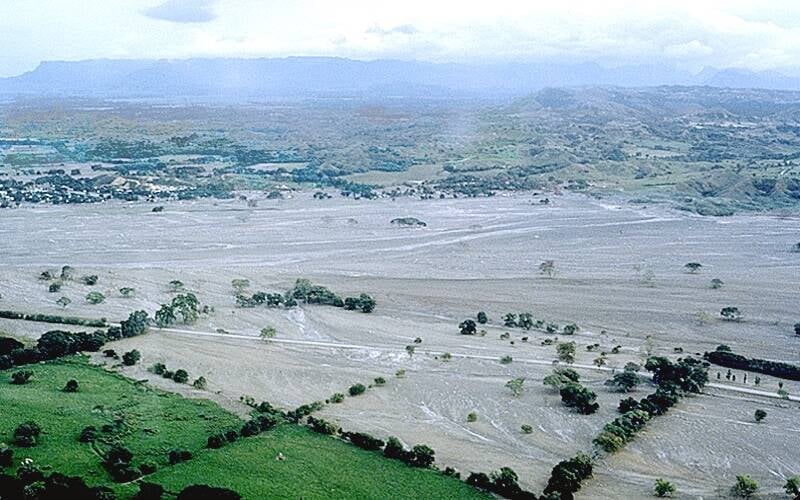
Jeffrey Marso, USGS geologistThe lahars from Nevado del Ruiz mixed with rivers, with some mudflows swelling to four times their size.
The mayor asked the government to clear a recent rock collapse that created a reservoir of water above the town. The mayor correctly predicted that a volcanic eruption would pour water into the valley below.
In the end, Rodríguez was right about the impending catastrophe. But when the tragedy hit, he refused to leave Armero. In his last phone call, the mayor said, “I have to help all these people get out, and I’ll be the last one to leave.”
He died in the mudflow while calling for help on a radio transmitter.
Lessons Learned from the Armero Tragedy
Today, Armero looks as it did in 1985, as the town has never been rebuilt. Buildings remain partially encased in mud. Gravestones remember the dead. And a shrine to Omayra Sánchez marks the spot where she died.
The 1985 eruption of Nevado del Ruiz was the second deadliest volcanic eruption in the 20th century, and the scale of the tragedy pushed Colombia to prevent similar disasters in the future. The country rolled out new monitoring stations, hazard maps, and early warning systems and, when Nevado del Ruiz erupted again just four years later, no one died.
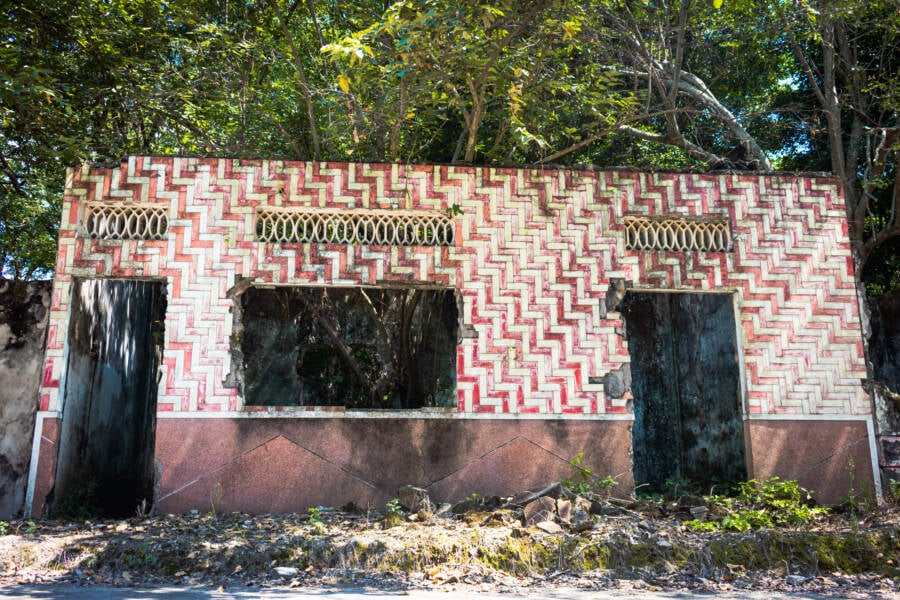
Wikimedia CommonsArmero was not rebuilt after the devastating mudflow.
That’s little comfort to the survivors of the Armero tragedy, who lost their town and their loved ones in one of the worst natural disasters of the 20th century.
After reading about the Armero tragedy, the catastrophic volcanic eruption in Colombia that killed some 25,000 people in 1985, go inside the eruption of Mount Vesuvius, the Italian volcano that destroyed the nearby town of Pompeii in 79 C.E. Or, learn about the 1815 Mount Tambora eruption, the most powerful volcanic explosion in world history.