Dating back to the first century C.E., this lavish estate featuring frescoes and mosaics was once owned by Roman elites who may have hosted the likes of Hadrian and Marcus Aurelius.

Ministry of CultureArchaeologists discovered the villa’s atrium as well as four smaller rooms.
After local police were alerted to an unauthorized excavation of an historic site that was underway on the outskirts of Rome, archaeologists from the city’s Special Superintendency raced to the site and began reverting the damage done by the illegal digging.
Archaeologists not only secured the area, they ending up discovering a previously-unknown 2,000-year-old villa that was likely owned by ancient Roman elites, and may have even been linked to famous figures like Hadrian, Antoninus Pius, and Marcus Aurelius.
The Extravagant 2,000-Year-Old Villa Found At Castel di Guido
The villa was found beneath a farm in Castel di Guido, a village about 12 miles west of Rome.
The illegal archaeological excavation was done with a backhoe, leaving behind massive piles of dirt and some cuts in the villa’s stone, officials said in a statement from Italy’s Ministry of Culture. Nevertheless, authorized archaeologists were then able to secure the site and uncover the villa’s multiple rooms adorned with opulent decorations and artifacts.
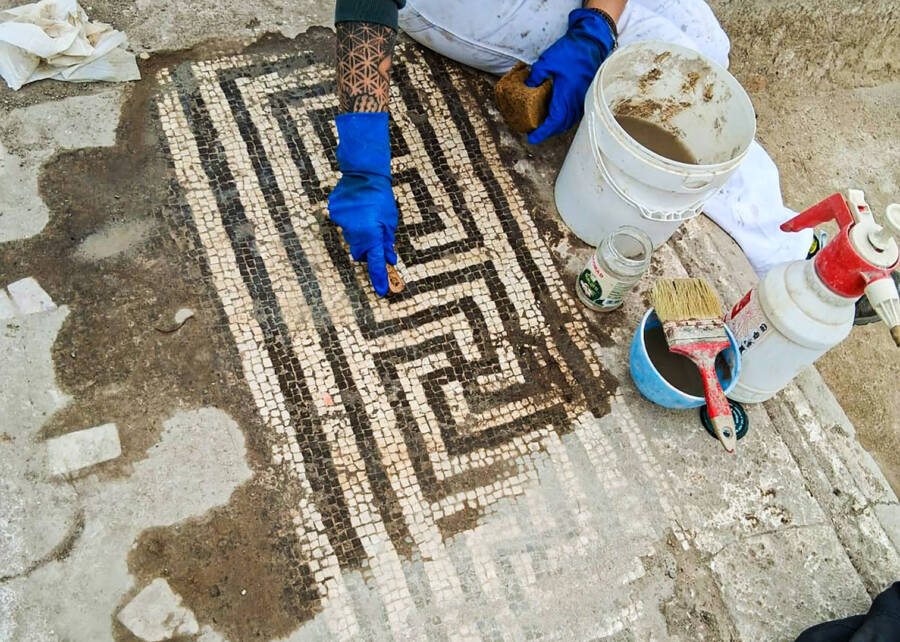
Ministry of CultureThe team found several black-and-white mosaic floors with geometric designs and plant motifs.
At the entrance to the villa, the team revealed a beautiful atrium with a central impluvium, a marble pool for collecting rainwater from an opening in the roof that was common in many ancient Roman houses. It was surrounded by a mosaic floor with both geometrical designs and plant motifs. The back wall of the atrium featured a section of a fresco that was decorated with human figures and nature scenes.
In the impluvium, archaeologists found a broken statue that was about 2.5 feet tall and depicted a bearded man holding a small domesticated animal, likely a calf or piglet. The man, wearing a short tunic, might be a depiction of Silvanus, the Roman god of forests and uncultivated land who is associated with rural life.
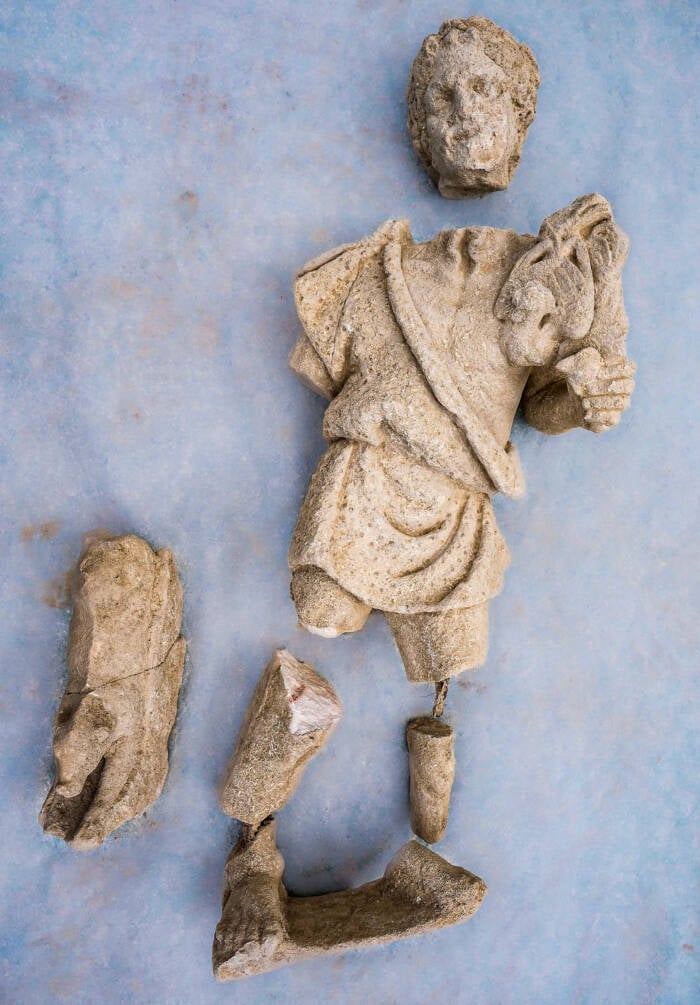
Ministry of CultureArchaeologists found a broken marble statue that could depict the Roman deity Silvanus.
The archaeologists also uncovered four smaller rooms surrounding the large atrium that contained structures related to the agricultural work likely carried out on the villa’s grounds. Three of the rooms also had well-preserved black-and-white mosaic floors that featured geometric designs.
How This Find Could Shed Light On The Lives Of Imperial Elites In Ancient Rome
The high quality of the statue, the mosaic floors, and the frescoed walls all indicate that the owners of the villa were of high social standing, perhaps even members of the Roman aristocracy.
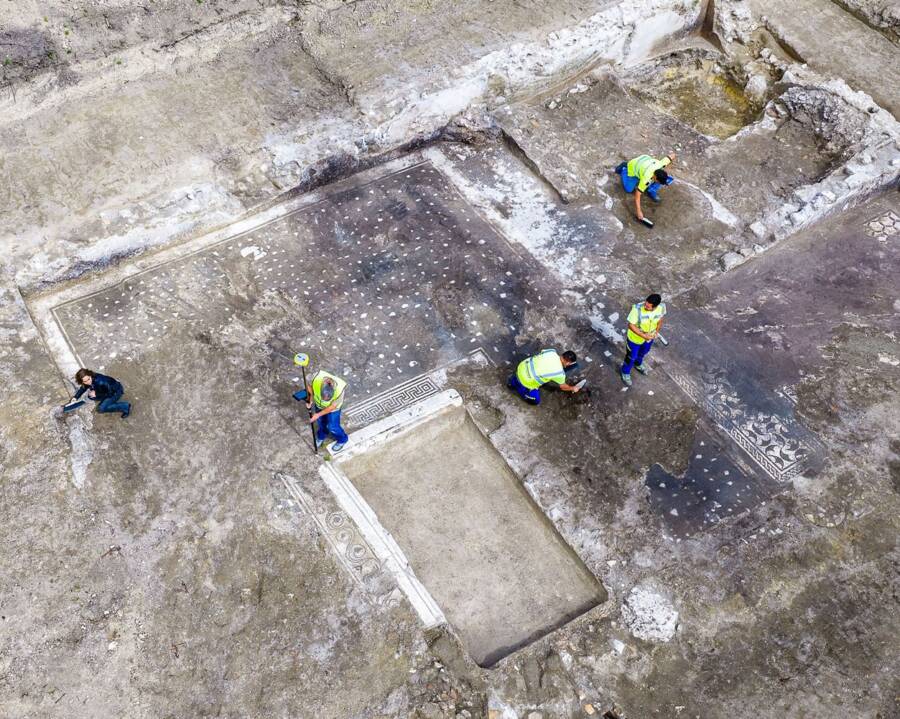
Ministry of CultureExperts believe that the Castel di Guido villa was built sometime during the first century C.E.
Furthermore, the villa was found in an area known in ancient times as Lorium, a village where prominent imperial figures lived and stayed.
Antoninus Pius, who succeeded Hadrian in leading Rome from 138 C.E. to 161 C.E., is believed to have lived in Lorium and built his imperial residence there. Lorium is also thought to be the place where he died, bringing his reign to a close at age 74. Lorium was also frequently visited by Marcus Aurelius, Antoninus Pius’ nephew and successor to the throne.
Due to the ancient village’s strong link to the Roman imperial leaders of the Antonine dynasty, archaeologists have uncovered many ancient estates and residences across this area.
The discovery of this newly-unearthed villa, however, came as a complete surprise to archaeologists. Now, the team hopes that this find can shed more light on the lives of Rome’s imperial leaders in the centuries just before the empire fell.
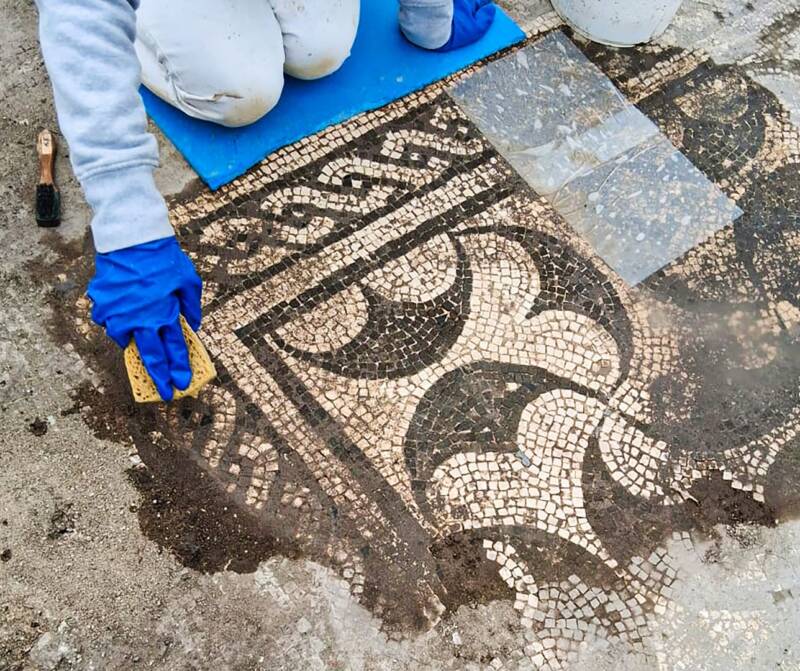
Ministry of CultureThe wealth of mosaics uncovered at the Castel di Guido villa suggest that its owners were Roman elites.
“This is another important piece of the puzzle, opening up new perspectives for the understanding and preservation of our history-rich territory,” said superintendency archaeologist Alessia Contino.
Archaeologists determined that the villa was likely first used in the first century and abandoned in the third when the imperial families relocated from Lorium, but more work and research must be done to narrow down the timeline.
Still, this discovery — especially considering the further damage that could have been inflicted during the illegal excavation — is an exciting step forward in learning about the storied Imperial Period of ancient Roman history.
After reading about the discovery of this lavish Roman villa, learn about the teenagers who stumbled upon a Roman house underneath their school gym. Then, dive into how and when the Roman Empire collapsed.