Metal detectorists in Montana uncovered flatware that they believe may have been used by William Clark and Meriwether Lewis themselves.

@mineralsofmontana/TikTokMetal detectorists uncovered the handle of a spoon that they claim is linked to the Lewis and Clark Expedition.
A group of modern-day explorers believes they’ve come across artifacts connected to Lewis and Clark’s famous expedition in the early 19th century. Is it really possible that a metal detector uncovered a piece of history — or is it just wishful thinking?
In a trending video with more than 374,000 views, content creator @mineralsofmontana claims that he and his friends found several artifacts in Montana that may be linked to two of the most famous explorers in American history.
“My buddy had found out that Lewis and Clark had camped on his property on their journey, and one day he was metal detecting and found half of a spoon that they had used. So you know we had to go back and go dig for some lost treasure,” the text overlay reads.
The men later uncovered a fork with a design on the handle that matched the spoon. “We’re finding treasure,” someone states in the video. “It has the exact same imprint.”
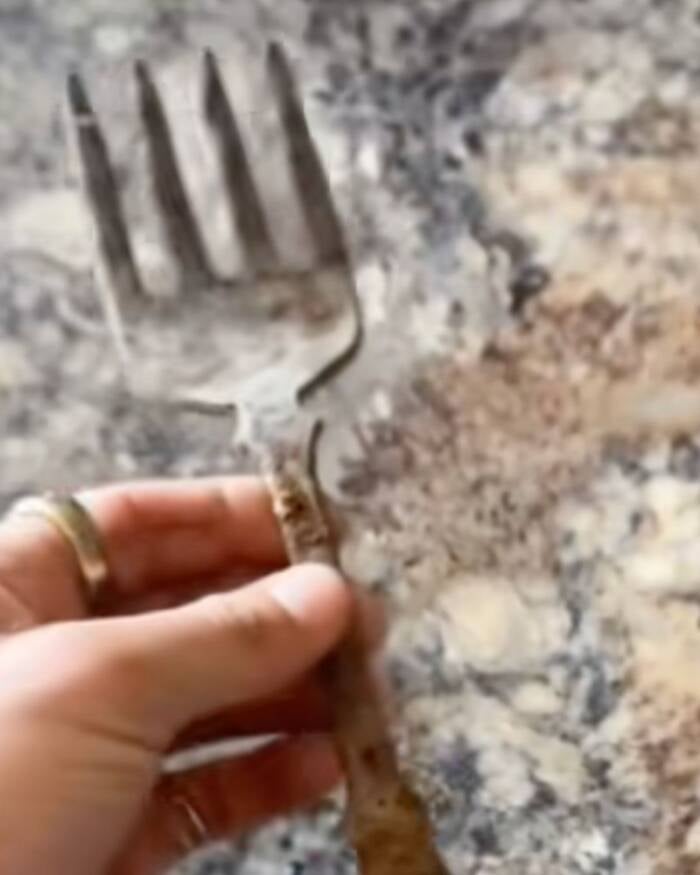
@mineralsofmontana/TikTokA large fork was uncovered near the spoon handle.
While it’s clear that the explorers found some fascinating artifacts, whether they really belonged to Lewis and Clark is up for debate.
Lewis And Clark’s Time In Montana
In 1803, President Thomas Jefferson asked his personal secretary, Meriwether Lewis, to lead an expedition into the 828,000 square miles of territory the U.S. had just acquired through the Louisiana Purchase. The land covered the entirety of the present-day states of Arkansas, Oklahoma, Missouri, Iowa, Kansas, and Nebraska, as well as parts of Louisiana, Texas, New Mexico, Colorado, Wyoming, Montana, North and South Dakota, and Minnesota.
Lewis chose William Clark to help him command the Corps of Discovery, the team that would accompany them on the journey. They had multiple goals: map the territory, document plants and animals, make contact with Indigenous tribes, and find a practical route to the Pacific Ocean.
The group set out from Camp Dubois in Illinois on May 14, 1804, on a mission that would cover 8,000 miles and last more than two years. The explorers identified 178 plants and 122 animals that were previously undocumented by scientists, including the grizzly bear, black-tailed prairie dog, and mule deer.
According to Montana Fish, Wildlife, and Parks, the expedition covered more ground in Montana than in any other state, first traveling through between April and September 1805.
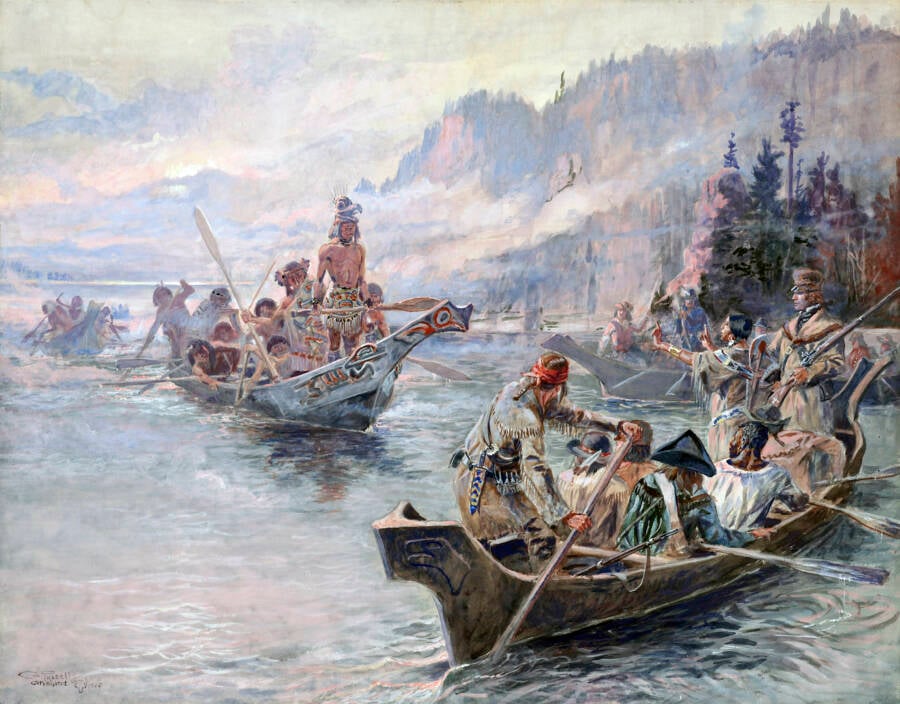
Public DomainCharles M. Russell’s 1905 painting of the Lewis and Clark Expedition.
Over those five months, Lewis and Clark saw the Great Falls — which Lewis called “the grandest sight I ever beheld” — ate buffalo intestines, and admired Beaverhead Rock with Sacagawea, the Shoshone woman who helped guide the men west.
During their return trip in 1806, Clark climbed a sandstone butte along the Yellowstone River. He dubbed it Pompy’s Tower after Sacagawea’s infant son, Jean Baptiste, whom Clark had nicknamed “Pomp.” He carved his name into the rock, where it remains to this day.
So, while there’s plenty of evidence that Lewis and Clark were indeed in Montana during their expedition, did they really leave utensils behind to be found by metal detectorists more than 200 years later?
The Artifacts Uncovered By Metal Detectorists
The video posted by @mineralsofmontana doesn’t clarify why the men believe the spoon and fork belonged to Lewis and Clark, aside from the fact that the men allegedly camped on the property where the relics were found.
In fact, it’s unclear whether the Corps of Discovery even carried forks. According to the Lewis and Clark Trail Alliance, Lewis compiled a shopping list in 1803 that included clothing, fishing tackle, lamps, weapons, ammunition, medicine, food, tobacco, and navigating equipment — but no flatware.

Public DomainWilliam Clark carved his name into the sandstone of the butte that he named Pompy’s Tower.
Lewis and Clark were also far from the only explorers who ventured through Montana in the 19th century. Fur traders, military units, and countless settlers crossed the territory over the years, and any one of them could have left their utensils behind.
What’s more, the spoon and fork haven’t been dated. They could easily be from a much more recent era. The metal detectorists would need to reach out to archaeologists to officially verify the age of the artifacts.
Perhaps experts will someday confirm that the utensils did belong to Lewis and Clark, after all.
@mineralsofmontana The day we found some buried treasure.. 🥲🤌🏻🍴 #fyp #treasure #lewisandclark #manifesting #energy
All That’s Interesting reached out to @mineralsofmontana for comment.
After reading about the artifacts found in Montana that may be linked to Lewis and Clark, learn about John Colter, a key member of the Corps of Discovery. Then, look through 44 photos of life on the Montana frontier.