The Battle Of Chickamauga, The Second-Bloodiest Battle Of The Civil War
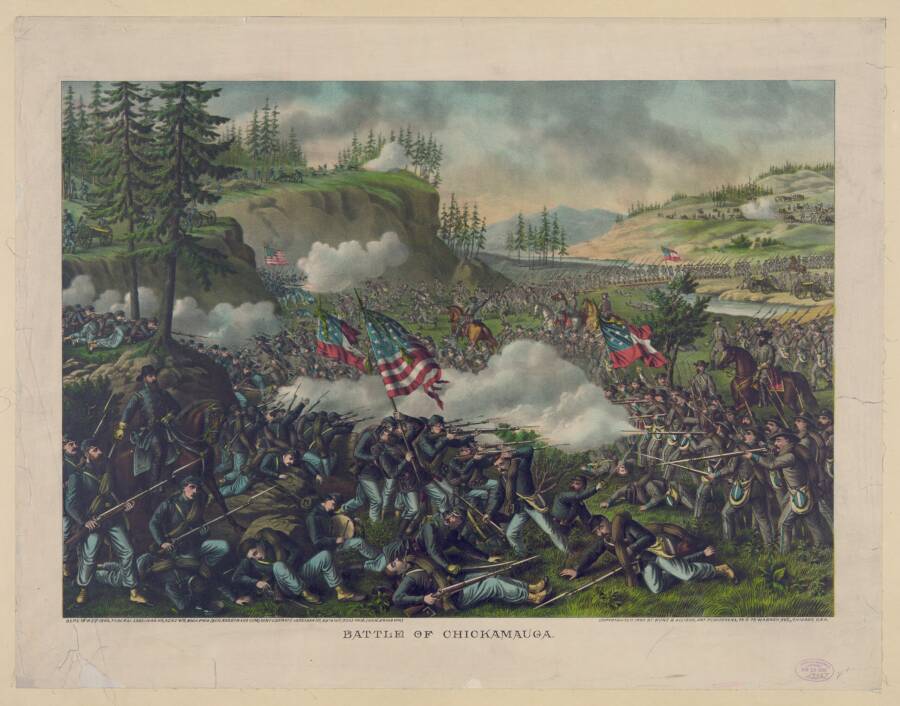
Library of CongressThe Battle of Chickamauga led to more than 34,000 casualties over three days.
Just a few months after Gettysburg, the second-bloodiest battle of the Civil War took place during the Battle of Chickamauga in Tennessee and Georgia. Reeling from great losses at Gettysburg and other battles, the Confederates put up a fierce fight. But their victory was ultimately Pyrrhic.
The battle, which took place between Sept. 18 and Sept. 20, pitted some 60,000 Union troops led by Major General William S. Rosecrans against 65,000 Confederates led by General Braxton Bragg. Both sides sought to control the crucial city of Chattanooga, Tennessee, an important link in the Confederate supply line, which Union soldiers had previously tried to sever during the Great Locomotive Chase of 1862.
The battle was intense from the beginning. At first, Union General William S. Rosecrans was able to seize control of Chattanooga. But instead of retreating, Bragg consolidated his forces and engaged the Union troops at Chickamauga Creek. The two forces, equally matched, ground against each other until the arrival of Confederate reinforcements. When Rosencrans made a tactical error, opening up a gap in the Union line, the Confederates struck hard.
Unable to hold their position — except for Major General George Thomas, the “Rock of Chickamauga,” who held firm — the Union forces fell back to Chattanooga. The Confederates then laid siege to the city.
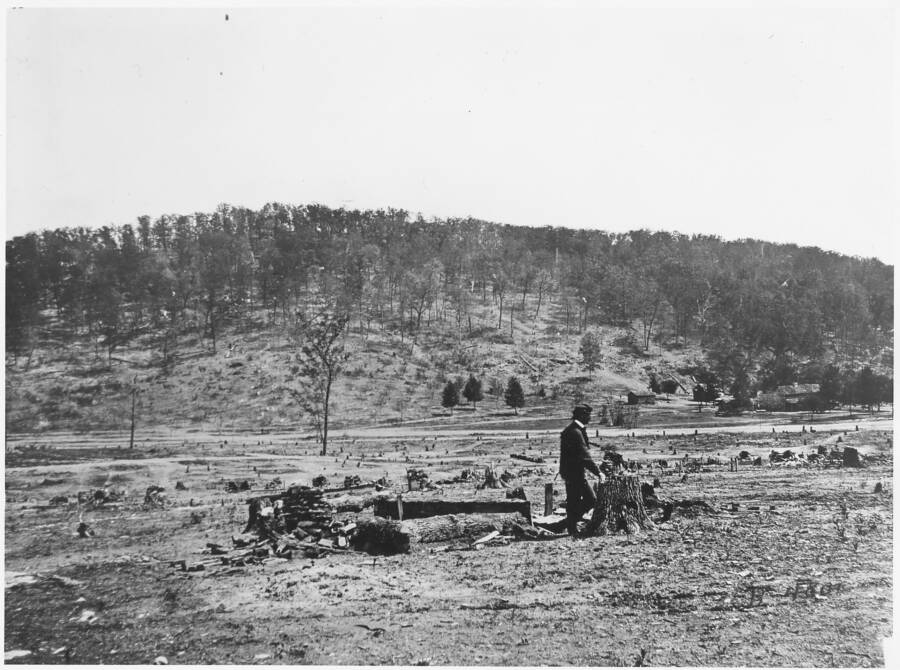
National ArchivesThe battlefield at Chickamauga.
Technically, the Battle of Chickamauga was thus a Confederate victory. But the Confederates had not destroyed the Union forces or retaken Chattanooga, and they’d suffered massive casualties during the conflict. While the Union forces reported 1,657 dead and an additional 14,513 wounded, captured, or missing, the Confederates reported 18,454 casualties (including 2,312 dead), for a total of 34,624. What’s more, Union forces were able to drive the Confederates away from Chattanooga just two months later.
But this Civil War battle stands out for other reasons as well. One of the soldiers fighting during the Battle of Chickamauga was James Garfield, a future U.S. president. Another was a 12-year-old drummer boy named John Clem, whose bravery at Chickamauga made him a Union celebrity — and the youngest noncommissioned officer in the history of the U.S. Army.