Researchers ultimately discovered 30 inscriptions written in three different Indian languages and spread across six tombs built for pharaohs like Tausert, Setnakhte, and Ramesses IX.
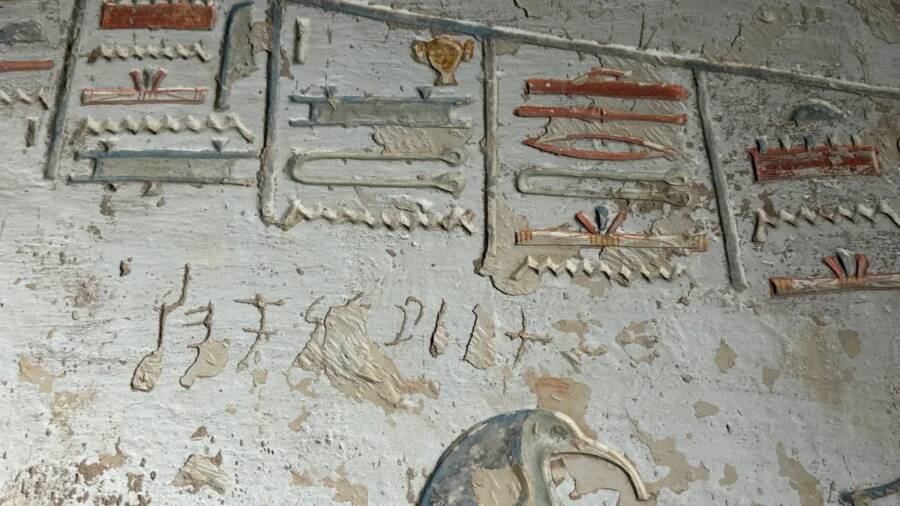
Ingo StrauchOne of the eight inscriptions left by an Indian man named Cikai Korran in Egypt’s Valley of the Kings.
Today, tourists who scratch their names into centuries-old structures like the Colosseum are thoroughly reprimanded, even prosecuted. But 2,000 years ago, plenty of people literally left their mark at the historic places they visited. And a new study of the royal tombs in Egypt’s Valley of the Kings has found a number of inscriptions left there by Indian tourists some 2,000 years ago.
The inscriptions were discovered in various pharaoh’s tombs and written in several Indian languages including Old Tamil and Sanskrit. But perhaps most striking is the fact that many of these etchings appear to have been made by the same man.
The Discovery Of 2,000-Year-Old Graffiti Left By Tourists In Egypt’s Valley Of The Kings
The findings about these ancient inscriptions were presented at a conference in Chennai, India by a group of researchers who published a paper in a collection called “Tamil Epigraphy: A four-day international conference 11-14 February 2026, Proceedings Volume 1” (Government of Tamil Nadu, 2026).
During their presentation, they described 30 inscriptions that they’d studied inside six Egyptian tombs in the Valley of the Kings. The inscriptions were written in three Indian languages, and, though past Egyptologists had noticed the inscriptions before, they had been unable to translate them. Researchers identified the graffiti languages as Indian in origin, and determined that many of the inscriptions came from a single Indian tourist named Cikai Korran.
Korran, writing in the language of Old Tamil, left eight inscriptions reading “Cikai Korran came here and saw” in five different tombs. Korran had a tendency to leave his inscriptions high off the ground, including in the tomb of Ramesses IX (1126 to 1108 B.C.E), where he wrote his message roughly 16 to 20 feet above the tomb entrance. Researchers remain baffled as to how he got up so high. They’re also not sure how he got into the tombs of pharaohs Tausert and Setnakhte, where Korran’s inscription is the only graffiti left inside, suggesting that these chambers had been sealed off in Korran’s day.
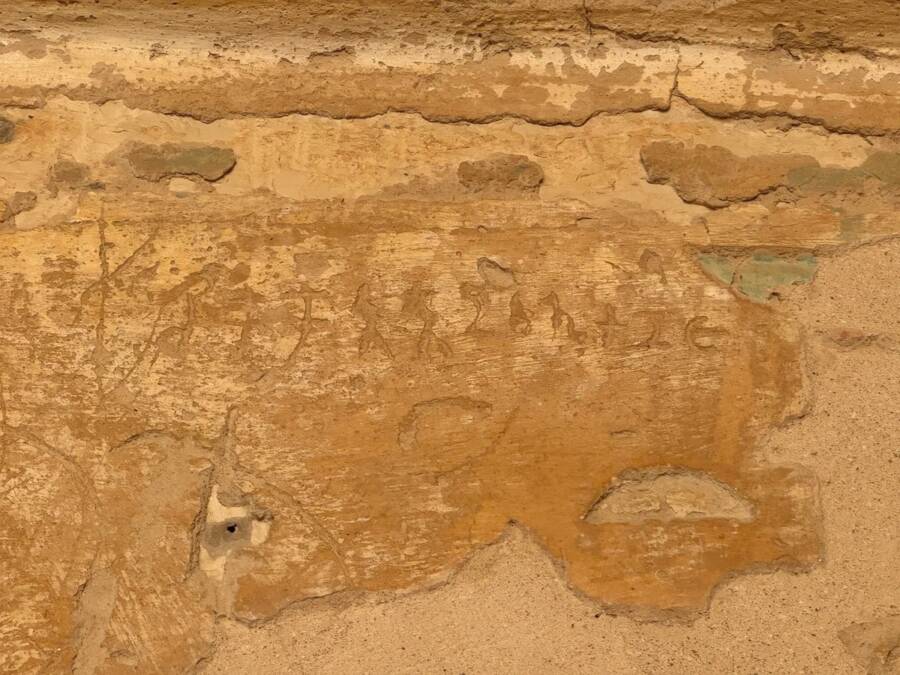
Timothee SassolasOne of the eight inscriptions left by Cikai Korran in the Indian language of Old Tamil.
But while Korran was prolific, he was certainly not the only Indian tourist to leave his mark in the Valley of the Kings 2,000 years ago.
Other Indian Graffiti Found Inside Ancient Egyptian Tombs
In addition to Korran’s inscriptions, researchers also identified dozens of others, including one left in Sanskrit by a man named Indranandin. He described himself as a “messenger of King Kshaharata,” a nod to India’s Kshaharata dynasty of the first century C.E.
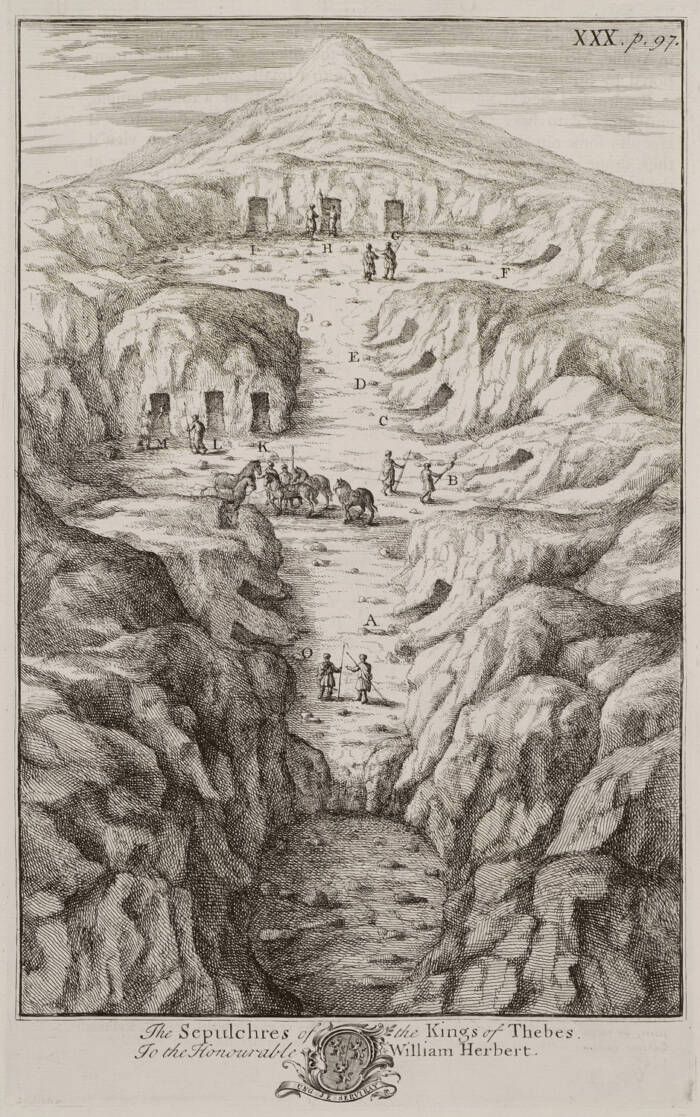
Public DomainAn 18th-century depiction of Egypt’s Valley of the Kings, where Egyptian pharaohs and other powerful nobles were buried for centuries.
It’s possible that Indranandin — and the other Indians who left graffiti behind in the Valley of the Kings — traveled through Egypt as tourists on their way to Rome, which controlled Egypt at the time. But while these travelers’ exact destination is unknown, the inscriptions they left behind both confirm the presence of Indians in Egypt and hint at their interest in Egyptian culture and history.
Indeed, the Valley of the Kings has long drawn the world’s interest. Composed of more than 60 tombs and chambers, the Valley of the Kings is the burial place of pharaohs and other powerful Egyptian nobles from the 18th, 19th, and 20th dynasties (spanning 1539 B.C.E. to 1075 B.C.E). One of the most famous tombs in the Valley of the Kings is that of Tutankhamun, or King Tut, which was first documented in 1922 by archaeologist Howard Carter.
As such, the site is a rich resource of Egyptian history and culture, packed with information about Egyptian mythology and funerary practices. But as these Indian inscriptions from 2,000 years ago prove, the Valley of the Kings can also tell a story about the kinds of people who have visited the site over the past several thousand years. Alongside Roman and Egyptian tourists who may have visited the Valley of the Kings, Tamil and Western Indian people also made the trek to the Valley of the Kings, located near the modern-day city of Luxor.
And just as tourists so often do today, the visitors in antiquity likewise left their mark — and etched their name into history.
After reading about the 2,000-year-old graffiti left by Indian tourists in Egypt, go inside Egyptomania, the worldwide fascination with all things Egyptian. Then, go inside the question of who really built the Egyptian pyramids.