Lepa Radić was hanged in February 1943 for resisting the Nazi occupation of Yugoslavia, and some of her final words from the gallows were, "Do not surrender to the evildoers!"
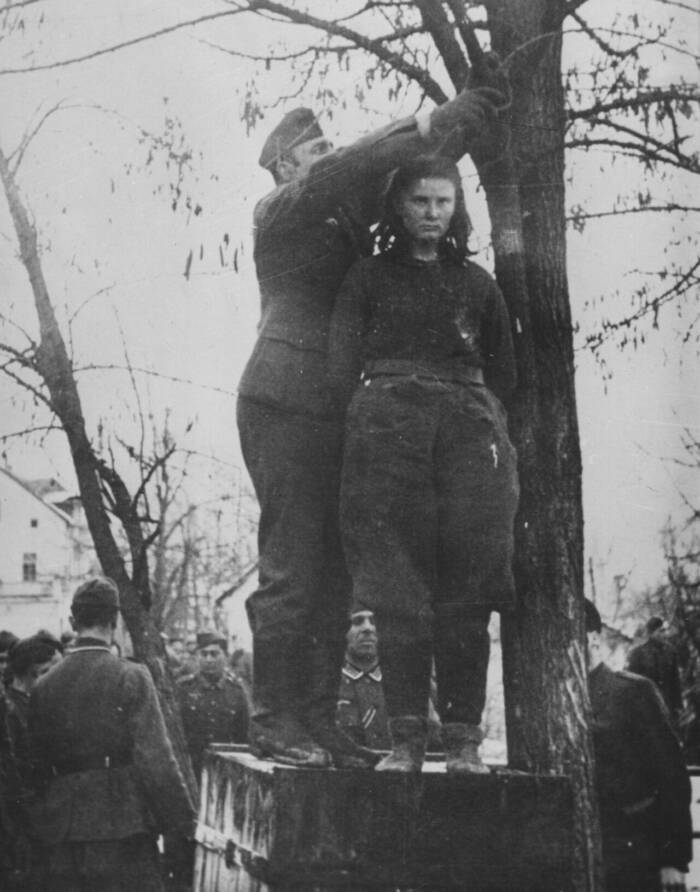
Public DomainLepa Radić stands tall as a German official places a noose around her neck just before her execution on Feb. 8, 1943.
Lepa Radić was just 15 years old when the Axis powers invaded her home country of Yugoslavia in 1941. Her family was involved in the subsequent resistance movement, and young Lepa soon joined them, becoming a member of the League of Communist Youth of Yugoslavia.
Even her imprisonment in November 1941 couldn’t stop the brave teenager. Lepa escaped from captivity and joined the Yugoslav Partisans. She spent the next year organizing the country’s youth, speaking about her cause, and even fighting in Partisan battles.
Then, in February 1943, Lepa Radić was captured and handed over to the Nazis. Despite their brutal torture, she refused to give up any information on her comrades.
Even while standing on the gallows, Lepa wouldn’t give in. She was publicly hanged at age 17, but she’s remembered today as one of history’s most courageous teenagers.
Becoming A Teenage Partisan
Lepa Radić was born in Gašnica, Yugoslavia — today part of Bosnia and Herzegovina — on Dec. 19, 1925. She had a fairly typical childhood, but she was influenced by her family’s strong political beliefs from an early age.
With World War II on the horizon, Lepa’s uncle started gathering weapons in preparation for Yugoslavia’s uprising against the Nazis. Lepa helped him hide the guns.
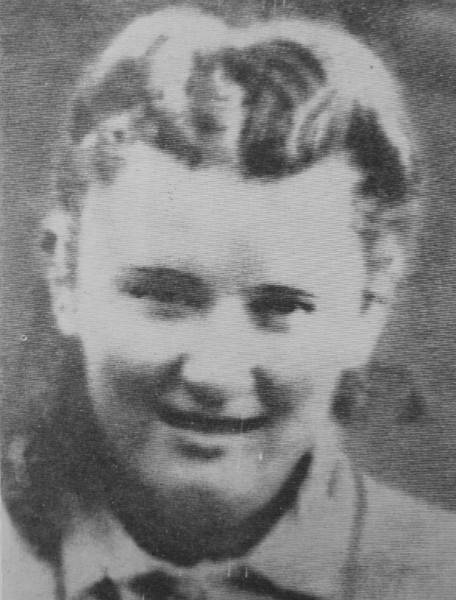
Public DomainLepa Radić in her early teens.
The Radić family members weren’t the only ones who planned to resist. On March 27, 1941, a coup in Belgrade overthrew the pro-Axis government. In response, Adolf Hitler launched his assault against Yugoslavia on April 6 to secure the Balkans for Operation Barbarossa, his planned invasion of the Soviet Union.
Within 12 days, Yugoslavian forces had surrendered to the Nazis. Axis countries annexed Yugoslavia, but their victory wasn’t entirely decisive.
While the Germans maintained tight control over the country’s roads and cities, their soldiers weren’t as present in the remote, mountainous regions of war-torn Yugoslavia. In those hills, Serbian resistance forces began to emerge from the rubble. They were divided into two main groups: the Chetniks and the Partisans.
The Chetniks were led by Colonel Draža Mihailović, who served under the Yugoslav government-in-exile. They were united in name only and composed of various sub-groups whose interests didn’t always align. Some were fervently anti-German, while others cooperated with the invaders at times. But what virtually all Chetniks did manage to agree on was their nationalist desire to ensure the survival of the Serbian population and their loyalty to the Yugoslav monarchy.
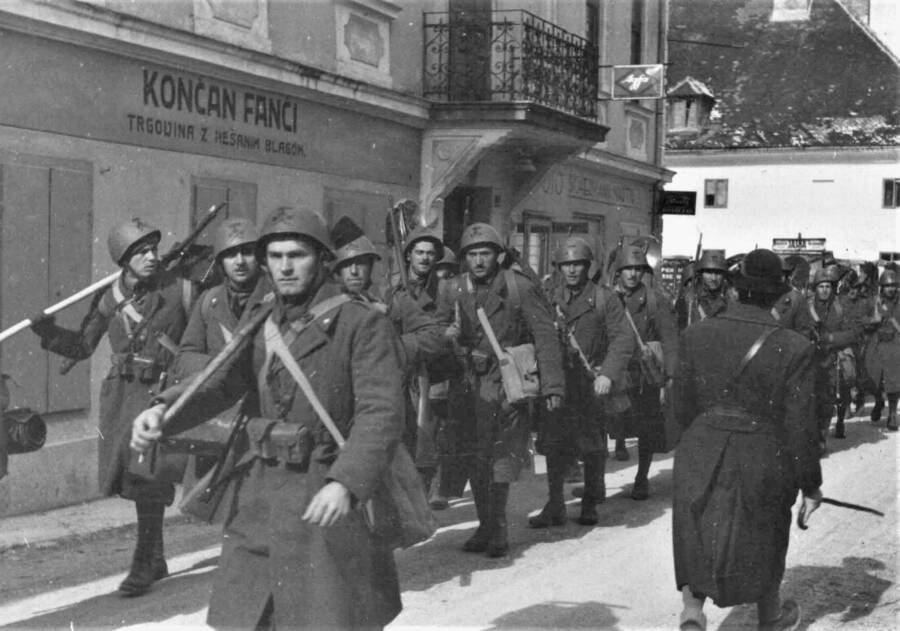
Public DomainItalian soldiers entering Yugoslavia in April 1941.
The Partisans were diametrically opposed to the Chetniks, as their group was fiercely communist. Their leader was Josip Broz “Tito,” the head of the underground Communist Party of Yugoslavia. Under Tito, the Partisans’ overarching goal was to establish an independent socialist Yugoslavian state after overthrowing the Axis powers.
It was into this dense, tangled conflict that young Lepa Radić threw herself when she joined the Partisans in December 1941.
The Heroism Of Lepa Radić
At 15, Lepa had become a member of the League of Communist Youth of Yugoslavia. Later that year, she was arrested alongside the rest of her family by the Ustaše, a group of pro-German Croatian fascists. However, she escaped from prison a month later with the help of undercover Partisans.
She then officially joined the Partisan cause as part of the 7th Company of the 2nd Krajiški Detachment. For over a year, Lepa recruited other youths for the cause and helped organize the harvesting of grain ahead of the arrival of enemy troops so that it wouldn’t be destroyed.
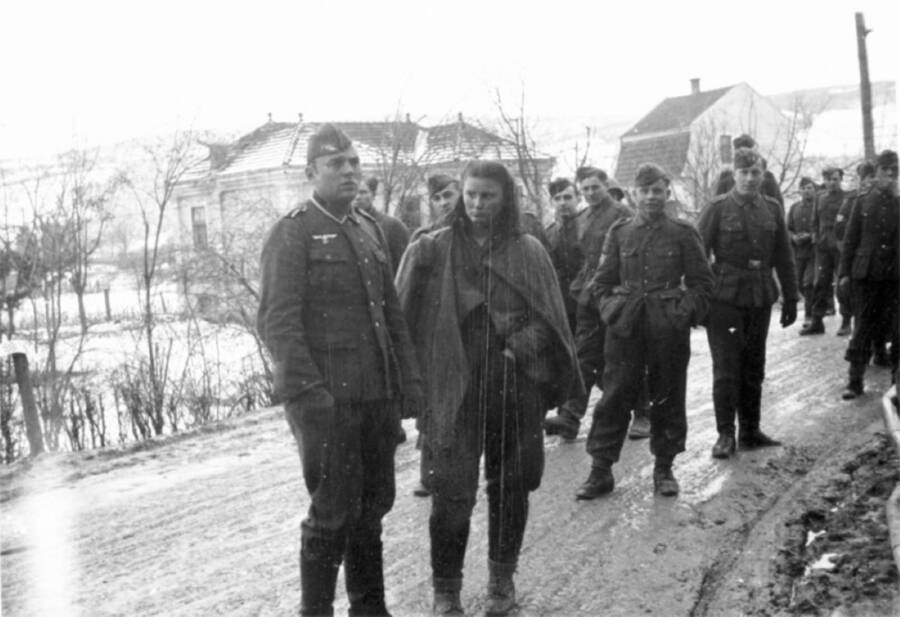
Public DomainLepa Radić is led to the gallows ahead of her execution.
Then, in February 1943, Lepa joined the Battle of Neretva. In late January, the Axis powers had launched an offensive against the Yugoslav Partisans. In return, Tito sent his rebel forces to defend and reclaim territory, leading to numerous clashes and heavy losses on both sides.
During this weeks-long operation, Lepa Radić helped evacuate women and children from the front lines and transported wounded soldiers and civilians to shelters. At one point, she reportedly shot at enemy troops to hold them off and allow more people to escape, firing her weapon until she ran out of ammunition.
Lepa was captured and taken into Nazi custody. She was then transported to the city of Bosanska Krupa, where she would spend her final days.
Lepa Radić’s Execution And Courageous Final Moments
The Germans kept Lepa in isolation and viciously tortured her in an attempt to extract intelligence about the Yugoslav Partisans and the group’s leaders. She bravely refused to divulge any information about her comrades, no matter how brutally her captors treated her.
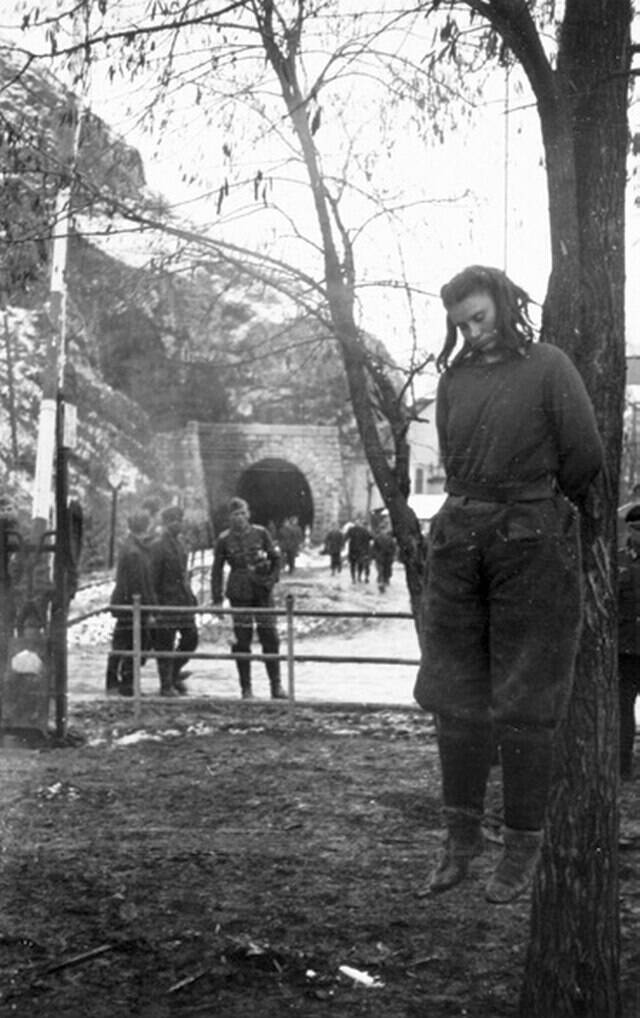
Public DomainLepa Radić’s body hanging as bystanders look on.
A few days later, on Feb. 8, 1943, Nazi officials led Lepa Radić to a hastily constructed gallows in full view of the public. As they placed a noose around her neck, they told her once more that she could save her own life if she talked. Once again, she declined.
As Dušanka Kovačević noted in Women of Yugoslavia in the National Liberation War, Lepa told her executioners, “I am not a traitor of my people. Those whom you are asking about will reveal themselves when they have succeeded in wiping out all you evildoers, to the last man.”
With that, the teenage girl reportedly shouted to the gathered crowd, “Long live the Communist Party and Partisans! Fight, people, for your freedom! Do not surrender to the evildoers! I will be killed, but there are those who will avenge me.”
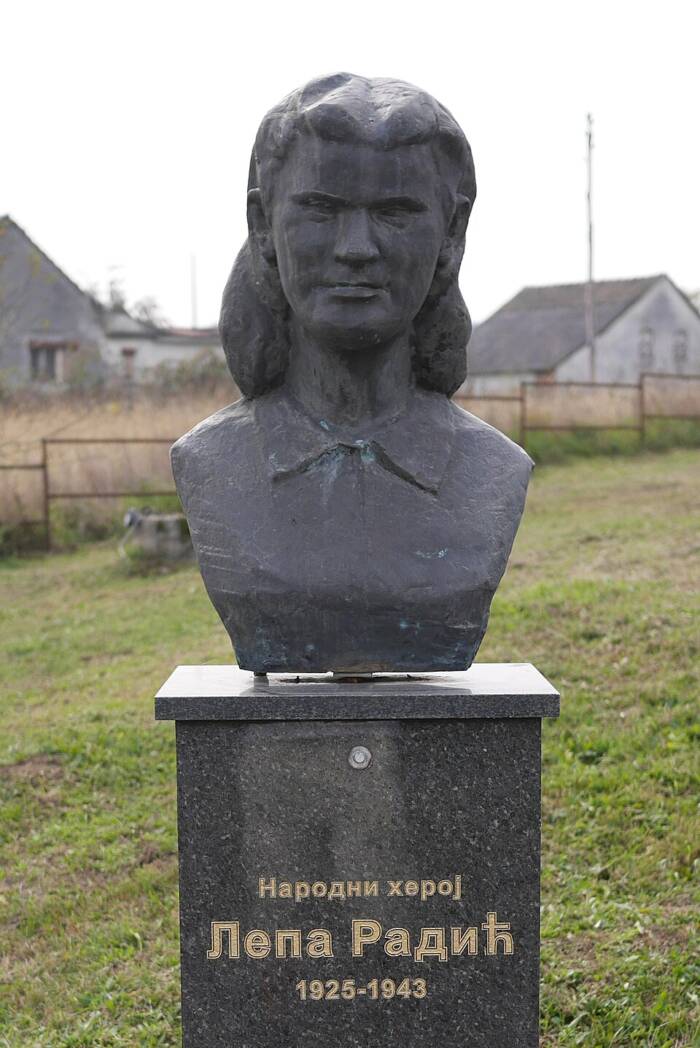
Petar Milošević/Wikimedia CommonsA memorial to Lepa Radić in her hometown of Gašnica.
Lepa Radić was just 17 years old when she was executed by the Nazis. Eight years later, she was awarded the Order of the People’s Hero, Yugoslavia’s second-highest military award, for her courage in the face of death.
Indeed, Lepa’s bravery was so extraordinary that when SS Colonel August Schmidhuber received a report about her hanging, it read, “The female bandit… showed unprecedented defiance.”
After reading about the daring life and death of Lepa Radić, learn about Hans and Sophie Scholl, the siblings who founded the White Rose movement and were killed for resisting the Nazis. Then, discover the story of Czesława Kwoka, the young girl who died at Auschwitz but whose memory lives on thanks to haunting portraits taken of her before she was killed.