Christopher Columbus
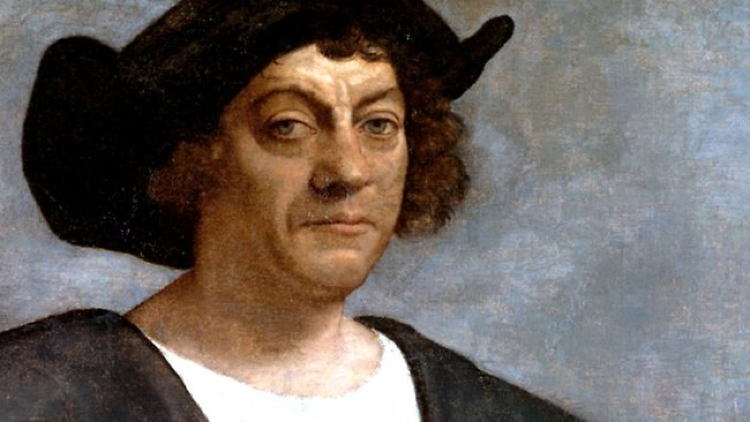
Wikimedia CommonsChristopher Columbus.
Not much is certain about Christopher Columbus‘ early life. He was likely born in Genoa sometime around 1451.
In his youth, Columbus worked as a merchant and sailed to far-off lands bringing back goods to sell in Europe.
But with the Fall of Constantinople in 1453, many European merchants like Columbus began to wonder if there might be a more direct route to the riches of Asia that didn’t involve going through their traditional Muslim enemies.
For many, that meant sailing west instead of east. So in 1485, Columbus began shopping the idea around to European kings and asking for help financing such a voyage.
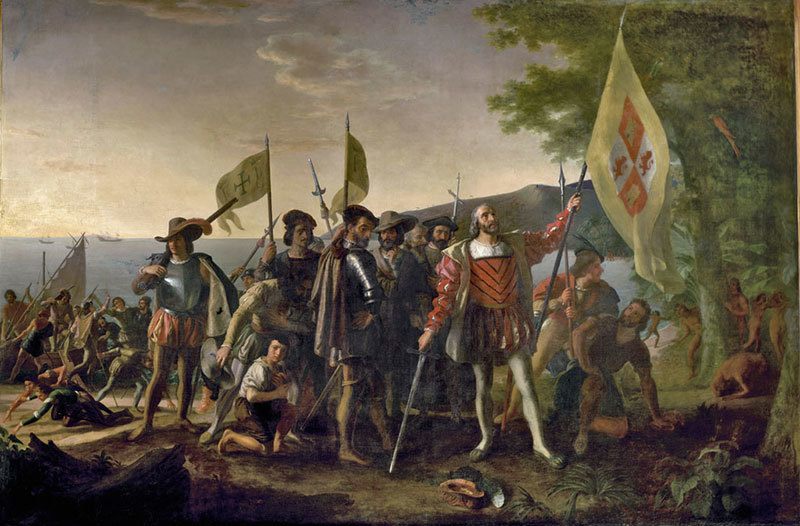
Wikimedia CommonsChristopher Columbus lands in America.
He finally got permission from the King and Queen of Aragon and Castile in 1492 and set off with three ships.
A popular myth is that Columbus was one of the few people who thought the Earth was round at the time. In fact, most people in Europe accepted that the Earth wasn’t flat at that point. But most assumed that it was far too big to reach Asia from Europe.
Columbus disagreed and it would actually be he who was wrong. Had Columbus not stumbled upon the Bahamas in a stroke of amazing luck, he likely would have perished along with his crew.
While Columbus never reached Asia, his good fortune meant that North and South America were now open for trade and colonization by European powers, and subsequently, this famous explorer had changed the course of history forever.
Famous Explorers: Ibn Battuta
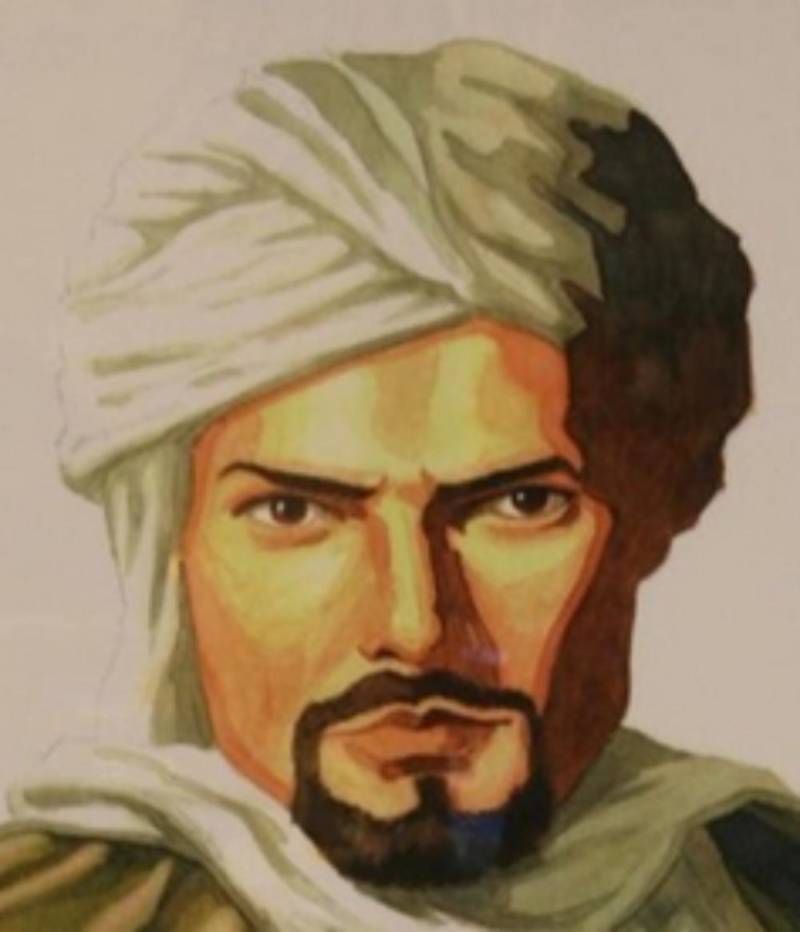
Wikimedia CommonsIbn Battuta.
Ibn Battuta was perhaps the most famous and accomplished medieval Muslim traveler in history. He was born in 1304 in Morocco to a family of legal scholars.
Everything that is known about Battuta’s early life is derived from his autobiographical accounts of his travels. The first journey he embarked on was the the Islamic pilgrimage to the sacred city of Mecca in modern-day Saudi Arabia, known as the Hajj.
His original intention for the journey was to fulfill his religious duty as a Muslim which dictates that all Muslims must embark on the pilgrimage at least once in their lifetime.
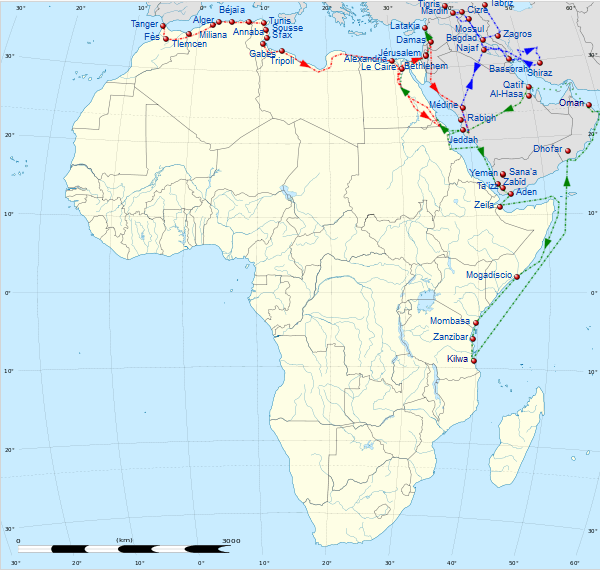
Wikimedia CommonsA map of Ibn Battuta’s travels.
Battuta began the 16-month pilgrimage from his hometown of Tangiers in Morocco in 1325 when he was 21-years-old. While on his pilgrimage, Battuta fell in love with traveling and decided to continue exploring the world after his Mecca hajj was completed. He gave himself a rule on that pilgrimage from that point forward: “never to travel any road a second time.”
He would continue to travel throughout the African and Asian continents for the next 24 years. Battuta chronicled his various journeys that took him everywhere from China, to Kenya, to Spain, in his book Rihlah, which has since become one of the most important travel books ever written.
Battuta completed his book and travels in 1355, and after its publication little is known about how he spent the rest of his life. It’s likely that he retired from traveling and became a judge, but where he lived and worked is unknown.
Despite Battuta’s relative disappearance from the world, his book is still a great reference that gives insight into what the world looked like in the 14th century.