The Gulabi Gang, which seeks to protect women and girls from violence and oppression, first emerged in 2006 and now has hundreds of thousands of members.
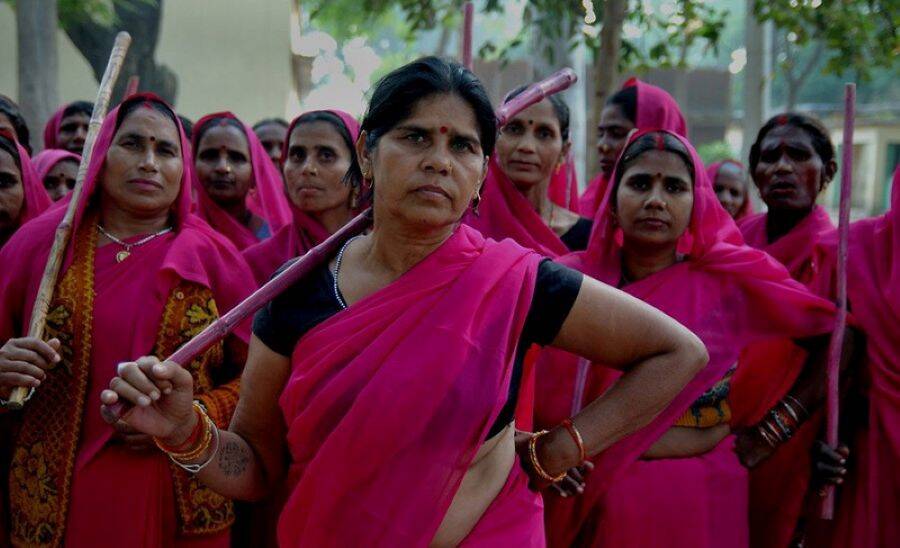
Gulabi GangThe Gulabi Gang stands up for female empowerment.
In the Indian state of Uttar Pradesh, men found to have abused, assaulted, or otherwise mistreated the women in their life could find themselves facing a group of women in pink saris wielding bamboo sticks. They’re known as the Gulabi Gang.
This vigilante gang encompasses hundreds of thousands of women across Uttar Pradesh, all devoted to combating violence against women and protecting women’s’ rights. While many of their tactics for awareness are nonviolent, members are trained to use long bamboo sticks called lathis to “thrash” men who are violent toward women.
Since its founding in 2006, the Gulabi Gang had grown to encompass hundreds of thousands of members. Take a deeper look at the gang of women dedicated to empowering women across India.
Sampat Pal Devi, The Woman Who Started It All
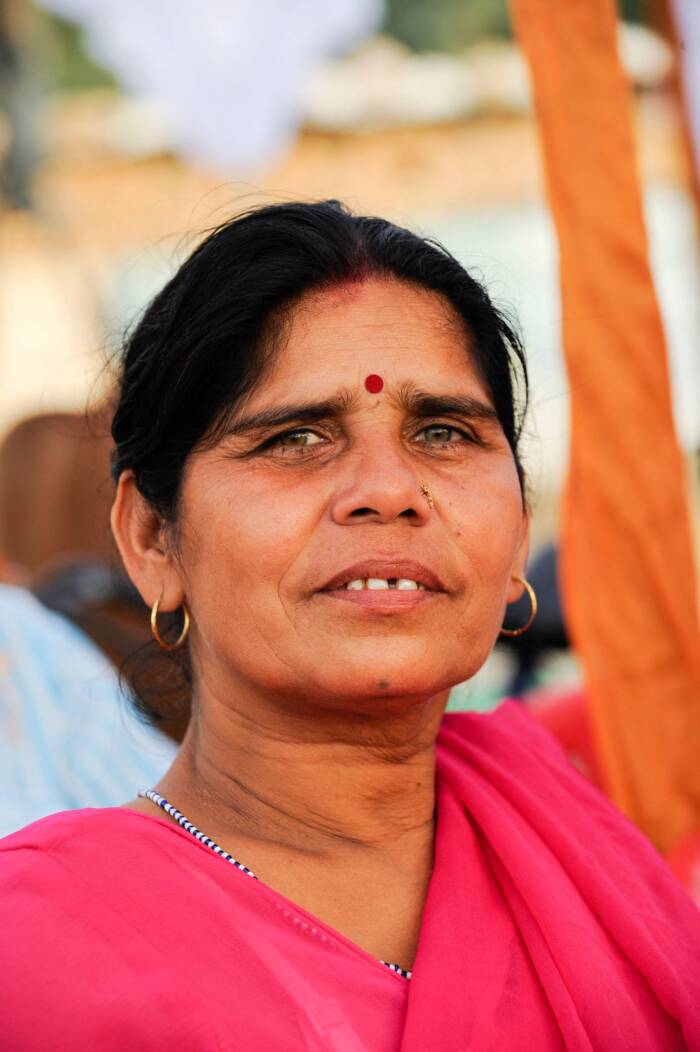
Joerg BoethlingSampat Pal Devi, the woman who started the Gulabi Gang.
According to the Gulabi Gang website, the idea for the organization originated with a woman named Sampat Pal Devi. One day, Devi saw a neighbor mercilessly beating his wife. Devi tried to intervene. But the man started attacking Devi as well.
However, she wasn’t done trying to fight back.
Devi returned the next day, this time armed with a stick and five other women. They gave the “rogue” a “thrashing.” And before long, the story of what Devi and the other women had done to spread across the village — and beyond. Women began to reach out to Devi, hoping to join her “gang.”
With that, the Gulabi Gang was officially born in 2006. The word “gulabi” means “pink,” a nod to the pink saris that gang members wear. And they soon set out to protect women and punish oppressive and violent men.
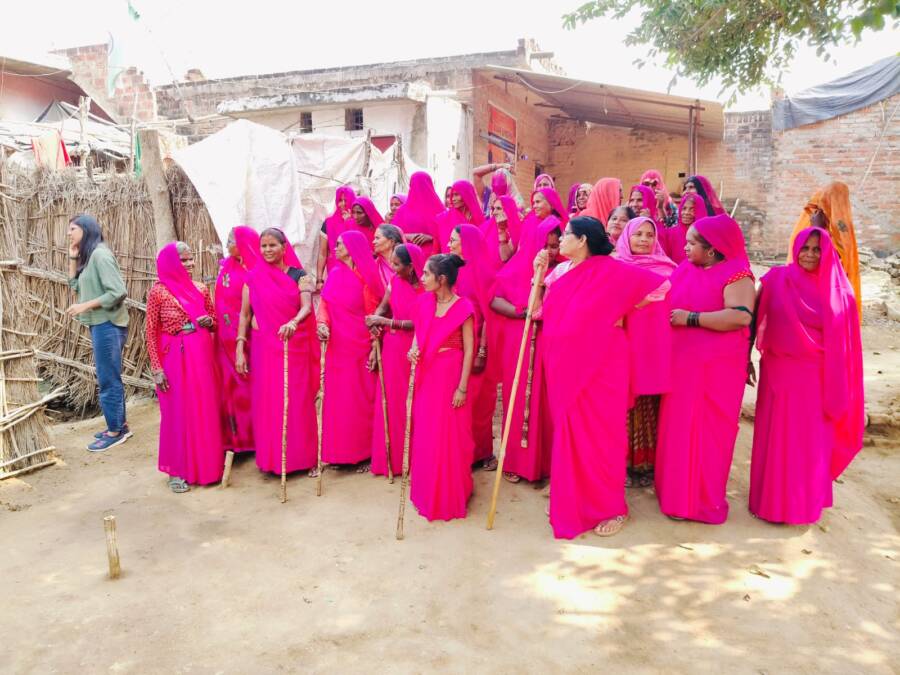
Gulabi GangMembers are trained on how to use a lathis to defend themselves and other women.
“Yes, we fight rapists with lathis [sticks]. If we find the culprit, we thrash him black and blue so he dare not attempt to do wrong to any girl or a woman again,” Devi told Al Jazeera in 2014.
In the beginning, the gang’s primary function was to protect women from the violence they would all-too-commonly face from men. This even involved investigating crimes themselves when police refused to act.
The Gulabi Gang’s Goal To Prevent Violence Against Women
The gang operates in some of India’s most impoverished regions — it was born in the Bundelkhand region of India, a place with more than 40 percent of people living beneath the poverty line — where crime rates are high. Members work to combat everything from violence against women, to child marriages, to fighting for basic rights for the poorest individuals.
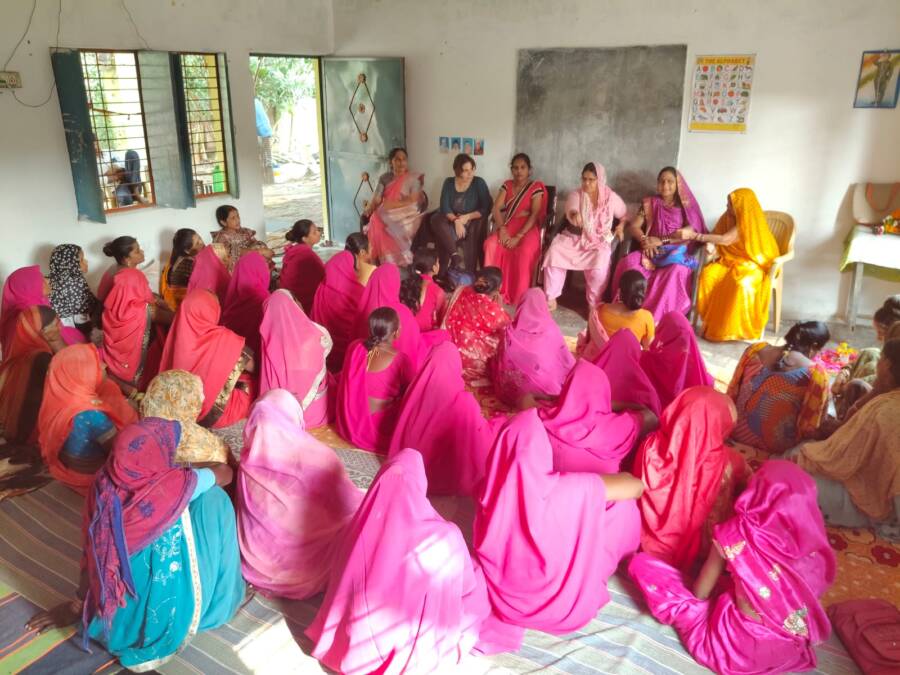
Gulabi GangThe all-woman group has hundreds of thousands of members.
“When a woman seeks the membership of Gulabi Gang, it is because she has suffered injustice, has been oppressed and does not see any other recourse,” Suman Singh, the group’s deputy commander, explained in 2014.
She added: “All our women can stand up to the men and if need be seek retribution through lathis.”
What the Gulabi Gang aimed to do is to support women to escape these cycles of poverty and violence, and more broadly ensure basic human rights for all peoples, no matter their socio-economic standing. On their website, their mission is to “support and train women to enhance their basic skills to become economically secure and develop confidence to protect themselves from abuse through sustainable livelihood options.”
The gang has been known to organize demonstrations to protest instances of local corruption. For example, police in Atarra refused to log a complaint from a member of a low caste, so the gang organized a protest of over 200 women to try and shame the police into making changes.
In another instance, they helped a 17-year-old who had been arrested after she told the police she’d been gang raped. One of her rapists, a member of the local legislature, had arrived at the station first and requested she be arrested. When her father alerted the Gulabi Gang about this, they organized protests outside of the police station and the legislator’s home.
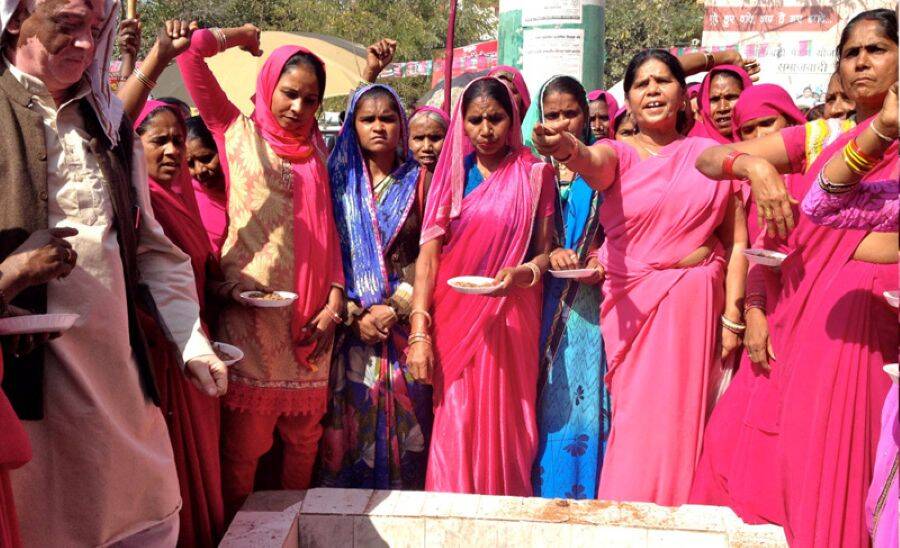
Gulabi GangThe Gulabi Gang organizes demonstrations and sit-ins.
The group also seeks to improve literary, help women establish financial independence, prevent child labor, and shield women from dowry demands. They frequently attempt to work within the confines of the system, by reaching out to police, or by using public shaming and protests. But the group has never forgotten their origin story.
Members are trained on how to use a lathi to protect one another. And they will retaliate against violence towards women in their communities.
The Gulabi Gang In Politics and The Media
In the years since their founding in 2006, the notoriety and popularity of the Gulabi Gang has grown significantly. Now boasting hundreds of thousands of members, the group has become an influential political force.
Since many of the gang’s goals involve combating corruption, they tend to butt heads with government officials. However, with the rise of their popularity, members of the Gulabi Gang have also run for office. In 2010, 21 women from the Gulabi Gang were elected to panchayat positions. These positions oversee issues like road construction and water sanitation.
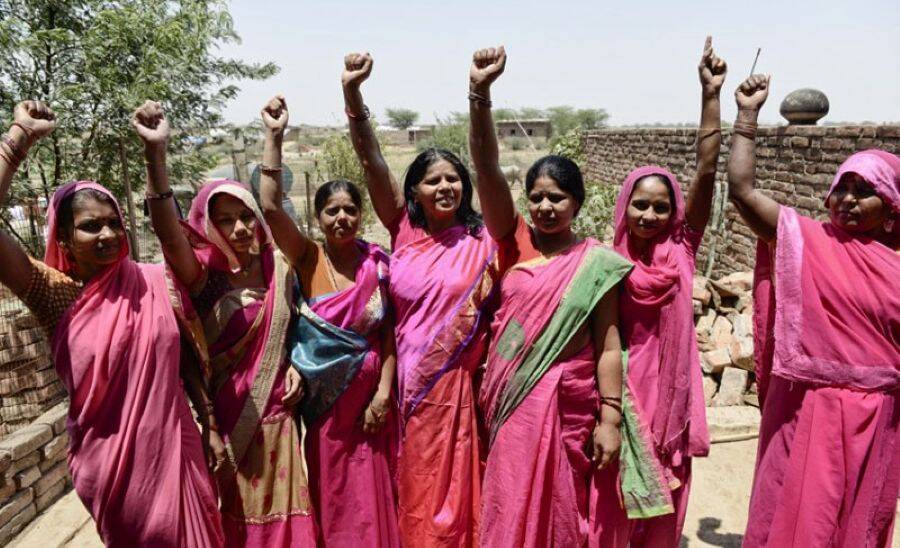
Gulabi GangMembers of the Gulabi Gang have been elected to local government positions.
The women have also became a media sensation. Their unique story and highly stylized look of pink saris and lathis were featured in a 2012 documentary entitled Gulabi Gang, as well as the 2014 Bollywood film Gulaab Gang, starring actresses Madhuri Dixit and Juhi Chawla. In 2013, a book which explored the group’s origins and missions, called Pink Sari Revolution: A Tale of Women and Power in India, was also released.
Devi took a step back from leadership operations of the gang in 2014, after allegations of financial impropriety, which she has denied. In her stead, Singh, formerly the assistant commander, was elected as head of the Gulabi Gang. But while she’s no longer running things, Devi continues to be involved.
And as the women who started the organization, her words are especially powerful.
“Men who commit these atrocities should be beaten by women,” Devi told Al-Jazeera in 2014. “They should be caught and have a tattoo of ‘I am a rapist’ engraved on their forehead.”
After reading about India’s Gulabi Gang, discover the story of Phoolan Devi, the Bandit Queen turned politician. Then, learn about Mumtaz Mahal, the woman who inspired the construction of the Taj Mahal.