Halley's Comet is named after Edmond Halley, the British astronomer who first identified it as a periodic comet in the 18th century — but new research has revealed that a monk named Eilmer of Malmesbury actually discovered the comet's cyclical appearance 600 years earlier.
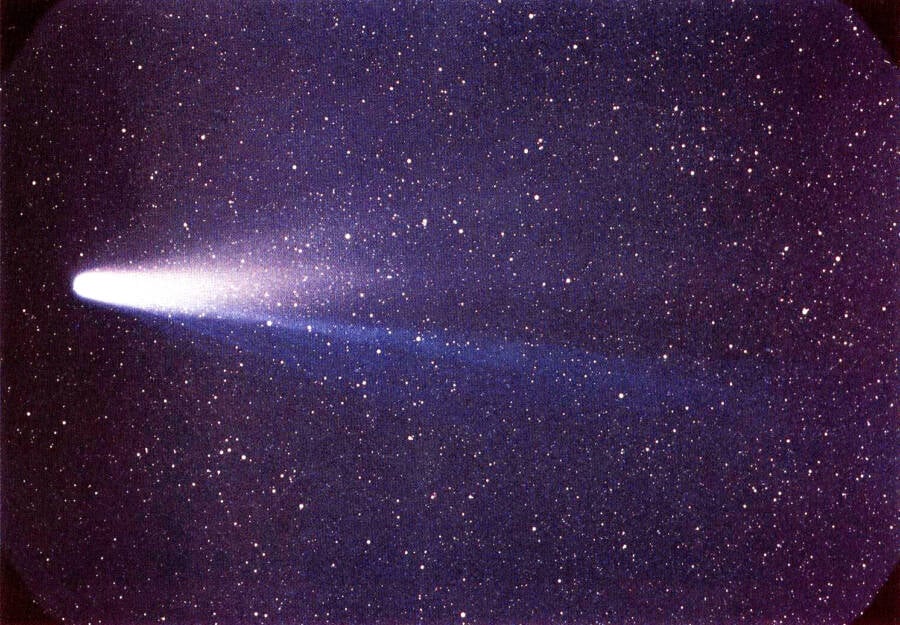
Public DomainHalley’s Comet can be seen from Earth every 76 years. It’s pictured here during its last appearance in 1986.
Halley’s Comet may be in need of a new name, according to recent research. The comet, which returns roughly every 76 years, has long been associated with astronomer Edmond Halley. In 1705, Halley determined that comets observed in 1531, 1607, and 1682 were actually the same celestial body — and then correctly predicted its return in 1758.
However, new research has revealed that an 11th-century English monk named Eilmer of Malmesbury actually recognized the comet’s periodicity centuries before Halley. Around 1066, Eilmer linked two observations of the comet, suggesting that he understood its cyclical nature long before Halley’s famous discovery.
The History Of Halley’s Comet
Halley’s Comet, one of history’s most famed celestial objects, returns approximately every 76 years. It was last visible from Earth in 1986, and it is expected to appear again in 2061.
In 1705, using Isaac Newton’s theories of gravitation, Halley determined that several comets observed throughout history had, in fact, been one and the same. Although Halley died in 1742 and did not live to see the comet return, he did correctly predict its reappearance in 1758, at which point it was named after him.
The new research, published in the book Dorestad and Everything After: Ports, Townscapes & Travellers in Europe, 800-1100 and described in a press release by Leiden University, challenges this historical narrative.
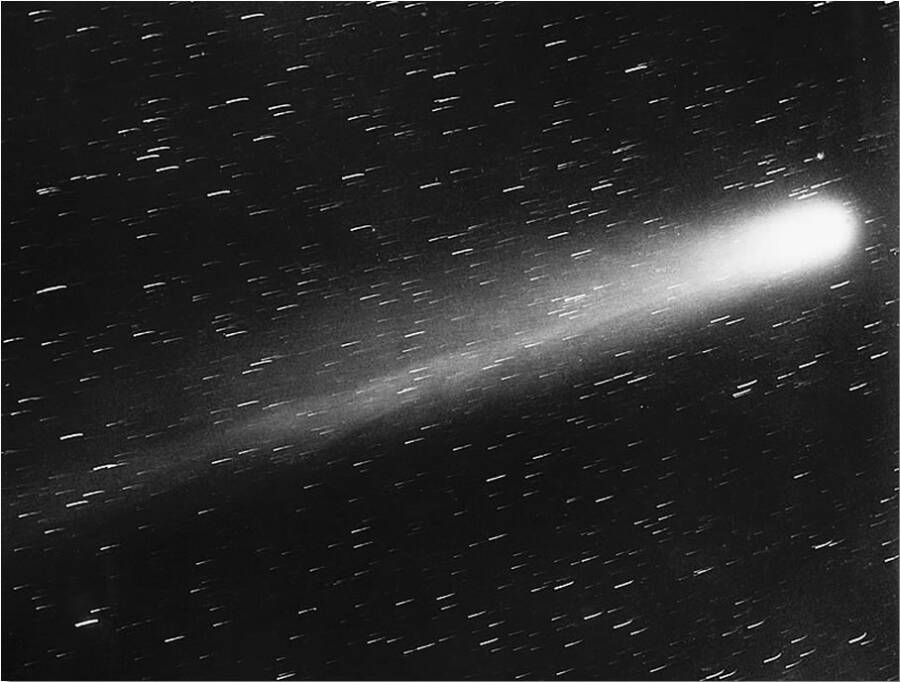
Public DomainHalley’s Comet as seen in 1910.
Researchers examined medieval manuscripts and determined that Eilmer of Malmesbury seemingly recognized that the comet he observed in 1066 was the same one that had appeared in 989. According to a 12th-century account by William of Malmesbury in his book Deeds of the Kings of the English, Eilmer proclaimed upon observing the comet for the second time, “You’ve come, have you? You’ve come, you source of tears to many mothers. It is long since I saw you; but as I see you now you are much more terrible, for I see you brandishing the downfall of my mother-country.”
While historical records show that observations of Halley’s Comet date back even further — as early as 240 B.C.E. — Eilmer was the first to connect that the same celestial object was appearing again and again.
Eilmer Of Malmesbury’s Observation Of Halley’s Comet
Eilmer referred to Halley’s Comet as “terrible” due to the association of comets with misfortune in the Middle Ages. When he observed it in 1066, he reportedly warned that it was a harbinger for the death of a king — and he was right. But nobody believed him at the time.
It’s not difficult to see why Eilmer’s warning may have been dismissed. The monk’s other notable claim to fame, after all, was his attempt to fly after reading the myth of Daedalus. Inspired by the tale, Eilmer strapped wings to his hands and feet and leapt from a tower at Malmesbury Abbey — and then crashed to the ground, breaking both legs and incapacitating himself for the rest of his life.
William of Malmesbury later wrote that the monk believed his attempt failed because “he forgot to fit a tail on his hinder parts.”
However, six months after the comet appeared in the skies above England, King Harold Godwinson was killed at the Battle of Hastings, and William the Conqueror seized the throne. The comet was even depicted on the Bayeux Tapestry due to its supposed role in the world-changing series of events.
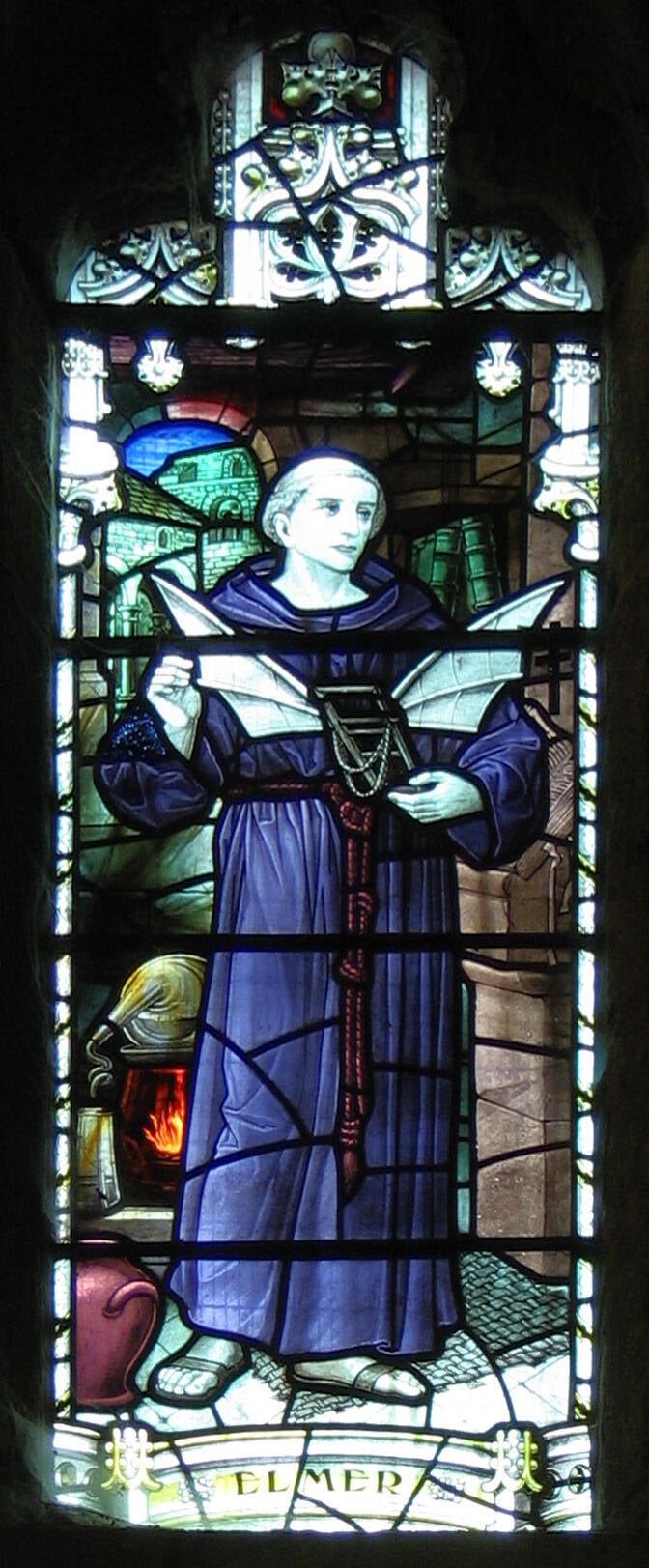
Andrew Dunn/Wikimedia CommonsEilmer of Malmesbury depicted in a stained glass window at Malmesbury Abbey outside of Bristol, England.
So, while Eilmer’s attempt at flight may have ended in disaster, he did accurately surmise that he had seen the same comet twice in the skies over England, roughly 76 years apart. Now, researchers have even suggested the comet be renamed in recognition of Eilmer’s work.
However, given Halley’s own contribution — and how famous Halley’s Comet is — this is unlikely to happen.
After reading about Eilmer of Malmesbury’s observation of Halley’s Comet, go inside the apocalyptic frenzy caused by Halley’s Comet in 1910. Then, discover the sensation caused by the Hale-Bopp Comet in 1997.