Saving Private Ryan: The Fog Of War Movies
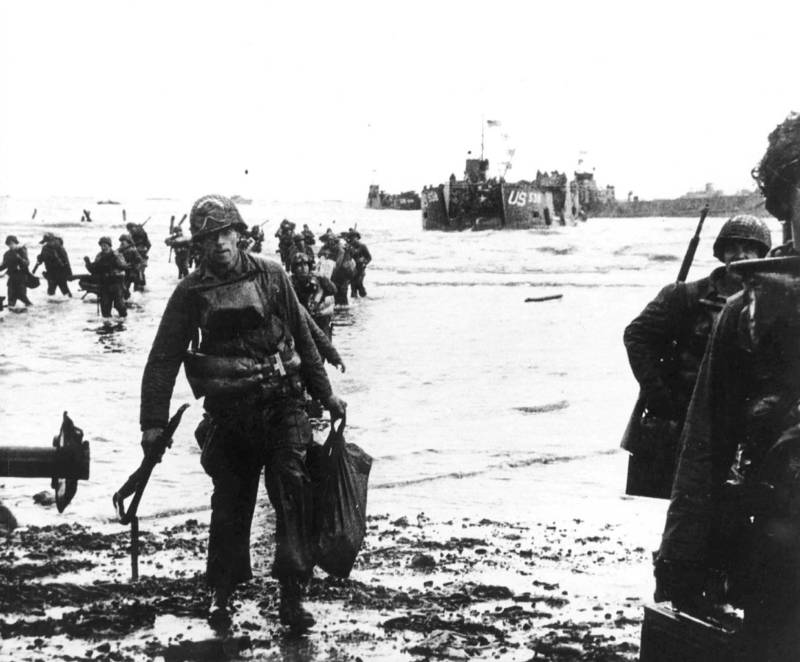
Wikimedia CommonsAmerican troops land on Utah Beach on D-Day.
As far as movies based on true stories go, Steven Spielberg’s 1998 World War II film Saving Private Ryan may be the most historically accurate on our list.
The film hinges on the retrieval of James Francis Ryan, played by Matt Damon, who is the last enlisted brother in his family still alive. In reality, the U.S. War Department did try to prevent families from losing every one of their sons to war, and so ordered a Directive for Survivorship.
According to History, the official order came about as the result of a particularly tragic loss in the Pacific Theater. When the Japanese sank the U.S.S. Juneau on Nov. 13, 1942, during the Battle of Guadalcanal, five brothers who were all stationed aboard lost their lives.
It was unusual for siblings to be stationed together, but George, Francis, Joseph, Madison, and Albert Sullivan requested to serve in the U.S. Navy together after a friend of theirs died at Pearl Harbor. When they all perished alongside at least 30 other sets of brothers, the U.S. War Department amended its practices.
As such, the colloquially known “Only Son” policy was set in motion. In 1944, when brother of four Sergeant Frederick “Fritz” Niland became the last-living brother in his family, it was ordered that he be sent home. This instance directly inspired the story of James Francis Ryan and the narrative of Spielberg’s film.
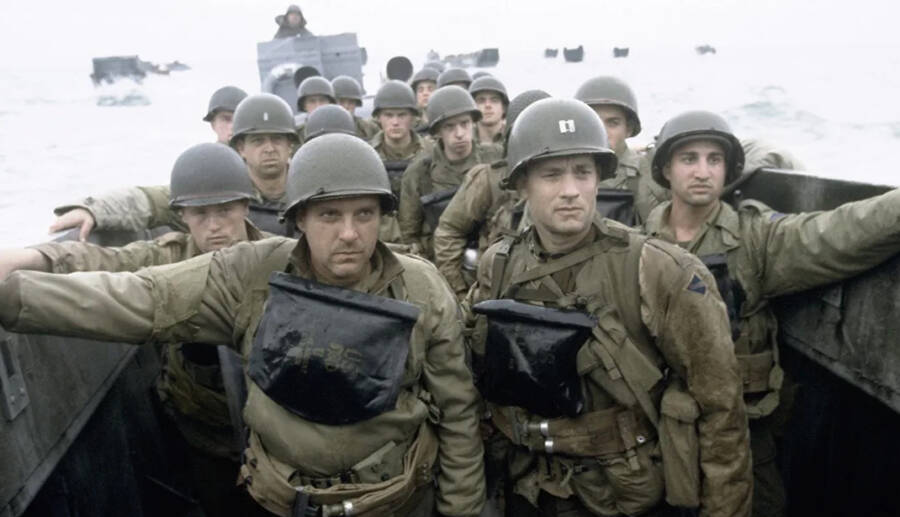
DreamWorks PicturesVeterans have praised Spielberg’s depiction of D-Day for both its emotional and factual accuracy.
Unlike in the movie, Niland was never “lost.” No search party was required to locate him. Instead, a chaplain of the 501st Regiment named Fr. Francis Sampson merely sent some paperwork to his station and Niland went home. But the poignant loss of his brothers was all too true.
Preston and Robert Niland had both enlisted in the service before the United States officially entered the war. The other two brothers, Edward and Fritz, volunteered in November 1942 for personal reasons. With the Only Son policy now in place, the four siblings were dispersed across separate units. Unfortunately, this didn’t keep them out of harm’s way.
Edward served in the Pacific as a pilot in the U.S. Army Force, Robert was stationed in the 82nd Airborne Division, Preston served with the 4th Infantry Division, and Frederick was placed in the 101st Airborne Division, 501st Regiment.
Edward was shot down in Burma and went missing in May 1944. Robert died on D-Day. Preston followed a day later while fighting near Omaha Beach.
When the Army realized that only one of the four sons was likely still alive, Frederick was retrieved and shipped back to America via England, where he completed the rest of his service with the military police. Miraculously, Edward survived his time as a prisoner of war in Burma and was sent home safely as well.
The atmosphere of the movie, too, was close to reality. For instance, former Chief of Military History at the U.S. Military Academy, Colonel Kevin Farrell, praised Spielberg’s depiction of a “sense of chaos and confusion.”
“I often joke that it’s hard enough to figure out what your own guys are doing, let alone find out what the enemy is doing,” he told the National WWII Museum. “That ambiguity, that chaos, I think comes across very well in the film, but most especially with the landing on the beach.”
While Spielberg may have changed character names or condensed time frames to suit the cinematic experience, the film largely received praise from those most familiar with the tragedies of war.
How Netflix Grapples With Henry V In The King
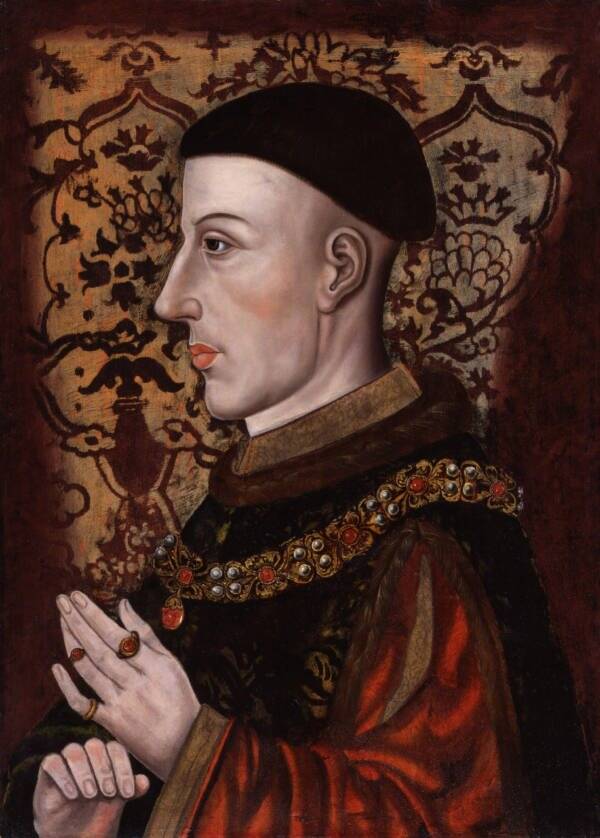
National Portrait Gallery/Wikimedia CommonsKing Henry V of England, late 16th or early 17th century.
David Michôd’s The King isn’t the first time a Shakespearean tale has been thoroughly altered. The Bard’s writing has seen a whole range of conversions, from page to stage and then to screen, with results as equally varied.
One of the latest efforts is a Netflix-produced adaptation of Shakespeare’s Henriad plays. These works, comprised of Richard II, Henry IV Parts 1 and II, and Henry V, are loosely based on events of the 15th century and chronicle the rise of the Lancaster branch of England’s House of Plantagenet.
These particular plays are largely political works of Shakespeare’s, which include familial intrigue and betrayal and are thus ripe for the silver screen.
The film covers the perennial maxim that the more power one acquires, the more corruption they must then traverse. But how faithful is The King to these Shakespearian texts?
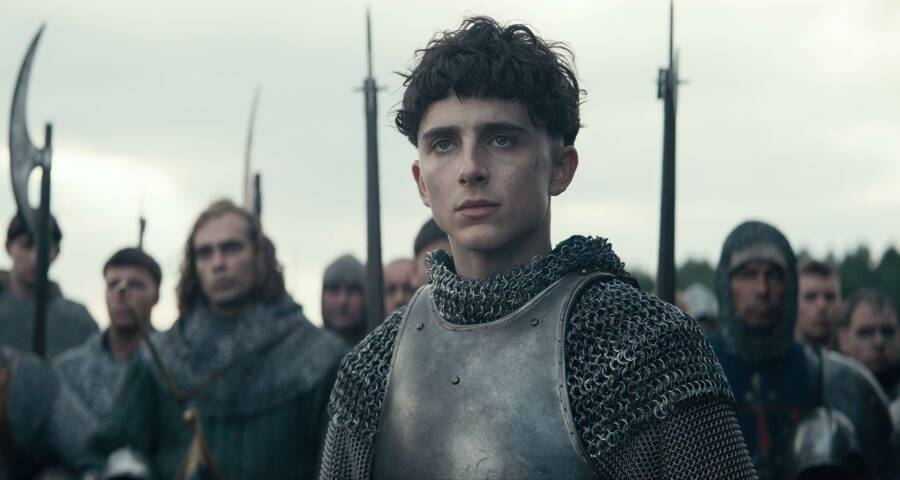
NetflixTimothée Chalamet plays King Henry V of England in The King.
The King traces the life of young Prince Hal from his days of recklessness to his ascent onto the English crown following his father’s death by leprosy. The prince both encounters and overlooks schemes against him as he acquires more power.
According to Time, the filmmakers certainly retained the rocky relationship Prince Hal had with his father, King Henry IV. Played by Ben Mendelsohn, King Henry VI becomes exhausted by the “riot and dishonor” wrought by his youthful son and envious of the reliable bond Lord Northumberland shares with his honorable son, Percy.
In the book, Prince Hal steals his father’s crown thinking the king died when he was merely sleeping. As a result, the king feels betrayed by his son, but the two later reconcile when Prince Hal professes his love for his father. King Henry IV then voluntarily bestows Prince Hal with his crown before he dies.
In the film, however, Prince Hal’s younger brother is crowned in his place. His brother is then killed in battle and Prince Hal leaves his ailing father to die. Prince Hal doesn’t tell his father that he loves him, let alone comfort him as he dies, and the king is left regretting his actions as he passes.
Arguably, the most egregious deviation is The King‘s portrayal of Prince Hal’s friend Falstaff, played by co-writer Joel Edgerton. In the play, Prince Hal becomes ruthless and paranoid as a result of his power and he bans Falstaff from seeing him after his coronation. But in the movie, Prince Hal and Falstaff experience only a brief period of embitterment before reconciling.
To be fair, the film does convey just how difficult it was for the friends to be separated by killing Falstaff in the real-life Battle of Agincourt shortly after they settled their differences.
Nonetheless, changes like these were reportedly made not for the easy digestion of audiences, but to package the sheer volume of a Shakespearian work into a two-hour and 20-minute film.