The Woman Who Survived The Titanic — And Two Other Shipwrecks
Violet Jessop’s tale isn’t just one of the most interesting stories in history — it’s one of the luckiest.
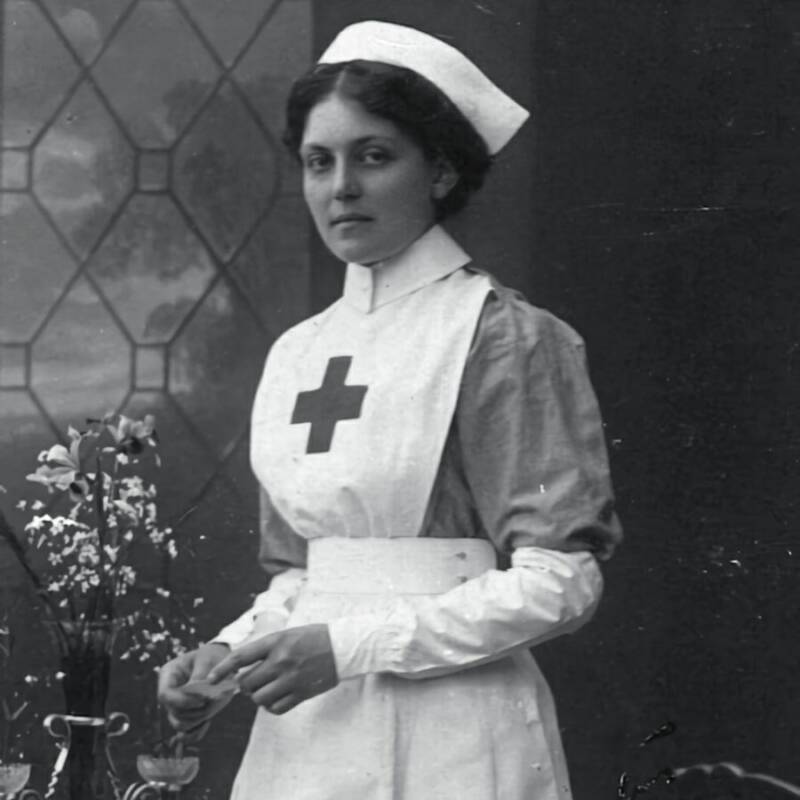
Public DomainViolet Jessop, also known as “Miss Unsinkable,” between 1915 and 1917.
Born in Argentina to Irish immigrants in 1887, Jessop went on to become an ocean liner stewardess. She started working for the White Star Line in 1911 on the RMS Olympic. She was on the ship on Sept. 20, 1911, when it collided with the HMS Hawke, a British warship. There were no fatalities — but the accident was a chilling harbinger of what was to come.
Six months later, Jessop was transferred to the sister ship of the Olympic, the RMS Titanic. During the liner’s maiden voyage, it struck an iceberg and sank to the bottom of the Atlantic, killing more than 1,500 passengers and crew members.
Violet Jessop survived.
Despite this brush with death, Jessop took a job on the third and final of the White Star Line’s Olympic-class ocean liners, the HMHS Britannic. The vessel served as a hospital ship during World War I, and Jessop was a stewardess for the British Red Cross.
On Nov. 21, 1916, the Britannic seemingly hit a German naval mine in the Aegean Sea and rapidly sank, killing 30 people onboard. Once again, Jessop escaped, though she suffered a head injury when she was forced to jump out of her lifeboat after it drifted near the ship’s exposed propellers.
“Miss Unsinkable” continued working on ocean liners until her retirement in 1950, and she died from natural causes at age 83.
The Tragic Yet Interesting Story Of The Human Zoo Exhibit
Ota Benga was a Mbuti Pygmy tribesman who was born in the equatorial forests of the Congo around 1883. As an adult, he married and had two children, but his family was later slaughtered, and he was captured by slave traders.
In 1904, he was purchased by Samuel Phillips Verner, an American businessman who was in charge of gathering African Pygmies for an exhibit at the upcoming Louisiana Purchase Exposition, better known as the St. Louis World’s Fair. Benga traveled to St. Louis, and he immediately became the center of attention at the World’s Fair.
After a brief stint back in Africa following the exposition, Benga returned to the United States. He first entertained visitors at the American Museum of Natural History in New York City, but in 1906, he was hired to maintain habitats at the Bronx Zoo.
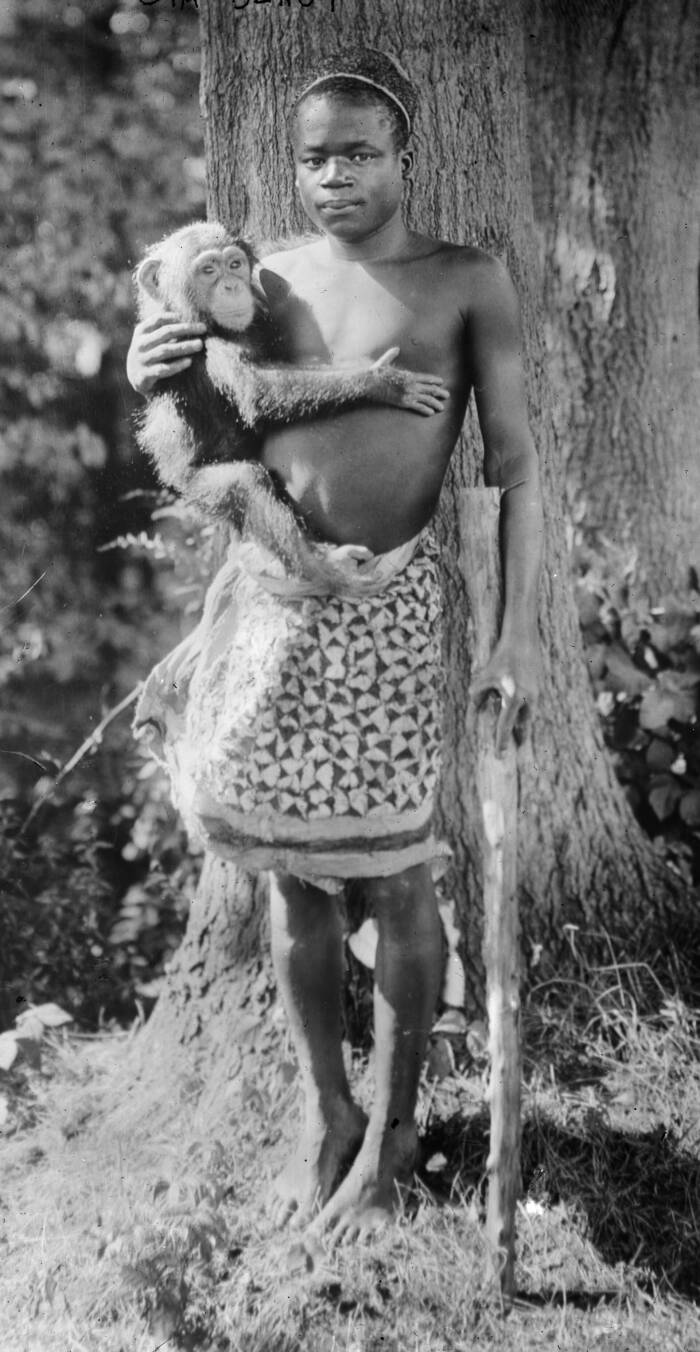
Library of CongressOta Benga poses with a baby chimp at Bronx Zoo in 1906.
However, zoo directors soon noticed that Benga was attracting more attention than the animals he cared for — and they put him on display, too. He appeared alongside an orangutan named Dohong, though local clergymen soon successfully lobbied to have the exhibit shut down.
Benga moved to Virginia, where he attended school, tried to assimilate into society, and worked at a tobacco factory. But he longed to go back to Africa, a desire that was impeded by the outbreak of World War I and the subsequent suspension of passenger ship travel.
So, on March 20, 1916, Ota Benga built a ceremonial fire, sang and danced around it, and then shot himself in the heart, bringing an end to one of history’s most heartbreaking yet interesting stories.