In 1980, Jean Hilliard froze near Lengby, Minnesota after spending six hours in the cold — but she was miraculously revived with minimal injuries the next day.
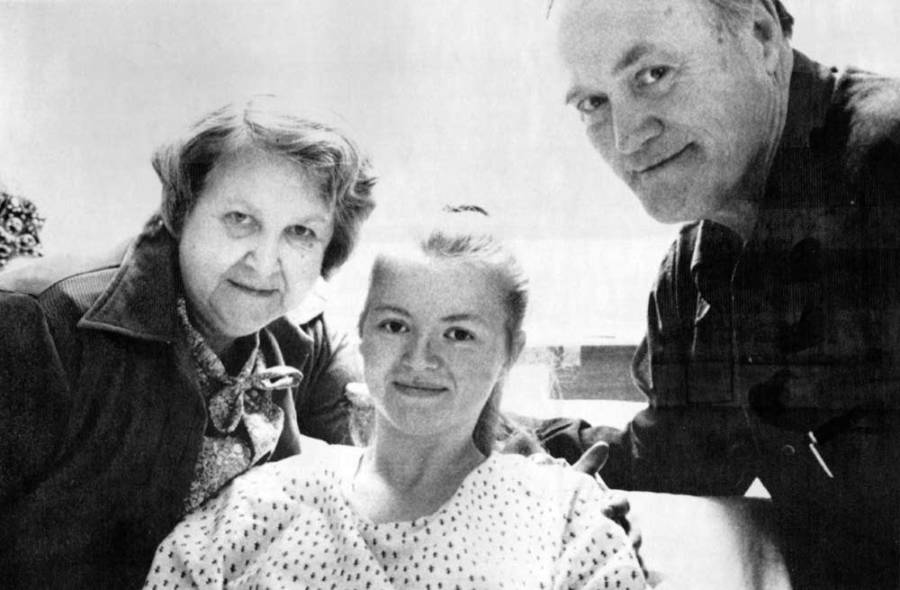
Vickie Kettlewell/StarTribuneJean Hilliard in the hospital with her parents. December 1980.
The last thing Jean Hilliard remembered was blackness — then waking up in a hospital bed. But to her friends, family, and doctors, Hilliard represented a medical miracle. The 19-year-old had been found frozen solid after spending the night outdoors during the Minnesota winter. And yet, after a few hours of “thawing,” she had come completely back to life.
Indeed, the incredible case of this “hibernating woman” remains a medical marvel even decades later.
Jean Hilliard’s Cold Walk In 1980
In December 1980, 19-year-old Jean Hilliard was living in her small hometown of Lengby, Minnesota, an isolated hamlet with less than 100 inhabitants. Located in the north-central part of the state, Lengby is surrounded by forests, lakes, and farmlands. That December, the town and its surroundings was also covered with thick layer of snow.

City of LengbyJean Hilliard’s ordeal happened near her hometown, the small hamlet of Lengby, Minnesota.
Despite temperatures that plunged down to -22 degrees Fahrenheit, Hilliard went out with some friends on the night of December 20. According to Minnesota Public Radio, they had drinks and danced at the Fosston American Legion, and, around midnight, Hilliard headed home.
But as she made her way along the snowy roads, Hilliard drove her father’s Ford LTD into a ditch. She had no other choice but to try to walk to the house of a friend, Wally Nelson, who lived two miles away. Though Hilliard had on a coat, she had lost her hat, and she was wearing cowboy boots.
To make matters worse, Nelson’s house seemed further away than Hilliard remembered.
“I’d get over one hill, thinking his place would be there, and it wasn’t,” she told Minnesota Public Radio. “I was more frustrated than scared.”
Then, finally, Jean Hilliard spotted Nelson’s home nestled in the snow. It’s the last thing she remembers seeing before her entire world turned dark.
The Woman Who Froze Solid
The next morning around 7 a.m., Wally Nelson woke up with a woman he’d brought home the night before. Walking outside, he noticed a “little hunk” about 15 feet from his front door. Then, to his horror, Nelson realized it was a person — his friend, Jean Hilliard.
Hilliard had been there for six hours.
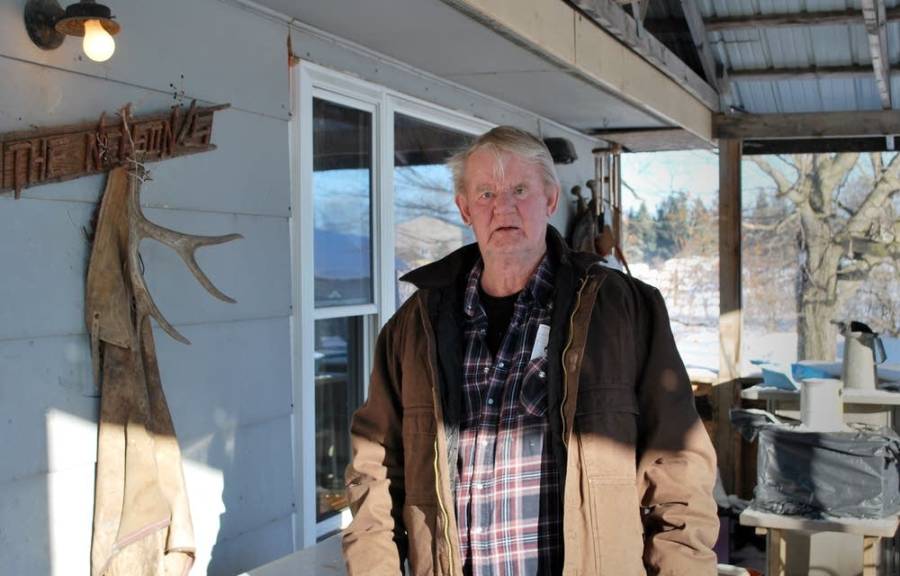
John Enger/MPR News Wally Nelson, the friend of Jean Hilliard’s who found her body, in 2018.
“I grabbed her by the collar and skidded her into the porch. I thought she was dead. Froze stiffer than a board, but I saw a few bubbles coming out of her nose,” Nelson recalled to Minnesota Public Radio.
Hilliard’s body was so frozen stiff that Nelson couldn’t get it into his car. He had to use his date’s car and, according to The New York Times, had to turn Hilliard “diagonally” so that she could fit.
Then, Wally Nelson raced Jean Hilliard to the hospital. But when doctors saw her, they weren’t optimistic about her recovery.
The Miraculous Recovery Of Jean Hilliard
When Jean Hilliard arrived at the hospital in Fosston, Minnesota, her skin was so frozen that doctors couldn’t pierce it with needles — the needles just broke on contact. Her body temperature was so low that it didn’t register on a thermometer, her face was ash-gray, and her eyes, frozen open, didn’t respond to light. In other words, Hilliard seemed beyond saving.
But she was not dead. Doctors could detect a faint pulse, just 12 beats per minute, and decide to try to warm up Hilliard’s body by wrapping her in heating pads. After all, people who had suffered from extreme hypothermia had recovered in the past once they were warmed up.
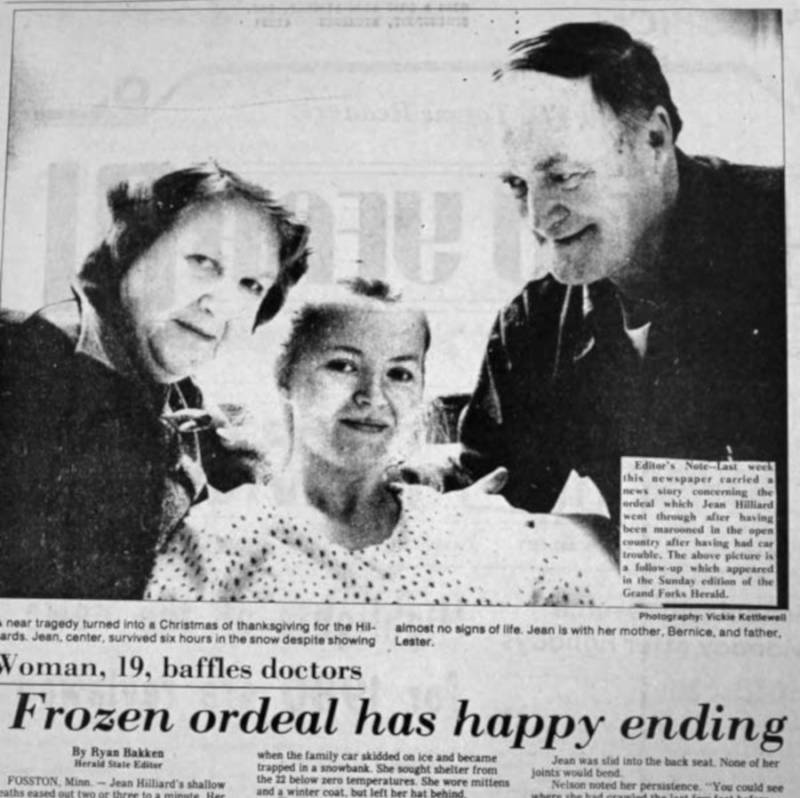
Thirteen Towns newspaper, Fosston A clip from Jean Hilliard’s hometown paper. Her mother, Bernice, is on the left, and her father, Lester, is on the right.
“I thought she was dead, but then we picked up an extremely faint whimper, Dr. George Sather, the attending physician, later explained. “We knew there was a person existing then.”
Still, it took several hours for the medical team to receive an encouraging sign. Then, slowly but surely, Jean Hilliard started to stir.
“The reaction didn’t appear until two or three hours after she started thawing out,” Dr. Sather told The New York Times. “The body was cold, completely solid, just like a piece of meat out of a deep freeze.”
By the middle of that morning, Hilliard awoke with spasms. By noon, she was talking coherently. And though she’d just narrowly escaped death, Hilliard was mostly concerned about the state of her father’s car.
Indeed, Hilliard felt normal. Though doctors initially thought they would have to amputate her legs, Hilliard survived the ideal with only minimal injuries.
“It’s like I fell asleep and woke up in the hospital,” she remarked. “I didn’t see the light or anything like that. It was kind of disappointing. So many people talk about that, and I didn’t get anything.”
But to everyone else, Jean Hilliard was a miracle. Her story spread to the national media, and she even appeared on the Today show.
“I was interviewed by Tom Brokaw. I took my mother on that trip. That was fun,” Hilliard recalled.
How Modern Medicine Handles Frozen Bodies
While Jean Hilliard’s recovery seemed like a miracle, it’s actually not all that unusual to save frozen people from death by warming up their bodies.
Dr. David Plummer of the University of Minnesota, an expert on reviving people with hypothermia, has seen roughly a dozen cases similar to Hilliard’s over the course of his career.

University of MinnesotaDr. David Plummer of the University of Minnesota.
“We have patients you can knock on like wood,” he told Minnesota Public Radio. “They feel rock solid frozen. That in no way dissuades us from the resuscitation attempt. And we do have a track record of success with that… no one is dead until they’re warm and dead.”
As a person’s body cools, blood flow slows down to a crawl — just as it would for a bear in hibernation. At this point, a person’s body requires less oxygen. When their blood flow increases at the same rate as their body temperature, they often recover. That’s what seems to have happened with the heating pads used on Jean Hilliard, though hospitals today use a device that warms a patient’s blood before circulating it back into their body. The warm blood, in turn, heats up internal organs.
According to the Washington Post, this same technique was used to save the life of a man named Justin Smith in 2015. Smith, then 25, was walking home from a party in subzero weather in Pennsylvania when he collapsed. His father found his frozen body 12 hours later.
At the emergency room, doctors determined his internal temperature was just 68 degrees. They performed CPR for two hours, until they could get Smith to a more advanced medical facility in Allentown. There, determined doctors pumped warm blood into Smith’s body.
And his heart soon started to beat on its own.
Just like Hilliard, Smith’s biological processes slowed his body down to where it conserved oxygen enough to keep him alive for several hours. Unlike Hilliard, Smith was in a coma for two weeks, and he ultimately lost his toes and both pinkies to frostbite. But, incredibly, he was able to recover from his ordeal without any lasting brain damage.

Courtesy Jean Hilliard Vig Jean Hilliard as seen decades after freezing solid during the Minnesota winter.
As for Jean Hilliard? After her miraculously recovery in December 1980, she’s lived a normal life. She went on to marry and have children.
But she never drives on icy roads at night.
After this look at Jean Hilliard’s remarkable survival story after being frozen solid back in 1980, read about the world’s oldest frozen man, Otzi, who died 5,300 years ago. Or, discover what it’s like to encounter frozen bodies as you climb the summit of Mount Everest.