In 1542, Marguerite de la Rocque was abandoned on the Isle of Demons near Newfoundland by her relative — but survived for two years on her own after her companions died.
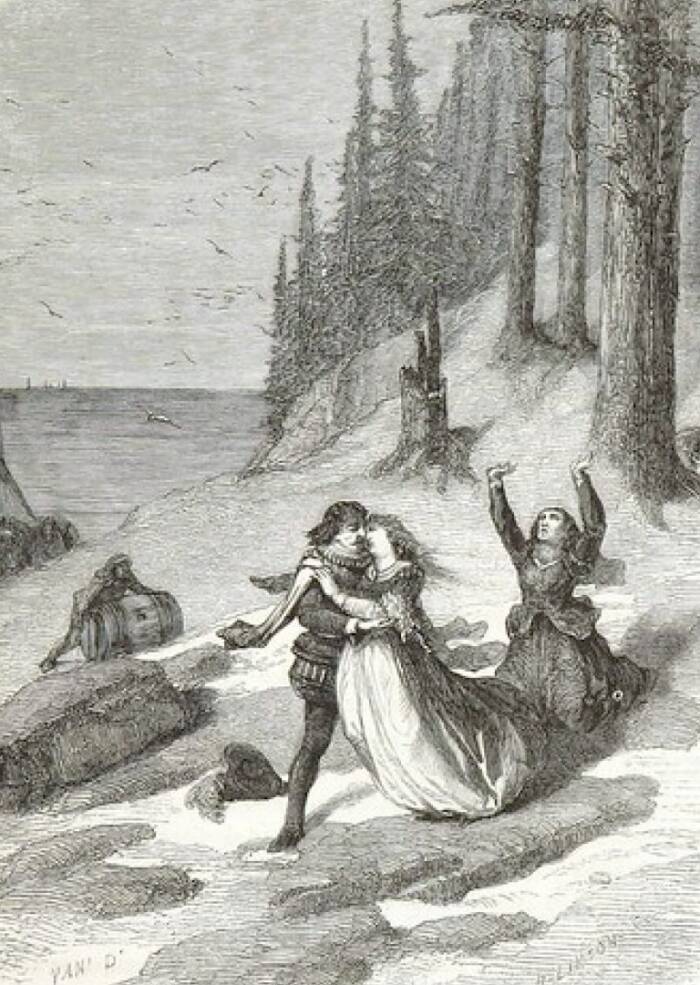
The British LibraryMarguerite de la Roque was abandoned with her lover and her servant on an uninhabited island near Newfoundland.
In 1542, Marguerite de la Rocque left behind the luxurious life she knew in France to travel to the New World. But her voyage didn’t go as planned. During the journey across the Atlantic, Marguerite was abandoned on the desolate Isle of Demons near Newfoundland.
Marguerite had been left to die because she’d taken a lover during the voyage. The scandalous romance shocked the ship’s captain, who was also Marguerite’s relative, Jean-François de La Rocque de Roberval. Jean-François abandoned Marguerite, her lover, and a servant on the island.
This is the incredible true story of Marguerite de la Rocque.
A Doomed Journey To The New World
Born around 1515, Marguerite de la Rocque was a wealthy nobleman who owned land in France alongside her relative, Jean-François de La Rocque de Roberval. While Marguerite’s reasons for sailing to the New World are unclear, the Dictionary of Canadian Biography reports that Jean-Francois hoped that the expedition could help him regain his lost fortune.
With the blessing of King François I, who appointed Jean-Francois the “lieutenant-general in the country of Canada,” and tasked him with “spreading the holy Catholic faith,” Jean-Francois set out in 1542. He set sail with three ships, the Valentine, the Anne, and the Lèchefraye. Joining him on the expedition was Marguerite, then a young and unmarried woman.
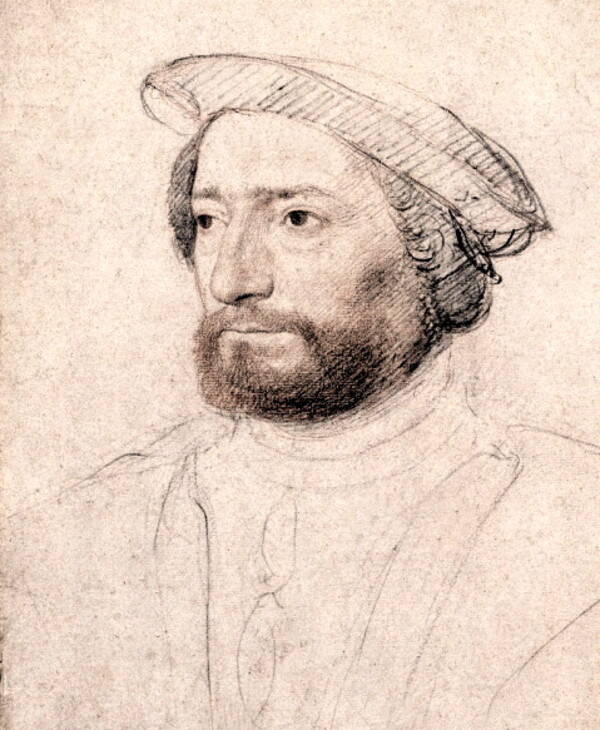
Public DomainJean-François Roberval, the nobleman who abandoned his relative Marguerite de la Rocque on an island.
At some point in the nearly two-month journey, Marguerite began a romantic relationship with one of the men in onboard. The affair would change the course of her life — and his.
Somehow, Jean-Francois found out about Marguerite’s love affair. Furious with Marguerite — and perhaps hoping to take sole ownership of the land they shared — Jean-Francois decided to punish his relative by abandoning her on an island. He left Marguerite, her lover, and a servant named Damienne on the Isle of Demons (an island which does not exist, and may have actually been Quirpon Island or Harrington Harbour).
Alongside her lover and a servant, Marguerite de la Rocque also had a gun, some knives, and a Bible.
Marguerite de la Rocque On The Isle of Demons
What was life like on the Isle of Demons? According to Marguerite, Queen of Navarre, who wrote a version of the story in her short story collection Heptaméron, the “little island in the sea” was “inhabited only by wild beasts.”
“The poor creatures, left alone with fierce beasts, had recourse only to God,” the queen claimed.
In Heptaméron, the queen wrote that Marguerite and her companions were able to build a “small dwelling.” They fended off wild animals with guns and rocks, and were able to subsist for a while by hunting and eating plants. But Marguerite’s lover “drank such unwholesome water that he became greatly swollen,” according to the queen’s account, “and died in a short while.”
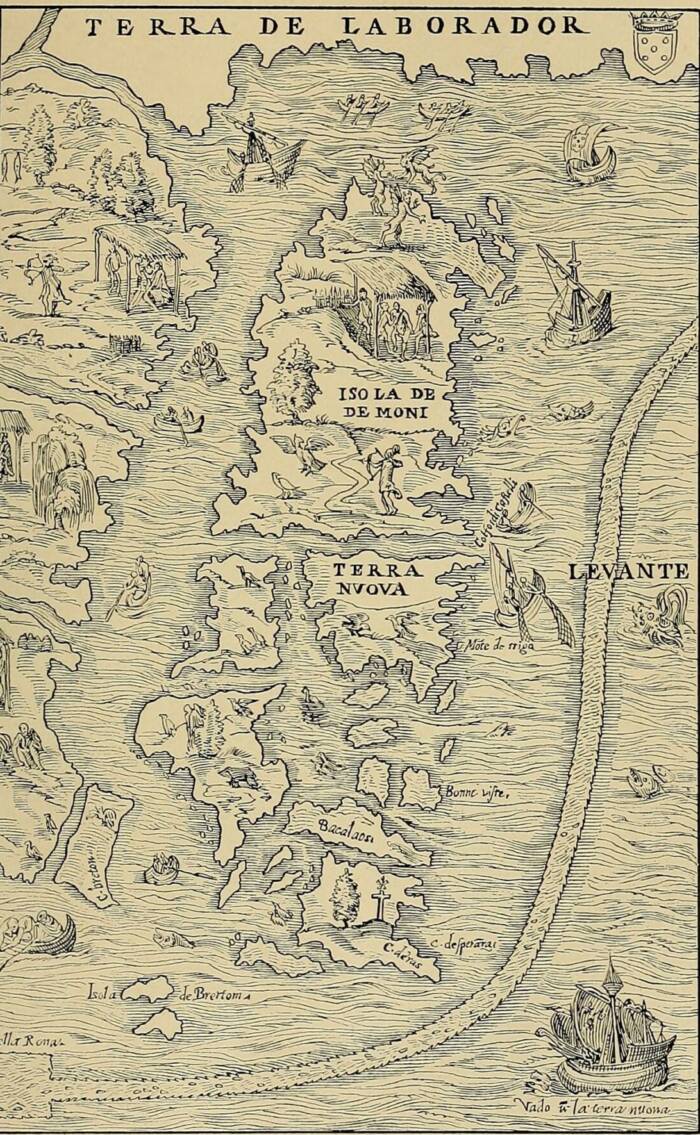
Library of CongressA map which claims to show the Island of Demons. The island does not actually exist, and Marguerite de la Rocque may have actually been marooned on Quirpon Island or Harrington Harbour.
Marguerite, the queen wrote, buried her lover in a shallow grave, and fended off animals attracted by the scent.
“She passed the time in reading, contemplation, [and] prayers,” according to the queen, “having a cheerful and contented spirit in a body emaciated and half dead.”
But life on the Isle of Demons soon got much worse. Marguerite’s servant died, and she soon found out she was pregnant. Though Marguerite had the baby, the infant died soon after it was born. Marguerite de la Rocque was alone, struggling to survive, left to contemplate the cruelty of man.
In Heptaméron, the Queen of Navarre wondered if women should prefer wild animals to men, with one of her narrators in the story noting: “If beasts did not bite me, their company would be more agreeable to me than that of men, who are irascible and unbearable.”
Though Marguerite de la Rocque seemed doomed, rescue was coming.
The Rescue of Marguerite de la Rocque
After living on the island for two years, Marguerite de la Rocque spotted a ship in the distance. She built a fire and signaled to the passing ship, a fishing vessel from France. The fisherman saw the smoke and came ashore, and discovered, to their shock, a Frenchwoman on the island.
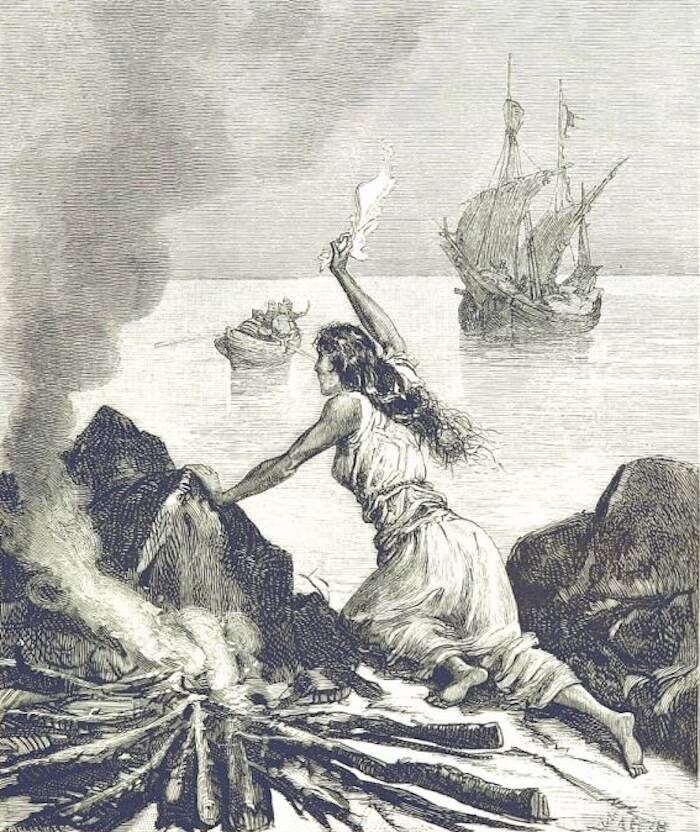
The British LibraryMarguerite de la Rocque was rescued after more than two years of living on the uninhabited island.
Marguerite de la Rocque returned to France after her rescue. She settled in Nontron, and founded a school for girls. According to the queen’s version of Marguerite’s story, ladies happily sent their daughters to Marguerite’s school because she was a shining example of “fidelity and perseverance.”
Indeed, the dramatic tale of Marguerite de la Rocque captivated Europeans. Both the Queen of Navarre and Andre Thevet, an explorer and writer, wrote versions of her life story. (Thevet claimed to have met Marguerite in person). While their versions vary, historians generally agree that Marguerite’s story seems based in fact.
But what about Marguerite’s relative, Jean-François de La Rocque de Roberval, who abandoned her? Although he never answered for leaving Marguerite and two others on a deserted island, his colony was a failure.
“Capt. Roberval was very cruel in dealing with his men, forcing them to work; otherwise they were deprived of food and drink,” recorded Thevet. “If anyone failed in his duty, Roberval had him punished. One day he had six of them hanged and some he ordered to be banished to an island, in leg-irons.”
The “gold” and “precious stones” that Roberval sent back to France also proved worthless. After abandoning his colony and returning to France, Roberval was assassinated during the French Wars of Religion.
His relative, Marguerite de la Rocque, never wrote about her experiences on the Isle of Demons. Yet her story has endured through the ages, while the story of Jean-François de La Rocque de Roberval is all but forgotten.
After reading about Marguerite de la Rocque, the French noblewoman who was abandoned on an island, discover the remarkable survival story of Tami Oldham Ashcraft, the woman who survived 41 days adrift at sea after a hurricane damaged her ship and killed her fiancé. Or, look through these incredible survival stories from people who cheated death.