Florence Owens Thompson, the woman in Dorothea Lange's "Migrant Mother," later expressed regrets over the famous picture and said she felt exploited by Lange.
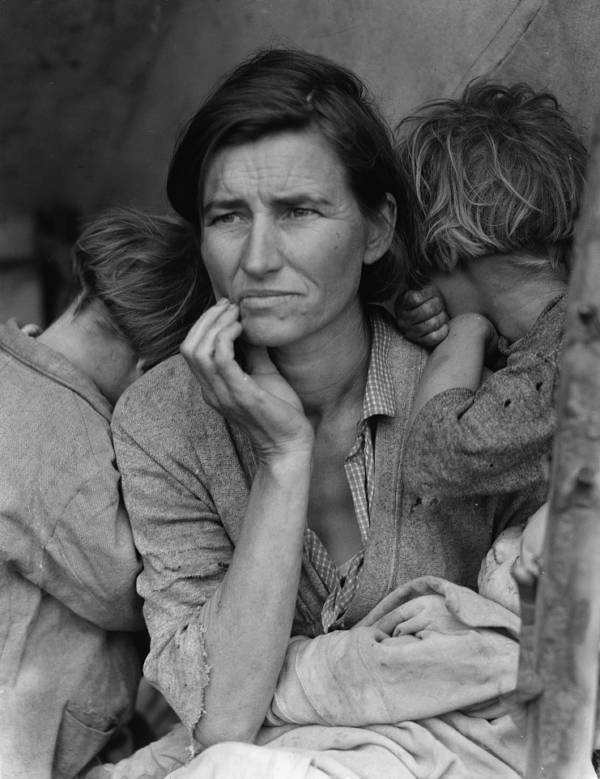
Dorothea Lange/Library of CongressThe famous Migrant Mother photograph, taken by Dorothea Lange in 1936.
On a spring day in 1936, a tired 32-year-old woman named Florence Owens Thompson sat down with a few of her children in a makeshift shelter at a pea pickers’ in Nipomo, California. Her family’s car had broken down, and her boyfriend had gone into town to find car parts. Owens didn’t know it yet, but she was moments away from becoming the subject of one of the Great Depression’s most famous images: the “Migrant Mother” photo.
The Migrant Mother photo, taken by federal photographer Dorothea Lange, is one of the most well-known of the Great Depression. The woman in the picture stares off into the distance, her face creased with worry, as two children nestle into her shoulder. For decades, her identity was unknown. It wasn’t until the 1970s that Florence Owens Thompson came forward.
At that point, Thompson told a surprising story. Though Lange’s photo of her had become one of the most iconic in American history, Thompson wished that it had never been taken at all.
This is the true story of the Migrant Mother photo.
Florence Owens Thompson’s Path To California
Florence Owens Thompson was born Florence Leona Christie on Sept. 1, 1903, in what was known then as “Indian Territory” (present-day Oklahoma). Thompson, of Cherokee descent, grew up in the small town of Tahlequah. When she was 17 years old, she married her first husband, Cleo Owens.
But the years that followed were hard. The couple had five children together, and Thompson was pregnant with their sixth, when Cleo Owens died of tuberculosis in 1931. Thompson was left raising their children on her own, just as the Great Depression and the Dust Bowl intensified.
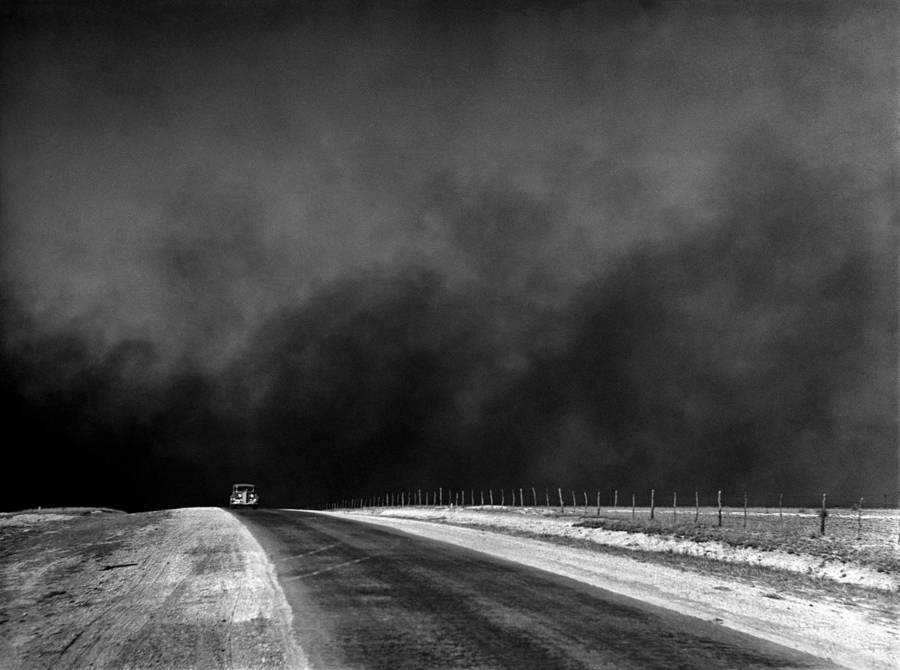
Arthur Rothstein/Farm Security Administration via Library of Congress/Wikimedia CommonsA dust storm in Texas in 1936.
Thompson made her way to California, where she did everything she could to make ends meet. She picked cotton and peas, tended bar, and worked in hospitals. One of her daughters told CNN many years later that though times were hard, Thompson always put her children first.
“She was the backbone of our family. We never had a lot, but she always made sure we had something,” Thompson’s daughter, Katherine McIntosh, stated. “She didn’t eat sometimes, but she made sure us children ate.”
After having her seventh child, Thompson met Jim Hill, who would father three more of her children. To support their growing family, Thompson and Hill subsisted as migrant farm workers, moving from place to place.
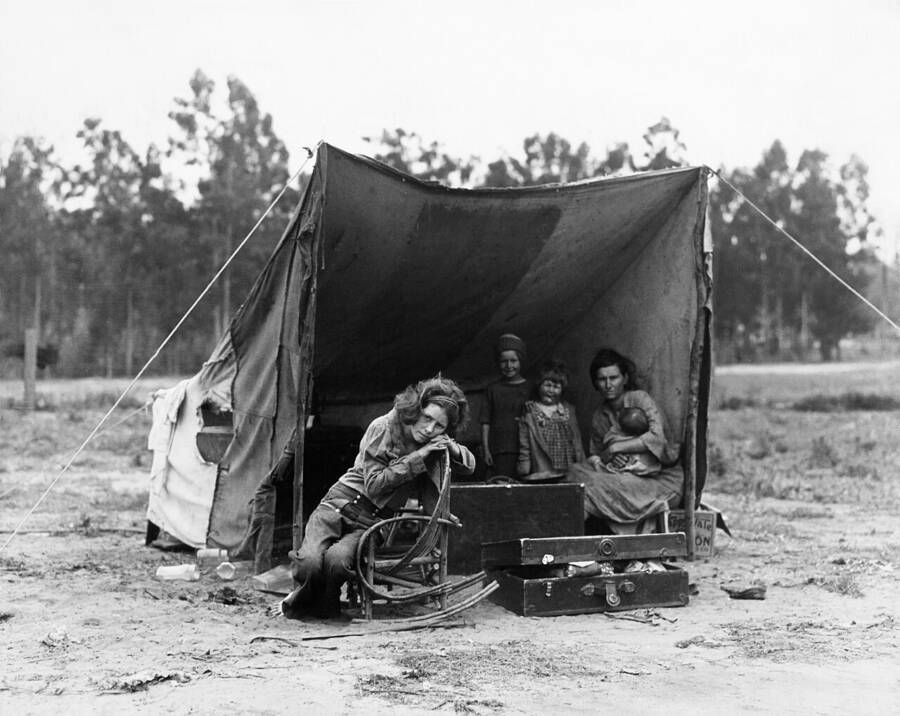
Dorothea Lange/Library of CongressFlorence Owens Thompson and her family in Nipomo, California. 1936.
In the spring of 1936, they were on their way to pick lettuce when their car broke down. Florence Owens Thompson and her family fatefully pulled into a pea pickers’ camp in Nipomo, California, where Dorothea Lange would meet Thompson and take her famous “Migrant Mother” photo.
The True Story Of The ‘Migrant Mother’ Photo
On the day the Migrant Mother photo was taken, Dorothea Lange was driving home from another photography assignment. A photographer with the Resettlement Administration, tasked with raising awareness about the plight of migrant workers, Lange had spent the day photographing migrant worker camps. When she saw the sign for the Nipomo pea pickers’ camp, she initially decided to keep driving, having already taken pictures for the day.
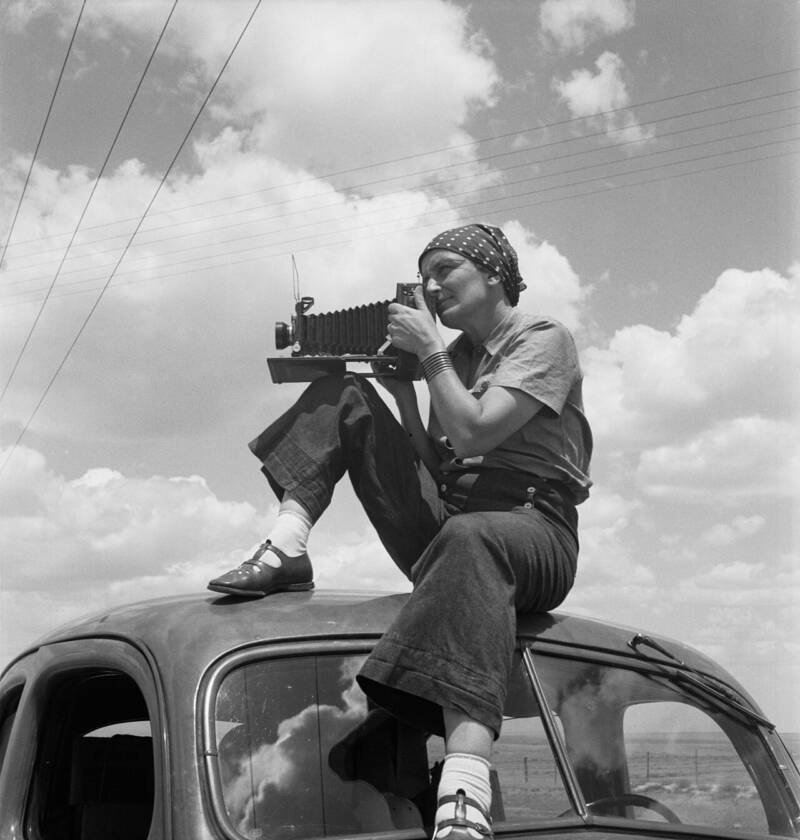
Public DomainA photo of Dorothea Lange and her camera. Circa 1935.
But something compelled Lange to turn around.
Arriving at the pea pickers’ camp, Lange immediately noticed Thompson, who was sitting under a makeshift shelter with her children. Hill had left to try to find parts for their car.
“I saw and approached the hungry and desperate mother, as if drawn by a magnet. I do not remember how I explained my presence or my camera to her, but I do remember she asked me no questions. I made five exposures, working closer and closer from the same direction,” Lange recalled in the 1960s, according to the Library of Congress.
Lange continued: “I did not ask her name or her history. She told me her age, that she was thirty-two. She said that they had been living on frozen vegetables from the surrounding fields, and birds that the children killed. She had just sold the tires from her car to buy food.”
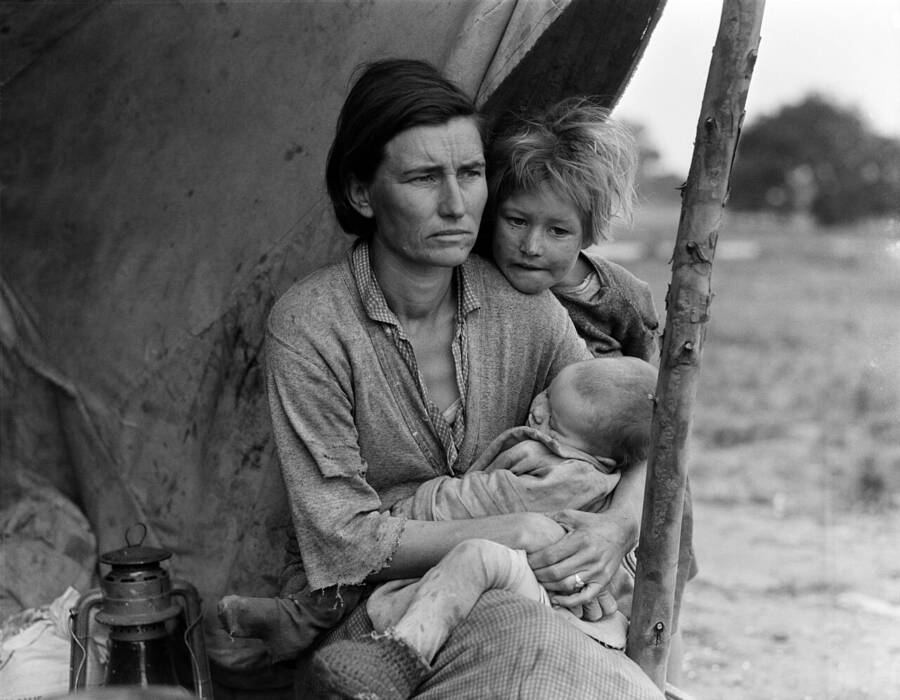
Library of CongressAnother of Dorothea Lange’s pictures of Florence Owens Thompson. March 1936.
Shortly after passing through the pea pickers’ camp, Lange’s “Migrant Mother” photo was published in the San Francisco News. It made an immediate impact: the U.S. government announced it would send 20,000 pounds of food to help pea pickers like the woman in Lange’s photograph.
But by then, Florence Owens Thompson and her family had already left.
Life For Florence Owens Thompson After The “Migrant Mother” Photos
Though the Migrant Mother photo swiftly became one of the most famous of the Great Depression, Florence Owens Thompson remained anonymous for decades. According to PBS, she and her family were aware of the photo and often discussed it, but it had little impact on their lives.
Thompson settled in Modesto, found work in a hospital, and ultimately married a hospital administrator named George Thompson. She said nothing about the famous photograph — until 1978.
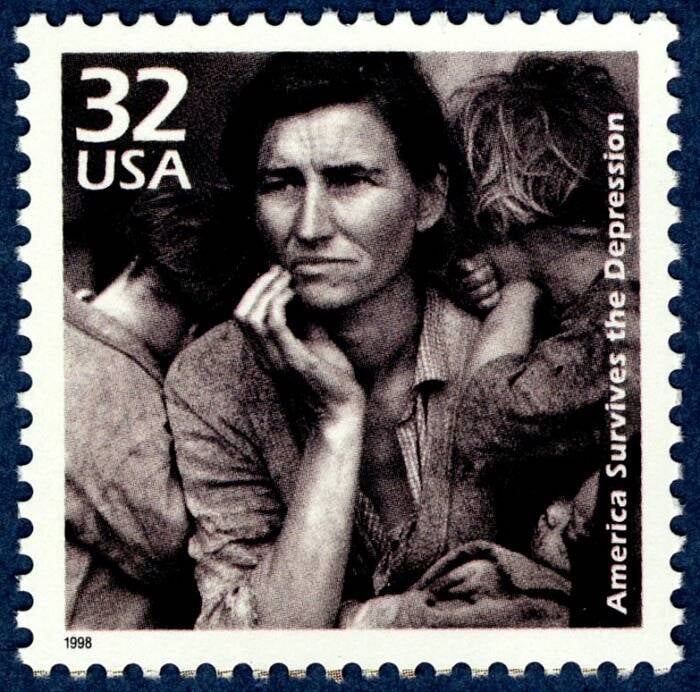
National Postal MuseumA stamp featuring Dorothea Lange’s famous “Migrant Mother” photograph.
Then, Thompson opened up to the Modesto Bee, and the story was soon picked up by the Associated Press.
“I wish [Lange] hadn’t taken my picture,” Thompson declared. “I can’t get a penny out of it. She didn’t ask my name. She said she wouldn’t sell the pictures. She said she’d send me a copy. She never did.”
To be fair, Lange hadn’t made any money off the picture either — it had been taken in service of the federal government. That said, it did bring her recognition and success, as well as a Guggenheim fellowship.
In any case, that wasn’t the only problem that Thompson and her family had with the Migrant Mother photograph. The other was that Lange had gotten several details about them wrong.
“There’s no way we sold our tires, because we didn’t have any to sell” Thompson’s son, Troy, told the San Luis Obispo New Times in 2002. “We drove off in them. I don’t believe Dorothea Lange was lying, I just think she had one story mixed up with another. Or she was borrowing to fill in what she didn’t have.”
Lange never commented on Thompson; she had died in 1965. And just a few years after coming forward, Florence Owens Thompson died as well. She passed away on Sept. 16, 1983, at the age of 80.
Her headstone reads: “FLORENCE LEONA THOMPSON Migrant Mother – A Legend of the Strength of American Motherhood.”
After reading about Florence Owens Thompson and the true story of the Migrant Mother photograph, discover the tragic stories of the Dust Bowl Migrants, the millions of Americans who fled the American heartland in the 1930s. Or look through these photos of Hoovervilles, the shanty towns of the Great Depression.