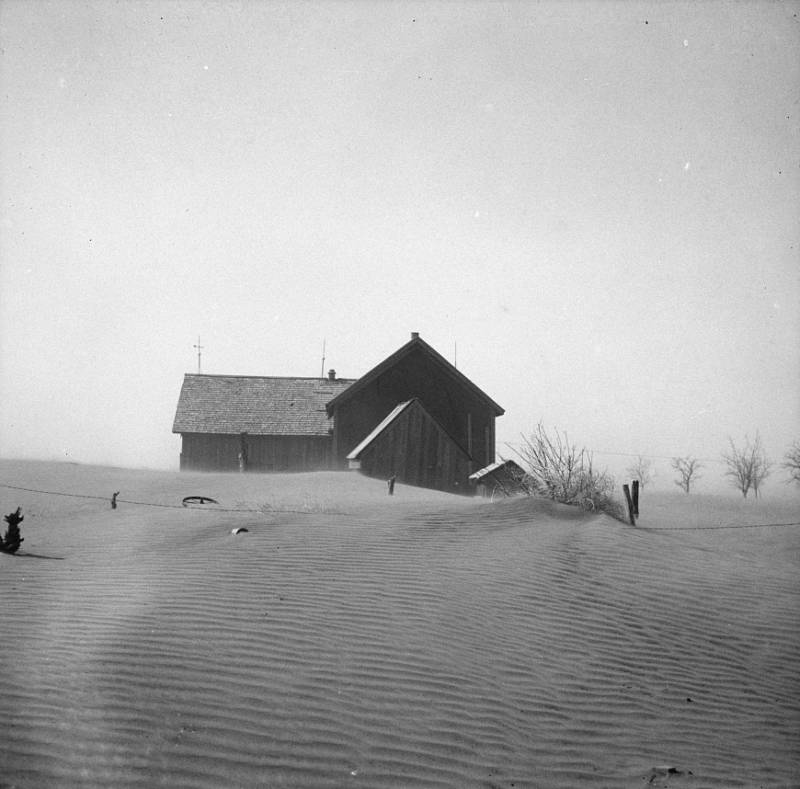
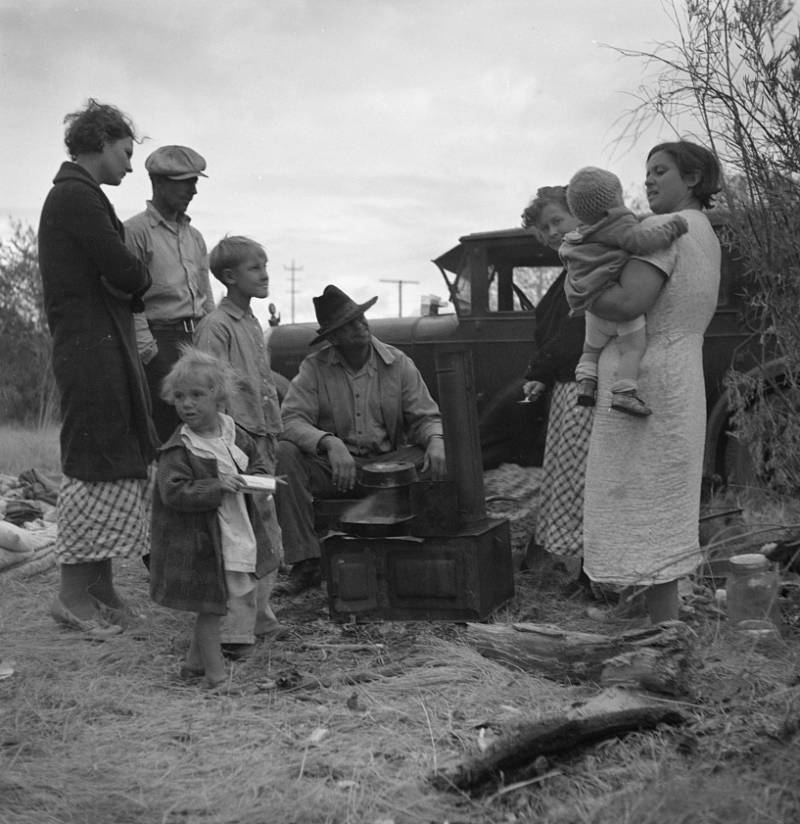
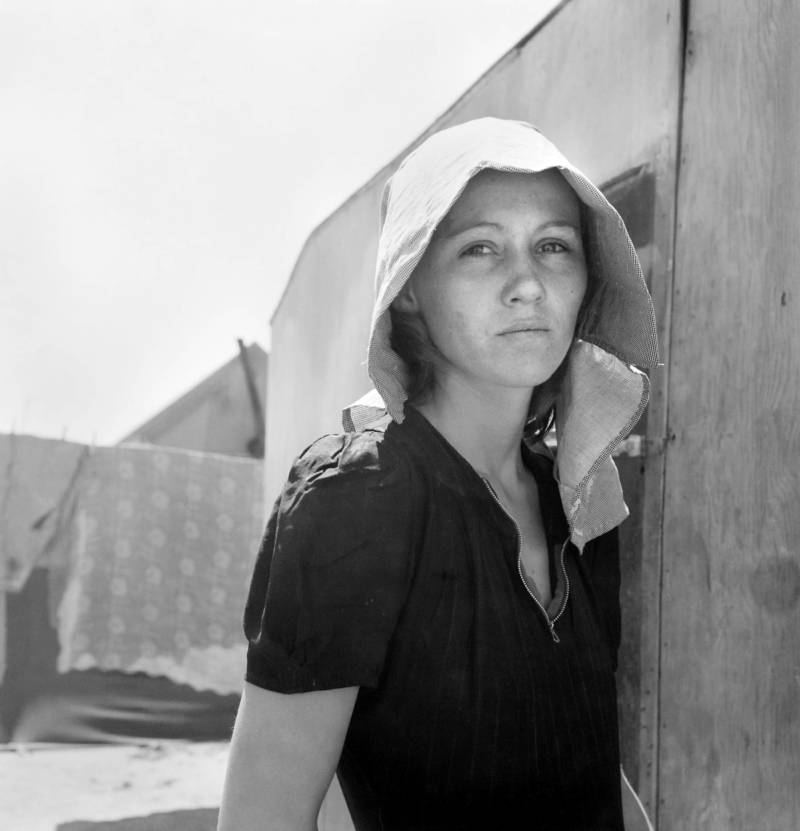
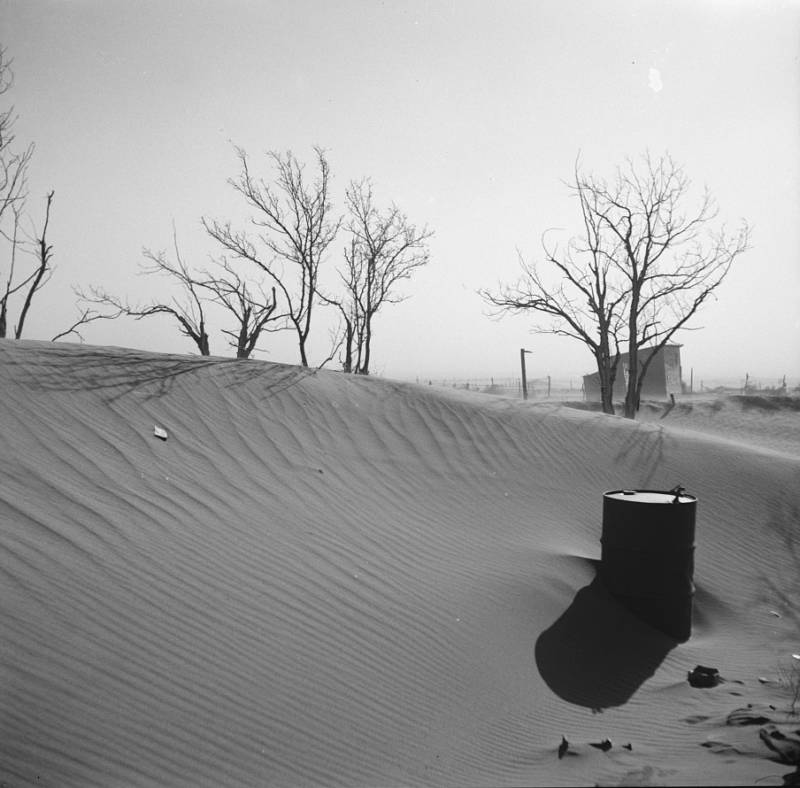
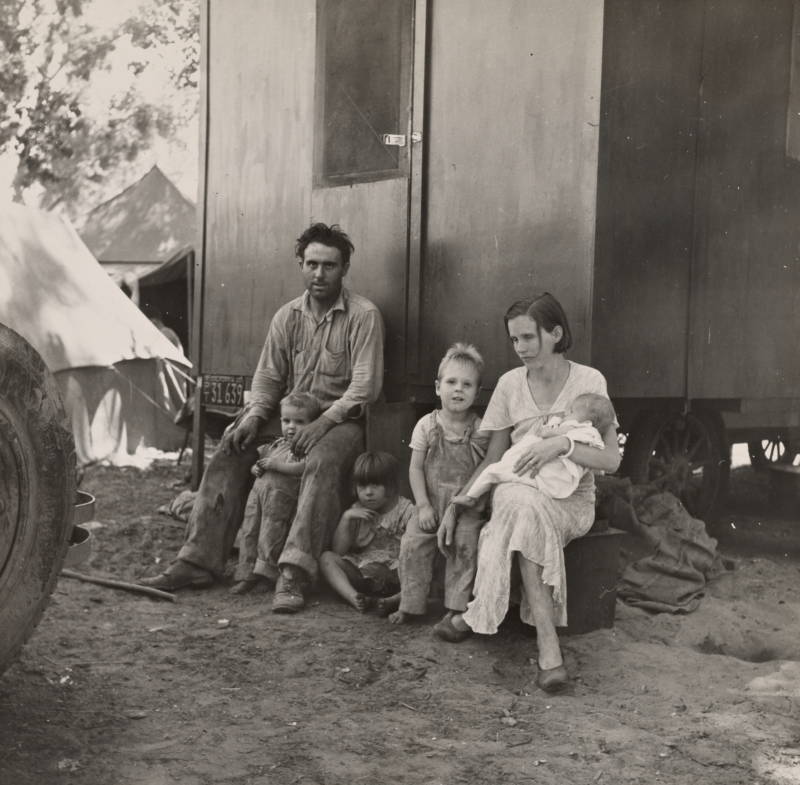
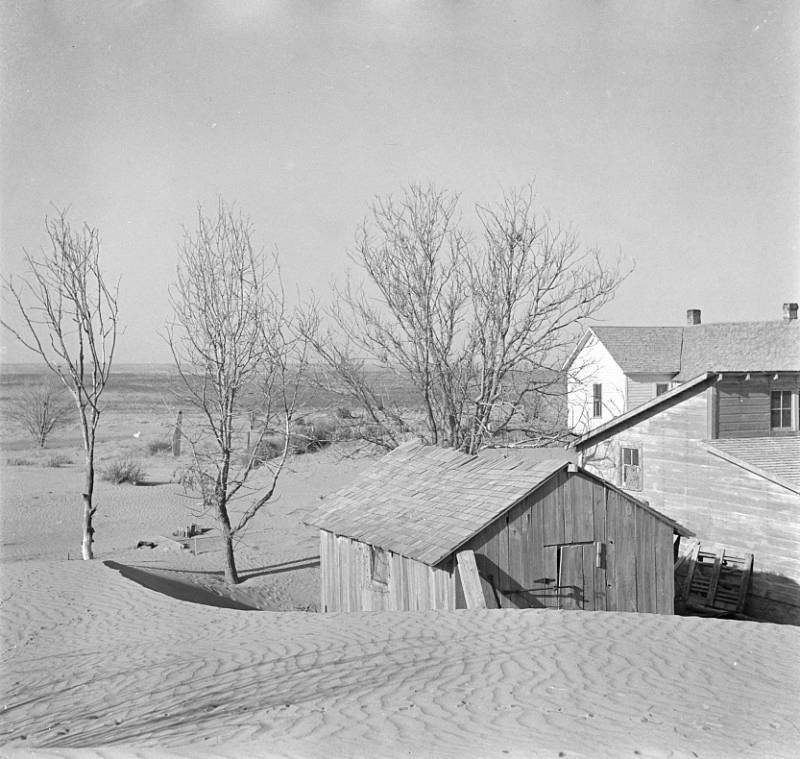
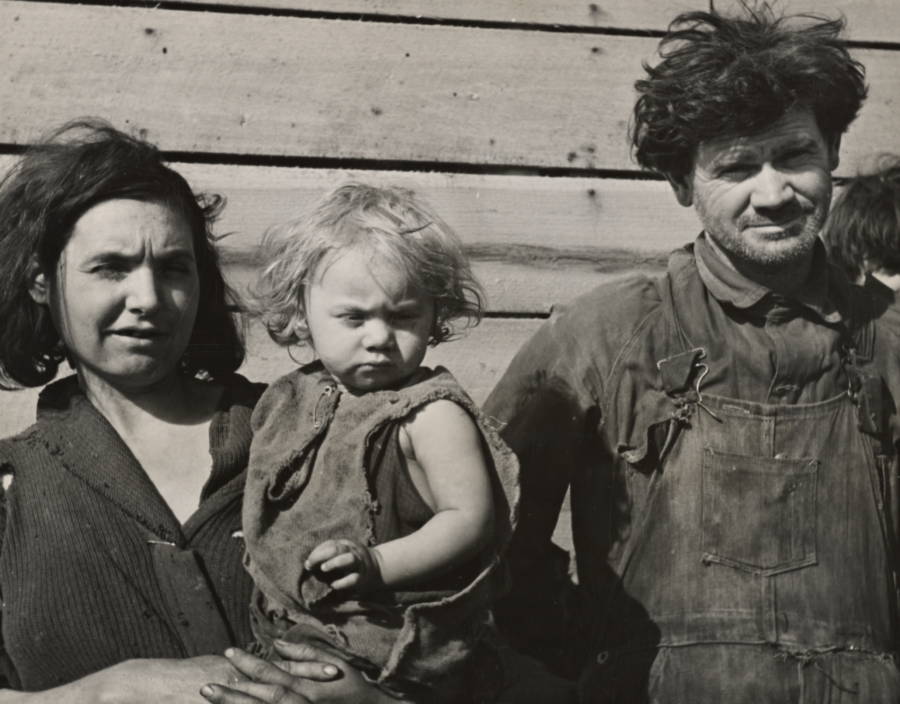
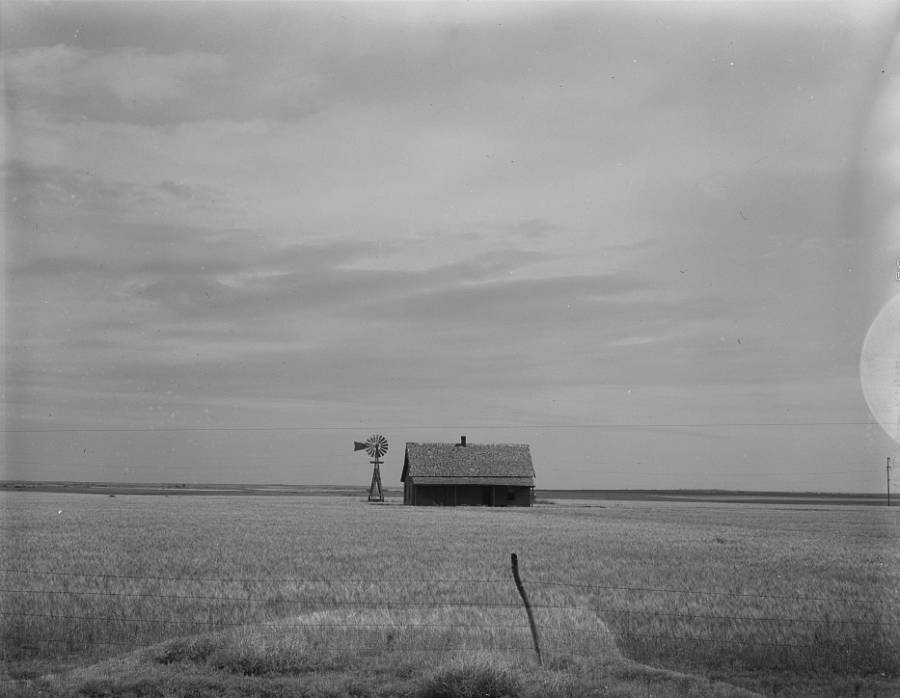
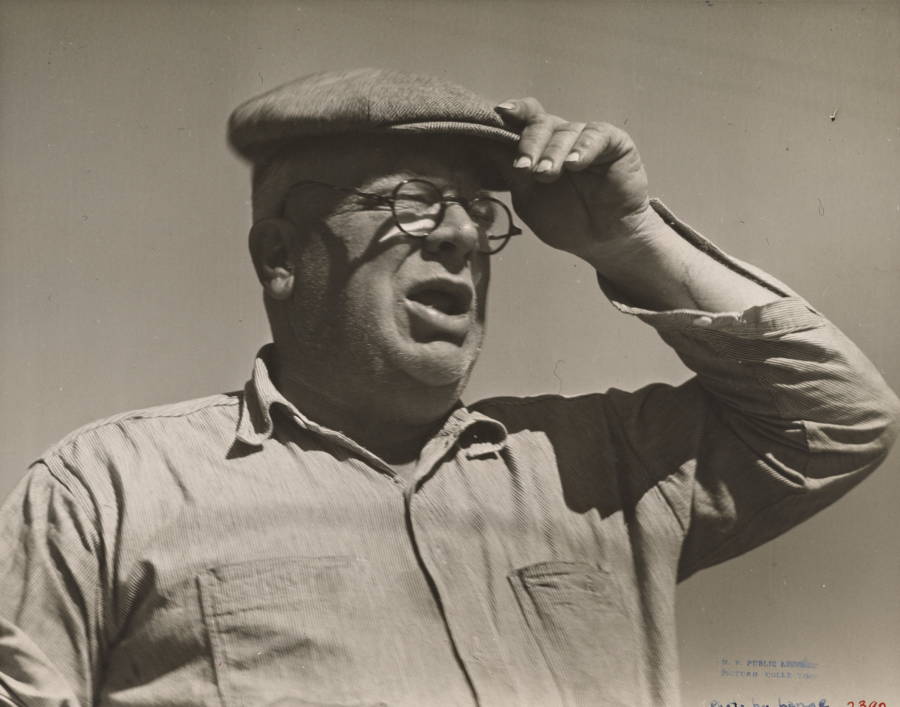
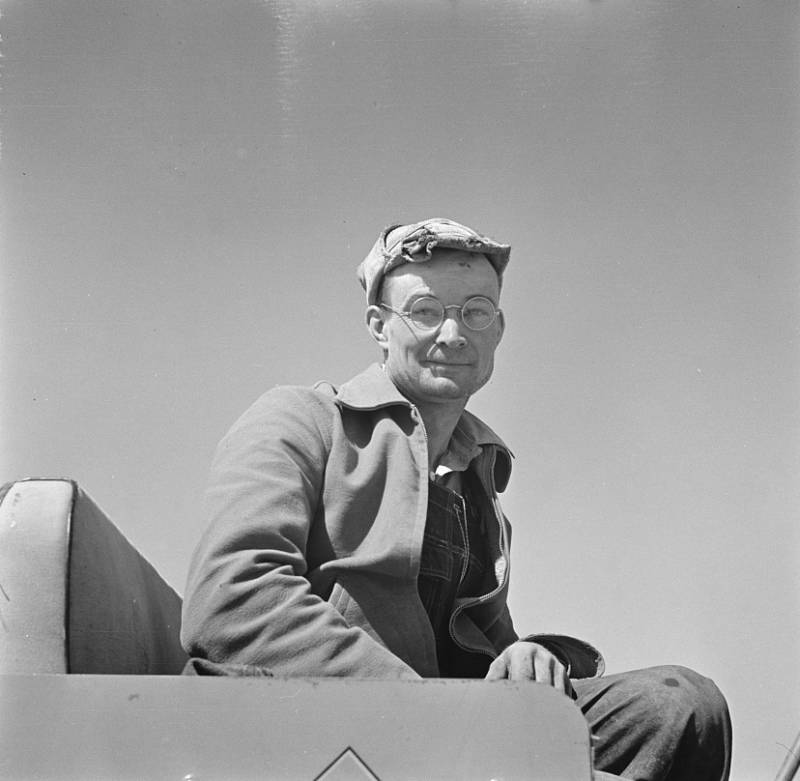
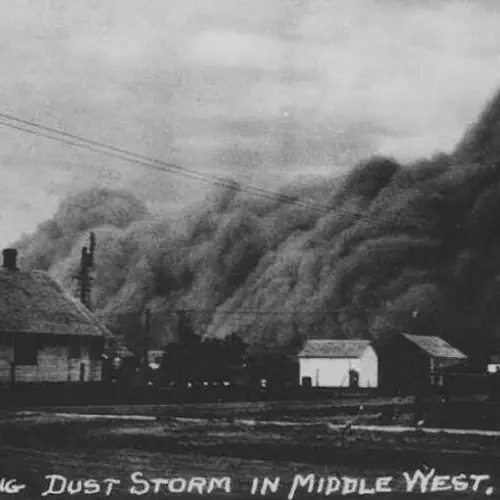
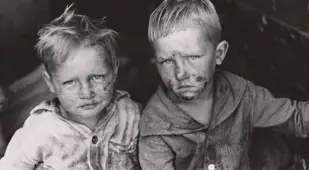
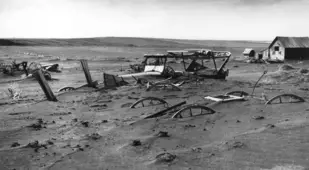
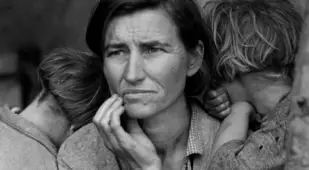
These Dust Bowl photos depicting enormous dust storms, destroyed farmland, and desperate migrants paint an evocative picture of one of the worst cataclysms in U.S. history.
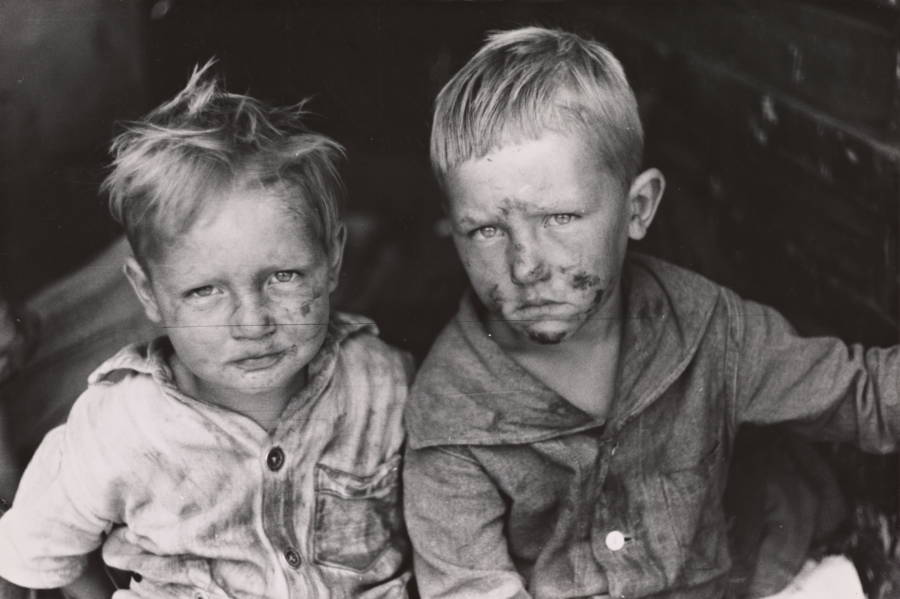
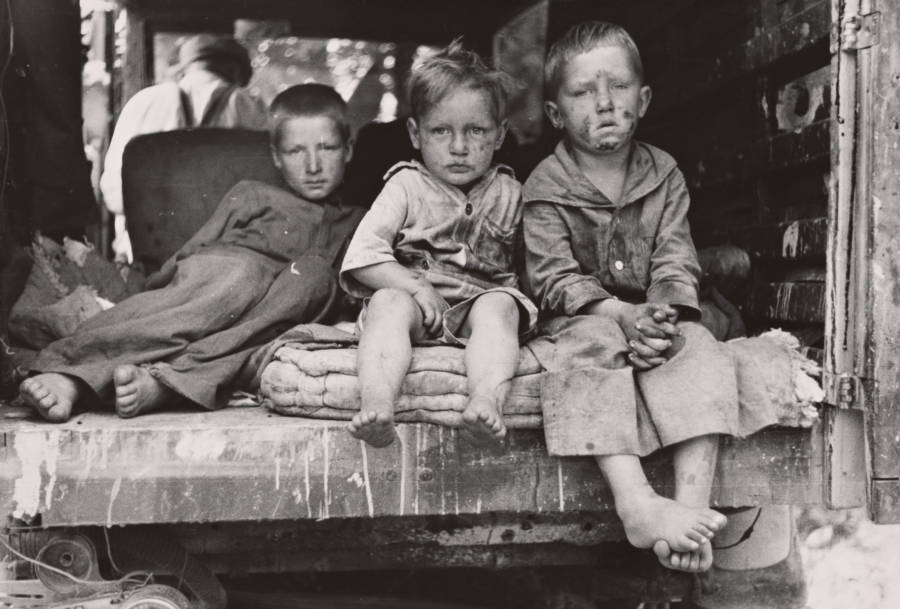
Children of a migrant fruit worker in Berrien County, Michigan, July 1940.John Vachon/Farm Security Administration via New York Public Library
2 of 48
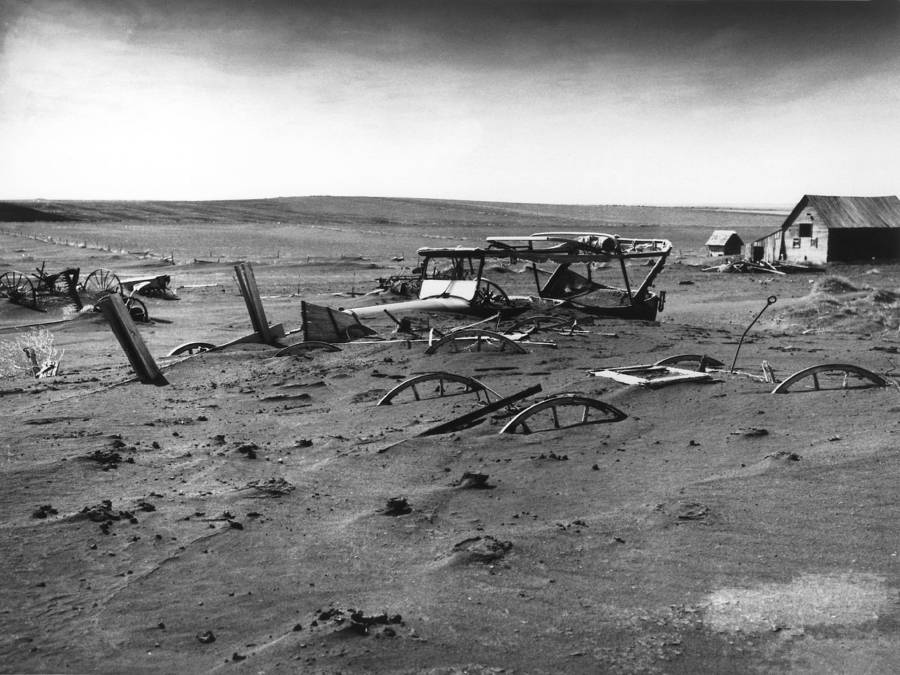
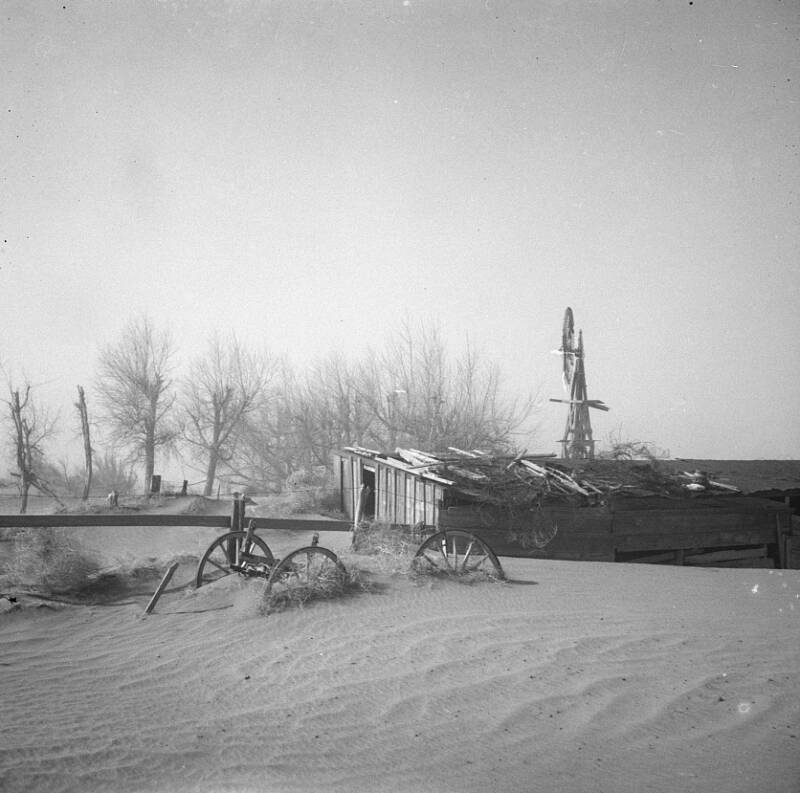
Farm machinery buried by a dust storm near a barn lot in Dallas, South Dakota, May 1936.United States Department of Agriculture via Wikimedia Commons
3 of 48
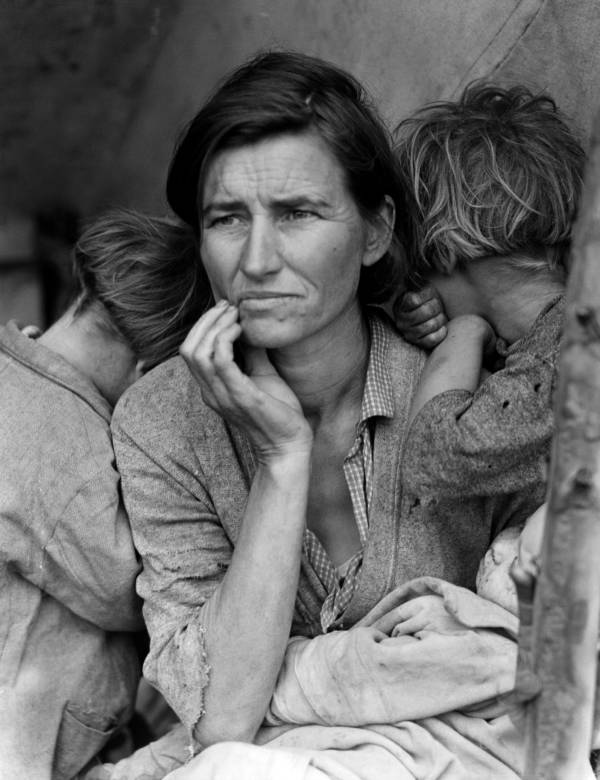
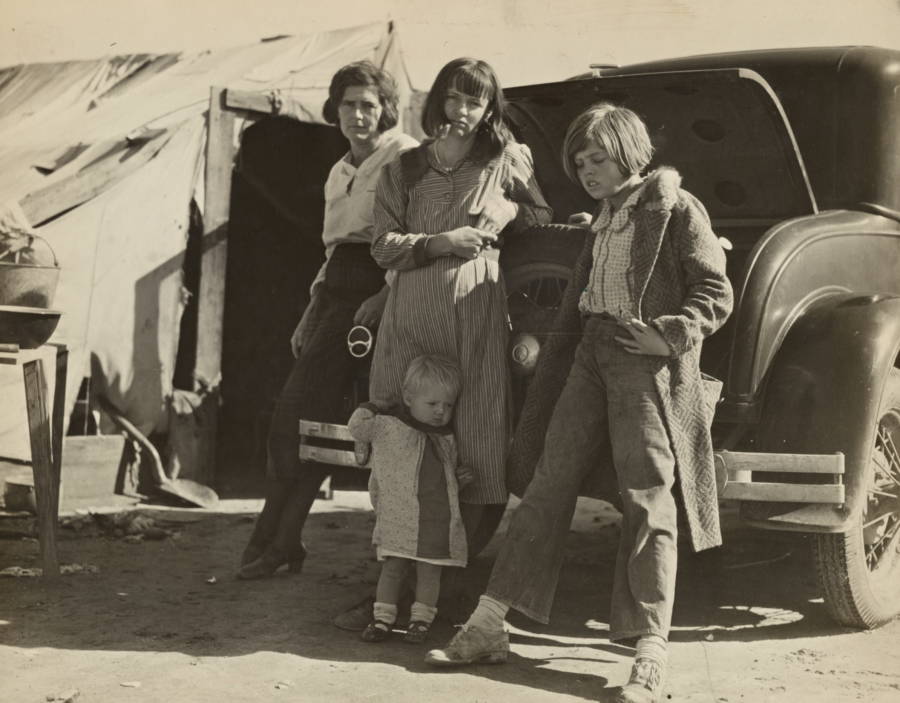
Thirty-two-year-old Florence Owens Thompson with three of her seven children at a pea pickers' camp in Nipomo, California, March 1936.Dorothea Lange/Farm Security Administration via Library of Congress/Wikimedia Commons
4 of 48
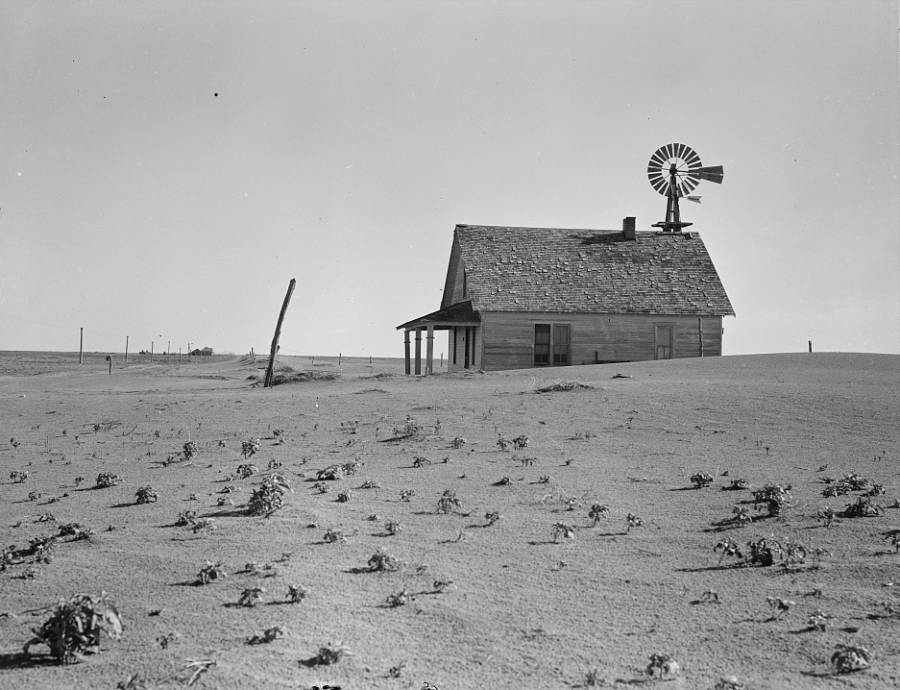
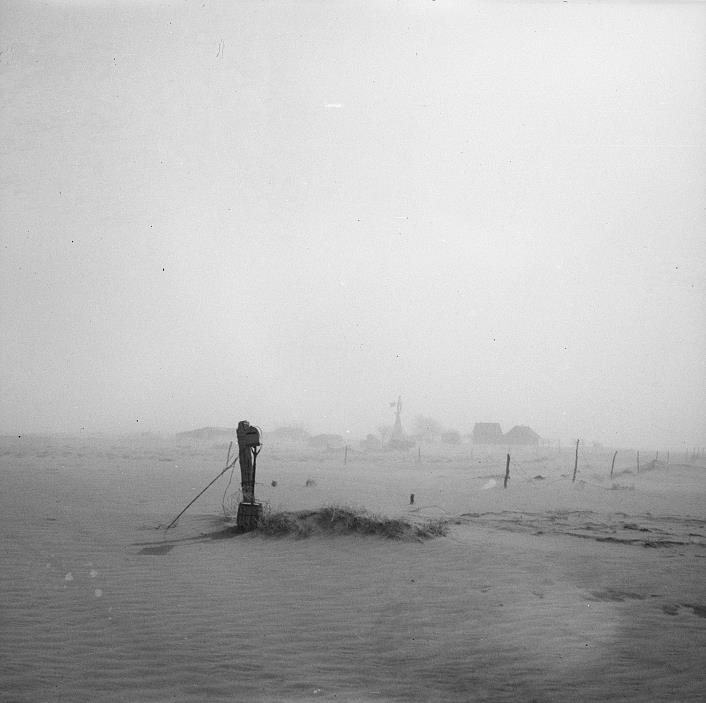
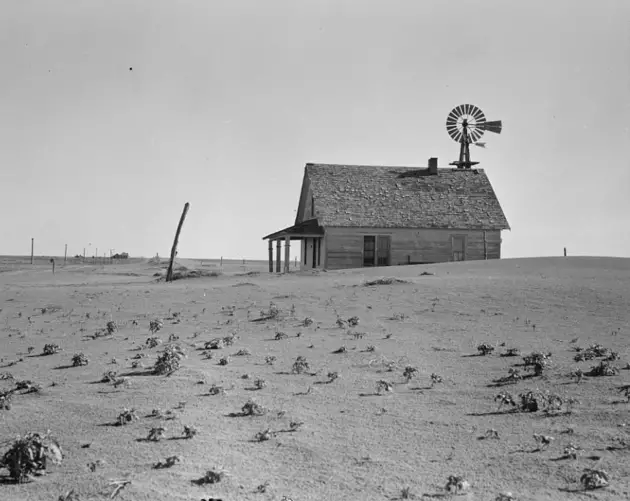
Dust Bowl farm in the Coldwater District, north of Dalhart, Texas, June 1938.Dorothea Lange/Farm Security Administration via Library of Congress
5 of 48
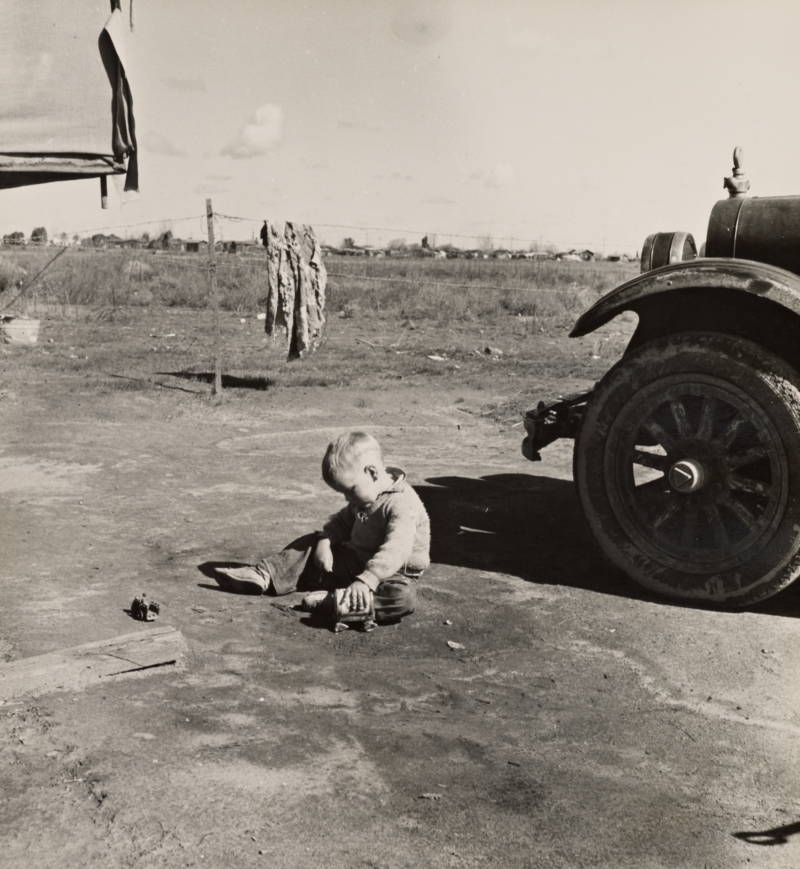
A child plays in a California migratory camp, 1936.Dorothea Lange/Farm Security Administration via New York Public Library
6 of 48
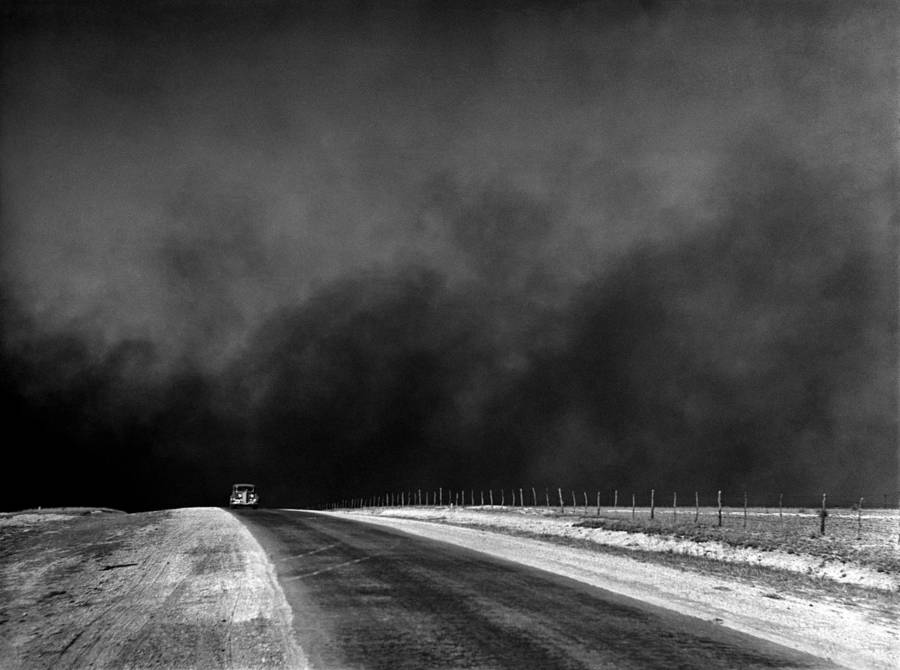
A dust storm looms behind a car in the Texas Panhandle, March 1936.Arthur Rothstein/Farm Security Administration via Library of Congress/Wikimedia Commons
7 of 48
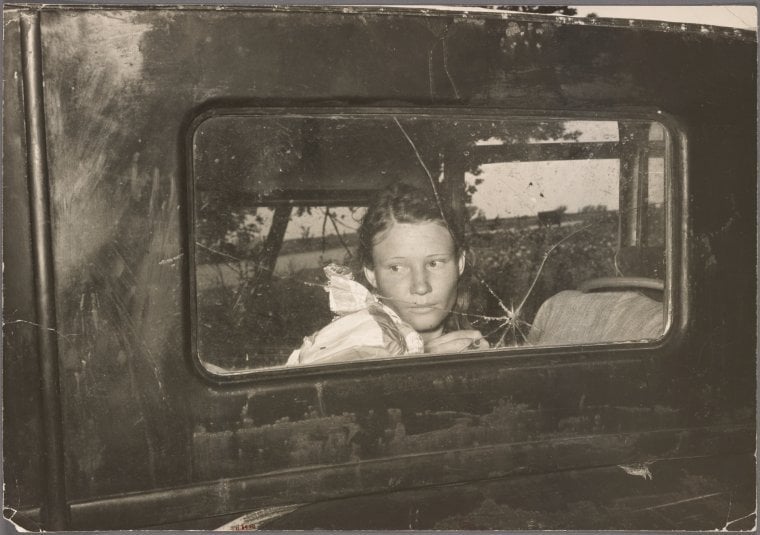
A migrant worker looking through the back window of an automobile near Prague, Oklahoma, 1939.Russell Lee/Farm Security Administration via New York Public Library
8 of 48
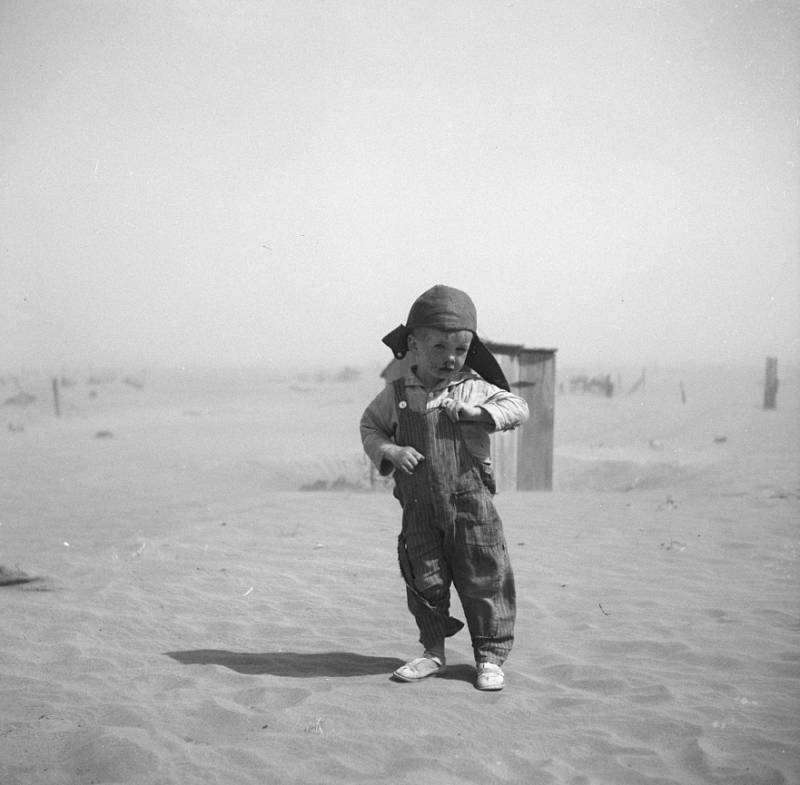
The young son of a farmer walks amid the dust in Cimarron County, Oklahoma, April 1936.Arthur Rothstein/Farm Security Administration via Library of Congress
9 of 48
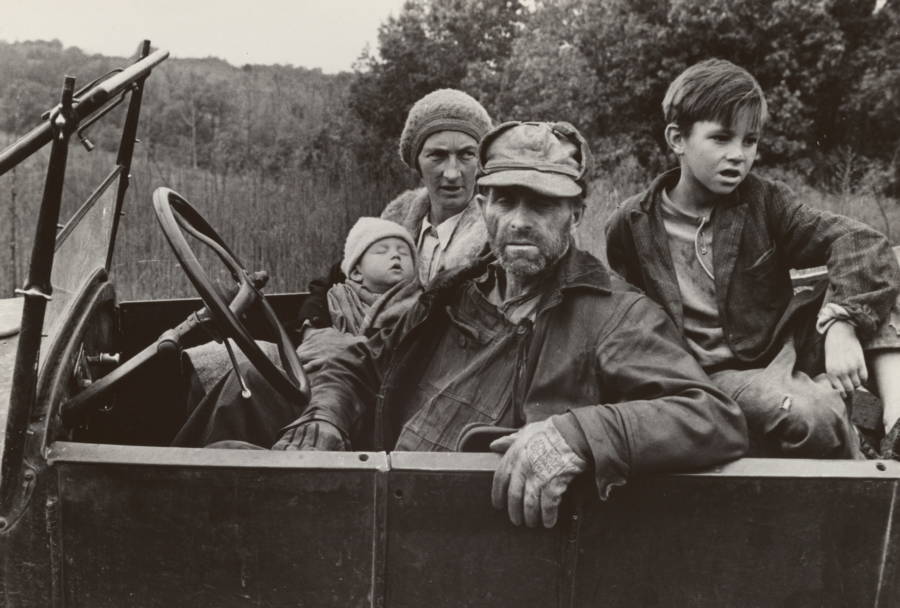
A destitute family in the Ozark Mountains area of Arkansas, 1935.Ben Shahn/Farm Security Administration via New York Public Library
10 of 48
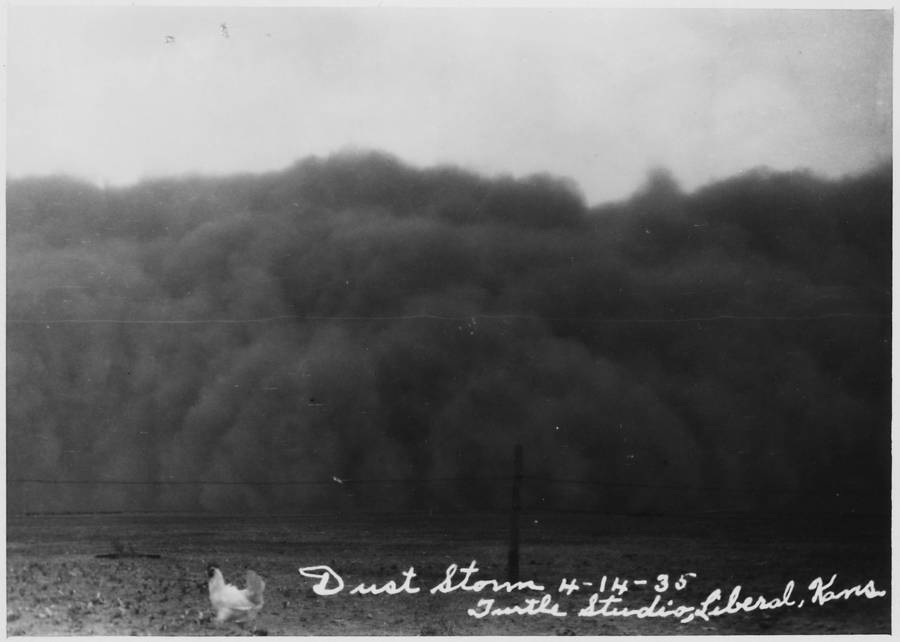
The "Black Sunday" dust storm, one of the worst of the Dust Bowl era, hits Liberal, Kansas on April 14, 1935.National Archives and Records Administration via Wikimedia Commons
11 of 48
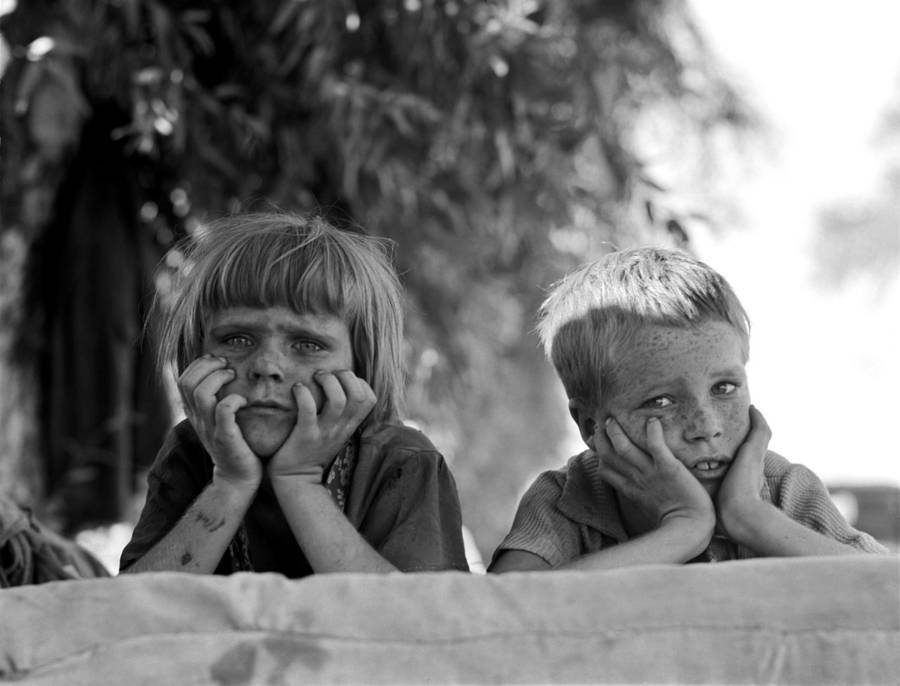
Children from Oklahoma staying in a migratory camp in California, November 1936.Dorothea Lange/Farm Security Administration via Library of Congress/Wikimedia Commons
12 of 48
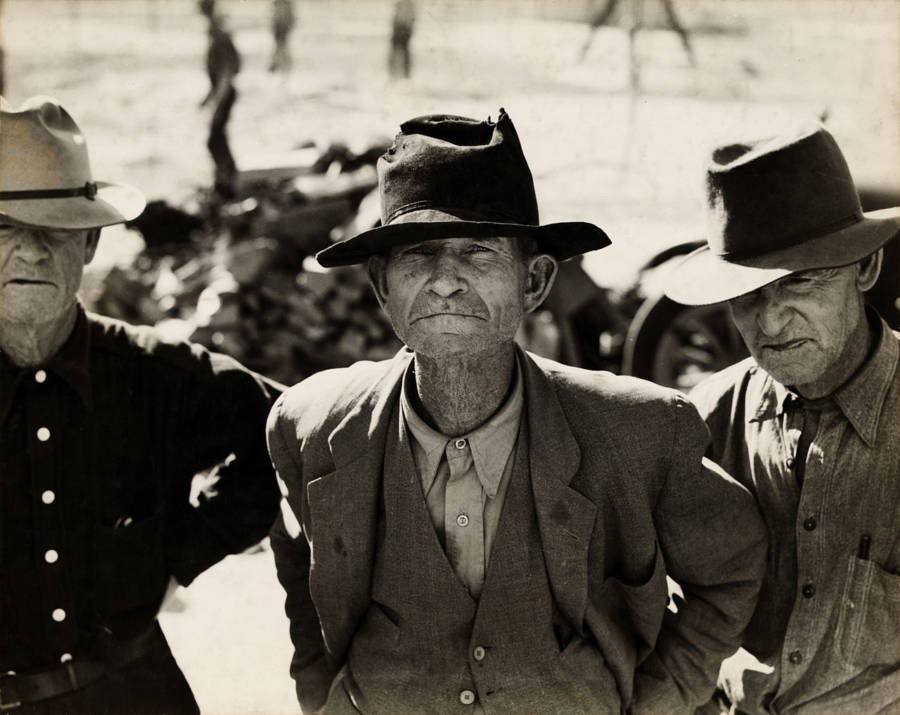
Veteran migrant worker camped in Wagoner County, Oklahoma, June 1939. When asked where his home was, he told photographer Russell Lee, "It's all over."Russell Lee/Farm Security Administration via Library of Congress
13 of 48
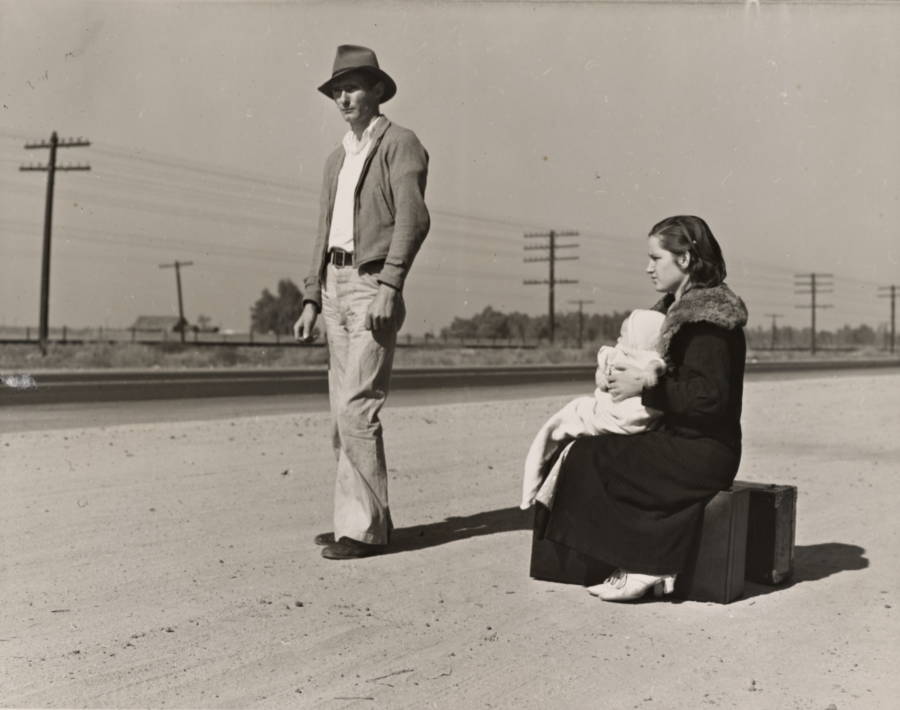
A poor 24-year-old father and 17-year-old mother attempt to hitchhike with their baby on California's U.S. Highway 99, November 1936.Dorothea Lange/Farm Security Administration via New York Public Library
14 of 48
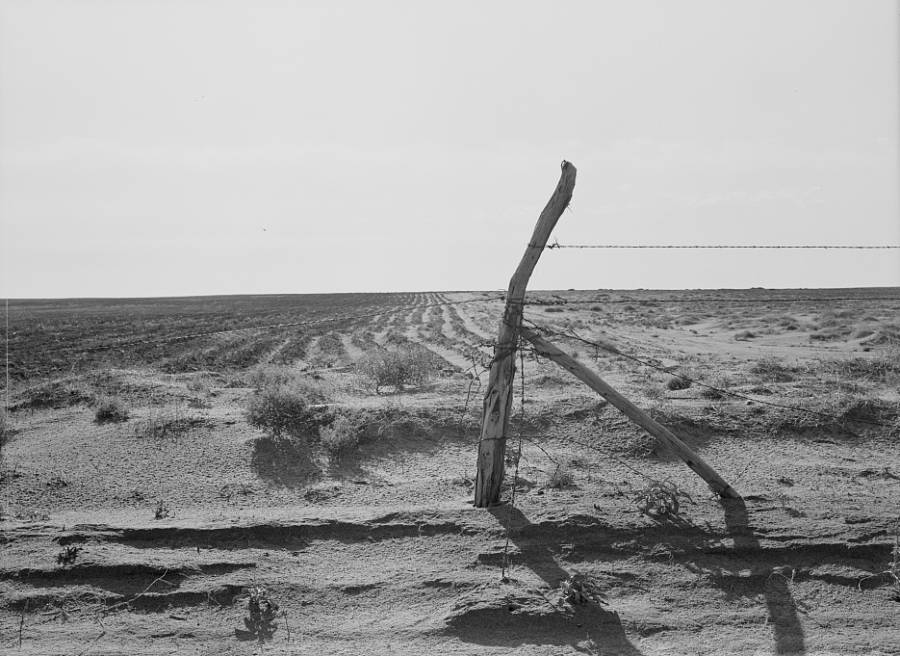
A landscape left barren by the Dust Bowl, north of Dalhart, Texas, June 1938.Dorothea Lange/Farm Security Administration via Library of Congress
15 of 48
A farmer and his sons walk amid a dust storm in Cimarron County, Oklahoma, April 1936.Arthur Rothstein/Farm Security Administration via Library of Congress/Wikimedia Commons
16 of 48
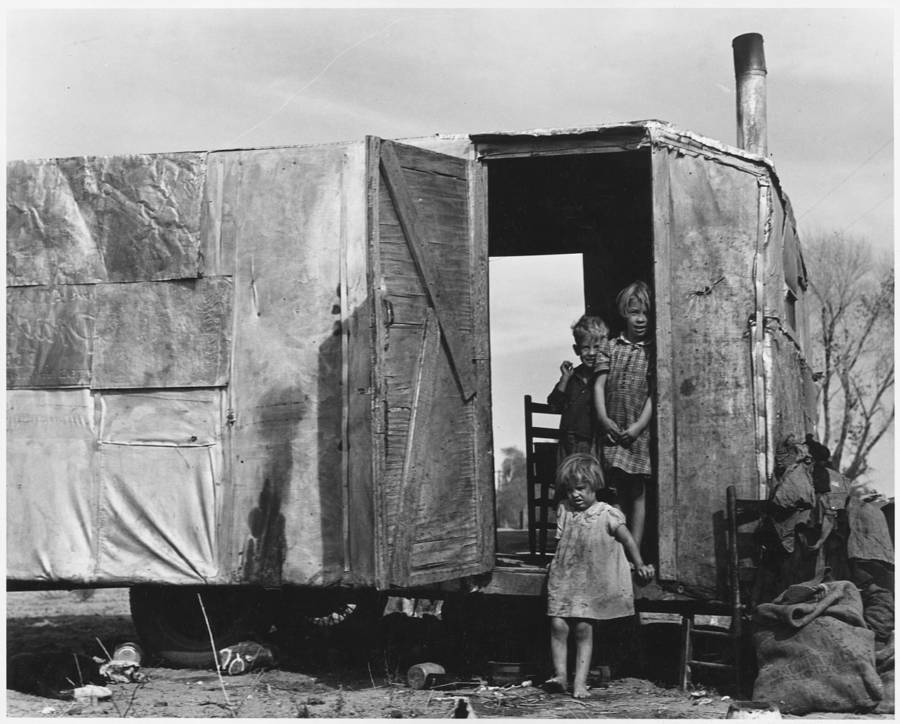
The children of a migrant family living in a trailer in the middle of a field south of Chandler, Arizona, November 1940.Dorothea Lange/United States Department of Agriculture via National Archives and Records Administration/Wikimedia Commons
17 of 48
"This is a hard way to serve the Lord": an Oklahoma refugee in California, March 1937.Dorothea Lange/Farm Security Administration via Library of Congress
18 of 48
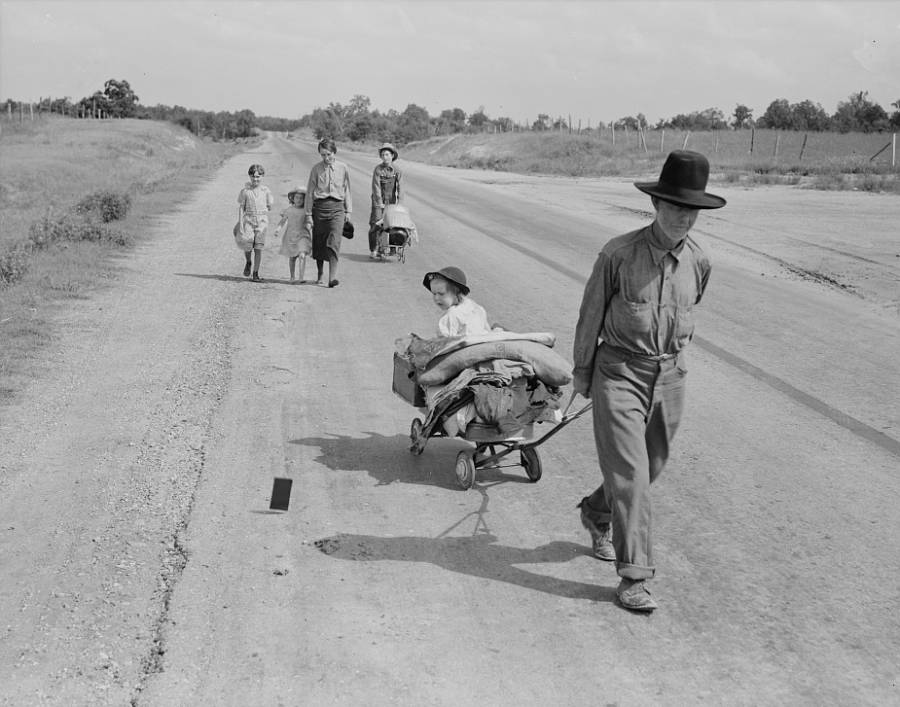
A migrant family traveling on foot through Oklahoma, looking for work, June 1938.Dorothea Lange/Farm Security Administration via Library of Congress
19 of 48
A Dust Bowl refugee from Chickasaw, Oklahoma, in Imperial Valley, California, March 1937.Dorothea Lange/Farm Security Administration via Library of Congress
20 of 48
A woman identified as Mrs. Howard holds her baby at a migrant camp in California, 1935.Dorothea Lange/Farm Security Administration via New York Public Library
21 of 48
Tenant farmers in Imperial Valley, California, March 1937.Dorothea Lange/Farm Security Administration via Library of Congress/Wikimedia Commons
22 of 48
Children of a tenant farmer in Boone County, Arkansas, 1935.Ben Shahn/Farm Security Administration via New York Public Library
23 of 48
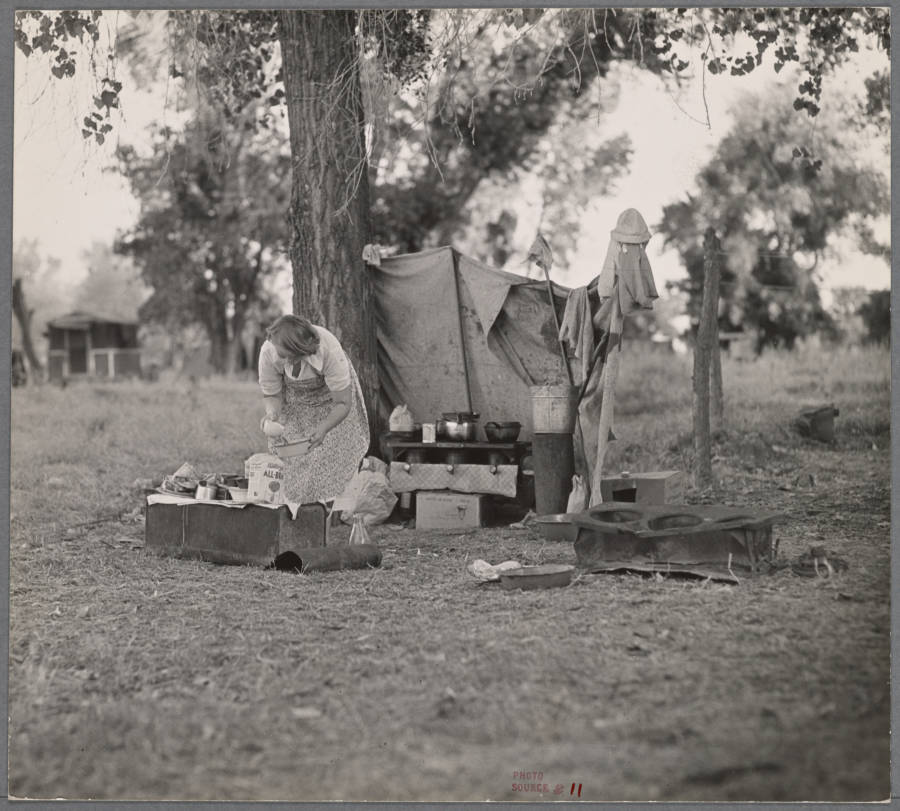
A drought refugee from Oklahoma attempts to prepare dinner in her makeshift outdoor dwelling in Marysville, California, August 1935.Dorothea Lange/Farm Security Administration via New York Public Library
24 of 48
The children of a migrant fruit worker in Berrien County, Michigan, July 1940.John Vachon/Farm Security Administration via New York Public Library
25 of 48
Dust storm damage in Cimarron County, Oklahoma, April 1936.Arthur Rothstein/Farm Security Administration via Library of Congress
26 of 48
Dust Bowl refugees camp along the highway near Bakersfield, California, November 1935.Dorothea Lange/Farm Security Administration via Library of Congress
27 of 48
A young migratory mother originally from Texas, now in Edison, California, April 1940. The day before this photo was taken, she and her husband had traveled 35 miles each way to pick peas for five hours, earning just $2.25 between them.Dorothea Lange/United States Department of Agriculture via National Archives and Records Administration/Wikimedia Commons
28 of 48
Sand dunes on a farm in Cimarron County, Oklahoma, April 1936.Arthur Rothstein/Farm Security Administration via Library of Congress
29 of 48
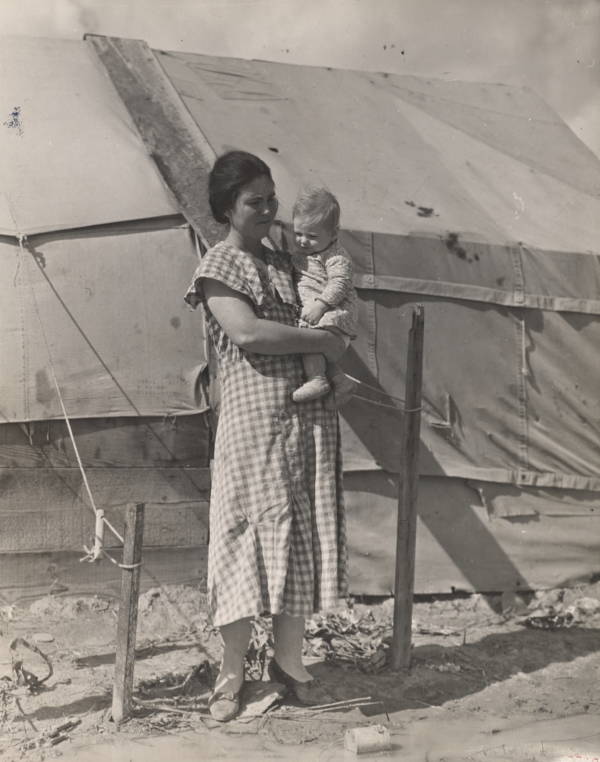
A migrant fruit farmer and his family rest at a camp in Marysville, California, June 1935.Dorothea Lange/Farm Security Administration via New York Public Library
30 of 48
Soil blown by Dust Bowl winds in large drifts near Liberal, Kansas, March 1936.Arthur Rothstein/Farm Security Administration via Library of Congress
31 of 48
Members of a poor family of nine who'd been living in a makeshift dwelling constructed from an abandoned car and using a nearby creek as their only water source along U.S. Route 70 between Bruceton and Camden, Tennessee, March 1936.Carl Mydans/Farm Security Administration via New York Public Library
32 of 48
An abandoned farm house in southwest Oklahoma, June 1937.Dorothea Lange/Farm Security Administration via Library of Congress
33 of 48
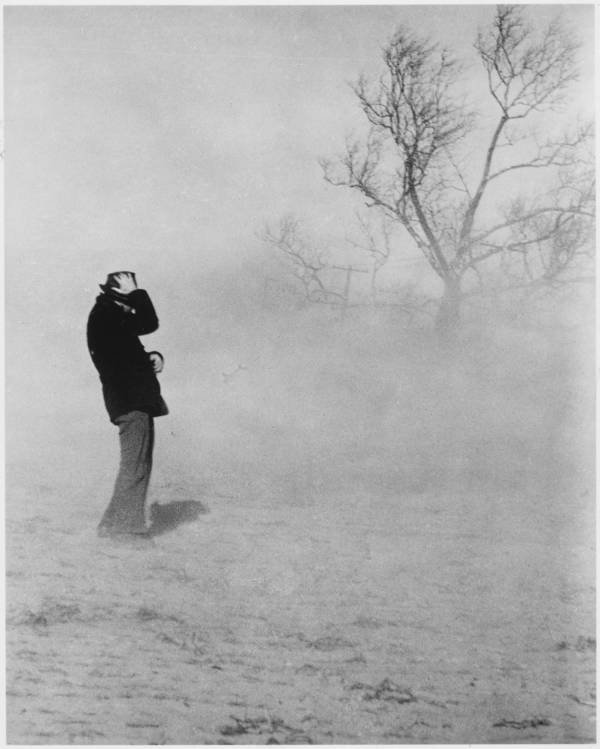
A man stands amid a raging dust storm at an unspecified location, circa 1934-1936.National Archives and Records Administration via Wikimedia Commons
34 of 48
An abandoned house on the edge of the Great Plains near Hollis, Oklahoma, June 1938.Dorothea Lange/Farm Security Administration via Library of Congress
35 of 48
A migratory field worker's makeshift home on the edge of a pea field, where they lived through the winter, in Imperial Valley, California, 1937.Dorothea Lange/Farm Security Administration via New York Public Library
36 of 48
A dust storm in Oklahoma, April 1936.Arthur Rothstein/Farm Security Administration via Library of Congress
37 of 48
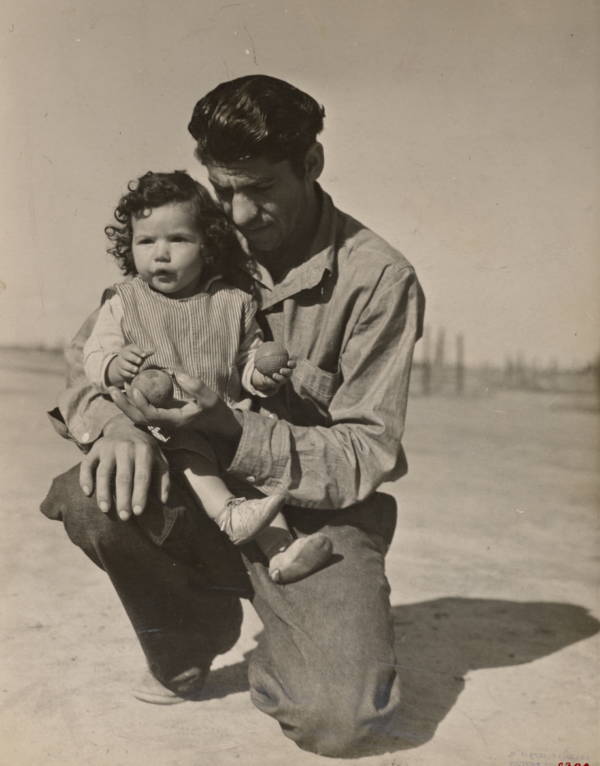
A migrant farmer and his child in California, 1936.Dorothea Lange/Farm Security Administration via New York Public Library
38 of 48
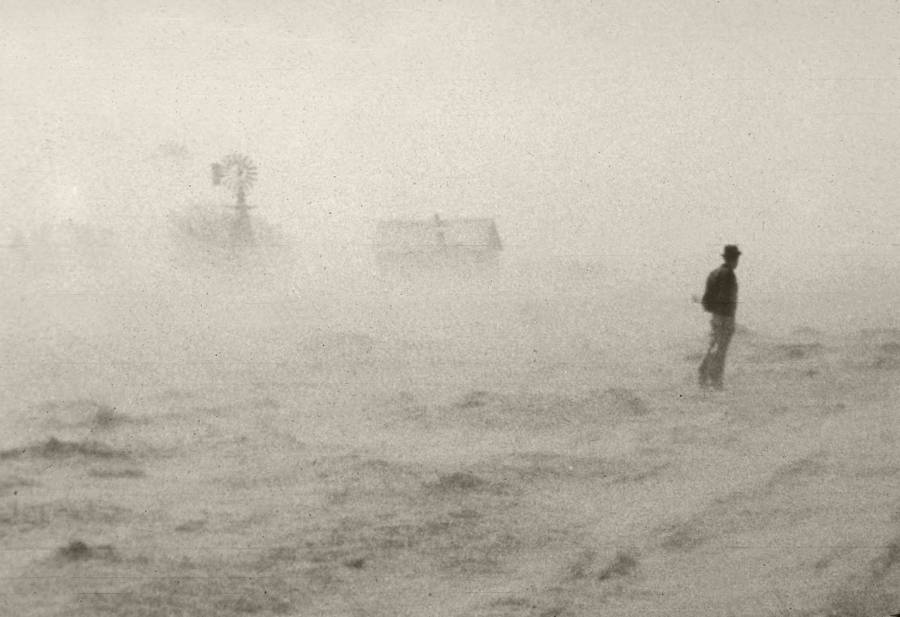
A dust storm rages at an unspecified location, circa 1930s.United States Department of Agriculture via Wikimedia Commons
39 of 48
At the Midway Dairy cooperative, near Santa Ana, California, 1936.Dorothea Lange/Farm Security Administration via New York Public Library
40 of 48
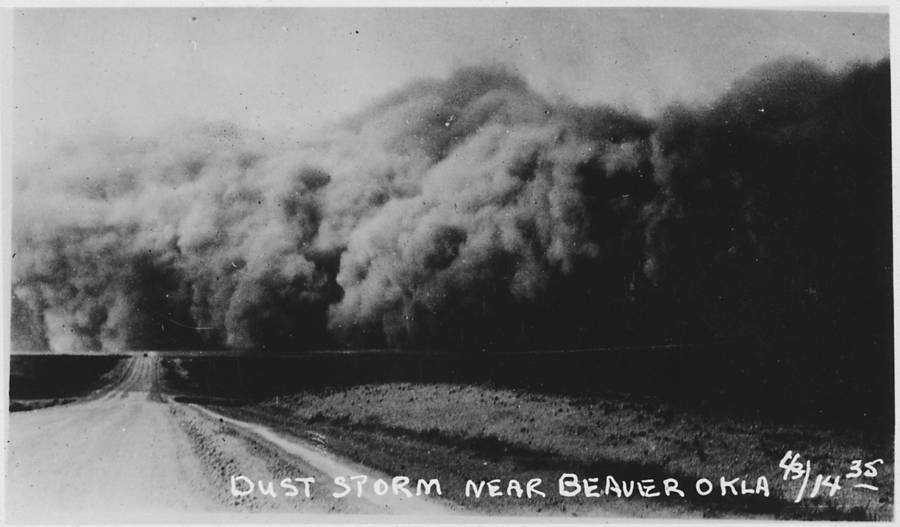
A dust storm near Beaver, Oklahoma, July 1935.National Archives and Records Administration via Wikimedia Commons
41 of 48
A farmer in Kansas, March 1936.Arthur Rothstein/Farm Security Administration via Library of Congress
42 of 48
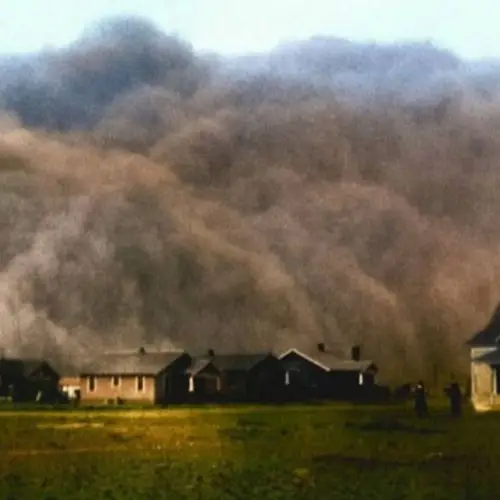
The "Black Sunday" dust storm approaching Spearman, Texas on April 14, 1935.National Archives and Records Administration via Wikimedia Commons
43 of 48
A mother and child at the El Monte Federal Subsistence Homesteads in California, 1936.Dorothea Lange/Farm Security Administration via New York Public Library
44 of 48
An abandoned farm in Cimarron County, Oklahoma, April 1936.Arthur Rothstein/Farm Security Administration via Library of Congress
45 of 48
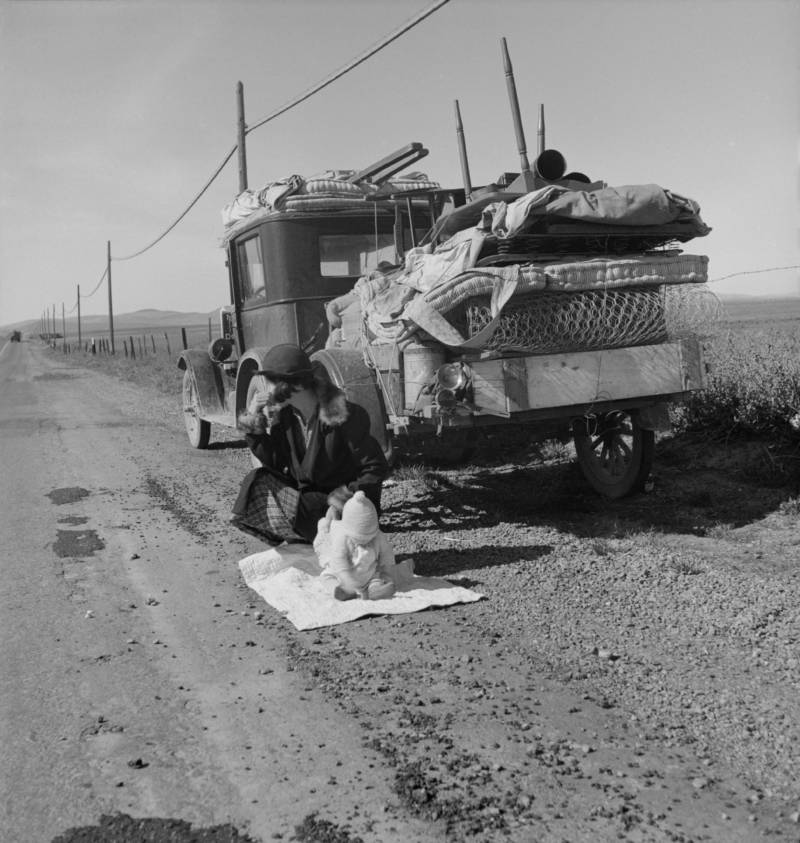
A migrant mother from Missouri tends to her sick child after experiencing car trouble on U.S. Highway 99 near Tracy, California, February 1937.Dorothea Lange/Farm Security Administration via Library of Congress/Wikimedia Commons
46 of 48
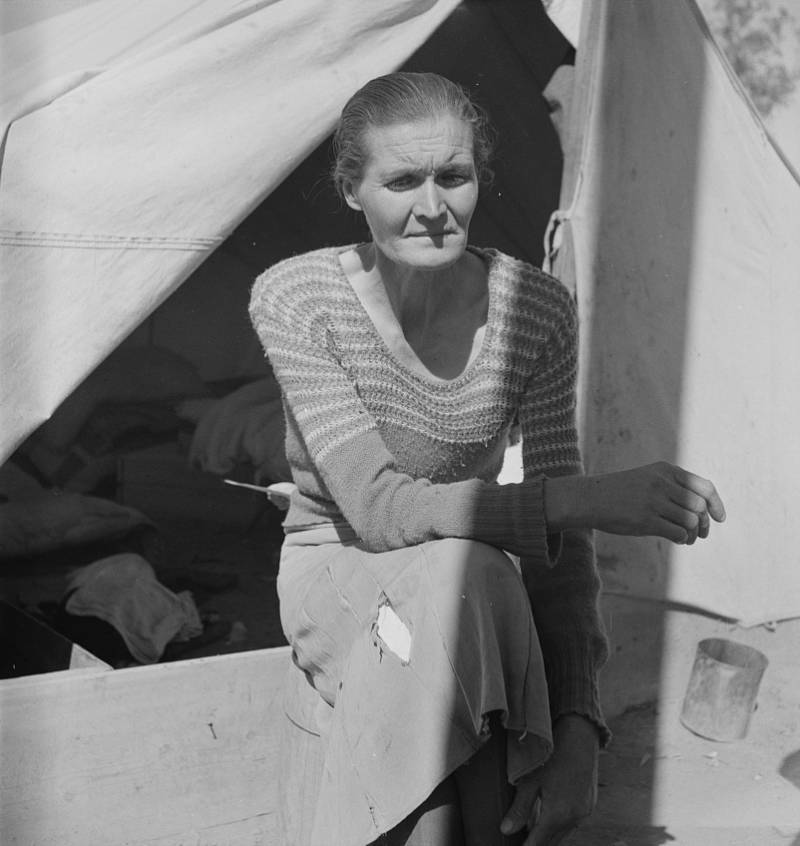
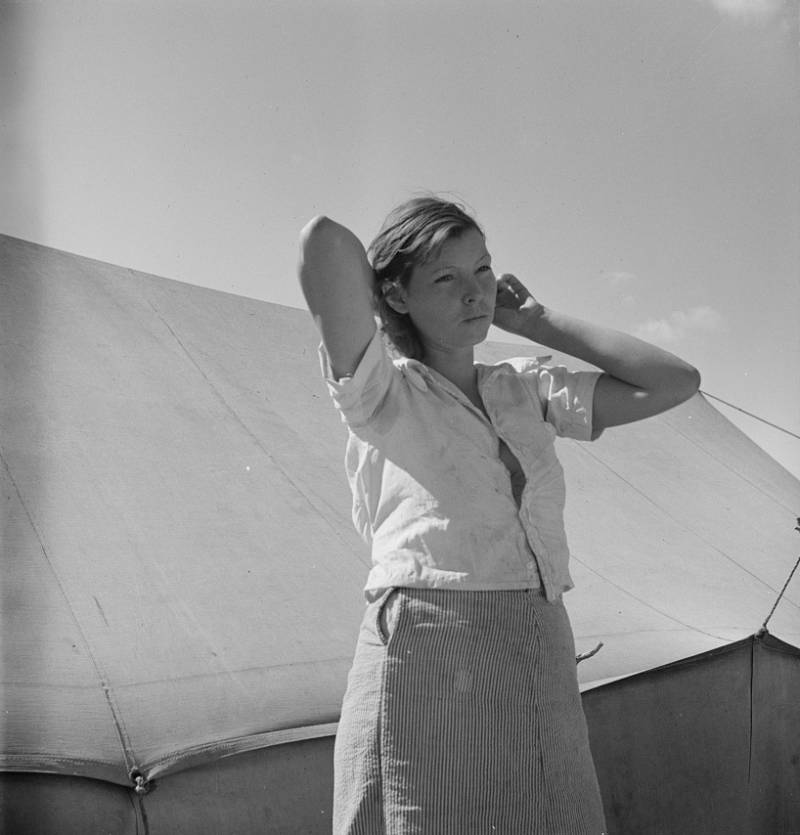
A woman in a pea picker's camp in California, March 1937.Dorothea Lange/Farm Security Administration via Library of Congress
47 of 48
Dust Bowl refugees in California, 1936.Dorothea Lange/Farm Security Administration via New York Public Library
47 Dust Bowl Pictures That Illustrate The Devastation Of This Unprecedented Ecological Disaster
View Gallery
You'll recognize the stare. You've likely seen it in Dorothea Lange's iconic photo of a migrant mother taken in 1936. And as you look through other Dust Bowl pictures above, you will see that stare again and again.
It's at once vacant and intent, stoic and poignant, broken and resolved. There's defeat, but hope too. After all, the Dust Bowl was one of the worst ecological disasters in American history, and it forced millions to leave their homes. From the tragedy, some people also forged fresh starts.
But that came later. First, starting in the early 1930s, the Dust Bowl was just dust. Dust which swirled through the air, blocking out the sun, dust which choked crops and buried farms, dust which stung the eyes, the nose, the mouth. For roughly a decade, the Dust Bowl turned much of the American heartland into a virtual wasteland, prone to "black blizzard" dust storms.
So how did the Dust Bowl even begin? How did it impact the United States? And where did millions of migrants fleeing the dust go? Below, read on to learn about the history of the Dust Bowl. And above, look through a gallery of Dust Bowl pictures which captures the despair and devastation of the era.
How The Dust Bowl Began
The seeds of the Dust Bowl were sown — literally — far before the disaster began in the 1930s. As the Library of Congress explains, thousands of settlers migrated to the region after the passage of the Homestead Act in 1862. Farmers plowed the widespread prairie grasses and, as the demand for wheat grew, they increasingly used the land for wheat cultivation.
This, alongside the overgrazing of cattle, removed the area's native prairie grass. These grasses had played an essential role, both by absorbing moisture and by holding the soil in place during periods of intense wind storms.
Then, in 1931, droughts made things even worse as crops failed and left behind dry, sandy soil. This soil was easily picked up by high winds, creating the region's first "black blizzard" dust storms.
Library of CongressThe aftermath of a dust storm in Oklahoma, circa 1936.
In 1932, there were 14 such storms. By the next year, there were 38.
The Dust Bowl had begun. Its name came from journalist Robert Geiger, who wrote in 1935, "Three little words achingly familiar on a Western farmer's tongue, rule life in the dust bowl of the continent - if it rains."
Black Blizzards, Destroyed Farmland, And Mass Migration Out Of The Heartland
Over the next decade, conditions grew even worse. The United States suffered under a widespread drought, which ultimately encompassed 27 states (and more than 75 percent of the country) by 1934.
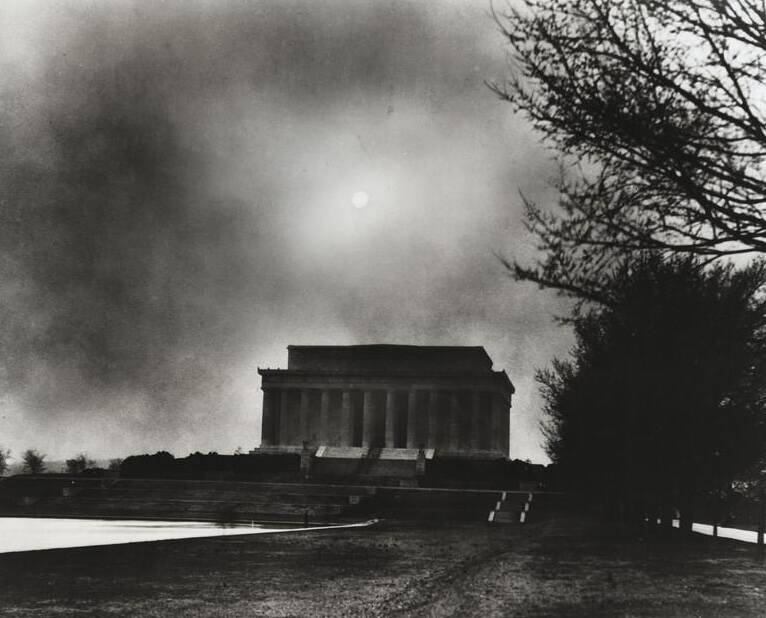
That year, one powerful dust storm even spread to the East Coast, coating both the U.S. Capitol and the Statue of Liberty with loose soil.
Carson County Square House MuseumSome dust storms were so powerful that the even reached the East Coast, as seen here when dust darkened the sky over the Lincoln Memorial in Washington D.C.
But one of the worst storm of the Dust Bowl hit on April 14, 1935, a date remembered as "Black Sunday." According to the National Weather Service, it began in eastern Oklahoma around 4 p.m., and quickly spread across the state and into Texas. High winds, reaching 60 miles per hour, created a monstrous dark tsunami that blotted out the sun.
"The impact is like a shovelful of fine sand flung against the face," writer Avis D. Carlson explained in a New Republic article. "People caught in their own yards grope for the doorstep. Cars come to a standstill, for no light in the world can penetrate that swirling murk... The nightmare is deepest during the storms. But on the occasional bright day and the usual gray day we cannot shake from it. We live with the dust, eat it, sleep with it, watch it strip us of possessions and the hope of possessions."
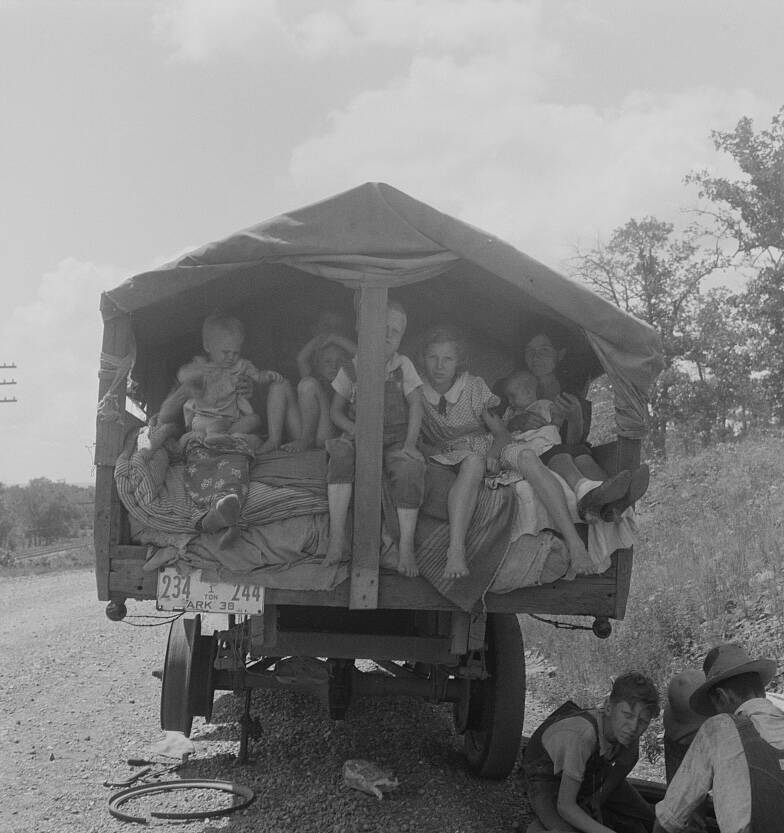
Meanwhile, animals got sick and died, and people suffered what they called "dust pneumonia." Indeed, conditions in the central United States had grown so dire that many people decided to leave. As John Steinbeck described in his 1939 book Grapes of Wrath, migrants known as "Okies" packed up their possessions and left the American heartland. Some 2.5 million people migrated out of the Dust Bowl states (Texas, New Mexico, Colorado, Nebraska, Kansas, and Oklahoma) in search of a better life.
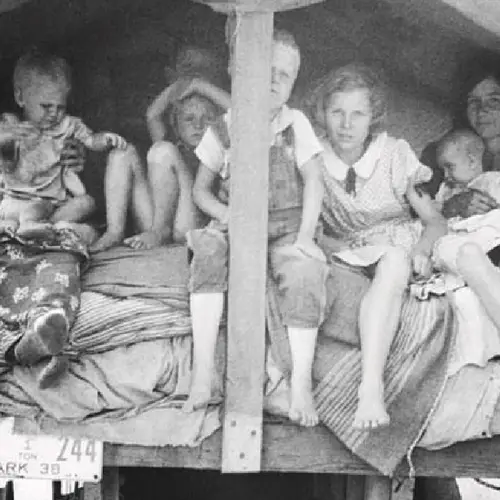
Library of CongressA group of Dust Bowl migrants, mostly children, making their way from Arkansas to California in 1938.
They didn't always find it. Okies often faced discrimination in places like California and Arizona, or found themselves working menial jobs. But fortunately, by the end of the decade, the Dust Bowl had begun to subside.
The End Of The Dust Bowl
In the 1930s, the U.S. government enacted several measurements to alleviate the suffering caused by the Dust Bowl.
In 1935, the Emergency Relief Appropriation Act provided $525 million for drought relief, and the Works Progress Administration ultimately employed 8.5 million people during the Great Depression. Congress also declared soil erosion "a national menace" and passed the Soil Erosion Service and the Prairie States Forestry Project that year.
This program paid workmen to plant trees, and subsided farmers who practiced farming techniques that protected soil, including crop rotation and contour plowing. Meanwhile, much needed rains in 1939 helped return environmental conditions to normal — to the relief of millions of farmers.
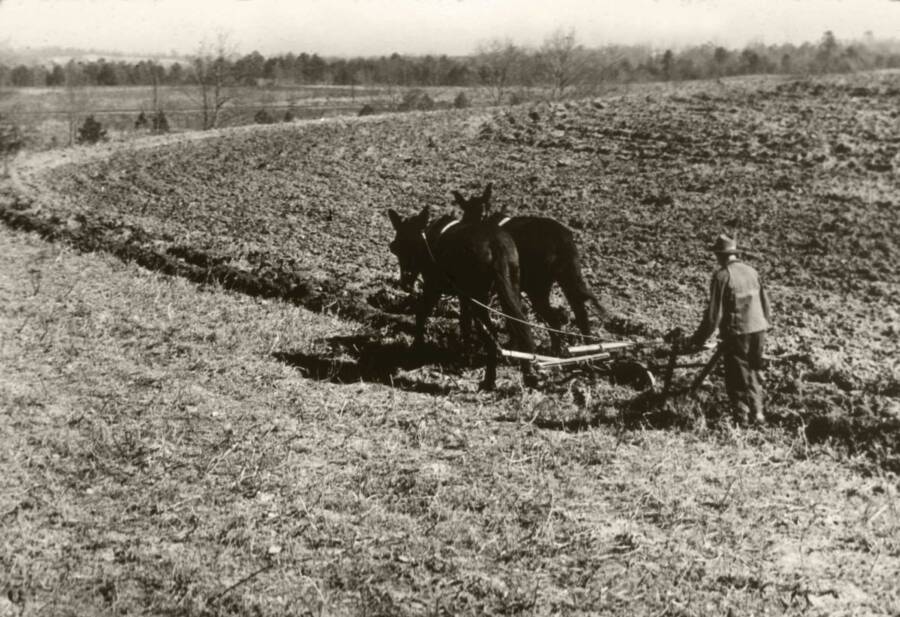
U.S. Department of AgricultureA farmer practicing contour plowing, a technique meant to prevent soil erosion. Circa 1930s.
"It was a very emotional time, when you'd get rain, because it meant so much to you. You didn't have false hope then," Floyd Coen of Kansas said, per WOUB. "When the rain came, it meant life itself. It meant a future."
In 1941, the United States also entered World War II, which boosted the national economy. Economic conditions improved alongside ecological ones, and things began to return to normal.
After a terrible decade, the Dust Bowl had ended.
Today, we're left with the work of Dorothea Lange and a few others photographers, whose Dust Bowl pictures provide an up-close look at this devastating American tragedy. In the gallery above, see some of the people who lived through the environmental disaster, as well as the ghostly landscapes ravaged by monster dust storms.
All That's Interesting is a U.S.-based digital publisher that employs subject-level experts to produce our articles. Each article is written by a staff member or a highly-vetted freelancer, and is reviewed by at least one editor. For licensing and permission inquiries, visit Wright's Media.
Become a member to help support our work and enjoy our site ad-free.
Based in Brooklyn, New York, John Kuroski is the editorial director of All That's Interesting. He graduated from New York University with a degree in history, earning a place in the Phi Alpha Theta honor society for history students. An editor at All That's Interesting since 2015, his areas of expertise include modern American history and the ancient Near East. In an editing career spanning 17 years, he previously served as managing editor of Elmore Magazine in New York City for seven years.
A senior staff writer for All That's Interesting since 2021 and co-host of the History Uncovered Podcast, Kaleena Fraga graduated with a dual degree in American History and French Language and Literature from Oberlin College. She previously ran the presidential history blog History First, and has had work published in The Washington Post, Gastro Obscura, and elsewhere. She has published more than 1,200 pieces on topics including history and archaeology. She is based in Brooklyn, New York.
Citation copied
COPY
Cite This Article
Kuroski, John. "47 Dust Bowl Pictures That Illustrate The Devastation Of This Unprecedented Ecological Disaster." AllThatsInteresting.com, April 20, 2026, https://allthatsinteresting.com/dust-bowl-pictures. Accessed July 22, 2026.