Pagan Christmas Traditions: The Yule Log
Yuletide is an adjective often used to describe the festive Christmas season, but the term actually comes from a pagan wintertime celebration.

Public DomainThe burning of the yule log stems from the pagan celebration of Yule.
Observed by ancient Germanic cultures, Yule was a farewell to the darkness of winter and a festival to welcome the longer days of sunshine that came after the solstice. It was a joyous occasion, and some historians even theorize that the word “jolly” stems from the word “Yule.”
One of many yuletide traditions was the lighting of revered trees in a giant bonfire. It was believed that burning this wood warded off the cold and darkness and celebrated the fruitful days to come.
As Christianity spread across Europe, people slowly began to abandon their pagan traditions for the rituals and celebrations of the new religion. However, aspects of their ancient festivals stuck around and transformed. Some historians believe that bonfire evolved into the modern custom of burning the yule log.
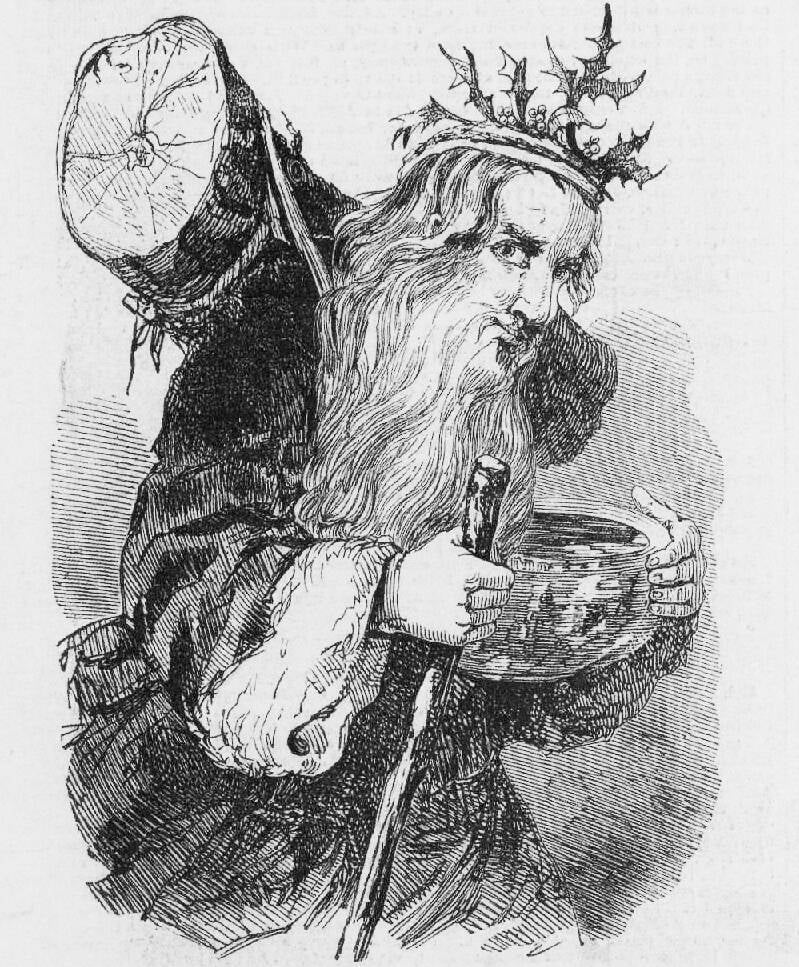
Public DomainFather Christmas with a yule log on his back, from an 1848 edition of the Illustrated London News.
This pagan Christmas tradition involves lighting part of a special log on the hearth each evening from Dec. 24 until Twelfth Night on Jan. 6. One of the most beloved holiday desserts — a chocolate sponge cake that’s filled with cream and rolled into a log shape — also stems from this practice.
Today, many people stream a virtual yule log on TV, which goes to show just how much pagan Christmas traditions have changed over the millennia.
After reading about these pagan Christmas traditions, dive into the story of Krampus. Then, learn about nine terrifying Christmas legends from around the world.