Although Christmas is one of Christianity's most important holidays, many of today's most beloved traditions stem from pagan festivals and rites.
Aside from Easter, Christmas is perhaps Christianity’s most sacred date. As a celebration of Christ’s birth, the holiday is often rife with nativity scenes and holy hymns. However, many of the most beloved Christmas traditions actually have pagan roots.
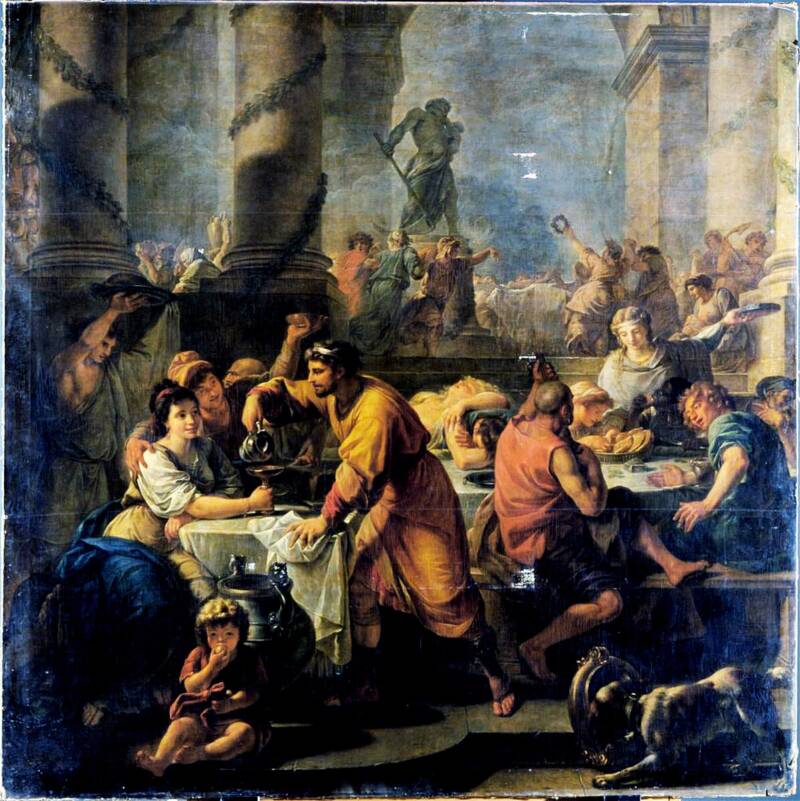
Public DomainSaturnalia, a 1783 painting by French artist Antoine-François Callet.
Wreaths, mistletoe, holly, and yule logs all date back to pre-Christian times. Mistletoe was sacred to the Druids of the ancient Celtic world, and yule logs may have Baltic or Germanic origins.
Even the day we celebrate Christmas, Dec. 25, has nothing to do with the birth of Christ. The Bible never says when Jesus was born — and it likely wasn’t even during the winter. Instead, Dec. 25 may have been selected as the official date for Christmas to coincide with the pagan Saturnalia celebrations of ancient Rome, making it easier for Romans to accept Christianity as it spread through the empire nearly 2,000 years ago.
From stockings and gifts to trees and caroling, read on to learn more about the pagan origins of popular Christmas traditions.
The Pagan Origins Of Decorating With Wreaths
More than 2,500 years ago, the Romans began celebrating Saturnalia each December. The festival honored Saturn, the god of agriculture, and celebrated the return of longer, more fertile days after the winter solstice.
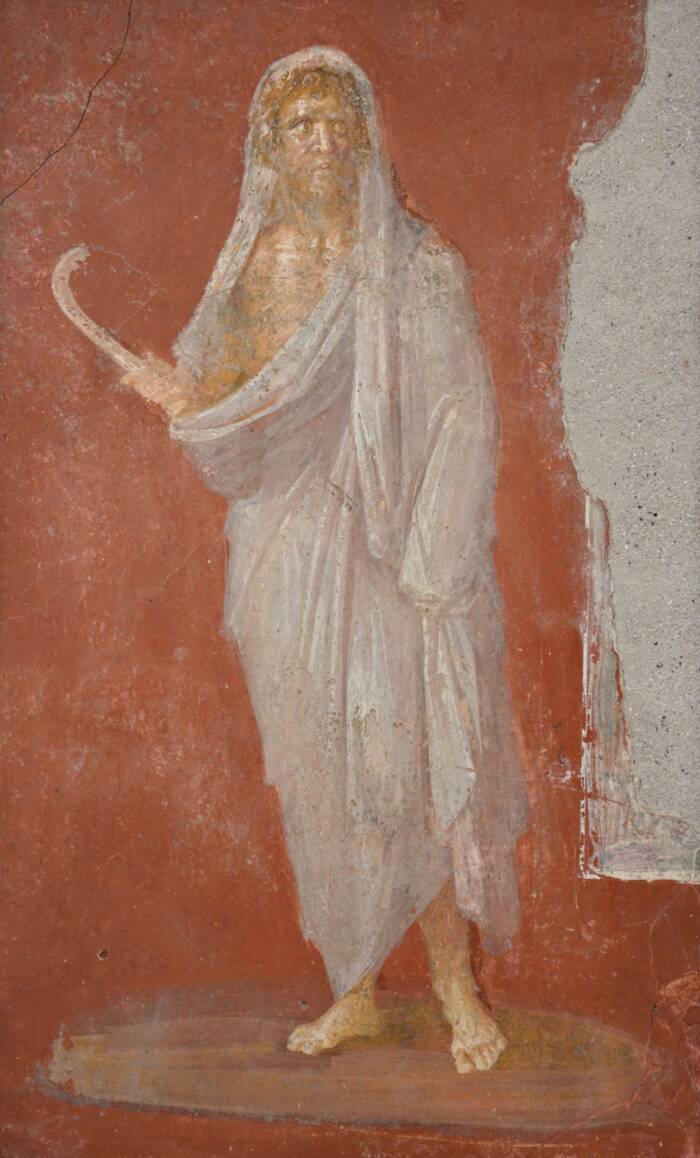
Carole Raddato/Wikimedia CommonsSaturnalia was a celebration of Saturn, the Roman god of time, abundance, and agriculture. The deity is pictured here in a fresco found in Pompeii.
While Saturnalia involved religious rites and ceremonies, it was also a period of feasting, merriment, and spending time together — much like Christmas is today.
At the time, wreaths represented power in ancient Europe. Etruscan rulers wore them as crowns, and in Greece and Rome, laurel wreaths were symbols of victory. They were even used to crown winners at the early Olympic Games. So, it makes sense that Romans utilized them as decor, hanging them on their front doors and public buildings during Saturnalia.
They crafted the wreaths from plants that were still green in the winter, like holly, fir, and ivy. Their circular shape may have also represented the never-ending cycle of the seasons.
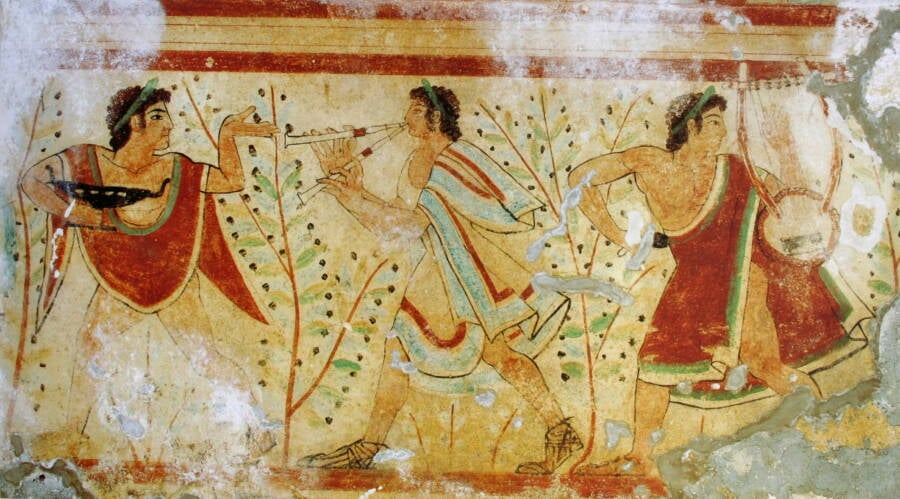
Yann Forget/Wikimedia CommonsAn Italian fresco of musicians with wreaths on their head from the fifth century B.C.E.
As Brent Landau, a religious studies professor at the University of Texas at Austin, told USA Today in 2023, “The imagery of the circle is particularly prevalent because by marking the winter solstice, you’re saying, ‘OK, this is a cyclical process that we go through every year and it gets really dark, and it gets really cold, but it doesn’t last.'”