These historic photos capture the holiday spirit of the White House — and show how Christmas celebrations there have changed over the years.
Each December, the days get darker, colder, and shorter. But this is also the time that Christmas decorations begin to appear across the world, and perhaps no place is more famous for its sprawling Christmas decorations in America than the White House. However, White House Christmases weren’t always as magnificent — or even as public.
For many years, presidents celebrated private Christmases at the White House (or elsewhere). It wasn’t until the early 20th century that White House Christmases started to become a public affair, and many festive traditions that we recognize today — including Christmas “themes” and elaborate gingerbread houses — didn’t emerge until the 1960s and 1970s.
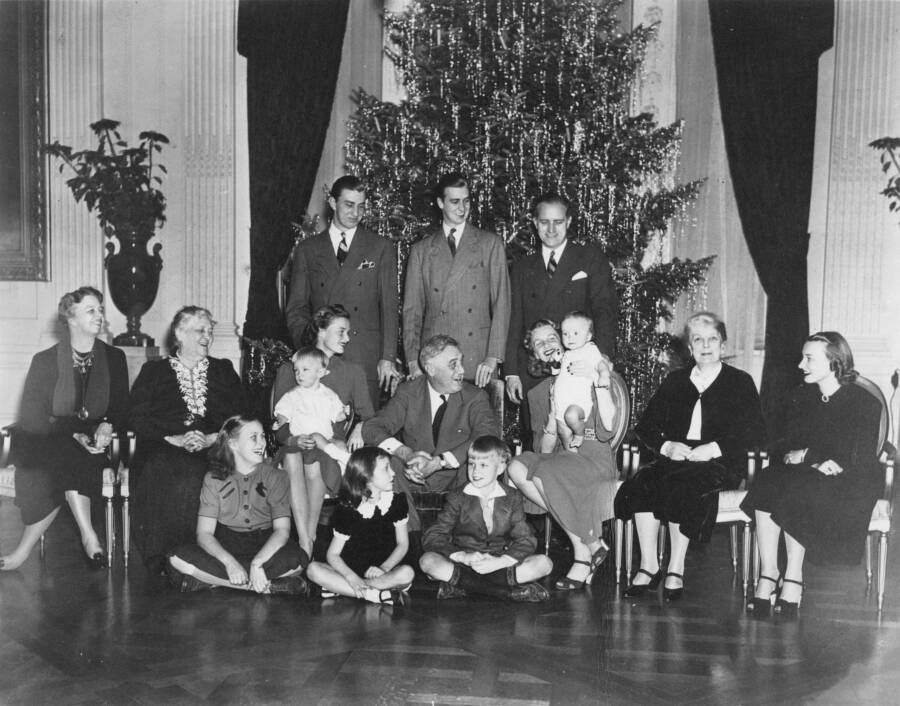
Take a look at past White House Christmas celebrations in the gallery below, and read on to learn more about the evolution of White House Christmases.


And if you liked this post, be sure to check out these popular posts:
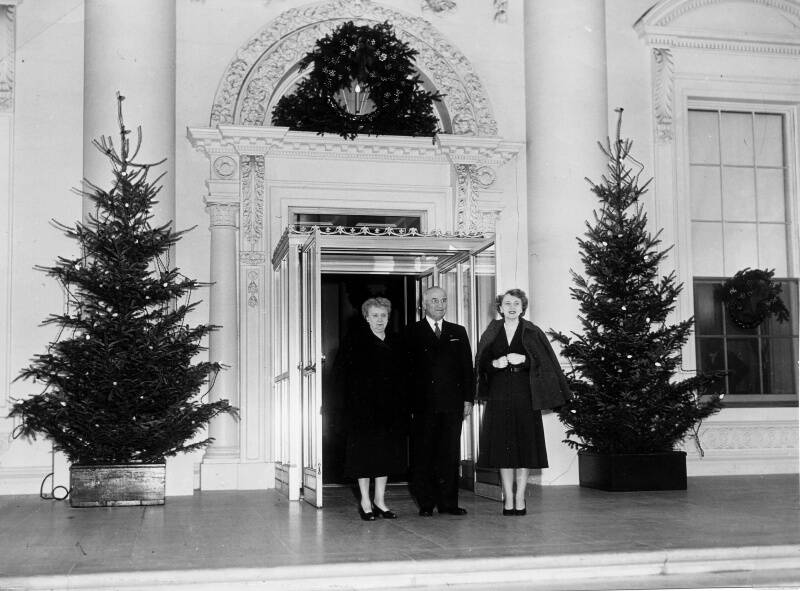
During his time in office, however, Truman spent most Christmases back home in Independence, Missouri.Abbie Rowe/National Park Service/Harry S. Truman Library & Museum
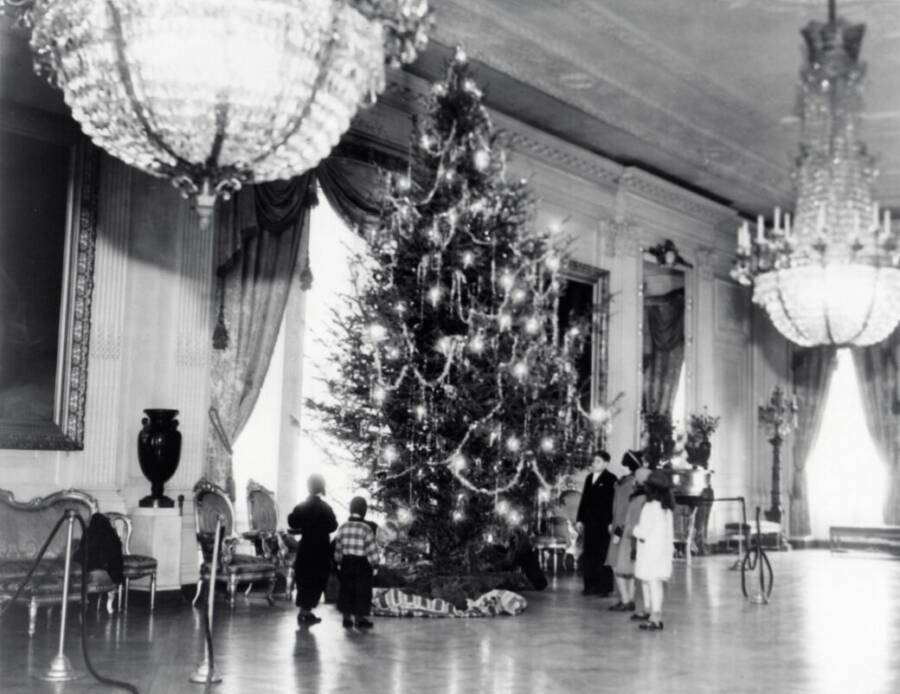
The official White House Christmas tree is almost always placed in the Blue Room, but this year it was in the Entrance Hall because of renovation work.John F. Kennedy Presidential Library


Simple Celebrations, Children's Parties, And "Secret" Trees
Before the 20th century, White House Christmases were quiet affairs. According to the White House Historical Association, the White House would be decorated modestly, and presidential families would celebrate the holiday in private. However, some presidents hosted larger Yuletide gatherings.
The first presidential couple to occupy the White House, John and Abigail Adams, threw a Christmas party in 1800, mostly for the benefit of their four-year-old granddaughter Susanna Boylston Adams. Over three decades later, Andrew Jackson also threw a party for children in his family in 1835 that included games, dancing, and snowballs made of cotton.
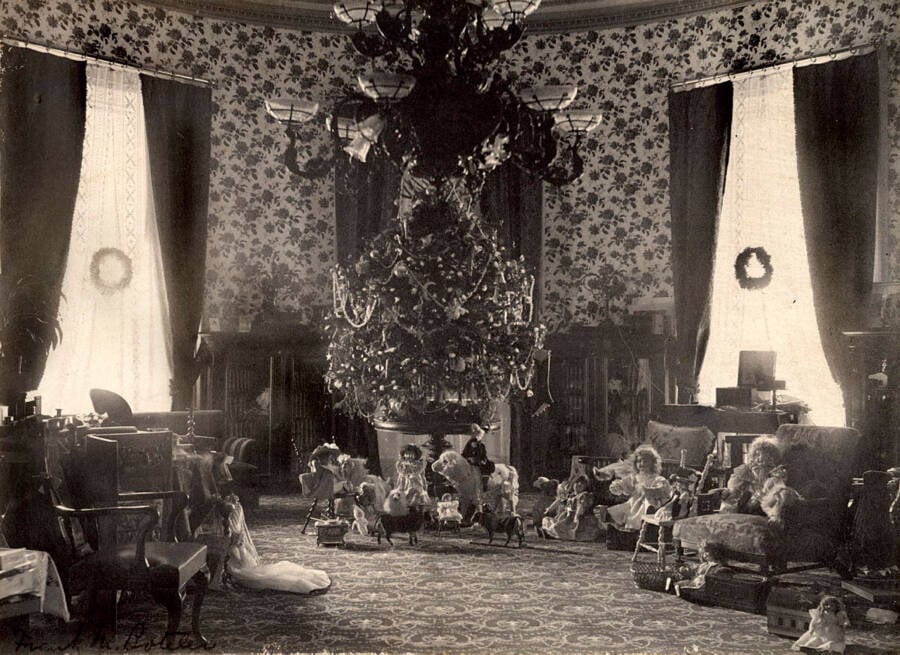
As Christmas trees became more popular around the world, they too began to make their way to the White House. Historians believe that Benjamin Harrison was the first president to bring a Christmas tree into the White House, when he and his family decorated a tree with toys and candles and placed it on the second floor of the building in 1889.
Christmas trees were far from ubiquitous in the United States at the time, however, and when Theodore Roosevelt and his family moved into the White House at the turn of the 20th century, they purportedly did not celebrate with a tree at all. In 1902, Roosevelt's son Archie allegedly snuck a small tree into the White House, which he decorated before revealing it to his family.
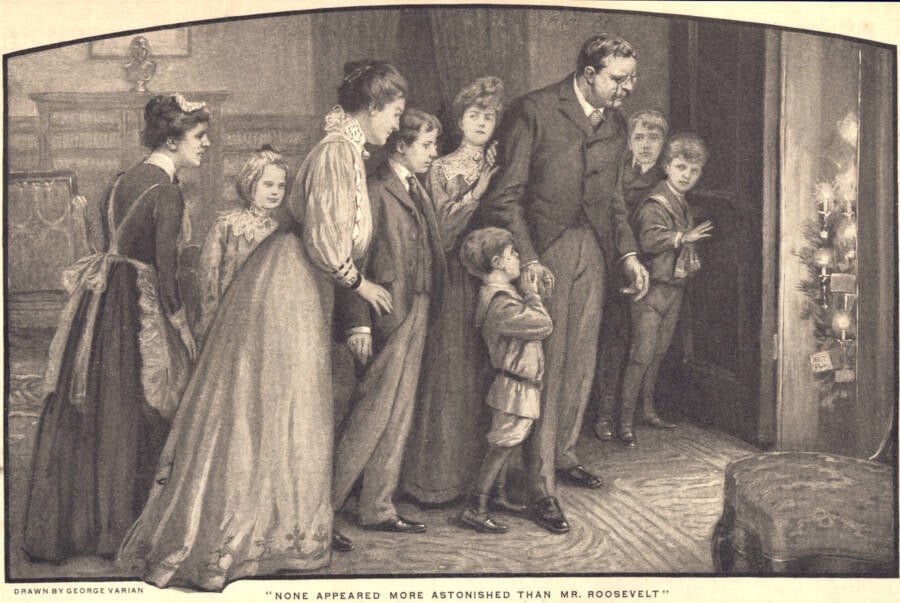
White House Historical Association Theodore Roosevelt "discovering" the tree that had allegedly been smuggled into the White House by his son Archie.
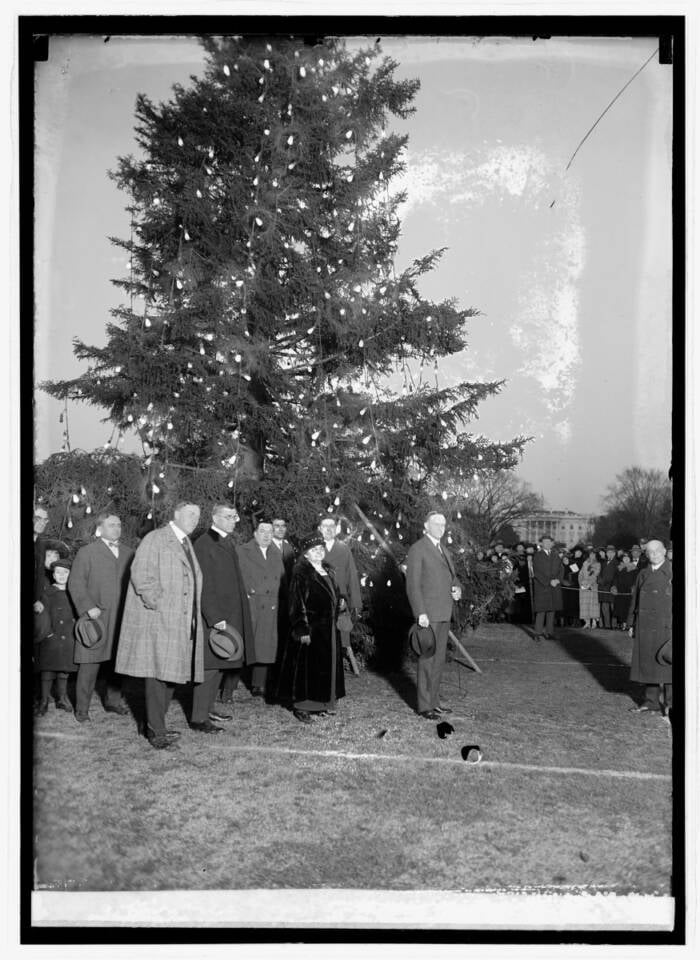
Still, more public White House Christmas celebrations would not emerge until many years later. Though Calvin Coolidge oversaw the first public lighting of the National Christmas Tree in 1923, and though some presidential families placed trees inside the White House, it wasn't until the 1950s that First Lady Mamie Eisenhower began the holiday tradition of consistently placing a Christmas tree in the Blue Room.
With a few exceptions, that's where the official tree has stood ever since.
How The Modern White House Christmas Was Formed By First Ladies
Mamie Eisenhower didn't just start the Blue Room Christmas tree tradition. She also expanded the holiday decorations at the White House, filling the Executive Mansion with numerous Christmas trees, poinsettias, wreaths, and holly. According to the White House Historical Association, there were 16 Christmas trees in the White House in 1957, and 26 trees in 1959.
Her successor, Jacqueline Kennedy, also embraced the tradition of public White House Christmases. And she put her own touch on it by suggesting that each year have a festive "theme." In 1961, the theme that the First Lady chose was "Nutcracker Suite," and the Christmas tree in the Blue Room was decorated with toys, birds, and angels inspired by the Nutcracker ballet. Her successor, Claudia "Lady Bird" Johnson, embraced an "early American" theme with her Christmas tree, which she decorated with traditional ornaments, nuts, fruit, popcorn, and gingerbread cookies.
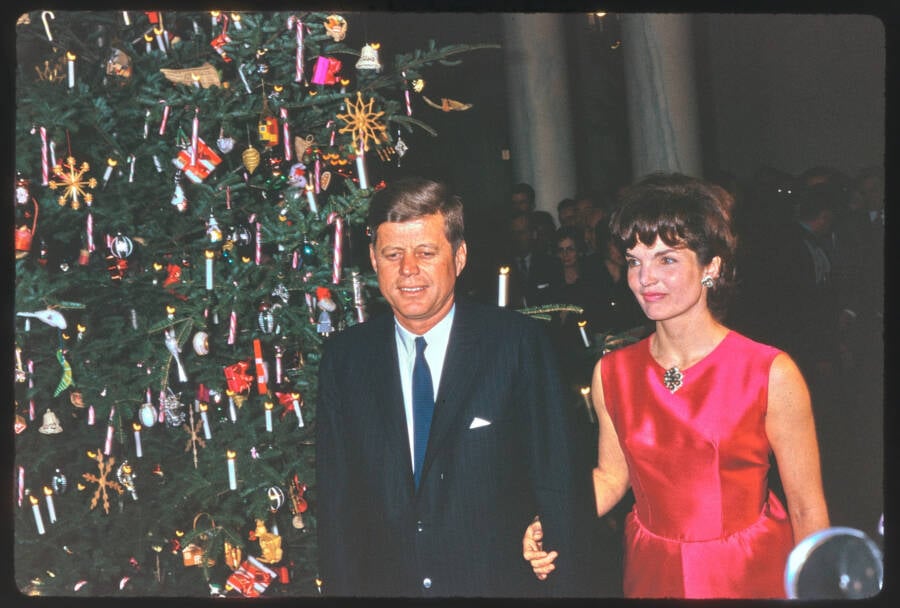
White House Historical AssociationJohn F. Kennedy and Jackie Kennedy celebrating Christmas at the White House in 1962.
But perhaps the First Lady who developed modern White House Christmas traditions the most was Pat Nixon. Hoping to share more of the White House with the public, Nixon oversaw several different developments, including adding wreaths to the White House windows, opening up the Executive Mansion for candlelight tours at night, and working with White House Sous Chef Hans Raffert to create a special 40-pound gingerbread house.
"Before we came to the White House, our friends always looked to us to see what surprises we were going to give them at Christmas, with our decorations, our 'open house' party," Pat Nixon explained to House and Garden magazine in 1971. "We've always tried to make Christmas special and different. At the White House we enjoy giving surprises, too."
White House Christmases that followed largely adhered to the mold created by First Ladies like Mamie Eisenhower, Jackie Kennedy, and Pat Nixon. But there were surprising moments too, like when Elvis Presley met Richard Nixon in the Oval Office on Dec. 21, 1970, or when First Lady Nancy Reagan sat on Mr. T's lap while he was playing the White House Santa in 1983.
Christmas At The White House In Recent Years
For the rest of the 20th century — and into the 21st century — White House Christmases have always had a theme. In 1975, Betty Ford chose "An Old-Fashioned Christmas in America," and decorated the official tree with dried flowers, fruit, acorns, pinecones, straw, and yarn. Rosalynn Carter embraced a "Victorian" theme, and Nancy Reagan had both a "Mother Goose" theme and an "Old-Fashioned" theme, which saw the reuse of Christmas ornaments from the Eisenhower administration.
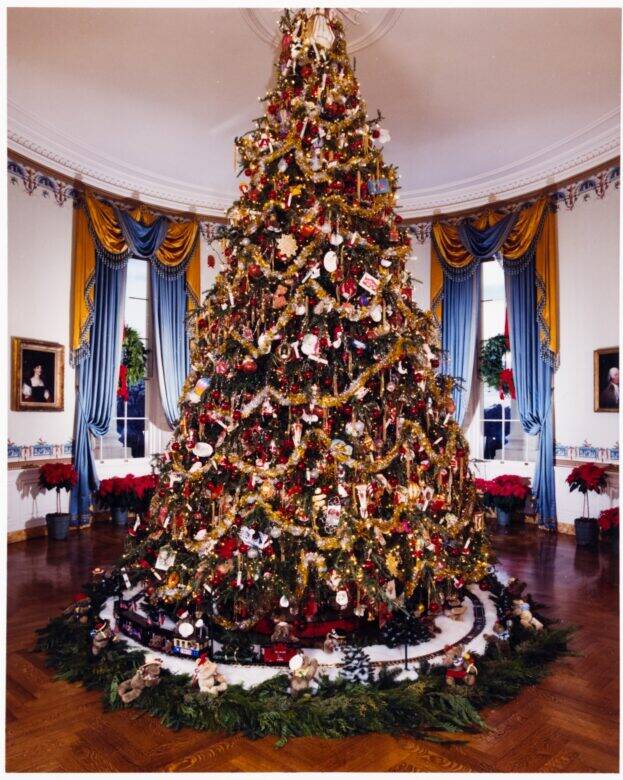
Ronald Reagan Presidential Library and Museum/NARANancy Reagan's Christmas tree from 1988.
In 1989, Barbara Bush used the White House Christmas theme to champion one of her causes — reading — and chose the theme of "Children's Literacy," whereas Hillary Clinton picked themes like "Year of the American Craft" and "The Twelve Days of Christmas." Meanwhile, Laura Bush — who decorated the White House with 19 Christmas trees, 660 feet of garlands, 245 wreaths, 251 bows, and 70,000 lights in 2001 — oversaw themes like "Home for the Holidays" and "All Creatures Great and Small" to honor animals.
In more recent years, Michelle Obama chose holiday themes like "Reflect, Rejoice, Renew," and "Simple Gifts," Melania Trump picked themes such as "Time-Honored Traditions" and "American Treasures," and Jill Biden opted for "A Season of Peace and Light."
White House Christmases also continue to feature a gingerbread house — though they've come a long way from the relatively simple structure designed for Pat Nixon. For many years, the shape of the gingerbread house stayed mostly the same (though the house grew in size and complexity), but after Chef Hans Raffert retired, things evolved. His successor, Executive Pastry Chef Roland Mesnier, created a gingerbread "village" for George H.W. Bush in 1992, and an entire gingerbread White House for the Clintons in 1993.
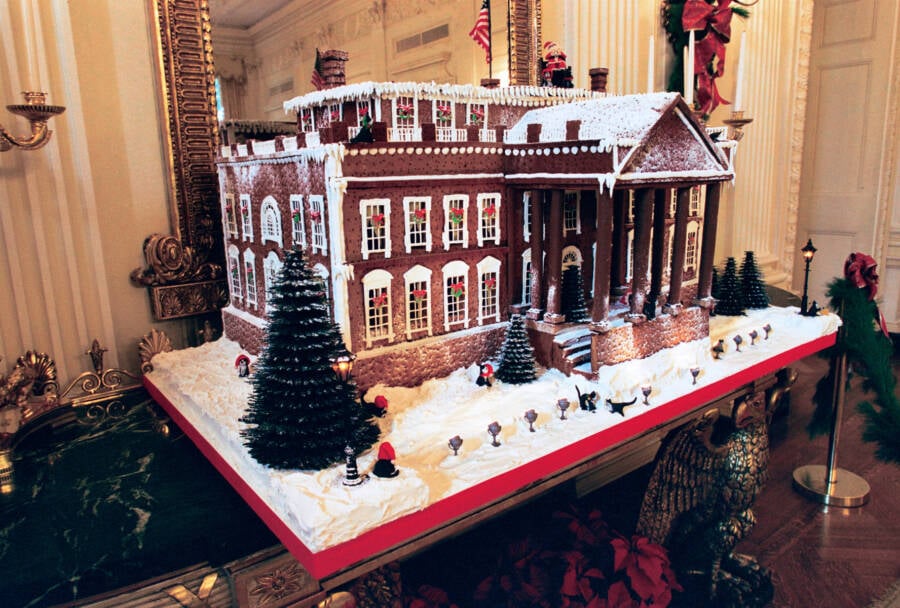
White House Historical AssociationAn entire gingerbread White House, created by Chef Mesnier, in 1993, which celebrated the Clintons' cat, Socks, with 22 marzipan sculptures of their beloved pet.
In the end, many of the White House Christmas traditions we enjoy today can be traced back to Yuletides from decades ago. But each administration puts their unique stamp on the holiday. To see how celebrations at the White House evolved over the years, take a trip through time in the gallery above.
After reading about the history of Christmas celebrations at the White House, enjoy these vintage Christmas photos from decades ago. Or, learn about unique Christmas traditions from around the world.