Four presidents have been assassinated, beginning with Abraham Lincoln in 1865, while others have died from heart attacks, strokes, and bacterial infections.
When William McKinley appeared at the Pan-American Exposition in Buffalo, New York, on Sept. 6, 1901, no one expected that the visit would change history. The president had traveled to Buffalo to examine the latest technologies of the day and to give a speech about trade and tariffs. But that afternoon, McKinley became one of the eight presidents who died in office when he was fatally shot by assassin Leon Czolgosz.
By the time McKinley was killed on that late summer day in 1901, four other presidents had died before their term was complete. Two had been killed by assassins, and two had perished from natural causes. And in the following century, three more presidents would lose their lives while in office.
These are the stories of the presidents who died in office — and how the nation changed in the wake of their sudden demises.
William Henry Harrison, The President Who Died In Office Just Weeks Into His Term
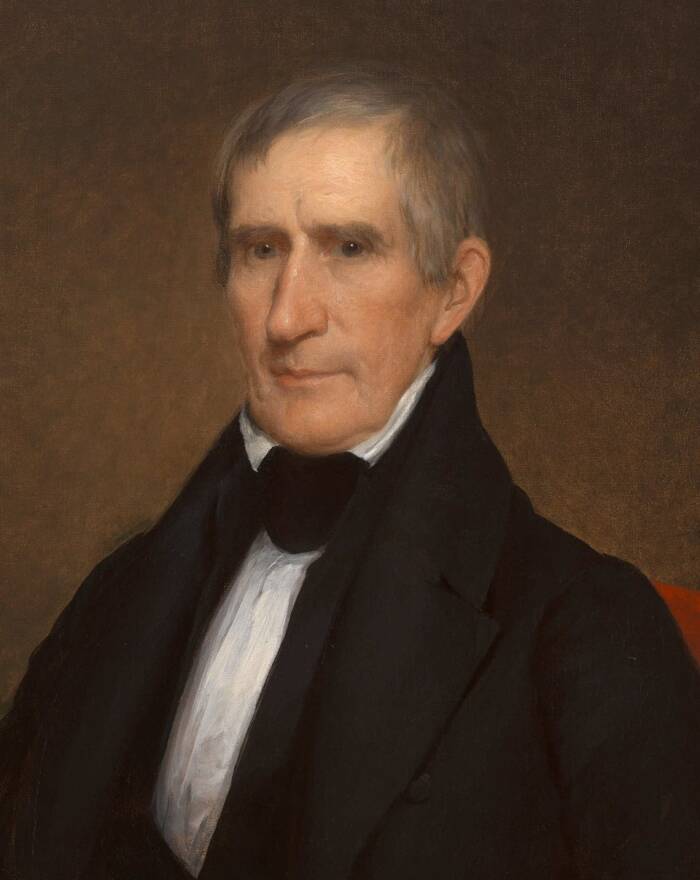
Public DomainWilliam Henry Harrison in an 1840 portrait. He died the following year.
William Henry Harrison is famous for one thing: dying.
A war hero known as “Tippecanoe,” Harrison was elected in 1840 after a raucous campaign against the incumbent president, Martin Van Buren. Harrison was mocked for his age during the campaign — he was then in his late 60s — but a newspaper attack that suggested he should retire to a “log cabin” with a “barrel of hard cider” made Harrison more appealing to voters than Van Buren, who was painted as out of touch.
Ironically, it was Harrison who came from a privileged background and Van Buren who had more humble roots. But Harrison was nevertheless elected president in a landslide victory. Harrison began to prepare for his presidency, which would begin that March, shortly after his 68th birthday.
On March 4, 1841, the day of Harrison’s inauguration, the new president gave the longest inaugural address in U.S. history. It was 8,445 words, and it took him almost two hours to deliver it while standing in the chill of a Washington, D.C. winter wearing no gloves or hat. Despite the length of his speech, Harrison’s term would turn out to be the shortest in American history.
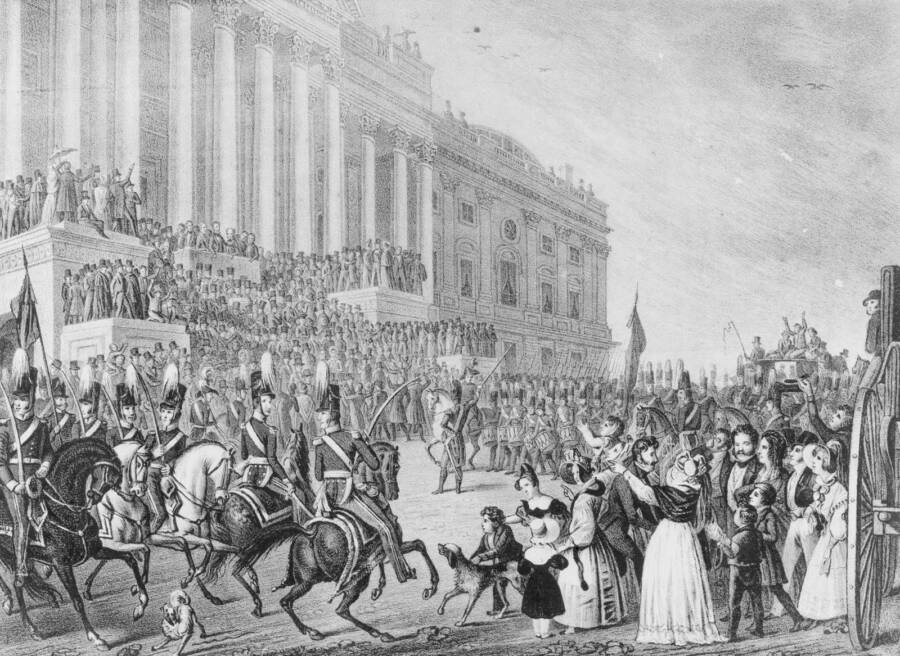
Public DomainA depiction of William Henry Harrison’s inauguration, during which the new president gave the longest inaugural speech in American history.
Just weeks later, on March 27, 1841, reports spread that the new president had fallen ill. Just days later, on April 4, William Henry Harrison died.
According to a report from Harrison’s physicians, the president had been “seized with a chill and other symptoms of fever” that progressed into pneumonia. Because of Harrison’s age, the doctors hesitated to treat him with “blood letting,” though they did give him opium and laxatives.
After suffering from “profuse diarrhea,” the president died.
His death ushered in an era of uncertainty, as no president had ever died in office before. Some believed that his vice president, John Tyler, should merely be an “acting president” until the nation could hold elections. However, Tyler forcefully took command of the presidency, setting an important precedent for the powers of the vice president.
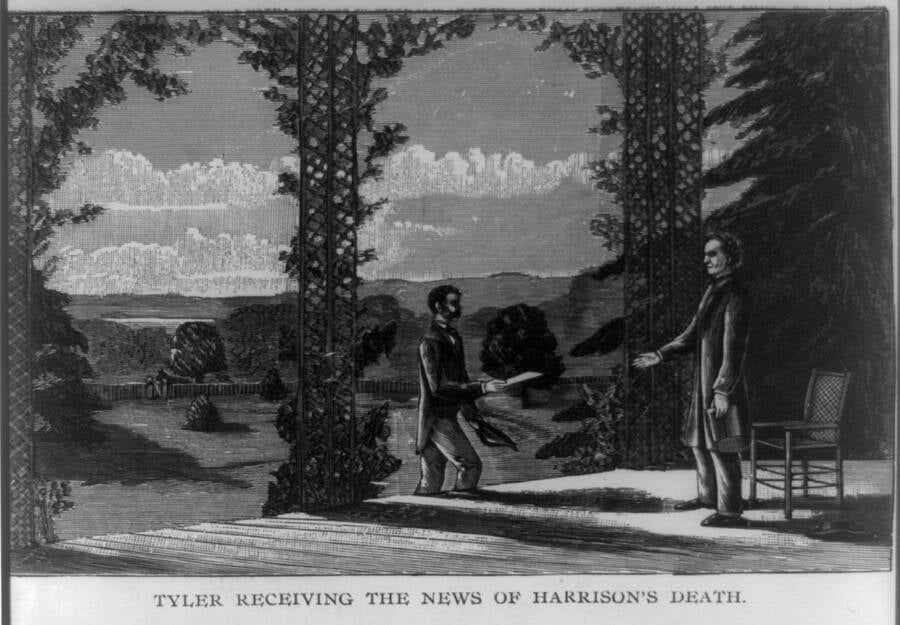
Public DomainA depiction of John Tyler, William Henry Harrison’s vice president, learning of the president’s death.
In the years since, a story has developed that William Henry Harrison died from pneumonia that he possibly caught during his long inaugural address. However, some scholars have argued that the president actually caught enteric or typhoid fever from Washington, D.C.’s poor water supply. They argue that it wasn’t all that cold on the day that Harrison gave his address (an estimated 48 degrees Fahrenheit) and that it wouldn’t make sense for his symptoms to appear three weeks later.
Whatever his cause of death, William Henry Harrison became the first U.S. president who died in office. But he would not be the last.