Scary Ocean Animals From The Deep: The Goblin Shark
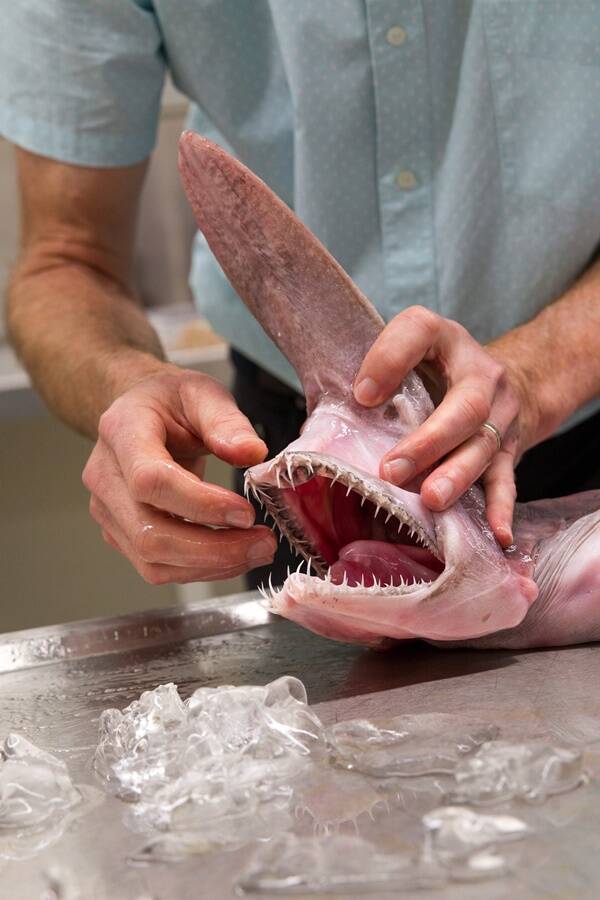
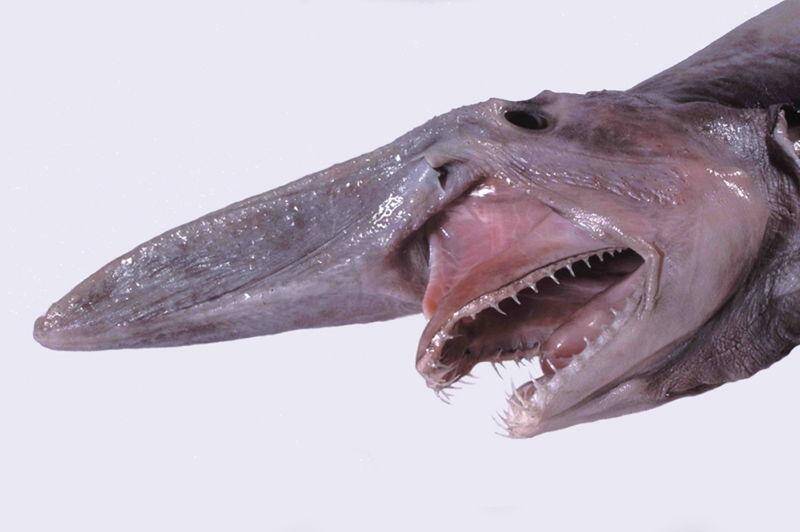
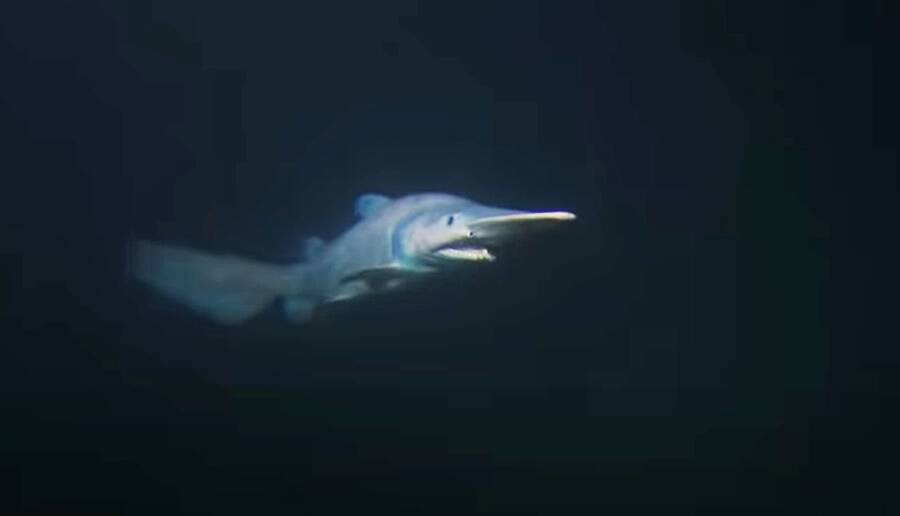
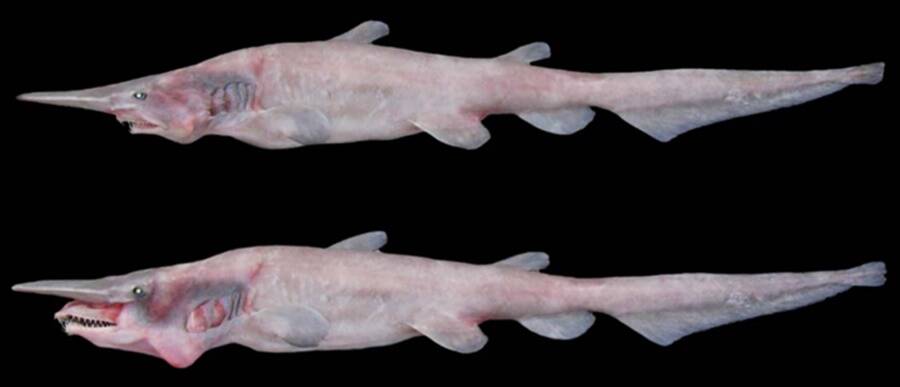
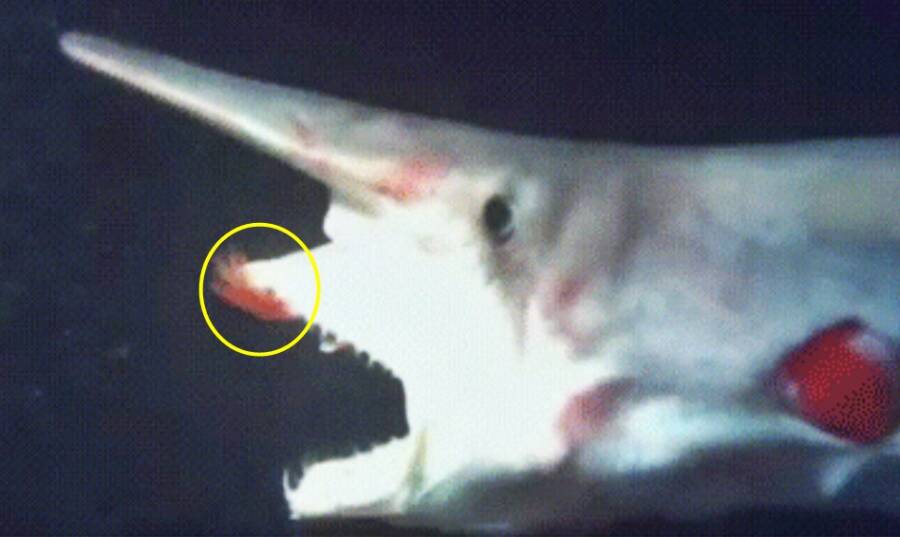


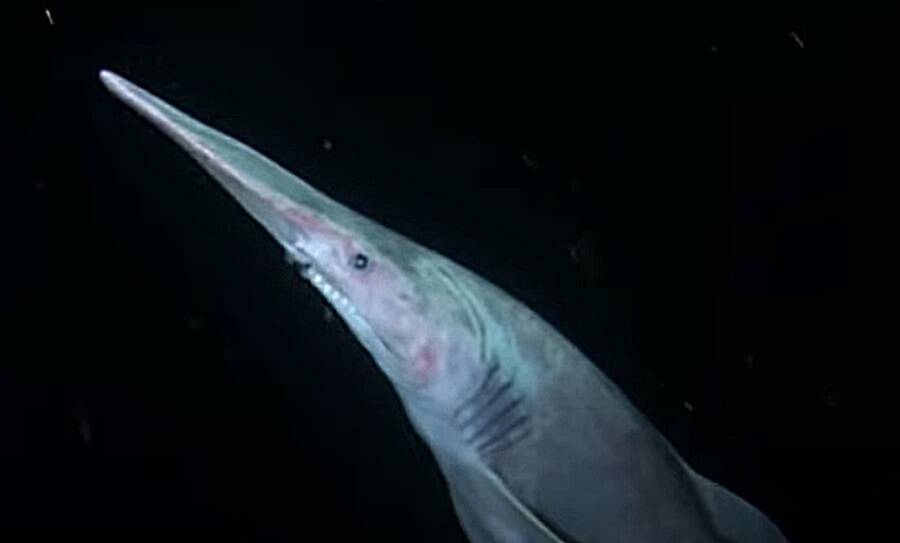


The goblin shark, or Mitsukurina owstoni, is among the most peculiar of sea animals.
Tragically overshadowed in pop culture by its more fearsome cousins, the goblin shark leads a relatively mysterious existence at more than 4,000 feet below the surface of the ocean. They are considered living fossils by researchers and are considered to be the only extant survivor of a 125 million-year-old family of sharks.
Goblin sharks were first identified in the 19th century and, as their name suggests, look more like a fairytale monster than a Great White. Its semblance to a goblin is most apparent when it is feeding, during which time the goblin shark's uniquely flat snout expands significantly in order to consume its prey.
This species has been found off various coasts in the Atlantic Ocean including in Guyana, France, Portugal, Senegal, and other places. But the majority of sightings have come off the coast of Japan.
Like most sharks, these scary sea animals are active predators that typically prey on fish, squid, and pelagic crustaceans. When hunting, the goblin shark senses its prey using its hyper-sensitive snout. It will then immediately jut out its jaws to capture its target in its razor-sharp teeth. Goblin sharks are not known for their speed, which makes their special ability to capture prey with a surprise jaw attack even more important.
Besides its unique anatomy, the goblin shark also has a fascinating method of reproduction. They mate via internal fertilization and give live birth to a small group of pups at once. During the gestation period, the pups receive nourishment not through the placenta but by eating the mother's other unfertilized eggs.
However, much of what is known about the goblin shark has come from the studies of dead specimens that are caught accidentally in fishing nets.
Their rarity is considered a good thing, though. The goblin shark's isolated habitat deep underneath the surface of the ocean and their intimidating appearance has kept the species fairly protected from humans at a time when many species of shark are becoming endangered due to overfishing.
The Flamingo Tongue Snail, The Weird Ocean Creature With Toxic Skin
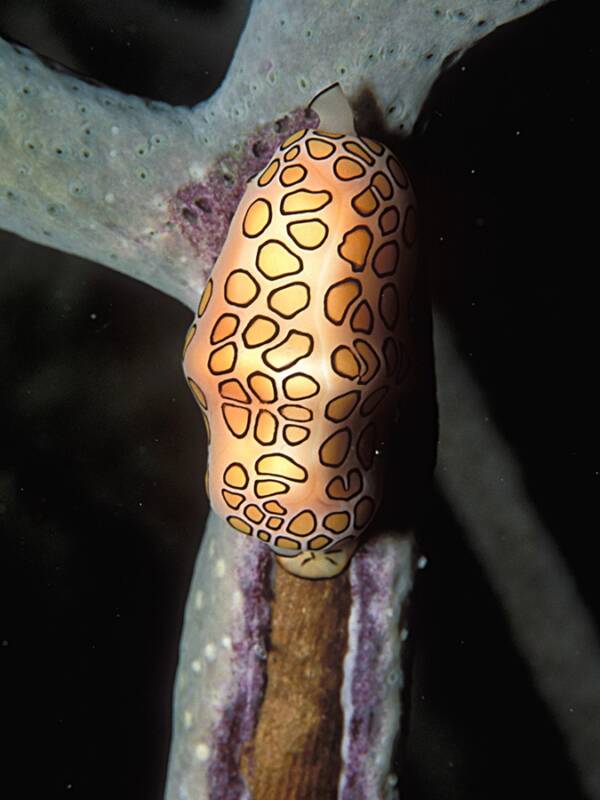
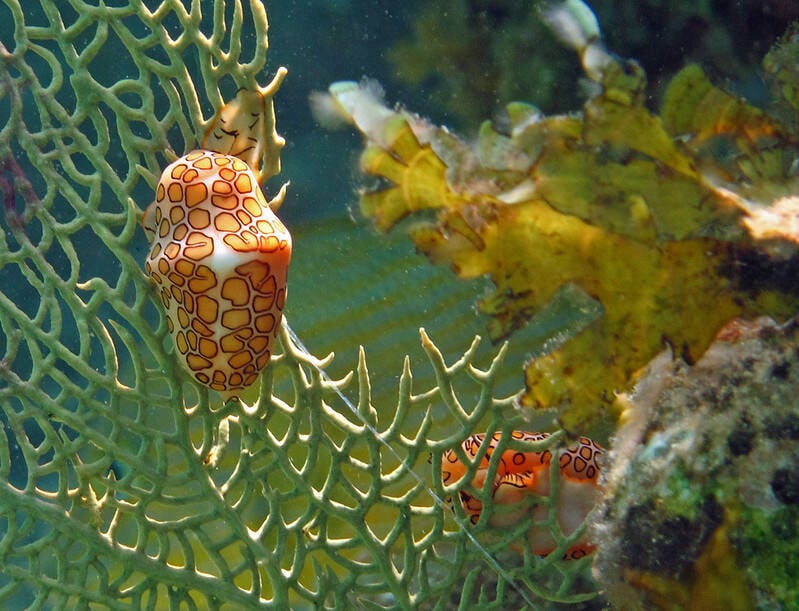
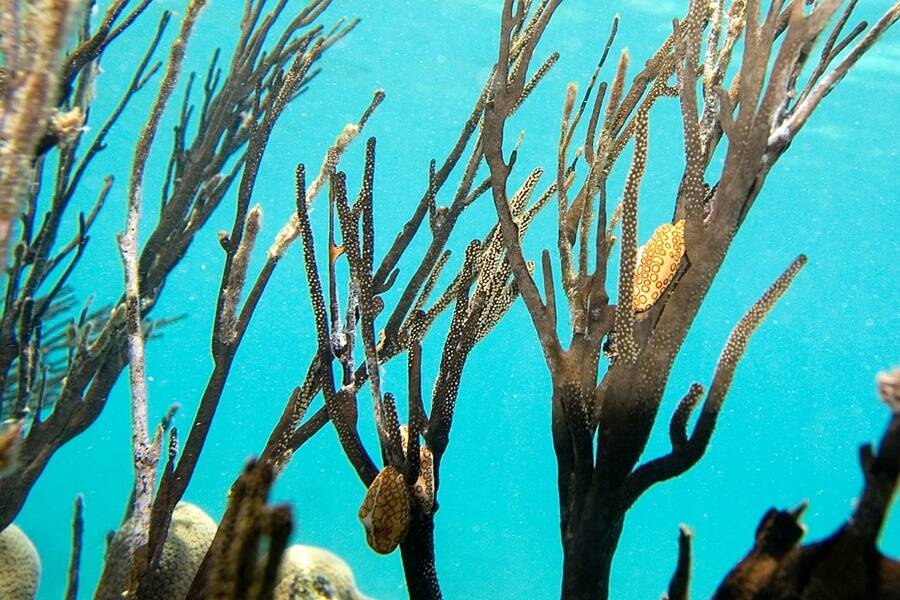
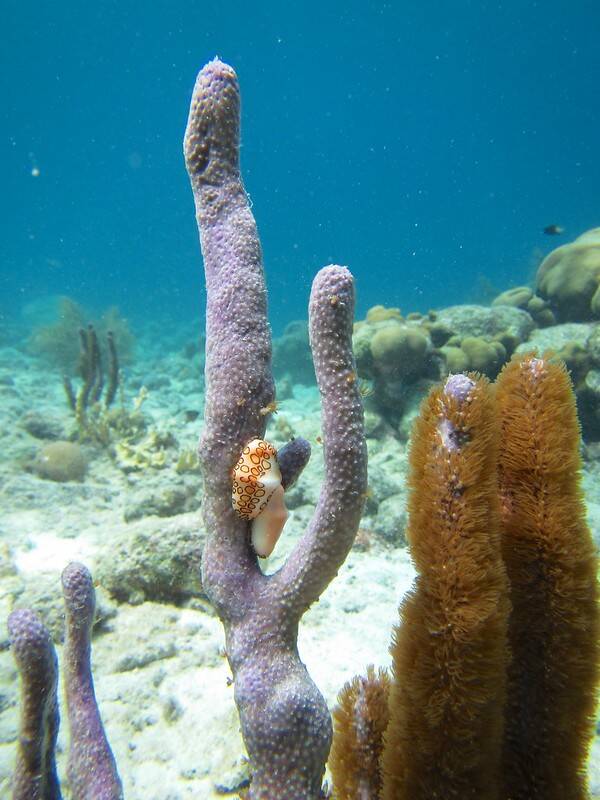
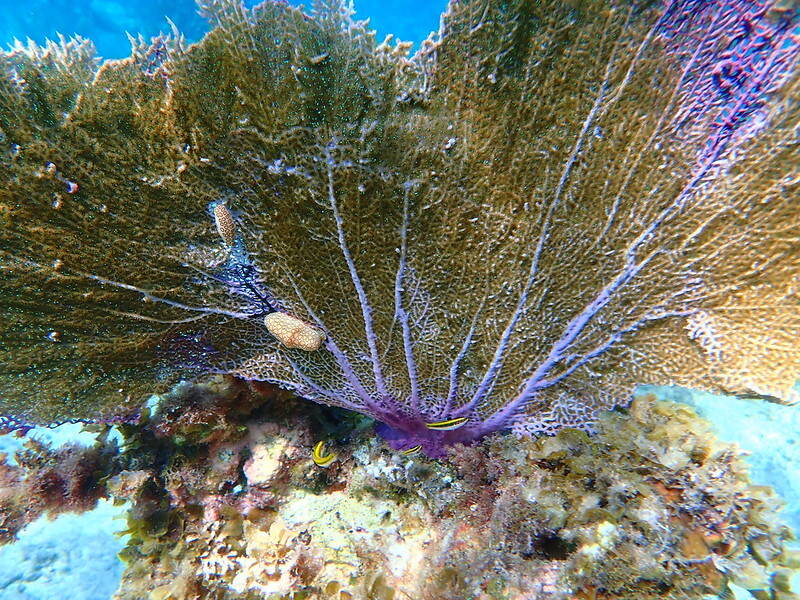


The flamingo tongue snail or Cyphoma gibbosum is an attractive marine snail, but make no mistake, despite its hypnotic appearance and small stature, the flamingo tongue snail is a dangerous animal with the ability to absorb the toxic properties of other creatures to use for its own defense.
These weird ocean creatures measure about one inch in length and are found in the subtropic and tropical waters of the Atlantic and the Caribbean, spanning off the coast of North Carolina in the U.S. all the way to the waters of Brazil. They feature a visually striking "shell," which is actually the mollusk's living tissues.
Like land snails, these sea creatures possess a wavy "foot" known as the radula which is located underneath their bodies. It is used by the snail to move its body across sea fans and coral and also to eat.
They feast on an array of sea fans, sea plums, and other sea corals. The flamingo tongue snail breaks down these corals by secreting enzymes that weaken the coral, which then enables the snail to scrape off the highly toxic skin of the coral and digest it.
The flamingo tongue snail can feed on toxic coral tissue without being harmed by absorbing the toxins and using it themselves as a potent defense mechanism. This ability to feed on the toxins of other animals and absorb their properties has been observed in other sea animals such as blue dragon sea slugs.
The flamingo sea snail is a solitary animal and breeding occurs only when a male and female happen to cross paths. After the fertilization process, which can take up to four days, the females will attach their fertilized eggs to the bare skeleton of a coral.
Then, the eggs will hatch after about a week. The larvae will feed on plankton as they float through the water until they mature.
In spite of their potential threat as toxic creatures, flamingo tongue snails have become a hot souvenir among scuba divers and swimmers who find them in the ocean. They are not an endangered species but lack of education among human poachers has likely affected their ocean population at least somewhat.