A Lizard In A Woman’s Skin

International Apollo FilmsA Lizard in a Woman’s Skin led to four different courtroom sessions across Italy.
Italian for yellow, the term “giallo” once described Italian paperback thrillers with bright, garish cover pages. It has since mainly denoted Italian genre films, with horror movie directors like Lucio Fulci and Dario Argento virtually inventing — then popularizing the operatic slashers. In 1971, however, Fulci’s mastery took him to court.
Filmed and set in London, England, A Lizard in a Woman’s Skin revolves around the daughter of a politician experiencing a series of nightmares. Initially quite psychedelic and sexual, they turn ugly when she dreams of murdering her neighbor — and awakens to discover that he was stabbed to death overnight.
Fulci’s second stab at giallo films wouldn’t reach the cult status of his later attempts. It did, however, depict a terribly realistic scene involving six dogs that had been ripped open. Fulci had hired practical effects genius Carlo Rambaldi (who would later create the E.T. puppet) to do so, to visceral success and judicial inquiry.
“[We had to] convince four different judges that they were not real dogs but in actual fact mechanical dogs that had been vivisected with our special effects,” said Rambaldi.
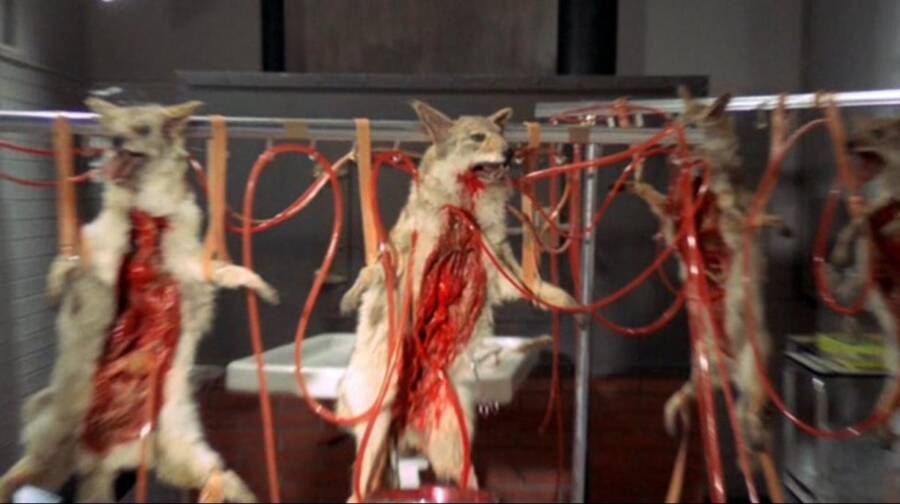
International Apollo FilmsFulci and Rambaldi had to present these mechanical dogs in court.
“Lucio Fulci, director of the film A Lizard in a Woman’s Skin, and the owners of the production company and distribution house, have been reported to the judicial authorities for having tortured and killed six dogs during one scene of the film,” the Italian press reported after the premiere.
“There are six dogs who have been vivisected, ie still alive, but with their chests slit open and with electrodes clipped onto their hearts.”
Fulci and Rambaldi were forced to travel to four different cities across Italy to defend themselves before the magistrates. The macabre experiment depicted onscreen was so convincing that only tangible proof would convince them — with Rambaldi luckily still in possession of the mechanical props he used during filming.
Had they not been able to wheel their work into court, Rambaldi and Fulci may have had their entire careers cut short as grotesque animal abusers. Instead, Fulci went on to become one of the most respected horror directors of all time — and Rambaldi an Oscar-winning visual effects artist for E.T. The Extra-Terrestrial.
Famous Snuff Films: Faces of Death
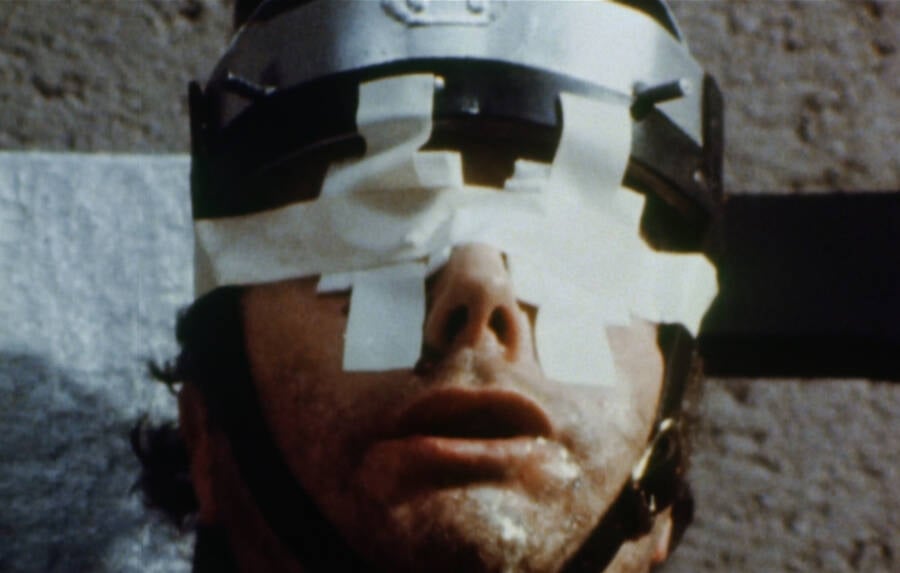
F.O.D. ProductionsFaces of Death was banned in 46 countries.
When Faces of Death was released in theaters in November 1978, moviegoers and censors didn’t know what to make of it. Inspired by the pseudo-documentary films of the mondo horror sub-genre, it had fake pathologist Francis B. Gross present the viewer with footage of animal killings, accident, and murder scenes.
It earned a whopping $35 million at the U.S. box office and became so infamous that its 1983 VHS release changed policy in the U.K. Under Mary Whitehouse’s direction, England’s National Viewers’ and Listeners’ Association banned the movie, seeing it colloquially known as a “video nasty” — a forbidden fruit of horror.
“I’ve always had an interest in horror films,” said Michael Felsher, producer of a documentary accompanying the Faces of Death Blu-ray release. “Faces of Death had this legend about it. It was this forbidden thing. People were talking about it and how it was all real; you got to see people actually killed on screen.”
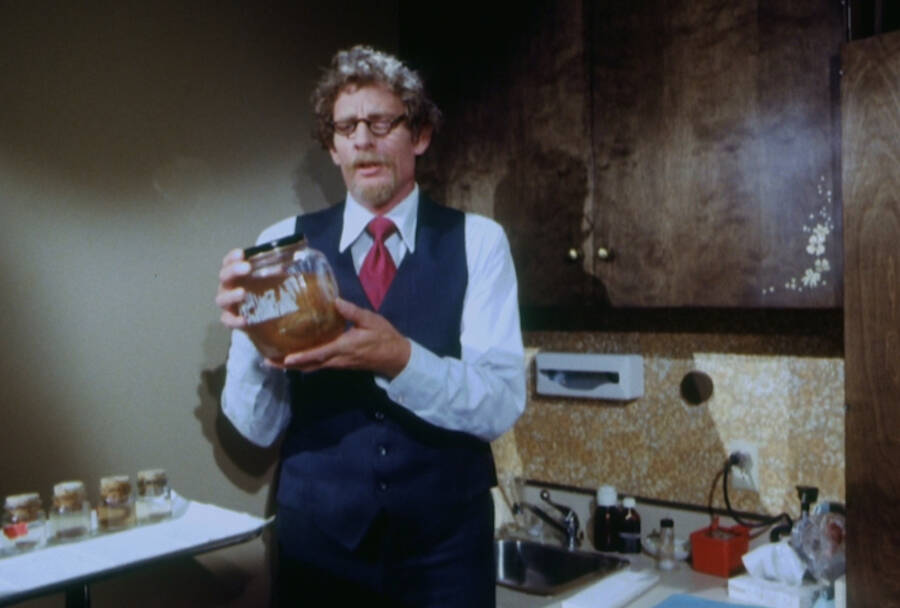
F.O.D. ProductionsThe film was essentially hosted by pathologist “Francis B. Gross” who presented the viewer with its macabre footage.
The advent of VCRs had seen horror obsessives rush to underground stores to purchase the ominous film and witness it for themselves. Head of media and film at the University of Bradford Mark Goodall said it even garnered “an underground currency” with the punk culture and anyone seeking out “extreme films.”
With a skull and numerous warnings about its content on the cover, the film had the fictionalized pathologist present various ways to die. Director John Alan Schwartz had approached news stations to buy footage that had been too gruesome for them to use, filmed fictional scenes himself — even one that included a corpse.
“They were down there filming something else but they got a report of a body on the beach and happened to be there to film it,” said Felsher. “It was some guy who got high on LSD and had fallen into the water and drowned.”
Schwartz edited two dogs playing to make it look like they were killing each other. He used wet cauliflower to depict monkey brains being eaten onscreen. With archival footage and one drowned body taking care of the rest, Faces of Death seemed so real that it was banned in 46 countries — with many still convinced it was real.